A version of this article originally appeared in Al Jazeera. Readers interested in today’s decision should also these excellent commentaries from Dov Jacobs and Kevin Jon Heller.
(Photo: BBC)
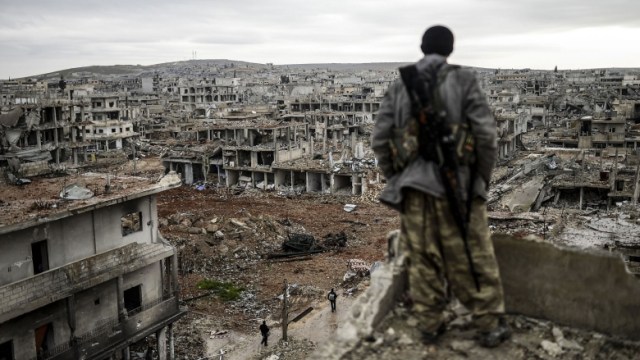
Judges at the International Criminal Court have denied a request to open an investigation into atrocities committed in Afghanistan. Their decision comes 1.5 years after the Prosecutor requested authorisation from the judges to open an official investigation into war crimes and crimes against humanity in Afghanistan. That was a momentous request for one reason in particular: prosecutor Fatou Bensouda made it clear that the torture allegedly committed by US forces and the CIA would be investigated. For the first time in history, the alleged atrocities committed by US forces would be put under the scrutiny of an international criminal tribunal.
But ICC Judges ruled today that an investigation would not be in the “interests of justice”. This marks the first time that Judges have invoked this argument, yet the ruling was meagre on its application, devoting just 3.5 pages to the subject (short for any international judge!) and, remarkably, did not reference any other cases or jurisprudence on the subject. Prosecutors will now seek appeal that decision and the Court still has a chance to reverse course.
For some, however, the decision is a ‘good’ one for the Court. Many believe that an investigation could only hurt the court because no American would ever end up before judges at the ICC. In denying the investigation, Judges stated that noted that changes in the “political landscape” in non-member states (i.e. the U.S.) “make it extremely difficult to gauge the prospects of securing meaningful cooperation from relevant authorities for the future.” In short, they believed that an investigation would be too difficult to be worth trying and therefore not in the interests of justice or the court.
But they are wrong. A lack of cooperation from Washington or other states should not have prevented the ICC from investigating alleged atrocities in Afghanistan. Even without cooperation, such an investigation would likely bolster – not undermine – the court’s credibility.
The waiting game
That it took judges 1.5 years to come to today’s decision will only fuel speculation that the they were acting politically, fearful of the political implications of an investigation and, possibly, Washington’s wrath.
At the same time, the ICC prosecutor’s office has been plagued by numerous high-profile setbacks. Within the last 12 months alone, judges acquitted both former Vice President of the Democratic Republic of the Congo Jean-Pierre Bembaand former President of Ivory Coast Laurent Gbagbo. It has also come to light that the ICC’s own President, Chile Eboe-Osuji, is suing the Court for higher pay at a time when the institution is struggling to resource its current workload.
Against this backdrop, it is tempting to conclude that the ICC should be risk-averse, focusing only on suspects who are likely to be surrendered to the court. In line with such thinking, it would have been ill-advised for the ICC to investigate atrocities in Afghanistan as cooperation wouldn’t be forthcoming. Such is the advice of many observers of the ICC.
The cooperation game
Followers of the ICC have repeatedly pointed out that US cooperation with the court would cease if the ICC opened an investigation into Afghanistan. They insist that there “will be no cooperation from the Afghan government, the Taliban, or the US”. Moreover, without any prospects of a successful trial of US officials along with the cessation of cooperation, “[t]here would be significant cost to the ICC, for little gain”.
These fears were confirmed when US NSA John Bolton threatened the ICC and its staff with sanctions while declaring that the US would “use any means necessary to protect our citizens and those of our allies from unjust prosecution by this illegitimate court.” They were further corroborated when Washington revoked ICC chief Prosecutor Fatou Bensouda’s entry visa to the United States. Continue reading