Aidan Hehir joins JiC once again with this interview of Bekim Blakaj on the trials and tribulations facing Transitional Justice in Kosovo. Aidan is a Reader in International Relations at the University of Westminster. He has previously written for JiC on the new Kosovo hybrid tribunal.
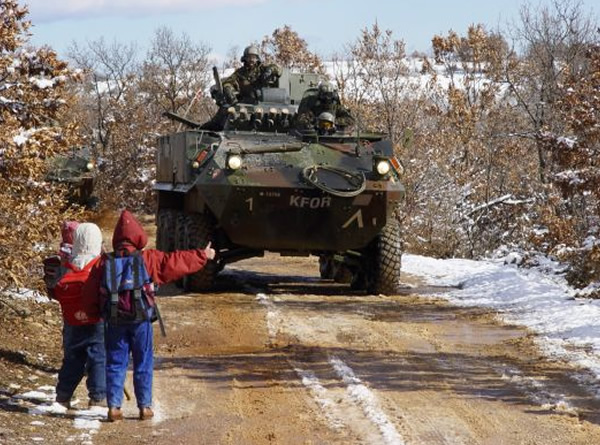
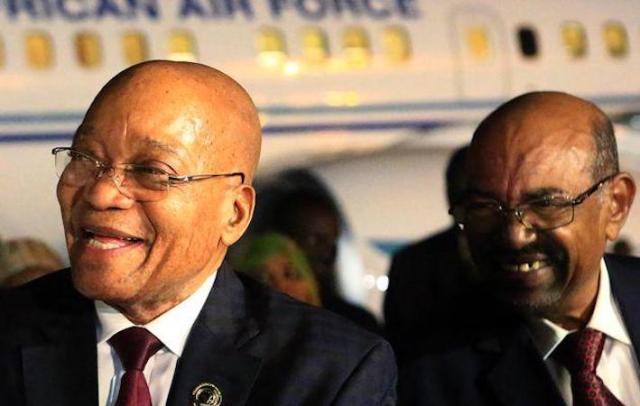
(Photo: ScrapedTV)
While academics, NGOs and governments have repeatedly extolled the virtues of reconciliation and transitional justice, actually implementing policies and procedures has often proved very challenging; this has been particularly the case in the former Yugoslavia. The
International Criminal Tribunal for the former Yugoslavia (ICTY) was established to prosecute those responsible for the horrific carnage and violence which engulfed Yugoslavia in the early 1990s. In tandem with this juridical approach to dealing with the internecine violence which scared the region, various transitional justice initiatives aimed at fostering inter-community reconciliation were also launched, the most notable being the
regional commission for the establishment of facts about war crimes and other serious violations of human rights, known as
RECOM.
Yet, the reluctance of Yugoslavia’s various successor state governments to engage with, and support, RECOM’s efforts, coupled with societal apathy – and at times open hostility – towards the very idea of reconciliation and accountability, have contrived to undermine the organization’s work. In spite of the various obstacles they face and their limited achievements to date, transitional justice organisations aimed at promoting reconciliation continue their work throughout the former Yugoslavia; once such organisation linked to RECOM is the Humanitarian Law Centre Kosovo.
Kosovo Specialist Chambers
Since its establishment in 1997, The Humanitarian Law Centre Kosovo has collected an impressive amount of detailed data on people killed, displaced and still missing in Kosovo. The organization is in the process of making this data available online, and has to date published a number of studies reflecting on past violence, including a “Memory Book”. While the majority of the victims of violence in Kosovo were Albanians targeted by Serbian forces, the organisation has also sought to highlight the plight of the minority communities who were targeted in particular after the conclusion of NATO’s intervention which routed Serbian forces in June 1999. In keeping with the broader trend relating to RECOM’s work, his aspect of The Humanitarian Law Centre Kosovo’s work has received little governmental support and frequently encountered opposition from within Kosovo’s majority Albanian population.
Efforts to deal with past violence in Kosovo have received renewed importance in recent years with the establishment of the “Kosovo Specialist Chambers”. Based in The Hague, this hybrid tribunal is mandated to prosecute crimes allegedly committed by the Kosovo Liberation Army (KLA) between 1998 and 2000. While the new court has yet to issue any indictments, it has already stoked controversy and hostility amongst the Albanian population; the KLA are widely perceived as heroes in Kosovo, and the official narrative promoted since NATO’s intervention has, unsurprisingly, presented the Serbs as the aggressors. By challenging this narrative, the Specialist Chambers run the risk of generating both societal discontent and instability in Kosovo, a country already reeling from persistent misrule, a contested international status, and deep economic malaise.
Given the imminence of the Specialist Chambers’ proceedings, the work of The Humanitarian Law Centre Kosovo has arguably never been so important. I met with Bekim Blakaj, Executive Director, in Pristina on the 18th July to discuss the organisation’s work and the likely impact of the Specialist Chambers.
How does your organisation work and what are your key objectives?
We are not funded by any government as we want to avoid any potential for governments to influence our agenda and our work. This also helps our credibility with the non-Albanian communities in Kosovo. In the past, other organisations that engaged in this work, here and elsewhere in the region, were supported by governments and they tended to become biased.
Essentially, we want Albanians to have empathy with Serb victims, and we have previously achieved this. There have been eleven forums on transitional justice held across the former Yugoslavia, including here in Kosovo. Each one had public hearings; half-day sessions which involved the victims talking in front of over 400 people. Of course, it was often hard to organise; people were fearful of the reactions they would get. Naturally, Serbs were worried about speaking in Pristina. But nonetheless, in October 2008, it went ahead and it was amazing. People supported the victims and many cried. When they are face to face, human beings have empathy with victims whoever they are.
In this sense, any attempts to establish “facts” about the past are likely to cause controversy; have there been any negative reactions to your work?
We did have some bad experiences. Associations of the families of the missing were set up after the war. Unfortunately, some of these became political and many were not staffed by people with relatives who were actually missing. They were not interested in our project and were more one-sided. Also, in general these initiatives are difficult to undertake as participants and organisers are often seen as “traitors” by both sides. Continue reading →





 Justice in Conflict