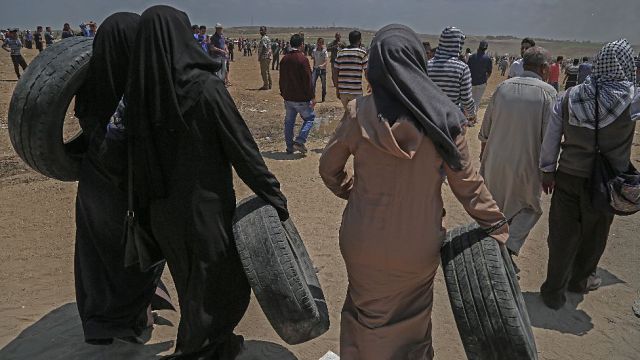
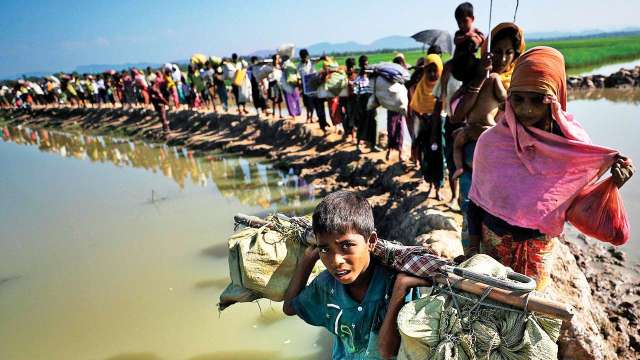
Hundreds of thousands of Rohingya have been deported from Myanmar to Bangladesh in recent months. (Photo: Reuters)
We have all heard of the devastating situation facing the Rohingya people. Many believe the abuses committed against this vulnerable population by Burmese authorities amount to genocide. Yet almost a year since the Rohingya crisis captured global attention, the situation facing the Rohingya continues to deteriorate. Justice for the atrocities committed against them appears to be a very remote possibility. There is reason, however, for at least some hope on this front.
A few weeks ago, the Office of the Prosecutor at the International Criminal Court (ICC) sought to ascertain whether the Court might have a sliver of jurisdiction over the crimes committed by Myanmar forces against the Rohingya. In particular, the Prosecutor — in an unprecedented move — asked judges in the Pre-Trial Chamber whether she might have jurisdiction over the deportation of the Rohingya from Myanmar (a non-member state of the ICC) to Bangladesh (a member-state that seems willing to engage with the Court on this question). In putting her argument forward, ICC Prosecutor Fatou Bensouda usefully explained that:
the crime of deportation is analogous to a cross-border shooting: the crime, for example murder, is not completed until the bullet (fired in one State) strikes and kills the victim (standing in another State). In both scenarios, the occurrence on the territory of the second State is not, in legal terms, the mere remote effect of a completed criminal conduct on the territory of the first State—rather, it is a legally required element of the crime.
In this context, the Canadian Partnership of International Justice under the leadership of Fannie Lafontaine and Amanda Ghahremani filed an amicus curiae at the ICC. I’m proud to have been part of that initiative. You can read our full brief here. You can also find a list of other submissions here.
The Canadian Partnership of International Justice’s filing supports the position of the ICC Prosecutor that she can request the Pre-Trial Chamber, under Article 19(3), to ascertain whether she has jurisdiction over the deportation of Rohingya people from Myanmar into Bangladesh. It also support the view that the Office of the Prosecutor should, indeed, be granted jurisdiction to investigate this crime.
Bangladesh too has filed its observations, which many hope and believe will be favourable to an ICC investigation. For obvious geopolitical reasons, this is a sensitive issue for Dhaka. Officials in Myanmar, on the other hand, have stated that they will ignore the Court’s request to share their views on the matter, saying that they have “no reason to respond”. Ignoring the ICC is Myanmar’s way of effectively saying that they do not recognize the authority of legitimacy of the Court and therefore will not participate in its proceedings. We can expect that to turn to mud-slinging if and when the Prosecutor opens an investigation.
It is worthwhile stressing that this is not an ideal situation. Far from it. But the ICC Prosecutor should be commended for trying to make the best, or at least something, out of a bad situation where any jurisdictional reach is extremely limited. The world has stood by watching as hundreds of thousands of Rohingya have been forced to leave their homes in Rakhine State only to enter devastating conditions in camps across the border in Bangladesh. Along with their often-meagre belongings, they carry with them stories and burden of untold violence and harm. Adding insult to criminal injury, neither side will recognize them as what they are: Rohingya. They are disenfranchised and disregarded. To call it abhorrent is an understatement. Continue reading