Mayya Chaykina join JiC for this post on the issue of head of state immunity and the prosecution of Venezuela’s Nicolás Maduro. Mayya is a master’s student in law at Sciences Po Paris. Her work focuses on international criminal law, mass atrocity prevention, and international human rights mechanisms.

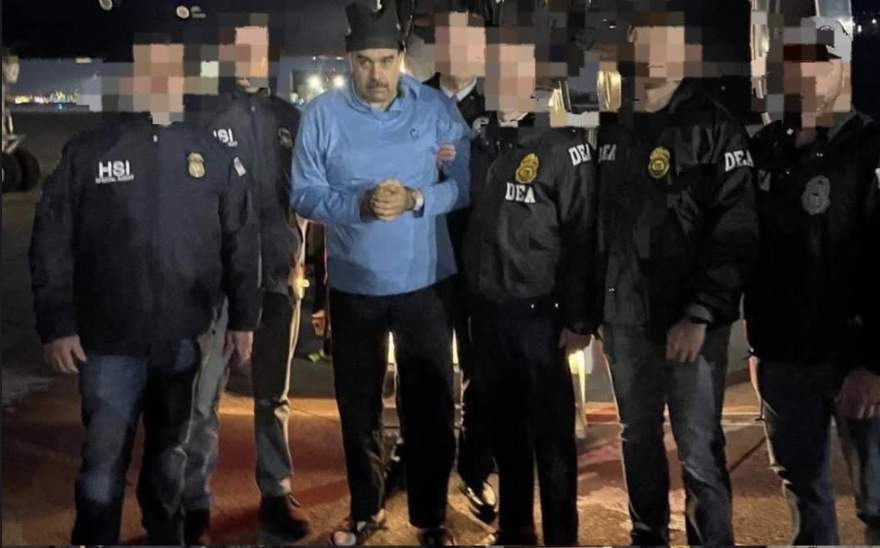
After months of threats of using armed force against the Government of Venezuela, United States forces capturedVenezuelan president Nicolas Maduro and his wife on January 3, 2026. Officials have claimed that the operation was in support of the recently unsealed indictment, which charges Maduro with “narco-terrorism conspiracy”, “cocaine importation conspiracy”, and “possession of machineguns and destructive devices”.
The legitimacy of the criminal charges, however, remains in question. Under the doctrine of immunity ratione personae, or head-of-state immunity, certain officials enjoy immunity from the exercise of foreign criminal jurisdiction for all acts committed in both a private and official capacity during their time in office. Acknowledged by the International Law Commission (ILC) and the International Court of Justice (ICJ), head-of-state immunity applies to a troika consisting of Heads of State, Heads of Government, and Ministers for Foreign Affairs.
Maduro will undoubtedly raise such an objection to the prosecution. On the other hand, the prosecution will likely argue that, given the United States’ non-recognition of Maduro as a legitimate leader, he is not entitled to head-of-state immunity. This analysis will consider the tension between these two questions, ultimately demonstrating that Maduro is entitled to immunity under the current international legal framework and the aims of the immunity doctrine.
Continue reading