Yeah, Right… ICC Officials Say There’s No Evidence Against Ugandan Military

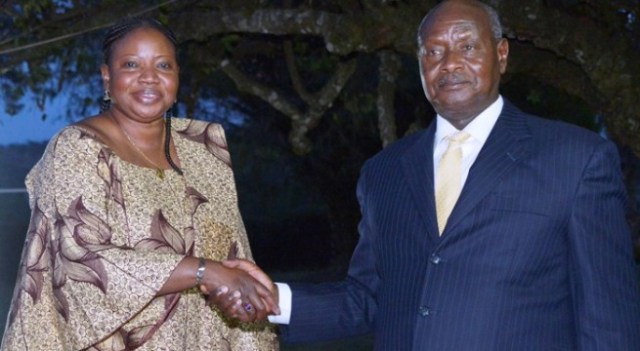
ICC Chief Prosecutor Fatou Bensouda with Ugandan President Yoweri Museveni during a meeting in 2015 (Photo: Daily Post)

ICC Chief Prosecutor Fatou Bensouda with Ugandan President Yoweri Museveni during a meeting in 2015 (Photo: Daily Post)

The Office of the Prosecutor and the Government of Uganda have always had a close, if at times strained and uncomfortable, relationship. There is little love lost between senior officials but they have been awkward bedfellows for fifteen years. Early on in the ICC’s existence, Court officials and the Government of President Yoweri Museveni engaged in close negotiations with the aim of providing the ICC with jurisdiction to target senior commanders of the Lord’s Resistance Army (LRA). In 2003, then-Chief Prosecutor Luis Moreno-Ocampo infamously held a joint-press conference with Museveni in London to announce that Uganda had referred the LRA to the ICC (later amended to “the situation in northern Uganda” because referring the LRA alone was legally bonkers, even if it more closely reflected reality). For critics and proponents of the ICC alike, this signaled Moreno-Ocampo’s intention to target the LRA and only the LRA. His appearance with Museveni, a staggering demonstration of bias towards the government and its military forces, was no accident; Moreno-Ocampo was not oblivious to the implications of buddying up with the Ugandan leader.

Fast-forward ten years, and the ICC has still not investigated, and is increasingly unlikely to investigate, alleged crimes perpetrated by the Government and the Uganda People’s Defence Force (UPDF). Originally, Moreno-Ocampo insisted that LRA atrocities were of such greater “gravity” compared to alleged UPDF crimes that investigators had to start with the LRA. Perhaps for this reason, William Schabas has written that “[t]he gravity language strikes the observer as little more than obfuscation, a laboured attempt to make the determinations look more judicial than they really are… to take a political decision while making it look judicial.”

In the end, skeptics were right: the ICC has not investigated any crimes by the Government or the UPDF. The bigger question is: why?

One possible answer is that the Government did not commit any crimes under the jurisdiction of the ICC — i.e war crimes or crimes against humanity — in northern Uganda. A recent statement by Mochochoko Phakiso, head of the Jurisdiction, Complementarity and Cooperation Division in the ICC’s Office of the Prosecutor, suggests that investigators simply don’t have the evidence to go after the UPDF: “It’s false propaganda that the ICC is only after the LRA. We have not received any evidence against the UPDF.” Setting aside the rather insulting insinuation that many, perhaps even the majority, of northern Ugandans spread and believe in “false propaganda”, could this be true? It is desperately hard to believe.

For anyone who has traveled to northern Uganda and spoken to the people there, it is impossible not to be told of UPDF and government crimes. Even those who believe that the ICC’s prosecutions of senior LRA rebels are appropriate also insist that the ICC should likewise prosecute members of the government and UPDF who committed unspeakable crimes. The fact that the UPDF has been let off the hook is confusing to many. This anecdotal evidence of UPDF crimes is supported by heaps of substantive evidence and research. The following excerpt from my forthcoming book* is but a small snippet of the troves of documents and evidence of the Governments crimes:

A crucial but oft-neglected cause of the war was the response and behaviour the NRM/A (later the UPDF) in northern Uganda and, in particular, its direct responsibility for mass human rights violations and its unwillingness to provide protection for civilians from LRA violence. Human Rights Watch (2003a; 2003b, 19-21; 2005) has catalogued cases of torture, murder, rape by government soldiers and even the recruitment of child soldiers into government forces – the same allegations levied against the LRA. At the same time, the Government of Uganda (GoU) seemed uninterested in defeating the rebels or providing adequate protection for civilians. As Adam Branch (2010b, 38) writes, “the NRA has generally abandoned the population to rebel violence letting it continue as a kind of collective punishment by proxy”. The result was that the people of northern Uganda were trapped as victims of violence perpetrated by the rebels and the violence perpetrated by the GoU. They were “caught between the fire and the frying pan: a hostile army of occupation and a ‘terrorist’ rebel group.” (Mwenda 2010, 55).

UPDF violence was, however, not only direct. In response to the rebellion, the GoU propagated and imposed a system of structural violence on the people of northern Uganda. As violence in northern Uganda spread and intensified in the 1990s, the Government began to herd civilians into IDP camps, a process that began in late 1996 (Dolan 2009, 46). By 2002, 800,000 civilians had been displaced. Some civilians chose to relocate to the camps but many others were coerced into doing so. In 2002, for example, the UPDF ordered all citizens from the districts of Kitgum, Pader and Gulu to relocate to the IDP camps. Refusing to do so meant being identified as a rebel collaborator and being targeted by the UPDF (see Rodriguez 2009, 102). Chris Dolan (2009) captures the dynamic of northern Ugandan civilians stuck in the cross-fire of the LRA and GoU in his book, Social Torture. Dolan persuasively argues that the war is “a form of mass torture, whose principal victims are the population within the ‘war zone’, and whose ultimate function is the subordinate inclusion of the population in northern Uganda.” The primary locus of ‘social torture’ was the IDP camps, named “protection villages” by the GoU, although more akin to “concentration camps” according to Rodriguez (2009, 104), Branch (2007a, 181) and Mwenda (2010, 55). In these camps, Dolan (2009, 1) finds the symptoms and tactics of mass torture: “widespread violation, dread, disorientation, dependency, debilitation and humiliation”. Finnstrom (2008, 133) makes a similar argument suggesting that the IDP camps constituted a form of structural violence against the people of northern Uganda, wherein “cultural and social agency diminish as the logic of domination and violence enter the most private spheres of everyday life.” Human rights groups have tended to agree. One report, prepared for United Nations Office for the Coordination of Humanitarian Affairs (UNOCHA), concluded that “the overall picture is one of severe destitution” (Weeks 2002, 5; see also Dolan 2009, 221) and, moreover, while direct violations of rights were commonplace, the camps’ “most damaging achievement of all has been to inflict economic and social paralysis on an entire society, which has thereby been reduced to destitution and dependency.” (Weeks 2002, 4). Some suggest that upwards of 1,000 people died per week, not from rebel attacks but as a result of the squalid conditions within the camps themselves (Mwenda 2010, 56; see also The Republic of Uganda Ministry of Health 2005). This represented a death toll that far exceeded what the rebels did or could achieve (Mwenda 2010, 56).

GoU violence against civilians was also direct. UPDF soldiers, sometimes disguised as LRA commanders, regularly abused civilians. And while some officers were held to account, this typically only occurred when cases received attention from notable citizens (Dolan 2009, 147). The camps appeared to be a tactical strategy wrapped in a ruse: the ‘good’ Government as a protector of civilians against the ‘evil’ LRA. “For from the day they were initiated in the name of protecting the civilian population, these villages instead became sites of their abuse… In fact, the ‘protected villages’ violated all major categories of rights, and just about all the UN’s ‘Guiding Principles on International Displacement’.” (Ibid. 151).

The UPDF forced civilians into the IDP camps not, as the title “protection villages” would suggest, for their ultimate benefit, but as part of its broader military strategy. In the midst of ongoing suspicions that the Acholi people were rebel sympathizers and collaborators, the use of camps to dominate and control northern Ugandans was a useful arrangement for the UPDF (Finnstrom 2008. 141-144). Eichstaedt (2009, 260) describes the government’s approach as “calculated neglect” which “allowed Kony and his rebels to wage a bloody and inhumane war against his own people and then abused these same people it claimed to protect.” (see also Branch 2011, 90-118). Finnstrom (2008, 158) adds that foreign humanitarian aid agencies have been complicit in this process “as a parallel partner to the army”. The forced encampment has since been followed with forced resettlement. The process of forced resettlement, however, “has also been enforced domination and an effort to control the population”, with the GoU “imposing its rule by regulating everyday life” (Finnstrom 2008, 145).

This barely scratches the surface of allegations against the Government and UPDF. Yet there is, in fact, no evidence that the ICC has ever conducted an effective or thorough investigation of UPDF crimes. And if they have, Phakiso may actually be right: investigators have not “received any evidence against the UPDF.” The real question is: how often and strenuously have they asked for such evidence — and from whom? And what explains such recalcitrance to investigate UPDF and government crimes?  Continue reading
Posted in International Criminal Court (ICC), International Criminal Justice, Lord's Resistance Army (LRA), Luis Moreno-Ocampo, northern Uganda, Uganda | Tagged , | 6 Comments

Mass Atrocity Monday, 5/2/2016: The Wagalla Massacre

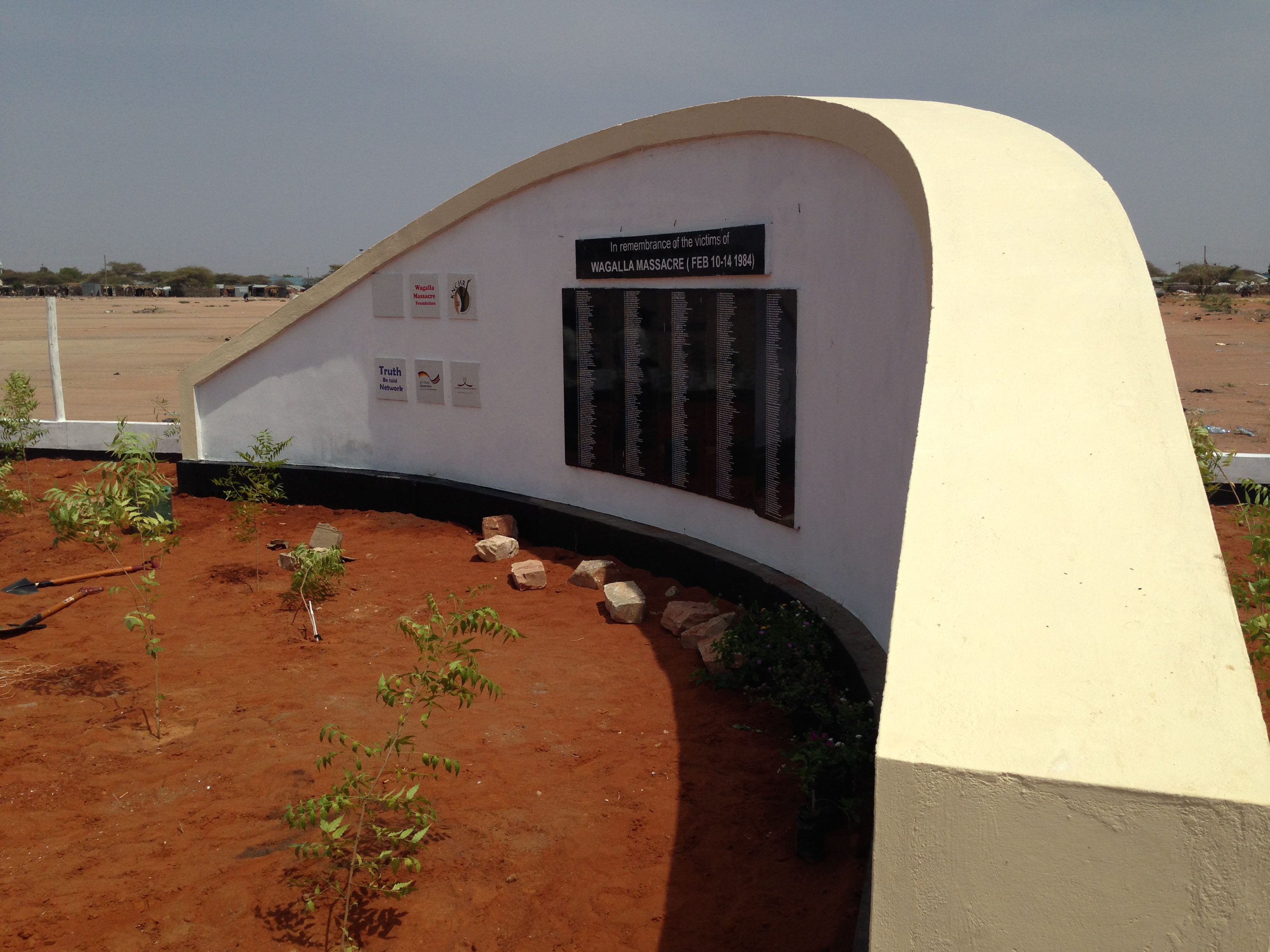
Wagalla Massacre Monument, from website of the Kenya National Commission on Human Rights.

Wagalla Massacre Monument, from website of the Kenya National Commission on Human Rights.

Hundreds, maybe thousands, of people died on the Wagalla airstrip in early February, 1984. The victims were ethnic Somalis living in Kenya’s North Eastern province. Their killers were members of the Kenyan army, ostensibly investigating reports of a planned rebellion by members of the Degodia clan.

Over the course of several days, troops burst into homes, raping women, destroying property, and seizing the men. The Degodia men, and anyone else unlucky enough to be caught up in the search, were taken to the airstrip. Once there, they were told take off their clothes and lie on the hot ground. Those who refused were shot on the spot. The rest were beaten and tortured, asked over and over if they owned a gun, and where it was. They were there for days, without food or water, baking in the hot sun.

Survivors say more than 5,000 people lost their lives at Wagalla—some from beatings, some viciously set on fire, many more shot in an escape attempt, and others succumbing to exhaustion in the heat. But for years, the Kenyan government denied it. The official story was 57 dead, all unfortunate casualties of a legitimate security operation.

The survivors of the massacre have spent decades demanding accountability. In 1992, President Moi promised that compensation would be paid to the families of the dead. It wasn’t.

When a national Truth, Justice, and Reconciliation Commission (TJRC) was created in the aftermath of Kenya’s 2007-2008 election violence, hearings were finally held into the Wagalla Massacre. But the TJRC’s credibility with victims was marred from its inception. The man appointed as chairman, Bethuel Kiplagat, was in attendance at the meeting where the massacre was allegedly authorized. Although he initially stepped aside due to the controversy, he was reinstated.

When the TJRC’s report came out, it confirmed that a mass slaughter had taken place, and that the death toll was far greater than previously acknowledged. It recommended an official apology and reparations for the Wagalla victims. In 2015, President Uhuru Kenyatta issued a blanket apology for “past wrongs” but reparations have yet to be paid.

The Wagalla Massacre is among the worst human rights abuses in Kenya’s post-independence history. Yet a number of officials implicated in ordering it remain in positions of power. The plight of the survivors, who’ve spent decades advocating on their behalf to no avail, underscores the difficulty of securing justice when it isn’t politically advantageous. Ethnic Somalis are a tiny minority in Kenya—some 6% of a national population of 45 million. And since independence-era efforts to join Kenya’s North Eastern Province to Somalia, they have been persistent targets of repression and discrimination by the government. Their demands therefore had little impact on successive Kenyan governments, who neither sought their votes nor valued them as citizens.

Posted in Kenya, Mass Atrocity Monday | 4 Comments

Protecting the Story-Line: Why Kenya Refuses To Surrender Witness Intimidation Suspects to the ICC

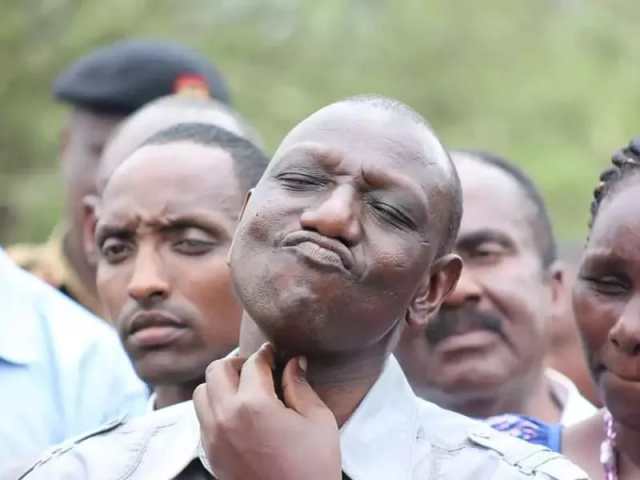
Kenyan Deputy President William Ruto (Photo: Tuko)

Kenyan Deputy President William Ruto (Photo: Tuko)

Just when you thought the drama was over

There have been reports of widespread relief among staff of the International Criminal Court (ICC) that their long-running and dramatic political run-in with Kenya was finally a thing of the past following the recent collapse of the last cases relating to the 2007/08 post-election violence. But the fight over three outstanding warrants of arrest — for three Kenyan citizens wanted by the Court on charges of obstructing justice and intimidating witnesses — suggests that the battle between Nairobi and The Hague isn’t over just yet.

The ICC’s Kenya cases, especially those against President Uhuru Kenyatta and Deputy President William Ruto, did little but harm the Court. A combination of severely flawed prosecutions by the ICC, indifference among political powers in the broader international community, as well as political pressure and interference from Kenya and some members of the African Union, proved a toxic and ultimately fatal mix of factors for the Kenya trials. To address its shoddy cases, some ICC investigators and prosecutors have pushed for more thorough and careful case-construction. For them, the Kenya disaster was a wake-up call. The wider apathy of the international community towards the ICC’s toughest cases, of course, hasn’t change and most days seems like a structural problem facing international criminal justice. But what of the issue of Kenya’s political interference and the allegations of witness intimidation?

Since 2013, the ICC has issued arrest warrants for Walter Barasa, Paul Gicheru, and Philip Kipkoech Bett, on the grounds that they perpetrated “offences against the administration of justice” by “corruptly influencing ICC witnesses.” Since then, they have remained in a sort of legal limbo as the government of Kenya fought the cases against its President and Deputy President whilst insisting that it was up to Kenyan courts to decide whether Barasa, Gicheru, and Bett could be transferred to the ICC. Following the collapse of the case against Ruto, however, President Kenyatta was unequivocal, declaring that no other Kenyan citizen would ever to be sent to the ICC:

I will not allow any other Kenyan to be tried in a foreign court. As a country, we have closed the ICC chapter…

We have closed that chapter, we will not go anywhere else, we will not allow anyone else to be taken anywhere else, we have our own courts here. I would not wish to see another Kenyan going through the same journey we went through. If we have an issue, the answer to it lies here. For those who might be looking for us, they need to know we are not there and we will not go back.

Kenya’s Attorney General Githu Muigai has since added that anyone charged by the ICC will be investigated and prosecuted in Kenya, by Kenyans, and that this process would be initiated “in a very few weeks.” But why is Kenya so concerned about the potential prosecution of Barasa, Gicheru and Bett at the ICC? Continue reading

Posted in International and Organized Crimes Division of Kenya, International Criminal Court (ICC), International Criminal Justice, Kenya, Kenya and the ICC | Tagged , , , , | 3 Comments

PRESS RELEASE: Prosecutor of the International Criminal Court Speaks on the Trial of Dominic Ongwen

This is the final post in JiC’s symposium on the trial of Dominic Ongwen and the prosecution of former child soldiers. Disclaimer: this is not a real press release. For a list of the posts written to date, please see here. Thanks for reading!

    A training centre for former child soldiers in northern Uganda (Photo: Article 25 http://www.article-25.org)

A training centre for former child soldiers in northern Uganda (Photo: Article 25 http://www.article-25.org)

DISCLAIMER: this is not a real press release.

Today, 21 April 2016, the Chief Prosecutor of the International Criminal Court (ICC) spoke to members of the media and issued a statement regarding the prosecution of Dominic Ongwen. Mr. Ongwen was a senior rebel commander of the Lord’s Resistance Army (LRA) and is currently facing seventy counts of war crimes and crimes against humanity. A warrant for his arrest was issued in 2005 and he was surrendered to the Court in January 2015.

“First, we must acknowledge that prosecuting anyone who has been a child soldier is a tragedy but also a necessary evil,” Chief Prosecutor Fatou Bensouda said. “No one should ever have to endure the hardship and violence that derives from being a child soldier. Yet, at the same time, it is not possible for my office, or any court for that matter, to simply ignore the atrocities committed by perpetrators who have previously been victims of the same or similar types of crimes.”

The Chief Prosecutor further stated that she understood that not all people in northern Uganda agreed with the prosecution of individuals who had previously been abducted as children. “We sought out to make a positive difference in northern Uganda,” said Bensouda. “My office fully recognizes that, ten years after five arrest warrants were issued for the top leadership of the LRA, having only one individual in custody, a former child soldier, has not come close to meeting the expectations of victims and survivors of LRA violence. I want to take this opportunity to reaffirm our position that we will continue to investigate any and all LRA crimes under the jurisdiction of the Court and also remind all parties, including the government of Uganda and its military, that further investigations and prosecutions are within the mandate of my office.”

Bensouda added that “for a number of reasons, many of which are outside of the control of the Court, the expectations of people in northern Uganda have not been met.” In order to avoid widening any expectation gap in the future, the Chief Prosecutor expressed her office’s intention to prosecute Ongwen both expeditiously and effectively. “Despite the fact that we charged Mr. Ongwen with seventy counts of war crimes and crimes against humanity, my office is committed to efficient proceedings. Barring any unforeseen or significant obstacles in the coming months, we will rest our case no later than three years from the beginning of the trial. Mr. Ongwen’s defence is aware of our intentions and have likewise committed to an efficient and fair trial. Let me be absolutely clear: the burden is on my office, on the judges, and on the defence — and not the victims and survivors of northern Uganda — to ensure that proceedings are efficient. We will work tirelessly to meet that expectation.”

Continue reading

Posted in Child Soldiers, Dominic Ongwen ICC, ICC Prosecutor, International Criminal Court (ICC), International Criminal Justice, northern Uganda, Reparations, Symposium, Uganda | 1 Comment

Shifting Narratives: Ongwen and Lubanga on the Effects of Child Soldiering

JiC is thrilled to welcome Mark A. Drumbl for this penultimate post in our symposium on the trial of Dominic Ongwen and the prosecution of former child soldiers. Mark is the Class of 1975 Alumni Professor of Law & Director, Transnational Law Institute, Washington & Lee School of Law. To read the other contributions to the symposium, see here.

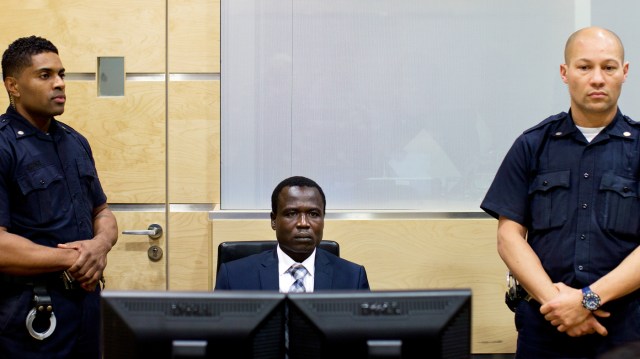
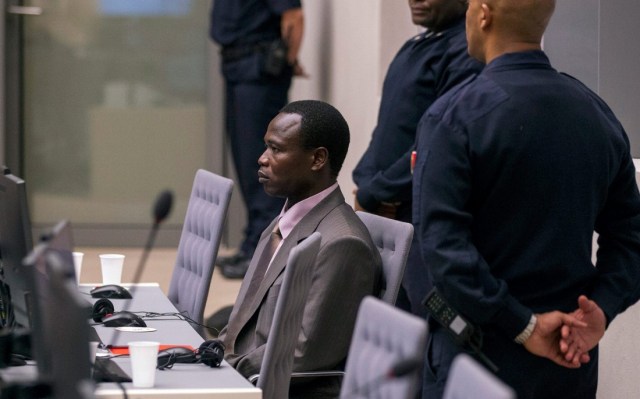
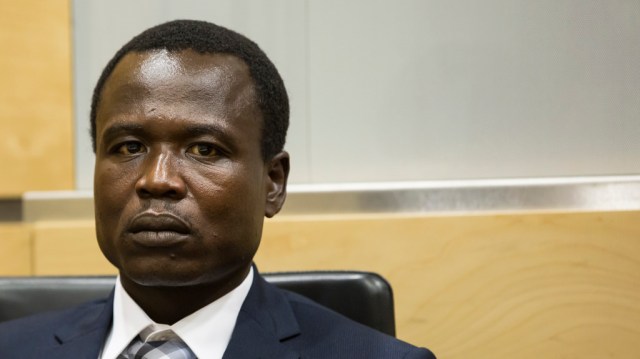
Dominic Ongwen during pre-trial proceedings at the International Criminal Court (Photo: ICC)

Dominic Ongwen during pre-trial proceedings at the International Criminal Court (Photo: ICC)

On March 23, 2016, ICC Pre-Trial Chamber (PTC) II issued its decision confirming charges against Dominic Ongwen. PTC II confirmed many charges, including for sexual and gender-based crimes. Ongwen will be tried for some crimes that he had himself endured. These include the war crime of cruel treatment, conscription and use as a child soldier, and the crime against humanity of enslavement.

Ongwen was abducted into the Lord’s Resistance Army (LRA) at the age of 9 while walking home from school. He was bullied, brutalized, and indoctrinated as a child soldier. He rose through the ranks. He ascended to the upper echelons of power, although these remained tightly controlled by LRA leader Joseph Kony.

Irrespective of how high he ascended, however, Ongwen’s point of entry remains fixed as a young, kidnapped, orphaned, and abused child. Ongwen’s defense team invoked this point of entry in its submissions. Defense counsel did so to make two specific legal points. First, that the ongoing and continuous nature of the crime of child soldiering means that Ongwen left the LRA – nearly thirty years later – still as a child soldier and, thereby, that he should be entitled to the evacuation of individual criminal responsibility that hortatorily inheres in the international legal regime that protects child soldiers. Second, the defense team submitted that coming of age in the LRA amounts to a kind of institutionalized duress that excludes criminal responsibility under Rome Statute article 31(1)(d) rather than just mitigating sentence. According to the defense, Ongwen “lived most of his life under duress (i.e. from the age of 9.5 years old)” and his “so-called rank was demonstrative of one thing: that he was surviving better than others while under duress”.

When making both arguments, the Ongwen defense team extensively (yet unsuccessfully) invoked the findings of Dr. Elisabeth Schauer, a court-appointed expert whose testimony on the dissociation and trauma arising out of the child soldiering experience had been dispositive to the Lubanga case. In Lubanga, child soldiers were the victims and Lubanga the adult perpetrator; in Ongwen, the accused is a former child soldier and many of his alleged victims were children at the time.

PTC II perfunctorily dismissed Ongwen’s first argument without providing any reasons. PTC II also dismissed the second argument, although not quite as perfunctorily. One judge, moreover, will append in due course a separate, concurring opinion.

Reasonable minds can disagree as to whether the defense arguments have merit. The point of my commentary is not to revisit these arguments. Grounds for excluding responsibility may, moreover, be reassessed at trial where the burden on the prosecutor is higher than at the confirmation of charges stage. Nor is the point of my commentary to suggest how (and where) a Trial Chamber might hypothetically assess these arguments.

Instead, my point is to emphasize that international criminal law should proceed in consistent and predictable ways. Here, PTC II slipped. Its understanding of the agency of actual and former child soldiers in Ongwen departs from the understanding previously deployed by the Lubanga Trial and Appeals Chambers, in particular in the sentencing judgments.

Lubanga cast the linkage between the past as a child soldier and the present as a former child soldier as linear and continuous. The child soldiering experience was constructed as ongoing and assured: it rendered the children as victims damaged for life, with their reality today as derivative of their previous suffering. Once a child soldier in fact, always a child soldier in mind, body, and soul. In Ongwen, however, the linkage between the accused’s past as a child soldier and his present as a former child soldier was seen as discontinuous and contingent. Continue reading

Posted in Child Soldiers, Defense Counsel, Dominic Ongwen ICC, International Criminal Court (ICC), International Criminal Justice, northern Uganda, Symposium, Uganda | 12 Comments

We Need to Talk About Ongwen: The Plight of Victim-Perpetrators at the ICC

Barrie Sander continues our symposium on the trial of Dominic Ongwen and the prosecution (or in this case, defence) of former child soldiers. Barrie is a Ph.D. Candidate at the Graduate Institute of International and Development Studies (IHEID). His research focuses on conceptions of justice and the construction of historical narratives in international criminal courts. Barrie is also a regular contributor to JiC. You can find his other posts here. This symposium was inspired by Barrie’s efforts to start a debate and dialogue on the issues and dilemmas raised by the Ongwen trial.

Dominic Ongwen shortly after he was transferred from the the African Union Regional Task Force to the Uganda People's Defence Forces.

Dominic Ongwen shortly after he was transferred from the the African Union Regional Task Force to the Uganda People’s Defence Forces.

Amidst the flurry of activity within the field of international criminal justice over the past few weeks, Dominic Ongwen – former child soldier and adult commander within the Lord’s Resistance Army (LRA) – became the first individual in the history of the International Criminal Court (ICC) to have charges confirmed against him of which he is also a victim.

The story of Dominic Ongwen has been well-documented within existing scholarship and media accounts of the conflict in northern Uganda. Abducted at the age of nine and trained to become a child soldier, Ongwen grew up to become a notorious commander within Joseph Kony’s LRA. After falling into the hands of Seleka rebels in the Central African Republic in January 2015, Ongwen was taken into US custody and promptly transferred to the ICC in The Hague.

From its inception, the idea of prosecuting Ongwen at the ICC has divided opinion both within Uganda and beyond. For some, since there is little difference between Ongwen and other former child soldiers who have been granted amnesties for their crimes, it seems unjust to single out Ongwen for prosecution. This view feeds into a broader critique of the ICC, which queries whether justice can ever be done within a judicial institution whose prosecutorial selectivity is consistently aligned with the dictates of State power. For others, Ongwen’s prosecution at the ICC is not only welcome but necessary. Adherents to this view caution that failing to prosecute Ongwen would serve as a licence for those in similar circumstances to carry out acts of violence with impunity.

One of the complexities of Ongwen’s case is that his victim-perpetrator status challenges the binary coding of international criminal law, which, as Mark Drumbl has argued, “derives its energy from, and in turn disseminates polarities of guilt/or innocence, capacity/or incapacity, adult/or child, and victim/or perpetrator”.

This dimension of the case rose to the fore during the Confirmation of Charges proceedings when Ongwen’s Defence attempted to rely on their client’s tragic background to argue that the case against him should be dismissed. In particular, the Defence raised two arguments, both of which were ultimately rejected by the PTC.

The Defence first argued that Ongwen should benefit from the legal protection afforded to child soldiers up to the moment of his leaving the LRA in January 2015, almost 30 years after his original abduction, and that such protection should include the exclusion of his individual criminal responsibility.

The Defence emphasised that the crime of conscripting child soldiers is a continuous crime and therefore did not come to an end when Ongwen turned 15 years of age. Forced to witness and perform unspeakable acts as a child, Ongwen was psychologically broken down and disconnected from the social construct of normal society in northern Uganda. Since Ongwen remained locked within this environment throughout his life, the Defence contended that the age of 18 years old, which serves as the marker for adulthood and criminal responsibility before the ICC, has little relevance for someone in his situation. In particular, it would be contrary to notions of justice to use international humanitarian law against Ongwen when that very same body of law had failed to protect him in the first place.

In response, the PTC gave short shrift to this argument, simply observing that it was entirely without legal basis and would therefore not be entertained further.

In its second argument, the Defence argued that Ongwen’s responsibility should be excluded on the ground that he acted under duress within the meaning of Article 31(1)(d) of the ICC Statute. Once again, the PTC rejected the Defence’s argument, this time on multiple grounds.

First, the PTC argued that the threat alleged by the Defence – the possibility that Ongwen would later be subjected to disciplinary measures – had not been “imminent”. In this regard, the PTC emphasised that “duress is not regulated in the Statute in a way that would provide blanket immunity to members of criminal organisations which have brutal systems of ensuring discipline as soon as they can establish that their membership was not voluntary”.

Second, the PTC argued that Ongwen’s stay within the LRA – which the Defence had claimed to be the source of the threat – could not be said to have been “beyond his control”. For this purpose, the PTC pointed to evidence that escapes from the LRA were not rare and that Ongwen could have chosen not to rise within the hierarchy and expose himself to increasing levels of responsibility within the organisation.

Finally, the PTC argued that the Defence had failed to demonstrate that Ongwen had acted “necessarily and reasonably” to avoid the alleged threat and had “not intended to cause a greater harm than the one sought to be avoided”.  By way of example, the PTC observed that even if Ongwen could not have avoided accepting forced wives, “he could have avoided raping them, or, at the very least, he could have reduced the brutality of the sexual abuse”.

As this analysis suggests, the Defence and PTC each adopted contrasting narrative perspectives of Ongwen’s behaviour. Whereas the Defence viewed Ongwen’s story as a narrative about inevitability, involving an individual caught up in events beyond his control, the PTC depicted Ongwen’s story as a narrative about choice, involving a moral agent who had genuine opportunities to act otherwise than he did notwithstanding his devastating upbringing. Continue reading

Posted in Child Soldiers, Defense Counsel, Dominic Ongwen ICC, International Criminal Court (ICC), International Criminal Justice, northern Uganda, Uganda | Tagged | 4 Comments

There is Nothing Extraordinary about the Prosecution of Dominic Ongwen

JiC’s symposium on the trial of Dominic Ongwen and the prosecution of child soldiers continues with this contribution by Alex Whiting. Alex is a Professor of Practice at Harvard Law School where he focuses on international and domestic prosecution issues. He previously worked as a prosecutor at the International Criminal Court and International Criminal Tribunal for the Former Yugoslavia. For a list of the other contributions to the symposium, see here.

Dominic Ongwen during pre-trial proceedings at the International Criminal Court (Photo: ICC)

Dominic Ongwen during pre-trial proceedings at the International Criminal Court (Photo: ICC)

The title of this post is admittedly a little misleading. In one way, of course, the prosecution of anyone by an international court for war crimes and crimes against humanity is an extraordinary, not to mention challenging, event. But in all other respects, the case against Ongwen is straightforward. In particular, the fact that Ongwen was himself abducted into the Lord’s Resistance Army at the age of 12 (the defense alleges it was at age 9.5), and made into a child soldier, before allegedly committing crimes himself against others between the ages of 27 and 30, changes nothing about whether he is legally responsible for those crimes. That Ongwen was a victim before becoming a perpetrator may be ironic and sad. It may be an interesting story. And it may be paradoxical and/or depressing. But it is not a legal defense to the crimes charged against him. At most, it may be a consideration at sentencing if Ongwen is convicted, but even here I have my doubts.

Ongwen is charged with 70 counts of war crimes and crimes against humanity, including murder, attempted murder, torture, rape, forced marriage, sexual slavery, forced pregnancy, persecution, cruel treatment, other inhumane acts, outrages upon personal dignity, enslavement, attacks against the civilian population as such, conscription of children under the age of 15, use of children under the age of 15 in hostilities, pillaging and destruction of property.

Some of these crimes are charged as war crimes, some as crimes against humanity, and some as both. Ongwen is accused of committing certain crimes himself as a direct perpetrator – specifically some of the charges of rape, torture, forced marriage, sexual slavery, enslavement and forced pregnancy – while it is alleged he committed other crimes with or through others.

At the confirmation hearing, Ongwen’s defence argued that, because he was a victim of crimes as an abducted and coerced child soldier, he cannot be convicted of the grave crimes he is alleged to have committed almost a decade after he turned 18, the minimum age of responsibility under the Rome Statute (Article 26). The Pre-Trial Chamber correctly brushed aside these arguments.

First, Ongwen argued that because he did not leave the LRA until 2015, at age 30, he must be considered a “child soldier” until that time, and therefore cannot be prosecuted. In this regard, the defense argued that child soldiers are psychologically broken down, desensitized and dehumanized. That is certainly true as a general matter, and may even be true in Ongwen’s case, but it is simply not a defense to committing crimes oneself.

To the extent that there exist protections for child soldiers in international law and the Rome Statute, they are tied to age and disappear when the individual legally becomes an adult. Further, the Rome Statute does not recognize as a defense that the accused developed a criminal state of mind because of his or her past experiences. Nor should it. It is not uncommon that defendants at international criminal tribunals, or in domestic criminal courts, have themselves been the victims of crime, or have suffered traumatizing experiences in their past.

Ongwen’s story is simply a variation on this common reality because he was apparently the victim of one of the same crimes he is alleged to have committed: the conscription of child soldiers. But even this variation is not that unusual: it is well known that many who commit abuse or violence on others have themselves been the victim of abuse or violence. Unless one’s past experiences rise to the level of duress (addressed in the next paragraph) or result in a mental disease or defect that destroys the accused’s “capacity to appreciate the unlawfulness or nature of his or her conduct,” something Ongwen has not alleged, then the law imposes an undiluted obligation to refrain from committing crimes against others. There is simply no license for the victims of crime to victimize others. Continue reading

Posted in Child Soldiers, Dominic Ongwen ICC, International Criminal Court (ICC), International Criminal Justice, Lord's Resistance Army (LRA), northern Uganda, Symposium, Uganda | Tagged | 5 Comments

What Counts against Ongwen – Effectiveness at the Price of Efficiency?

Danya Chaikel joins JiC for this fourth installment in our ongoing symposium on the trial of Dominic Ongwen and the prosecution of child soldiers. Danya is a lawyer and independent legal consultant specialising in international criminal law and human rights. She has worked for organisations such as the International Criminal Court and the International Bar Association. She has also written about the Ongwen case in relation to the Rome Statute’s child Soldier crimes for OSJI, in ‘The ICC’s Child Soldier Provisions: Time to Close the Three-Year Gap‘. For a list of contributions to the symposium, see here.

Dominic Ongwen during proceedings at the International Criminal Court (Photo: ICC)

Dominic Ongwen during proceedings at the International Criminal Court (Photo: ICC)

The trial of Dominic Ongwen, the child soldier turned commander in the Lord’s Resistance Army (LRA), could end up being the longest ever adjudicated before the ICC and threatens to jeopardise Ongwen’s right to be tried without undue delay. An unprecedented 70 counts of war crimes and crimes against humanity and seven modes of liability must be tested at trial. But the vast bundle of charges represents a dramatic turnaround in the OTP’s investigative approach and could make it one of the most effective trials to date for victims. Current efforts by ICC judges to make trials more efficient couldn’t come at a better time.

About those 70 Counts

On 23 March 2016, the ICC Pre-Trial Chamber confirmed 70 counts of war crimes and crimes against humanity against Dominic Ongwen. At first look the Chamber’s robust approval of so many charges seems unusually high and impractical, since it could lead to an even longer protracted trial than usual. It will take the Court years to plough through the enormous volume of evidence (documentary, testimonial, forensic, digital, and so on) which the Prosecution and Defence will need to submit in support of their cases.

The multifaceted charges allegedly took place in Northern Uganda between 2002 and 2005 and can be broken down into six main parts: the first four cover separate gruesome armed attacks of the Pajule, Odek, Lukodi, and Abok internally displaced person camps (counts 1-49); the fifth part describes heinous sexual and gender-based violence (SGBV) crimes directly committed by Ongwen. This includes forced marriage and his rape of girls as young as 10 years old (counts 50-60 which are based on the account of seven women victim witnesses) as well as also SGBV crimes indirectly committed by Ongwen (counts 61-68); and the sixth section includes child soldier crimes (counts 69-70).

To put this in some perspective, Ongwen’s number of counts is strikingly higher than all other ICC cases that have reached the trial stage. In the other nine ICC cases with confirmed charges (excludes Bemba et al), the average number of counts has been only six. The ICC’s first trial, against Thomas Lubanga, involved a mere six confirmed counts (all child soldier crimes) and the trial phase lasted three years. In the Court’s most recent trial to conclude, Jean-Pierre Bemba Gombo faced just five counts (crimes of murder, rape and pillaging) and his trial phase lasted over five years. As yet another comparison, at the ICTY Radovan Karadzic faced 11 counts and his trial phase lasted five and a half years.

It’s easy to assume that Ongwen’s trial will last years on end since the charges cover such an enormous range of crimes including: civilian attacks; murder; attempted murder; rape; sexual slavery; forced pregnancy; forced marriage as an inhumane act; torture; cruel treatment; outrages upon personal dignity; destruction of property; pillaging; the conscription and use of child soldiers; enslavement; persecution; and other inhumane acts. Seven potential alternate modes of liability are also thrown into Ongwen’s charging mix, which is again the most that any ICC accused has every faced: direct perpetration; indirect perpetration; indirect co-perpetration; ordering; aiding or abetting; in any other way contributing to the commission or attempted commission of the crimes; and command responsibility. The judges, parties and participants have an incredibly daunting task ahead of them.

The New OTP Investigative Strategy at Work

Why did the Prosecution decide to bring so many charges against Ongwen in the first place, and why were they largely confirmed? Under the leadership of the previous Prosecutor, Luis Moreno Ocampo, the arrest warrant in 2005 only listed seven counts. The 900% increase in charges requested by Prosecutor Fatou Bensouda 10 years later and within the same year that Ongwen was surrendered to the Court is thus quite extraordinary. In fact, the increase coincides with the OTP’s new investigative strategy, one that has brought on far more robust investigations before the charging phase. The OTP explains in its 2016-2018 Strategic Plan that it had: shifted its policy away from “focused” investigations to “open-ended, in-depth investigations”; asked for and received extra resources for more effective evidence gathering; and aimed to be trial-ready as early as possible and no later than by the confirmation of charges hearing.

This new strategy tackled many serious past deficiencies head on, including: only 63% of the Prosecution’s requested charges being confirmed in the Court’s first 10 years of operation which, according to the OTP, increased to 86% during the period of 2012-2015 due to their revised strategy; the Trial Chamber admonishing  the Prosecution for shoddy investigations in the Court’s first three verdicts (Lubanga, Ngudjolo and Katanga) among other cases; and a narrow charging strategy which didn’t reflect the full range of potential criminality against defendants, such as in the Lubanga case when the Prosecution chose not to bring SGBV charges even though evidence of these crimes peppered the trial proceedings as Prosecution witnesses offered their testimonies. Continue reading

Posted in Child Soldiers, Dominic Ongwen ICC, International Criminal Court (ICC), International Criminal Justice, northern Uganda, Symposium, Uganda | Tagged | 2 Comments

The Ongwen Trial and the Struggle for Justice in Northern Uganda

Rosebell Kagumire joins JiC for the second installation in our ongoing symposium on Dominic Ongwen and the prosecution of child soldiers. Rosebell is a Ugandan journalist, communications specialist, public speaker and award-winning blogger. She has over 10 years experience working at the intersection between media and rights in crisis, women’s rights, peace and security. For previous posts in the symposium, click here.

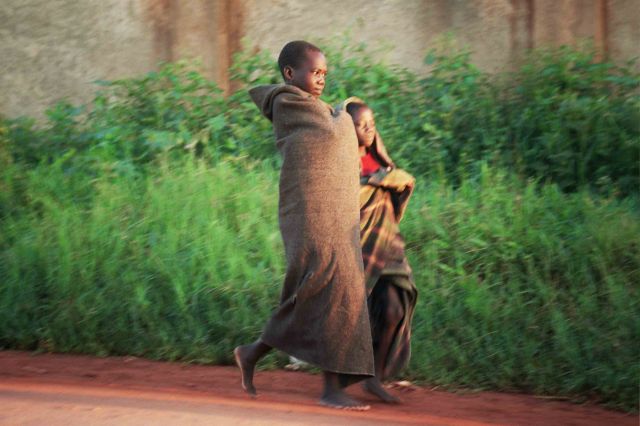
Children in northern Uganda in 2006 (Photo: Matthew Smeal / Eureka Street)

Children in northern Uganda in 2006 (Photo: Matthew Smeal / Eureka Street)

My first trip to northern Uganda was in 2005. I was working at a newspaper in Kampala and went on an assignment. The air was still and tense, our hosts warned us not to stay late at the bar in Gulu town, the biggest town in the province of Acholiland. I had many interviews, comprising of countless horror stories from children as young as five on what they had gone through during the war. They were still ‘night commuters’ – children would leave their homes in the rural areas to spend a night in the relative safety of Gulu town where the army could protect them from being abducted. I was one of the Ugandans privileged enough not to have any direct experience with war. My parents weren’t. Post-independence Uganda saw many turbulences and the struggle for power continued. In the vacuum and absence of national consolidation, resistance and rebel movements mushroomed.

The Lord’s Resistance Army (LRA) were one of the last rebel movements to emerge and put up the longest rebellion, well known for their horrendous tactics and the terrible crimes they committed against the populations of Northern and North Eastern Uganda. The children I spoke with on that 2005 trip lived in a totally different world than me, even though we were from the same country. Besides the LRA’s violence, they also witnessed other children, as well as their siblings, parents and relatives either mutilated or die of preventable disease in internally displaced peoples camps set up by the Government of Uganda to ‘protect’ them. You didn’t have to know international criminal law to know these were crimes against humanity.

One of the teenage boys I interviewed was Simon. Simon had been recently released after a few months at a rehabilitation centre. But it wasn’t really rehabilitation, as the sheer volume of children either rescued or escaped from the LRA was too high for the available centres to provide adequate psychosocial support.

Simon had passed through one of those centres and so we sat down to hear his story. As with the heinous acts many children recounted to me, it was hard not to feel pressure rise in your chest listening to these stories. Simon was forced to kill his parents with a machete before he was abducted. The rebels threatened to kill the whole family if he wouldn’t do it. Forcing Simon to kill his parents began the process of mutating him into a child soldier. Simon spent many years with the LRA, during which he knew he couldn’t return. How could he come back to a community that knew he had killed his own parents? And what was home? His siblings, his relatives, could he ever be forgiven? These were questions that Simon couldn’t move past.

Like many child soldiers, Simon would go on to kill many more people during his time in the LRA. Finally, after five years in the bush at the age of 20 he was returned to his surviving relatives in the camp after a rescue by the Ugandan army in 2005. But the family didn’t want anything to do with him and, in the absence of proper government run shelters and psychosocial services, Simon still battled trauma and nightmares when I visited him again in 2008.

Simon’s life comes to mind when considering the proceedings against Dominic Ongwen. Ongwen was abducted by the LRA as a child and rose through the ranks of the rebel group. When he was surrendered to the ICC in early 2015, my thought was that any of the children I had interviewed could have become an Ongwen. If they hadn’t been rescued, some could have gone on with their fear of return replaced with the power that the gun and rebel hierarchy bring.

We are told that Ongwen’s trial is about justice. But what does that mean for the local communities who have to heal? This includes those families whose children were abducted just like Ongwen and families whose children were abducted by Ongwen. The calls for forgiveness from some victims are not a surprise. Many know their own children are still struggling to overcome the trauma and cope with the crimes they were forced to carry out. Continue reading

Posted in Child Soldiers, Dominic Ongwen ICC, International Criminal Court (ICC), International Criminal Justice, northern Uganda, Uganda | Tagged | 31 Comments

Rupturing Official Histories in the Trial of Dominic Ongwen

Continuing our symposium on the trial of Dominic Ongwen and the prosecution of child soldiers, Adam Branch joins JiC for this piece on how the Ongwen trial fits within the dominant narratives of the war. Adam is a Lecturer in the Department of Politics and International Studies at the University of Cambridge. He is author of Displacing Human Rights: War and Intervention in Northern Uganda (Oxford, 2011) and Africa Uprising: Popular Protest and Political Change (Zed, 2015; co-authored with Zachariah Mampilly). From 2011-2014, he was Senior Research Fellow at the Makerere Institute of Social Research in Kampala, Uganda.

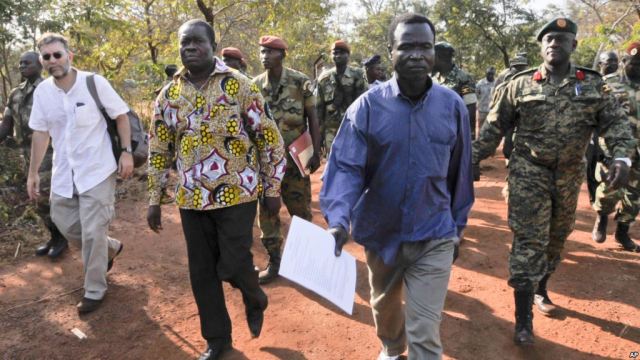
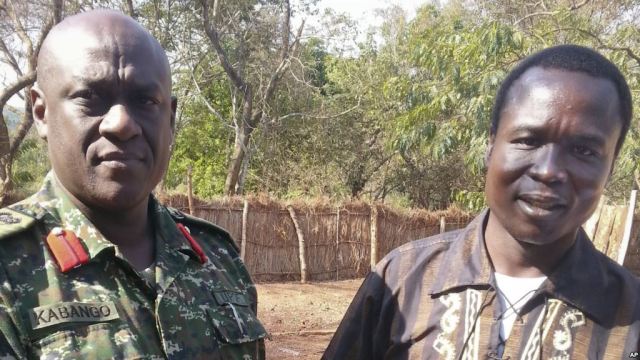
Col Michael Kabango of the UPDF stands with Dominic Ongwen shortly after coming into Ugandan custody (Photo: AP)

Col Michael Kabango of the UPDF stands with Dominic Ongwen shortly after coming into Ugandan custody (Photo: AP)

Every international criminal trial is a contest between competing narratives constructed by the prosecution and the defense, between contrasting histories and the moral and political judgments made of the actors in those histories.

The Ongwen trial, of course, has received notoriety because of an inescapable tension that has produced precisely such contrasting narratives: Ongwen’s status as a so-called “victim-perpetrator.” The defense, in an effort to absolve Ongwen of the very possibility of criminal responsibility, has focused on the first part of the dichotomy, while the prosecution, fearful of having the ground swept out from under the trial of anyone who could be cast, even in part, as a victim, has emphasized the second.

Here, I turn to another pair of contrasting narratives espoused by the prosecution and defense: their divergent portrayals of the violence used during the war. These narratives can illuminate unexpected possibilities for justice arising from the trial, I believe, irrespective of what the final decision is concerning Ongwen’s guilt or innocence.

When the ICC first got involved in northern Uganda in the mid-2000s, there was already a firmly established discourse on the conflict. According to this dominant narrative, the LRA was, in a word, ‘‘bizarre,’’ and LRA violence defied understanding. LRA motivations were summed up in the endlessly iterated declaration that the rebels had “no clear political agenda but want the country governed in accordance with the Ten Commandments.” The Ugandan government, for its part, was portrayed as waging a desperate struggle against the LRA in a well-intentioned, though short-handed, effort to protect civilians. And so the government’s violent counterinsurgency was cast unambiguously as humanitarian and rational, the LRA’s violence as inhuman and beyond comprehension.

This narrative of an evil LRA and a good Ugandan government was instrumental to the massive regime of Western intervention into the conflict. It also suited the Ugandan government fine: being a favorite of foreign donors and an enthusiastic participant in the US War on Terror, Uganda used the narrative of a terrorist LRA without a political agenda as an excuse for refusing peace talks, for securing Western support, and for pursuing an endless “military solution” without regard for the civilian consequences. The narrative even allowed the government to forcibly displace the entire civilian population of Acholiland – over a million people – into horrific internment camps, which led to a massive humanitarian crisis. Uganda’s Western donors, instead of denouncing these acts as war crimes, were complicit with them as they managed the camps on behalf of the government.

When the ICC intervened over ten years ago, it made its move on the back of this narrative. The Ugandan government effectively became a partner in the investigation against the LRA instead of being itself a target of investigation for possible crimes. Meanwhile, the LRA was denounced as a “criminal organization” with no political agenda by then Chief Prosecutor Luis Moreno-Ocampo.

At Ongwen’s confirmation of charges hearing in January, however, the Prosecution’s story had changed. The Prosecution had reversed its portrayal of the LRA and now insisted categorically that the LRA always had a clear political agenda, a firm organization and hierarchy, and a strategic rationality to its violence. In the words of prosecutor Benjamin Gumpert, the LRA “aimed to overthrow the government of Yoweri Museveni, the President of Uganda, then as now.” No mention was made, as it had been a decade earlier, of the Ten Commandments or Kony’s spirits. Instead, because the prosecution is seeking to convict Ongwen under the doctrine of command responsibility, because war crimes require a real war and not irrational violence, and because crimes against humanity need to be “part of a widespread or systematic attack,” the prosecution has had to turn the LRA into a regular rebel group with a regular political agenda. Continue reading

Posted in Child Soldiers, Dominic Ongwen ICC, International Criminal Court (ICC), International Criminal Justice, northern Uganda, Symposium, Uganda | Tagged | 6 Comments