A Comment In Defence of Luis Moreno-Ocampo

Luis Moreno-Ocampo (Photo: Jerry Lampen / Reuters)

Luis Moreno-Ocampo (Photo: Jerry Lampen / Reuters)

One of the most rewarding aspects of writing in the public domain is the feedback and commentary it generates — even, perhaps especially, when it’s critical. In response to my earlier post on former chief Prosecutor Luis Moreno-Ocampo’s record at the International Criminal Court (ICC), a few commentators have replied that there is far more that needs to be included for any accurate judgement to be made of the first decade of the Court’s existence than Moreno-Ocampo’s role alone.

Errol Mendes, a professor of law at the University of Ottawa, for example, commented that “while I agree with much of what you say, the failures of the ICC [are] also due to lack of co-op[eration] by states, UN etc.” I completely agree and should have clarified that the original post was not intended to produce an authoritative account of all of the reasons that explain the troubles the ICC faced in its first decade, but rather to assess one part of that record: the role and responsibility of the chief Prosecutor. There are no doubt structural constraints and limitations that the ICC confronts — and JiC posts raise them regularly, certainly far more often than commentary on Moreno-Ocampo — but the ICC is the type of institution that is deeply affected by the personalities at its helm. Moreno-Ocampo’s tenure is a case in point.

The initial blog post also generated an important and insightful comment from Wanda Boker, who worked as Moreno-Ocampo’s outreach advisor at the ICC from 2003-2004, in defence of Moreno-Ocampo’s tenure. Like Mendes, Boker is absolutely correct in her argument that any authoritative account of the failings (and, I would add, successes) of the ICC must look beyond attempts to discredit Moreno-Ocampo. Her comment deals with the alleged failures of ICC investigators and other staff to understand the situations they were working as well as the wider context in which the Court functions. Boker’s response is important and should be highlighted. So here it is, in full and without edit:

I worked for Prosecutor Moreno-Ocampo as his outreach advisor from 2003-2004 and later founded Interactive Radio for Justice, an outreach project which operated where the OTP investigated between 2005-2011. I agree completely with Paul Seils when he says “I’m not at all sure that international courts really are set up to understand the realities of the conditions they’re investigating,” but you are mistaken when you put the blame for that squarely on the shoulders of Moreno-Ocampo. What I saw consistently over the years I worked in and with the OTP is that investigators, prosecutors, colleagues in the registrar…tried do to their assigned work as they would have in their home country environment, without understanding just how much they needed to change in order to be effective working at the ICC, particularly in regions where the Court investigates. I can’t speak for Kenya because I didn’t work there, but in DRC (Ituri and Kivus) and RCA and Uganda, ICC teams would try to work while maintaining complete isolation from the local communities. The reason why cases were weak was because investigators relied too heavily on local informants because they didn’t go into neighborhoods, IDP camps, demobilization camps etc. themselves to understand where they were and who they were dealing with. If you don’t work in the community, don’t socialize and live there and build trusting relationships there, but only pay someone to bring you people to speak with from ethnic group Z…..how in the world do you know if you’re really talking with people from ethnic group Z, and not from group Y? That’s not Moreno-Ocampo’s fault. It took five years of him insisting, to finally be allowed (because of security concerns)to visit Ituri and speak directly with an unrestricted (meaning anyone interested in coming to the meeting could come) public meeting which we organized and broadcast over community radio stations. The chief defense lawyer for the Lubanga case was also invited to the meeting and she fielded questions as well, it was clear that she knew the terrain, because she could do her job with minimal restrictions, much better than the entire OTP contingent combined. I knew when ICC teams were in town, from any branch of the Court (save for the defense teams), because they were only allowed to eat in two places in town, only allowed to drive on a couple of main roads and spent their days in an air conditioned office within the guarded MONUC (later MONUSCO) compound. Their outreach teams would visit our radio partners to ask if they could speak with our focus groups because they didn’t have the local contacts to develop their own. I write this because it seems too easy to critique the ICC by targeting a personality who made people uncomfortable – Moreno Ocampo was not the reliable conventional prosecutor true, but it’s incorrect to blame all of the weaknesses of the ICC on him because he didn’t play by the same rules that a Chief Prosecutor would play in Canada, for example. He couldn’t play by the same rules at the ICC and he was the first in his position, he was exploring ways to approach his challenge to end impunity globally for the crimes under the Courts’ jurisdiction with no guidelines that seemed sufficient. His ideas about networks and creating cultures of deterrence were well worth trying, and the failures weren’t necessarily failures because they were bad ideas, there were a lot of structural and personality driven obstruction which had nothing to do with Moreno-Ocampo, that all but guaranteed failure in many situations.. It didn’t help matters at all to have lawyers and investigators saying “but I wasn’t expected to do that in the UK (Belgium, Canada, etc) and I don’t want to try it here” or the Registrar or the UN saying “you can not investigate without an entourage of vehicles, without notifying all UN , local military and local police beforehand”…..My point is if you’re going to write a frank report on the failings of the Court you really do need to look beyond your thinly veiled eagerness to discredit Moreno-Ocampo.

Posted in International Criminal Court (ICC), International Criminal Justice, Luis Moreno-Ocampo | 4 Comments

A Brutally Honest Confrontation with the ICC’s Past: Thoughts on ‘The Prosecutor and the President’

(Photo: Jerry Lampen / Reuters)

(Photo: Jerry Lampen / Reuters)

In the world of international justice, it’s often said that states and societies must confront the past in order to move forward. But the same is true of the International Criminal Court (ICC): the institution needs to learn from its (very) shaky first decade. During that time, the ICC was put on the map, became an entrenched feature of global politics, and altered the way we think about the appropriate responses to mass atrocities and collective political violence. None of those achievements should be underestimated. But a string of controversies and unnecessary failures always seemed to follow the ICC. Trials narrowly avoided being thrown out by judges. Staff were wrongfully dismissed. Cases collapsed under weak evidence. The Court demonstrated a bias towards both major Western powers as well as despots.

Many observers and insiders believe that one person is chiefly responsible for these failures and near-misses: the Court’s first Prosecutor, Luis Moreno-Ocampo. This is also the message of a hard-hitting feature New York Times special report by James Verini into the ICC’s foray into Kenya, an intervention spearheaded by Moreno-Ocampo but whose goal of accountability for the 2007/08 post-election violence was ultimately shattered by a fatal combination of institutional ineptitude and political interference in the cases. These failures are lessons that the ICC has, and must continue, to learn from. Every indication suggests that it is doing so.

I highly encourage all readers to check out Verini’s account as well as Kate Cronin-Furman’s brilliant, funny, and insightful ‘live-blogging’ of the article. Verini’s piece should be read in full, but I thought it was worth posting a few highlights and some thoughts (in bold).

Alex Whiting, a onetime federal prosecutor in Boston who became Moreno-Ocampo’s prosecutions coordinator, told me the Kenyatta case “was like trying to prosecute an organized-crime case without the tools the Department of Justice uses to prosecute organized crime” — though, for this reason, Moreno-Ocampo’s temperament was an asset. “You have to have a big ego, because you don’t have much else.”

But Moreno-Ocampo himself may have been the greatest obstacle to the court’s success, members of his staff told me. They didn’t question his devotion — he often worked seven days a week, closely managing every case — but increasingly they questioned his judgment, which seemed always caught between that ego and his idealism. He inspired fierce admiration and dislike, sometimes in the same people.

There are different types of prosecutors and Moreno-Ocampo appears to have been a charasmatic but controlling leader who put his views and himself at the forefront of the Court’s work. In UN terms, he was more of a general than a secretary. While doing research in northern Uganda, I recall being told that many of the victims and survivors of violence by the Lord’s Resistance Army (LRA), initially believed that Moreno-Ocampo was called “ICC”. This blurb also reminded me of comments by Jean Ping when he was African Union Commission chairperson: “we are not against the International Criminal Court. What we are against is Ocampo’s justice — the justice of a man.” Many who initially dismissed Ping’s comments as cynical then, certainly wouldn’t do so now.

And while it was true that the court’s small budget limited the size of his investigations, he was, some say, already more interested in prominence than evidence. A former court attorney told me: “He would see the leader of a state and say: ‘There must be evidence out there. Go get it for me.’ ”

The investigation in Congo began calamitously. Bernard Lavigne, formerly a French domestic prosecutor, became Moreno-Ocampo’s first lead investigator in Congo. “We accumulated a lot of information about one militia,” Lavigne told me. “Then suddenly, because of a political decision by Luis or his political committee, we were obliged to change our planning and our investigative work and concentrate on a new target. It was completely crazy. … We put in danger a lot of people.” The case Moreno-Ocampo brought against Lubanga, for recruiting child soldiers, “barely scratched the surface of the conflict,” Paul Seils, the first director of Moreno-Ocampo’s preliminary-examination unit, says. Moreno-Ocam­po removed the lead attorney weeks before the trial commenced and clashed with the presiding justice, who accused him of trying to undermine the judiciary and pervert the Rome Statute.

It is exceedingly rare to find such forthright commentary about the ICC from former staff in the public. But this chimes with what I have heard for years now. Despite the best efforts of investigators (many of whom eventually resigned), the ICC built poor cases, cases that were so weak that they were virtually bound to fail unless someone delivered the prosecution a Hail Mary. Sometimes it worked (Lubanga, Bemba), and sometimes it didn’t (every Kenya case relating to the post-election violence). In many ways, it seems that under Moreno-Ocampo, the ICC forgot that it was actually a court (purposely perhaps — see final comments below) and, instead, saw itself as a kind of justice-y public relations pulpit. Reading these quotes always makes me wonder what would happen if Sudanese President Omar al-Bashir actually turned up at The Hague to face genocide charges. How strong (or weak) is that case?

It’s really important to highlight and stress, as the piece does implicitly, that the views and well-formed opinions of ICC investigators were overridden by Moreno-Ocampo. In a similar vein, you would have to think that when the former Chief Prosecutor met with Ugandan President Yoweri Moseveni to announce a referral of the LRA to the ICC, he must have been told it would show a bias towards Uganda. He did it anyways. The crucial lesson here is that the poor investigations and poor decisions made in the Office of the Prosecutor were not growing pains or mistakes. They were calculated decisions by Moreno-Ocampo himself, often against the advice of those working closely with him.

The good news is that, under new Prosecutor Fatou Bensouda, the ICC seems to have learned its lessons and now ensures that cases are as trial ready as possible when arrest warrants are initially requested. We are starting to see the fruits of this much more patient and much less cavalier strategy. Continue reading

Posted in International Criminal Court (ICC), International Criminal Justice, Kenya, Kenya and the ICC, Luis Moreno-Ocampo | 8 Comments

John Bolton says Hillary Clinton Would Join the ICC. Is He Right?

Hillary Clinton (Photo: Jim Young / Reuters)

Hillary Clinton (Photo: Jim Young / Reuters)

In a way, it’s kind of sad. You would think, after all of these years, that former US diplomat John Bolton would get over his almost paranoid fear of the International Criminal Court (ICC). Bolton, who served under George W. Bush and was an architect of that administration’s vitriolic, anti-ICC policies, has always had an overly sized chip on his shoulder when it comes to the Court. He proudly speaks of the day he deposited a notice at the United Nations declaring that Washington was ‘unsigning’ the Rome Statute of the International Criminal Court. For Bolton, the ICC is some sort of undemocratic boogie-man set out to wreak havoc upon US interests and stampede on the sovereign integrity of states. Irony and evidence apparently don’t have much of an effect on Bolton. If they did, he would recognize that his claims present the ICC as having much more power and effect than the institution actually has.

When given the opportunity, Bolton has continued his rambunctious tirades against the ICC. At a recent conference in Tel Aviv, Israel, Bolton derided the ICC and warned that, if Hillary Clinton managed to become the next President of the United States, she would do the unthinkable: (re)sign the Rome Statute and join the ICC. This seems extremely unlikely. But before delving into why, here’s a report of Bolton’s comments:

Turning to the ICC, Bolton called on democratic nations not to engage with the court, branding it unaccountable, illegitimate, impotent and biased.

“We must not cooperate with the ICC – that gives them legitimacy,” he said. “The ICC is an illusion. A bunch of people in black robes will never be able to stop the brutal dictators who carry out mass murders.”

“No one elected them, there are no checks and balances. It is in practice an ad hoc tribunal to attack African leaders,” he continued, adding that his “happiest moment” in service of the US government was the day he removed America’s signature from the Rome Statute.

“Fortunately, Obama didn’t resign until now, as he knows he won’t have a majority in the Senate in favor,” Bolton stated.

But “if Clinton is elected, she will rejoin Americans to the ICC and resign the Rome Statute,” he warned.

There’s a lot to digest here. But let’s put aside a few things, so we can get to the meat of the matter: whether Clinton would have the US join the ICC. Let’s put aside that Bolton’s comments were to a conference organized by a controversial NGO that has sued the organizers of the Gaza Flotilla and which has pushed the ICC investigate and prosecute the Palestinian Authority. Let’s put aside the fact that the US under Obama has a ‘policy’ of “positive engagement” with the ICC. Let’s put aside that Bolton was America’s UN Ambassador at a time when the US was engaged in a systematic policy of torturing enemy combatants (crimes which are being examined by the ICC). Let’s put aside that ICC judges are in fact elected — by member-states of the Court. And let’s put aside the reality that the ICC does have checks and balances, namely via the principle of complementarity which ensures that the ICC can only prosecute international crimes if and when the relevant state refuses to do so or won’t do so genuinely. The ICC isn’t perfect, but it’s not the rampaging monster Bolton has concocted.

But would Clinton ever push for the US to join the ICC? For two reasons, it seems extremely unlikely: first, her record on the ICC is mixed, at best; and second, there’s little-to-no appetite in the US to do so. Continue reading

Posted in International Criminal Court (ICC), International Criminal Justice, Torture, United States | Tagged , | 4 Comments

Hold Your Horses, ICC Complementarity

Families of victims of the 2011 violence gather outside of the courtroom where Simone Gbagbo was on trial.

Families of victims of the 2011 violence gather outside of the courtroom in Abidjan where Simone Gbagbo was on trial last year (Photo: Daily Mail)

A former first lady went on trial for disturbing the peace and undermining state security in Abidjan. She was convicted and given a twenty year sentence. The International Criminal Court (ICC) and human rights groups, however, insist should still be prosecuted in The Hague for the crimes that she has been charged with by the Court. In response, lawyers in Côte d’Ivoire charge Simone Gbagbo with crimes against humanity during the 2011 post-election violence — the same charges she’s facing at the ICC. Looks good, right? Not quite. As she goes on trial, groups representing Simone Gbagbo’s alleged victims say they’ll take no part in the proceedings and pull out because “the prosecution’s investigation had been rushed in order to respond to the ICC warrant and the trial would not give victims a full picture of the Gbagbo administration’s orchestration of the post-election violence”.

Let’s take a step back for a moment. In recent years, there has been something of a ‘complementarity turn’, a subtle but evident shift towards focusing on “positive complementarity” — the ICC’s role and ability to catalyse domestic prosecutions. Rather than seeing perpetrators of international crimes find themselves in the dock in The Hague, galvanising domestic proceedings is increasingly seen as the ICC’s primary means of ending global impunity. It relies, of course, on using carrots and sticks to ensure that states meet the Court’s complementarity regime — i.e. investigating and prosecuting perpetrators of war crimes, crimes against humanity and genocide, and showing that they are able and willing to do so genuinely. In the case of Côte d’Ivoire, we have a state that has responded positively to the ICC’s insistence that an alleged perpetrator be prosecuted with the same crimes she faces at the Court. But the groups representing the victims think it was done with such haste that they’ve pulled out of the proceedings altogether. What’s going on here? Were the victims groups right to ditch proceedings?

One would assume that the victims groups, including the International Federation for Human Rights, don’t make unilateral decisions for their victims but instead represent their wishes through a consultative process. Withdrawing from proceedings is undoubtedly a dramatic act. After all, it is unlikely that Simone Gbagbo will be prosecuted elsewhere and perhaps ever again for international crimes. Her current and ongoing trial may be the only chance these victims get to participate in a trial and have their voices heard by Gbagbo herself. Evidently, however, their expectations of proceedings are so low that they would prefer not to see justice done rather than to lend the legitimacy of their participation to the hearings.

This raises a broader question: how quickly should states respond to ICC pressure to investigate and prosecute alleged perpetrators of international crimes? This isn’t an easy question to answer, particularly in cases where there have been instances of mass political violence or war — i.e., essentially all ICC cases. In such instances, surely new governments shouldn’t simply be expected to immediately ‘flip’ their most senior and often responsible detainees over to the ICC. If there is any virtue in the idea of new regimes prosecuting old ones in order to break with the past, sending senior perpetrators to The Hague would undermine it. In Libya, ICC prosecutors and judges gave the authorities a remarkably long leash when it came to prosecuting former spy chief Abdullah al-Senussi. As I explore at length elsewhere, this was at least in part because Court officials felt that the new Libyan government deserved a crack at prosecuting senior figures from the Gaddafi era.

But there is also the risk that states can’t or won’t genuinely prosecute former despots, dictators, or their ilk. This is not always because they don’t want to but because of the circumstances, including violent unrest and political instability. In the Senussi case, the ICC’s leash was, in fact, far too long. The Court essentially gave its blessing to a deeply flawed, nigh impossible, trial. For whatever reason, prosecutors refuse to acknowledge this or to suggest that perhaps, given the incredibly volatile situation in the country, the admissibility hearings should be re-started and Senussi should be transferred to The Hague for trial. Continue reading

Posted in Complementarity, International Criminal Court (ICC), Ivory Coast / Côte d'Ivoire, Libya, Libya and the ICC, Simone Gbagbo | Tagged | 3 Comments

Mass Atrocity Monday, 6/6/2016: Tiananmen Square

Panoramic view of Tiananmen Square, from Wikipedia

Panoramic view of Tiananmen Square, from Wikipedia

Saturday was the anniversary of the suppression by the Chinese military of mass protests at Tiananmen Square in 1989. Twenty-seven years later, the death toll is still unknown. Beijing’s official estimate puts the figure at 241, but credible reports suggest that over 1,000 people may have been killed. Thousands more were arrested in the round-up of perceived dissidents that followed. The regime defended its actions as necessary to put down a counter-revolutionary plot, and insisted that lethal force was warranted.

Memorialization of the events at Tiananmen Square remains deeply contested. They are not mentioned in textbooks or official media, and the regime continues to arrest activists who attempt to commemorate them. In a recent open letter, 131 mothers of slaughtered Tiananmen Square protesters described an ongoing campaign of surveillance and harassment against them for their efforts to secure accountability for their loved ones’ deaths.

Because of the harsh reprisals against anyone who challenges the official story, the events at Tiananmen Square remain shrouded in mystery. I recently had the opportunity to read new, yet-to-be-published, work by political scientist Joseph Torigian that sheds new light on the massacre. Critically, he shows that the decision to use force against the protesters was extremely contentious—both military leaders and high-ranking party officials opposed a violent response. It’s fascinating research, so I asked Joseph to give us an overview of his findings. Here’s our conversation, edited lightly for clarity:

KCFWhat’s the conventional wisdom about why deadly violence was deployed against the Tiananmen protesters?

JT: It depends who you ask. According to Beijing’s official historiography, the student protests were a counter-revolutionary plot that intended to overthrow the regime and were treated accordingly. For regular people in China, the topic remains extremely sensitive, and the younger generation has only a hazy idea about the incident. A surprising number of people believe that the students deliberately provoked a violent solution. In the west, a number of important scholars have emphasized an alleged consensus that existed within the party, especially at the very top and among the elder revolutionaries, about the need to use force. In any case, much of the western analysis has been based on problematic sources, like rumors out of Hong Kong or alleged primary sources with unclear provenance.

KCFWhat was the first thing that tipped you off that this story of consensus might not be an accurate representation of events?

JT: My original intention was not to write such a revisionist account as I ultimately produced. I was aware of a number of crucial new available sources and wanted to do a sort of “brush-clearing” exercise, or in other words, to just organize the presently available evidence and make tentative connections to the most important puzzles. Although much remains mysterious about the crisis, the best evidence we have to date points to a surprising conclusion: an overwhelming number of military leaders and top-ranking party officials, and even a significant number of key revolutionary elders, were opposed to violence or had profoundly ambiguous feelings.

KCFIf that’s the case, how should we understand the origins of the decision to use force?

JT: Given the level of opposition to force that I just mentioned, then that is the real puzzle: why was violence ultimately used if so many people wanted a different outcome? The answer is that Deng Xiaoping wanted to use force, and his peculiar authority allowed him to engineer that particular solution. Judging why Deng felt so strongly is of course problematic, but the evidence suggests the following possibilities. First, his history as a communist agitator made him more likely to see the protesters as threatening and under the control of ‘black hands’. Second, the Chinese Communist Party had essentially conquered the mainland in 1949, which led some in the elite to subscribe to the old Chinese attitude of “he who conquers all under heaven rules all under heaven.” Many had sacrificed their lives for that victory, which created an almost holy attitude towards the PRC as a political project. Third, the chaos of the Cultural Revolution, which Deng had experienced firsthand, was a powerful historical memory. Fourth, it is possible that Deng understood that the protests could be defused without violence, but feared such a solution would have created an uncontrolled political space with unforeseen long-term implications. Deng was clearly afraid about protests becoming a regular feature of the political landscape and making the reform and opening up process more difficult.

It is important to emphasize, however, that these attitudes were not shared by most of the elite. While the success of the revolution had inculcated in some people a feeling that they had the right to rule China, for others the idealism of revolution had manifested in a different way: that the use of violence by the government against its own people in the streets of Beijing would be unthinkable. In other words, in the spring of 1989 a majority of the leadership believed the PRC could survive, and perhaps even become better, if it could defuse the crisis without force.

Deng, however, was able to ensure that the party did not get to make that decision in a democratic fashion. Tiananmen was therefore not just a massacre, but arguably also a sort of political coup d’etat. At the time, Deng’s only formal position was head of the Central Military Commission. He was not even a member of the five-man Politburo Standing Committee, the most important decision-making body. Although a decision had been made in 1987 that Deng would have the final word on issues of major importance, he clearly understood that use of that authority was politically problematic and would be seen as undemocratic.

Deng’s informal authority as a major revolutionary figure was clearly important. But many forget that Deng also enjoyed status as one of the key military heroes in the wars against the KMT and the Japanese. His strong personalistic relations with the top military hierarchy allowed him to persuade the military to act while preventing the Politburo, Central Committee, or even the state legislature from rallying to demand a peaceful solution.

KCFWhat is the most crucial piece of evidence in favor of your interpretation?

JT: One of the most interesting pieces of evidence is Li Peng’s memoirs. Li was the premier who supported Deng against the general-secretary of the party, a man named Zhao Ziyang, who opposed violence to the very end and was put under house arrest for the rest of his life because of it. In his memoirs Li both admits that Deng was concerned about opposition within the military and deliberately opposed allowing formal political decision-making bodies to meet until violence was used. Deng told Li: “It is necessary to wait until after the military enters Beijing to open an enlarged session of the Politburo, in this way conflict and interference can be avoided, only then can the meeting be held with certainty.”

Li’s memoirs are also interesting when they lie. Li claimed that Beijing mayor Chen Xitong was a key figure in the execution of martial law. Chen later denied this in a way that suggested Li was trying to cover up the extent to which decision-making on violence was made by an exceptionally small and unrepresentative group of people.

KCFIf Deng could force this through over the objections of both party and military officials, what does this tell us about institutions in autocracies?

JT: Deng was able to engineer a violent solution because of the fragility of Chinese political institutions. Institutionalization consists of three key aspects: the ability for selection processes to convey ‘rational-legal’ authority to individuals, the presence of a clearly defined group enfranchised to make decisions, and the power of a non-arbitrary third party to enforce those decisions.

When those elements are lacking, we see the importance of the following sources of power. First, questions of personal prestige and legitimacy come to the forefront. As Zhao Ziyang later put it, “authority is formed under many historical conditions, it is not possible to confer authority and have it suddenly appear.” Deng’s informal relationships were necessary for him to stretch and break formal party rules. Second, the violent solution was not the outcome of debate within a single defined electorate, but was instead the outcome of a struggle about whether key decision-making bodies were allowed to meet at all. And third, the key enforcer of political decisions, the military, did not act apolitically, but instead followed Deng despite strong opposition among its own ranks and clear signs party bodies were being sidelined.

KCFDoes the relationship among power/leadership/institutions remains the same in China today? Could something similar happen again?

JT: The extent to which Chinese elite politics has institutionalized is a vigorously debated topic. The opacity of the political system makes it hard to judge. One lesson from my research on authoritarian regimes is that we should be cautious about sweeping generalizations. I’ve read or heard at least half a dozen different stories about the rise of Xi Jinping that differ on critical questions like the relative role of retired officials and the Central Committee.

In some clear ways, Chinese leadership selection has moved towards institutionalization and predictability. As Alice Miller points out, over the last four party congresses retirement from the PSC has followed a defined age limit (with one exception), PSC leaders have been chosen from Politburo members not retiring from that body, and appointments have been made on the basis of age. On the other hand, those rules have never been explicitly codified. Moreover, recent evidence suggests that Xi Jinping has arrogated so much personal authority that the durability of previous leadership norms might be under increased stress. The 19th Party Congress in 2017 will shed light on this question: if an obvious successor is not identified at that meeting, it will be a clear sign that crucial previous norms are being violated.

We have no evidence that mass protests like those in 1989 will happen again any time soon. The leadership has developed a greater capacity to manage public disturbances without resorting to the People’s Liberation Army. Having said that, the PLA is still a party army and its first goal is to maintain the current regime. Institutionalization has not eliminated the possibility the military would be used in a power struggle among the elite or against the citizenry of the PRC. The relationship between the Central Military Commission (chaired by Xi Jinping) and the PSC still remains somewhat ambiguous.

In December 2012, Xi gave a chilling speech to party insiders in which he argued:

“Why do we want to unwaveringly maintain the party’s leadership over the military? This is the lesson learned from the collapse of the Soviet Union. The Soviet military was de-politicized, de-partified, nationalized, the party’s weapon was removed. Some men who wanted to save the Soviet Union appeared, they dealt with Gorbachev, but before a few days passed it was reversed, because the tool of dictatorship was not in their hands. Yeltsin stood on a tank and gave a speech, the military was useless, they maintained so-called ‘neutrality.’ Finally Gorbachev said one word declaring the end of the CPSU, and a great party was lost. In terms of size, the CPSU was bigger than us, but no one was a real man, no one came out to resist.”

These words bear remembering on the anniversary of Tiananmen, as they show, 27 years after the incident, that we cannot exclude a similar event from occurring again.


Posted in China, Mass Atrocity Monday, Uncategorized | 1 Comment

Intimidated Witnesses, ICC Judges, and ‘Justice’ – Mission Creep or a Revolution Long Overdue?

Claire Smith and Fanni Andristyak join JiC for this post on ongoing efforts to ensure that witnesses at the International Criminal Court are adequately protected. Claire is currently at the UNESCO Secretariat examining the protection of cultural heritage in armed conflict and previously interned with a defense team at the International Criminal Tribunal for the Former Yugoslavia (ICTY). Fanni is a research intern at the British Institute of International and Comparative Law prior to which she worked for the Defence Team of Ratko Mladic at the ICTY.

A witness testifies during proceedings at the International Criminal Court (Photo: ICC / CPI)

A witness testifies during proceedings at the International Criminal Court (Photo: ICC / CPI)

International criminal justice has a witness problem. In April this year, by a majority, the Judges in the trial of Joshua arap Sang and William Ruto concluded that the prosecution’s case wasn’t strong enough for the trial to continue. Nonetheless, as one judge remarked, it found that the extent of direct and indirect interference with witnesses was ‘enough to make acquittal of the accused grossly unjust’. But the end of the Ruto and Sang trial does not signal a new problem for the ICC; witness tampering in modern international criminal justice has been apparent since Tadić. What it does do, however, is propose a new solution, one without precedent.

Based on existing law, ICC Judges in the Ruto and Sang trial had two conceivable outcomes for the ‘no case to answer’ motions put forward by the Defence: acquit or order a continuation of the proceedings. Their Decision appears to represent a compromise option: vacating the charges against the accused without prejudice to later prosecution. Neither acquittal, nor continuation.

Was it acceptable — from a policy perspective — for the ICC Judges to introduce this concept (essentially the equivalent of mistrial) into international criminal law in order to deal with the effects of witness tampering? Is this new tool likely to achieve the aims for which it was adopted? And if so, at what cost?

Nothing New

Threats, intimidation, injury, bribery, or any other types of coercion of potential or actual witnesses can be issues in any jurisdiction. However, it is and has been especially problematic for international criminal adjudication.

Two comparable cases from the ICTY, Haradinaj et al. and Šešelj, serve to illustrate the ordinary way witness tampering was dealt with up until April this year. In both cases the Judges established that:

(i) a climate of intimidation existed;
(ii) witnesses were intimidated;
(iii) these circumstances could have had a substantial impact upon the outcome of the proceedings; yet
(iv) the Accused were found not guilty and were thus acquitted.

Therefore, neither the problem of witness tampering, nor its substantial effects on the proceedings appear to confront international criminal judges with a new situation.

Anything New? Heal the World

The Ruto and Sang case matches the first three of the above four characteristics. In addition, unlike in Šešelj and quite like in Haradinaj, neither of the Accused were linked to the interference. Based on existing precedent, when the Chamber found that the Accused had no case to answer, an acquittal should have followed. But it didn’t. Is that because this case is different from those previously before international tribunals? Or is the ICC itself different?

As Judge Eboe-Osuji explicitly states, the Majority’s “disposition is unusual”. However, in his account of the circumstances, nothing emerges that would set the case apart from Haradinaj, where it was “the serious witness intimidation that formed the context of the Trial”. What (extra-judicial) consideration would then warrant the adoption of a new approach into international criminal law?

Judge Eboe-Osuji emphasised the need to send a message that political intervention will only result in mistrial and that “extra-judicial conducts, campaigns or demands could not influence the Chamber to acquit or convict the accused”. He stressed that justice must be realised regardless of consequences. In the words of the Judge, “what controls the appropriate result in the circumstances is the public’s interest in seeing justice done — or conversely the need to avoid perversion of justice at all, let alone the scandal of it in the full public view of the whole wide world.”

The obvious undercurrent to the proceedings, clearly, was a “sense of justice” that had not yet been visibly embodied in a rule or precedent in international criminal law. That, is, up until now. Without addressing issues of its legality, let us consider this conceptualisation of justice in the framework it was borne out of: judicial policy-making.

The Ends and The Means

One possible, or at least intended, benefit of declaring a mistrial is to fulfil the aim of deterrence. The Decision purports to send a message to States, the media and any other third party about the futility of non-compliance and obstruction of justice. As stated, it could, at best, ‘only’ result in mistrial.

But there are two problems with this assumption. Firstly, effective deterrence (if it exists at all) would require foreseeability both as to the conduct that may lead to mistrial and as to its potential consequences. However, neither the former nor the latter is fleshed out in sufficient detail in the Decision. As for the conduct, it appears that at its lowest, it may be legitimate media reporting which can still ‘result in declarations of mistrial when media commentary, even with the best intentions, contributes to the tainting of the values of a fair trial’. As legal standards go, negligent contribution to the tainting of the values of a fair trial is a particularly vague one.  As for the consequences,  what mistrial at the ICC in reality entails remains uncertain, as the issue of admissibility may have to be resolved again if the Prosecutor decides to ‘start afresh another time, if she wishes’. For the very same reason, the aim to allow for a fresh prosecution may not be achieved either. Continue reading

Posted in Guest Posts, Kenya, Kenya and the ICC, Witnesses | Tagged , | 5 Comments

You Can’t Make this Stuff Up: Former ICC Chief Prosecutor Gets Job with Cigarette Company

(Photo: Getty)

(Photo: Getty)

So the title of this post may be slightly misleading. But only slightly. The former Chief Prosecutor of the International Criminal Court (ICC) Luis Moreno-Ocampo has a new job: he’s partnering with Philip Morris International to combat worldwide smuggling rings and “related crimes”. For those who may not know, Philip Morris is among the world’s largest cigarette manufacturers with brands such as Marlboro in its corporate wheelhouse. It has now launched a panel of experts to help it tackle tobacco smuggling. That panel includes Moreno-Ocampo (update: it also includes Mahmoud Cherif Bassiouni, as per the comments below). Here’s a snippet from the conglomerate’s own press release:

Philip Morris International Inc. (PMI) (NYSE /Euronext Paris: PM) announced today a major new initiative — “ PMI IMPACT ” — to help confront smuggling and related crimes.

The centerpiece of PMI IMPACT is a prestigious council of external independent experts whose seven members have impeccable credentials in the fields of law, anti-corruption and law enforcement. The experts will oversee grants to enable innovation in three key areas in the fight against smuggling and related crimes – research, education and awareness, and action.

PMI IMPACT will issue a request for funding proposals later this year. Proposals can come from private, public, or non-governmental organizations. PMI has pledged USD 100 million to fund the first three rounds of grants.

“Progress against illegal trade requires ideas, resources, and actions — and that’s why we’re excited to launch PMI IMPACT. We’re especially grateful that distinguished experts have agreed to guide this effort and look forward to broad response to the upcoming request for proposals. In parallel, PMI is continuing to control its own supply chain and to support international protocols against illicit trade,” stated André Calantzopoulos, Chief Executive Officer of PMI…

…Despite much progress, there is still significant illegal trade in many types of tobacco products. For criminals, there is often more profit and less risk in smuggling tobacco than, for example, illegal drugs.

According to PMI IMPACT council member Luis Moreno Ocampo, who was the first Chief Prosecutor of the International Criminal Court: “Tobacco is controlled by state regulations; stopping smuggling is the way to enforce the regulations.”

Remarkably, there’s no mention in the release of the international organization that actually deals with these types of crimes: INTERPOL. But let’s face it. For Philip Morris, this is a brilliant ploy. The global cigarette trade has long faced three primary threats: increasingly restrictive healthcare policies around the world; ongoing health-based law suits against the industry’s biggest corporations; and the illegal trade in tobacco, worth tens of billions of dollars in lost corporate and tax revenues a year. So why not kill two birds with one stone: ally yourself with senior figures in international justice to combat transnational and organized crime while simultaneously protecting your own markets by working to eradicate illicit networks that threaten your business. The evil genius of the plan is almost breath-taking. Continue reading

Posted in ICC Prosecutor, International Criminal Court (ICC), Luis Moreno-Ocampo | 11 Comments

Bashir Travels to Uganda, Partners with the Europe Union, and Plans a Trip to New York

Ugandan President Museveni and Sudanese President Bashir speak at a news conference earlier this month. (Photo: Al Morwan / EPA)

Ugandan President Museveni and Sudanese President Bashir speak at a news conference in Khartoum last year. (Photo: Al Morwan / EPA)

The International Criminal Court (ICC) has indicted Sudanese President Omar al-Bashir on every crime under its mandate: war crimes, crimes against humanity and genocide. Such charges should have left Sudan’s leader marginalized and vulnerable to arrest. Yet Bashir has not only evaded arrest, he’s also been able to travel the globe and rub shoulders with world leaders. Last year, he visited South Africa, a prominent supporter of the ICC, for an African Union summit, and has forged a new relationship with Riyadh, enjoying a prominent place in the Saudi-led coalition in Yemen.

Bashir’s recent travels suggest that this rehabilitation has accelerated in ominous ways. Earlier this month, Bashir traveled to Uganda, an ICC member state with a treaty obligation to arrest him. Bashir feted his Ugandan counterpart at President Yoweri Museveni’s fourth swearing-in, where Museveni introduced Bashir and described the ICC as “a bunch of useless people.” Recent reports also suggest that the European Union plans to partner with Bashir to stem migrant flows from north Africa. To top things off, the Sudanese president has applied for a visa to attend the 2016 United Nations General Assembly. What remains of the diplomatic sanction attached to an ICC indictment?

Bashir in Uganda — diplomatic reconciliation over international justice

Bashir’s Uganda visit attracted significant controversy. The American, Canadian and European Union delegations walked out of Museveni’s ceremony over his remarks. A U.S. State Department spokesman said that Museveni’s comments amounted to “mocking the victims of genocide.” Human rights groups and justice advocates demanded that Uganda detain Bashir and surrender him to the ICC. Critics suggested that Bashir’s presence in an ICC member state once again illustrated the feeble power of the court. One local group filed a motion with Uganda’s High Court in an attempt to sue the government for reneging on its domestic obligations to arrest Bashir and to request an injunction preventing the government from inviting the Sudanese president again.

In fact, Bashir’s presence in Uganda had little to do with defying the ICC. Rather, his visit should be seen within the context of thawing relations between Khartoum and Kampala. Sudan and Uganda have been fierce regional rivals for the better part of two decades. Bashir and Museveni have sponsored each other’s adversaries through an intricate web of proxy warfare. Bashir has long been the sponsor of the Lord’s Resistance Army (LRA), providing it with refuge, arming and supporting the notorious rebel group against the government of Uganda. In turn, Museveni fostered close relations with the Sudanese People’s Liberation Army that fought Sudanese forces until — and, unfortunately, also since — South Sudan achieved independence from Sudan in 2011. Historically, Museveni and Bashir have seen their relationship more as an eye for an eye rather than eye to eye. It was this mutual disdain and enmity that resulted in Bashir skipping Museveni’s previous swearing-in ceremony in 2011. At the time, however, it was generally explained by insisting that Bashir had been successfully marginalized by the ICC warrants against him.

In recent months, however, the Kampala-Khartoum relationship has warmed. In an effort to reconcile differences and normalize relations, Museveni made a historic visit to Khartoum last year. In turn, Museveni extended an invitation to his swearing-in earlier this month — but unlike in 2011, this time he meant it.

This development is significant for African regional politics. But what does it tell us about the ICC? Both critics and proponents of the ICC ascribe more salience and power to the institution than it actually has. Bashir didn’t skip Museveni’s 2011 ceremony because of the ICC, but because the two leaders despised each other. And the reason for his attendance this month was not due to the ICC no longer being relevant, but because Uganda and Sudan are attempting to patch up their differences. Museveni’s vitriolic diatribe against the ICC may have flattered Bashir and offended his Western guests, but should come as no great surprise. Museveni’s schizophrenic attitude to the ICC is nothing new; he has cooperated with the ICC on the trial of child soldier-turned-LRA commander Dominic Ongwen, while simultaneously lambasting the court as a neocolonial institution out to demonize Africans and protect Western interests. Continue reading

Posted in Darfur, European Union (EU), Genocide, International Criminal Court (ICC), International Criminal Justice, Sudan, Uganda, United Nations | Tagged , | 6 Comments

Confused Partisan Bluster won’t Bring Blair to Justice – Or Serve Accountabilty in Iraq

(Photo: Jim Young / Reuters

Former UK Tony Blair with former U.S. President George W. Bush (Photo: Jim Young / Reuters)


There are many who dream of the day when former British prime minister Tony Blair faces a panel of judges and answers to allegations that he was responsible for war crimes in Iraq. There are dozens of memes with Blair’s face behind bars or his mug plastered on ‘most wanted’ posters. There’s even a placard that reads “Tony2012”, a play on Invisible Children’s Kony2012 campaign to hunt Joseph Kony, the notorious leader of the Lord’s Resistance Army and himself a target of an arrest warrant from the International Criminal Court (ICC).

Blair and his former ‘partner in crime’ (no pun intended), former U.S. president George W. Bush, are also the poster boys for the unevenness of international justice. Go to a conference on the ICC and you’ll invariably hear the question: “What about Bush and Blair? Why are they not at the Court?”

The truth is that the world is closer to prosecuting powerful Western leaders for abuses of power than ever before. But could the ICC truly be willing and able to prosecute someone like Tony Blair?

If you ask UK opposition leader Jeremy Corbyn or former Scottish National Party leader Alex Salmond, the answer is yes. In recent days, both have intimated that Blair should face prosecution in The Hague. Corbyn, who was derided by his predecessor, Blair, before emerging as the leader of the Labour Party, has declared:

If [Tony Blair has] committed a war crime, yes. Everyone who’s committed a war crime should be [charged]… I think it was an illegal war. I’m confident about that. Indeed, Kofi Annan confirmed it was an illegal war, and therefore he has to explain to that.

Salmond has made similar remarks, arguing that if there is a:

causal link then that would in my view provide the body of evidence, and therefore it would be up to a group of citizens to take this evidence to the Office of the Prosecutor of the ICC and ask him or her to investigate… My own view is the ICC is a better route. And what would be the crime? The crime would be the crime of aggression.

The timing of Corbyn’s and Salmond’s remarks coincide with a soon-to-be released report on the faults and failures of Britain’s invasion and occupation of Iraq. It’s fair to say that the Chilcott Inquiry’s findings represent the most anticipated revelations in recent British political history. And, if preliminary reports are to be believed, Chilcott will issue an “absolutely brutal” verdict against the masterminds of the UK’s intervention in Iraq, including Blair.

Yet, while there is a wide consensus that the invasion and occupation of Iraq were illegal, it does not follow that Blair can be prosecuted for it. What Salmond and Corbyn are describing isn’t a war crime. It’s the crime of aggression — a crime that the International Criminal Court does not (yet) have jurisdiction over. The Court may be able to prosecute the crime of aggressive war in 2017, at the earliest. But even when that transpires, the invasion of Iraq will be excluded from its remit because of when it took place. Continue reading

Posted in Crime of Aggression, International Criminal Court (ICC), Iraq, United Kingdom, War crimes | Tagged , | 7 Comments

“Let’s Ditch War Crimes”? Let’s Not Get Carried Away with Justice Criticism and Cynicism

Weapons being burnt during the official launch of the Disarmament, Demobilization, Rehabilitation and Reintegration (DDRR) process in Muramvya, Burundi. Burundian military signed up voluntarily to be disarmed under the auspices of United Nations peacekeepers and observers.   2/Dec/2004. Muramvya, Burundi. UN Photo/Martine Perret. www.un.org/av/photo/

Weapons being burnt during the official launch of the Disarmament, Demobilization, Rehabilitation and Reintegration (DDRR) process in Muramvya, Burundi. Burundian military signed up voluntarily to be disarmed under the auspices of United Nations peacekeepers and observers.
2/Dec/2004. Muramvya, Burundi. UN Photo/Martine Perret. http://www.un.org/av/photo/

Common criticisms and cynicism of international justice, and the International Criminal Court specifically, are frustrating as they tend to obscure reality, misunderstand both the limits and possibilities of accountability norms and institutions, and misdirect blame away from states whose cooperation and compliance is essential for ensuring accountability for atrocity crimes.

The arguments presented here in “Let’s Ditch War Crimes”  are typical in these respects: justice for the “big fish” has no deterrence effects; trials take too long and are not worth the cost; and our money is better spent on local justice. These criticisms are partially valid, but require some nuance and correction as they reflect a broader debate in the public domain about how to make international justice matter and work.

On deterrence, it depends.

“Karadžić’s conviction took a whopping 21 years to obtain, and hundreds of millions of dollars…Theoretically, Karadžić’s conviction could send a message to other tyrants, but it hasn’t seemed to.”

It’s true that Karadžić’s and others’ convictions have not deterred Bashir, Kony, or Assad–all unrelenting and unrepentant perpetrators of atrocities. But few have ever claimed that successful convictions of top leaders can achieve the specific deterrence of crimes by others, particularly when such crimes are already taking place. Rather, there is a greater likelihood that international justice can achieve general deterrence of atrocity crimes by would-be perpetrators, especially in regions where the ICC has jurisdiction.  Both Kate Cronin-Furman and Beth Simmons and Hyeran Jo have done important work providing the nuance and empirical evidence of deterrence effects.

Are the big fish worth it?

Apprehending and prosecuting the likes of Radovan Karadzic (former Bosnian Serb political leader, known as the “Butcher of Bosnia” for crimes like genocide in Srebrenica), Laurent Gbagbo (former President of Cote d’Ivoire, accused of orchestrating ethnic and political violence after he was voted out of power), and Dominic Ongwen (former child soldier turned LRA commander accused of mass atrocities in Northern Uganda), are big wins for international justice in political and symbolic ways. And often, as the author points out, we have to wait a long time for arrests, trials, and it all costs a lot.

It is equally, if not more important, to ensure accountability for mid and lower level perpetrators. These are the perpetrators whose impunity affects the social fabric of post-conflict societies.

“Massive amounts of time and money are directed at a tiny handful of war criminals, while hundreds of others go about their daily lives unpunished…Here’s an idea: Let’s put the billions we’ve spent on international tribunals into local courts, where lawyers and judges know the context better, and which are “often in bad shape at the end of the conflict,” as Baylis says.”

But international and local justice are not an either/or scenario.

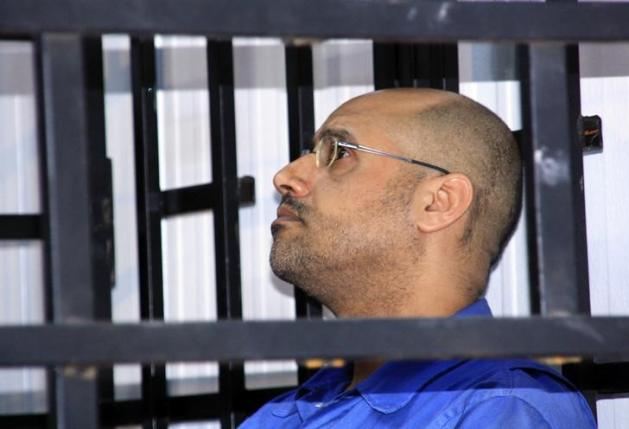
First, we can’t replace international justice with more local justice. The “big fish” are unlikely to ever see the inside of a local courtroom as long as they have connections to power (e.g. President Alassane Ouattara of Cote d’Ivoire, President Kenyatta of Kenya, President Kagame of Rwanda, etc.). If they ever lose power, the new regime isn’t likely to give them a fair trial. Neither Simone Gbgabo, former first lady to Laurent Gbagbo, nor Saif Gaddafi, son of the former Libyan dictator, have received fair and impartial justice in their home countries. In in both cases, justice advocates have called for their transfer to The Hague.

Domestic courts are also rife with their own problems, such as lack of capacity, compromised impartiality, and politicization. For example, the Cambodian tribunal (ECCC) has suffered enormously from political interference and a limited prosecutorial strategy. Continue reading

Posted in Complementarity, Deterrence, International Criminal Court (ICC), International Criminal Justice, Outreach, UN Security Council, War crimes | 2 Comments