The Rwanda Tribunal Closes — But Who Owns its ‘Legacy’?

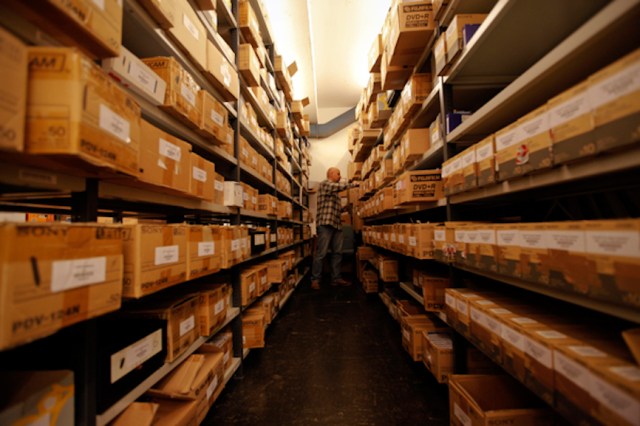
Archives of the ICTR's cousin, the ICTY (Photo: Damir Sagolj / Reuters)

Archives of the ICTR’s cousin, the ICTY (Photo: Damir Sagolj / Reuters)

The relationship between Kigali and the International Criminal Tribunal Rwanda (ICTR) has always been a sensitive balancing act. Ever since 1994, when the United Nations Security Council decided to establish the tribunal in order to investigate and prosecute senior perpetrators of the Rwandan Genocide, the relationship has been marked by periodic bouts of controversy and heightened tensions. The tribunal never seemed to truly trust the regime of Paul Kagame and the Rwandan president never seemed to truly trust the tribunal. As the ICTR concludes its work and closes its doors twenty year after its creation, this mutual mistrust is still rearing its ugly head.

The closing of the ICTR, as well as that of its cousin, the International Criminal Tribunal for the Former Yugoslavia, has brought forward important questions about the so-called ‘legacy’ of both tribunals. What will these institutions will leave behind and bequeath to future generations? As Viviane Dittrich, a leading expert on the subject of tribunals and their legacies, has cogently observed:

Talk about legacy often arises in a valedictory or commemorative setting when reflecting upon accomplishments and the meaning of being… [But t]he concept of legacy seems to be engulfed in a paradoxical situation: it is understudied, yet rhetorically overused… Ultimately, constructions of legacies are both a reflection and a sideshow of broader debates about the Court’s raison d’être, international involvement in conflict and post-conflict settings and the meanings of justice.

One of the primary raisons d’être of the ICTR — and indeed any international criminal tribunal — is the volumes of records it has accumulated regarding the crimes investigated and prosecuted under its purview. For the Court, these troves of documents were crucial to establishing who bore the greatest responsibility for the Genocide. Moving forward, the ICTR’s archives will prove an indispensable resource to students, scholars, historians, and journalists hoping to establish a detailed and accurate account of not only who perpetrated the Genocide but how and why.

And for this very reason, the closing of the ICTR has been met with some controversy. According to one report:

Rwanda will not relent in its push to host the International Criminal Tribunal for Rwanda (ICTR) genocide archives even when the court closes. Senior ICTR officials met with Rwanda judicial leaders, last week, in Kigali ahead of the official court closure after 20 years of adjudication…

…Rwanda and the tribunal established in 1995 have disagreed over several issues, including lengthy but minimal trials, refusal to transfer archives of the court to Rwanda and breach of sentence enforcements of convicts…

…At least 900,000 pages of transcripts, audio and video recordings of more than 6,000 trial days, 10,000 decisions, on top of 1,020 terabytes digital content are shelved at the tribunal centre in Arusha, Tanzania.

According to the tribunal officials, the court documents, including those classified as ‘confidential’, are the sole property of the United Nations.

But why is the ICTR so hesitant to hand over its archives to Rwanda? After all, this is the history of the people of Rwanda and not that of a now-extinct tribunal. It was Rwandans who lived these crimes and who undoubtedly deserve ownership over the documents which spell out, in harrowing detail, the forensic and factual truths behind the 1994 Genocide.

The problem is, once again, that there remains very little trust between the Kagame government and the broader international community, of which the ICTR is just one part. Kigali has always been suspicious, not only of the tribunal, but of the broader project of international criminal justice and the human rights community that propels it. Kagame’s government, which has ruled since the end of the Genocide and which many consider to be authoritarian, has also earned a reputation of hunting down, intimidating, and assassinating political figures opposed the regime. There are thus pertinent fears that, in the wrong hands, the archives could be used for rather nefarious purposes. Continue reading
Posted in Archives, International Criminal Justice, International Criminal Tribunal for Rwanda (ICTR), Legacy, Rwanda, Rwandan Genocide | Tagged , , | 2 Comments

Open for Business – An Interview with the ICC’s First-Ever Staff Members, Sam Muller and Phakiso Mochochoko

Imagine being in a team of just two and having the responsibility of opening the first-ever permanent international criminal court. That was the unique and challenging task that Sam Muller and Phakiso Mochochoko faced in 2002. Today, with the ICC entering its new premises, it is an opportune time to look back on the very first days of the Court’s existence. Continuing his series of interviews at JiC, Shehzad Charania, Legal Adviser and Head of the International Law Team for the British Embassy in The Hague, recently spoke with Sam and Phakiso, the ICC’s very first staff members. Shehzad asked them about those early days, the work involved, the challenges they faced, how the Court has progressed through the years, and their hopes for the future of the ICC.

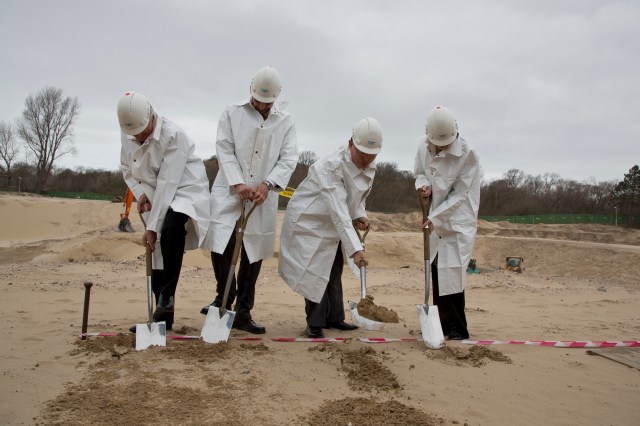
Long before the ICC had a groundbreaking ceremony for its new premises, Sam Muller and Phakiso Mochochoko had to break new ground in opening the first-ever permanent international criminal court (Photo: ICC Permanent Premises)

Long before the ICC had a groundbreaking ceremony for its new premises, Sam Muller and Phakiso Mochochoko had to break new ground in opening the first-ever permanent international criminal court (Photo: ICC Permanent Premises)

The Idea of an Advance Team

The Advance Team was the idea of the late Hans Peter Kaul, the Head of the German Delegation at the Rome Conference, and later Vice President and Judge of the ICC. The Court became a reality less than four years after the Rome Conference and the speed of ratifications had taken everyone by surprise. There had been those who had thought the milestone of sixty ratifications [required before the Rome Statute could come into force, and the ICC established] would take at least ten years. But by 2001, 47 States had ratified, and it became clear that there would be 60 within the year.

There was, therefore, a fear that once the UN Secretary General received the 60th ratification, there would be no physical premises ready to begin work, which would have a serious impact on the ICC’s credibility.  Many recalled that when the ICTY was set up, the Judges had to work out of the Peace Palace until a permanent building was established; this meant it was slow to get off the ground.

At the same time, John Bolton, then the US Permanent Representative to the UN was leading a campaign against the ICC, in particular going round the world persuading States to sign up to so-called “Article 98 agreements”. This was proving damaging to the ICC’s image, especially as there was no physical institution through which the Court could respond.

Members of the Advance Team

Once the Bureau of the Assembly of States Parties (ASP) had overcome the opposition to an Advance Team, the next step was to appoint its members. This proved controversial. The larger states took the view that those individuals who were part of the Advance Team would gain an advantage in shaping the structures and personnel to reflect their national legal system. To avoid such a situation, the Bureau appointed Sam and Phakiso, nationals of the Netherlands and Lesotho, on the basis that they were considered as “not posing any danger” to the interests of larger member-states.

Eventually, the Advance Team created a number of positions: Sam as the Head of the team, Phakiso as the Legal Adviser; and other positions which would eventually be filled dealing with IT, security, public information and human resources. Later, experts on IT and law (Klaus Rackwitz), the Office of the Prosecutor (Morten Bergsmo) and chambers (Gilbert Bitti) were also brought in.

The Advance Team reported their early progress in monthly reports to the Bureau of ASP. They would apprise the Bureau of every small detail, including the fact that they had acquired desks and chairs, mobile phones – as well as an intern. Because of the ICC’s lack of legal status, Sam was paying for this from his own personal funds.

And even in those early days, they were asking the same “big” questions the ASP, the Court, and commentators are asking now: what should the ICC look like in five, ten or twenty years? What should its optimal capacity be? How should the courtrooms be designed?

The Day the Court Opened Its Doors

On Monday morning, 1 July 2002, Sam and Phakiso were ready to meet the press outside the ICC building in Voorburg, having worked all weekend (with the expert assistance of Claudia Perdomo, Public Information Officer) to ensure everything would run smoothly. The building still had the sign for KPN (the Dutch Telecoms Company) blazed across it. This was Sam’s first experience of facing the cameras; but he had rehearsed what he was going to say all weekend. He made a barnstorming speech, concluding with the announcement that the ICC was as of that day open for business. After answering questions, Sam and Phakiso turned around and purposefully marched into the building. Once in, they had to wait until the media throng had departed before they exited though the back. Their offices had not yet been set up, so they returned to their temporary location at the Dutch Ministry of Foreign Affairs to continue their work.

First Challenges

The ICC was beginning its life from scratch. There was a statute and there were rules of procedure and evidence. But there was no broader governance structure beyond that. The Advance Team soon entered into negotiations on behalf of the Court with the Government of the Netherlands in order to conclude a Relationship Agreement, so that the ICC would have legal status. Sam and Phakiso also began negotiating an agreement with the Netherlands Forensic Institute, to ensure that any evidence they received, for example, bullets, or even body parts, could be stored safely, and correctly. They also had to think about letters/submissions from the public/third parties (i.e. Article 15 communications). There was not yet an Office of the Prosecutor (OTP) which could formally receive such communications. But they all had to be acknowledged and recorded regardless.

Dealing with the Dynamics

The Advance Team was later replaced by the Directorate of Common Administrative Services headed by Bruno Cathala, who would later become the ICC’s first Registrar, while Sam and Phakiso remained as Deputy Director and Legal Advisor respectively.

The Court then saw the arrival of the first set of elected Judges and the first Prosecutor. This created a new dynamic as the Court began to grow and become a fully-fledged and fully-staffed institution. The Judges soon elected a President, and then selected the Registrar. The three organs of the Court were now a reality.

But the establishment of the organs also created natural tensions. All of the principals – with very different personalities, demeanours and styles of working – clung steadfast to their independence. The Coordination Council was, therefore, set up to deal with issues of common concern. One of the first major areas of disagreement was over who should be running Field Offices, the OTP or the Registry. Another pressing issue was deciding whether the OTP should have its own, separate, staff rules, or if there should be one set common to the ICC as a whole. Further complicating matters, each organ also wanted control over its own services. While the  Division of Common Services had been established to provide services common to all three organs, it soon turned out that each organ wanted to retain ownership over services as much as possible. This immediately reinforced the idea of three very separate, independent organs, rather than a one-court principle.   Continue reading

Posted in International Criminal Court (ICC), International Criminal Justice, Interview, Interviews | Tagged , , | 1 Comment

The Responsibility to Protect isn’t Dead, but its Proponents’ Hubris has Wounded it

A 2011 scene from Tripoli street in the Libyan city of Misrata (Photo: Zohra Bensemra / Reuters)

A 2011 scene from Tripoli street in the Libyan city of Misrata (Photo: Zohra Bensemra / Reuters)

It has been a decade since the international community endorsed the principle of “Responsibility to Protect.” But with hundreds of thousands dead in civil conflicts around the globe, it is clear that the expectations set by this doctrine are not even close to being met.

Adopted by the United Nations in 2005, Responsibility to Protect (R2P) encompasses a deceivingly simple, two-part proposition: First, states have a primary responsibility to protect their citizens from war crimes, crimes against humanity, genocide and ethnic cleansing; and second, if states are unable or unwilling to protect their citizens from such crimes, the responsibility is transmitted to the international community.

When the United Nations Security Council evoked R2P language in response to the 2011 Libyan civil war, many academics and diplomats found cause to celebrate. R2P had finally arrived. Five years later, however, states have refused to apply R2P to the crisis in Syria while a spiral of political violence ravages Libya. What does this mean for the fledgling doctrine?

The international community’s disregard for R2P in Syria certainly does harm to the doctrine. So too does Libya’s languishing in a violent political crisis and the allegations that R2P acted as a veneer for regime change. But what has also wounded R2P is the hubris of some of its proponents — those who over-confidently insisted that R2P had been invoked when it hadn’t and that it existed where it didn’t. By raising expectations bound to be frustrated, these advocates have hurt the R2P doctrine they hoped to elevate.

R2P’s architects and supporters saw the doctrine as a means to fundamentally transform how we conceptualized state sovereignty and responsibility, overlapping the two concepts to entrench and propagate respect for universal human rights and the sovereign integrity of states. But the principle experienced a rather rocky birth. Despite a multitude of candidate situations, in its first years R2P was never successfully invoked as a means to effectively protect civilians. While the doctrine had achieved what international human rights expert David Scheffer called “rhetorical presence” in international relations and law, little substantive advances have been made. In 2008, Gareth Evans, one of R2P’s chief proponents, asked whether it was “an idea whose time has come … and gone,” and observed that states seemed to exhibit “buyers remorse” towards the idea. Making matters worse, when R2P-type language was eventually evoked by states, it was done to advance nefarious political interests. Russia, for example, employed R2P-style rhetoric to justify its invasion of Georgia in 2008 and, later, its annexation of Crimea. In short, R2P’s future looked bleak.

But as the regime of Moammar Gaddafi threatened to indiscriminately slaughter citizens protesting the dictator’s forty-year rule in early 2011, Libyan diplomats joined states across the region and world to call for an intervention to protect civilians. The U.N. Security Council responded by passing two resolutions. On Feb. 26, 2011, Resolution 1970 was passed unanimously. In referring the situation in Libya to the International Criminal Court, the council recalled “the Libyan authorities’ responsibility to protect its population.” A few weeks later, the council passed Resolution 1973, which evoked the language of R2P even more substantively by “[r]eiterating the responsibility of the Libyan authorities to protect the Libyan population and reaffirming that parties to armed conflicts bear the primary responsibility to take all feasible steps to ensure the protection of civilians.” Resolution 1973 subsequently authorized U.N. member states to take “to take all necessary measures … to protect civilians and civilian populated areas under threat of attack in the Libyan Arab Jamahiriya.”

Proponents of R2P immediately heralded the language of Resolutions 1970 and 1973. For Ramesh Thakur, one of R2P’s architects, the apparent invocation of the doctrine was a “game-changer” that “breathed life” into R2P. Academics Alex Bellamy and Paul Williams went so far as to assert that, “Libya reflects a new politics of protection.” U.N. Secretary-General Ban Ki-moon emphatically declared that “Resolution 1973 affirms, clearly and unequivocally, the international community’s determination to fulfill its responsibility to protect civilians from violence perpetrated upon them by their own government.” International relations and U.N. expert Thomas G. Weiss similarly stated that Libya signaled that R2P was “alive and well.”

The problem with such proclamations was that, in their overzealous drive to read R2P into Resolutions 1970 and 1973, many scholars and diplomats alike failed to realize that neither resolution actually operationalized the R2P doctrine. Continue reading

Posted in International Law, Libya, Responsibiltiy to Protect (R2P), Syria | 9 Comments

1990s Hollywood Film Covers Meet Anti-ICC Propaganda – A Lighter Moment from this Year’s ICC Conference

(Photo: Carrie Comer)

(Photo: Carrie Comer)

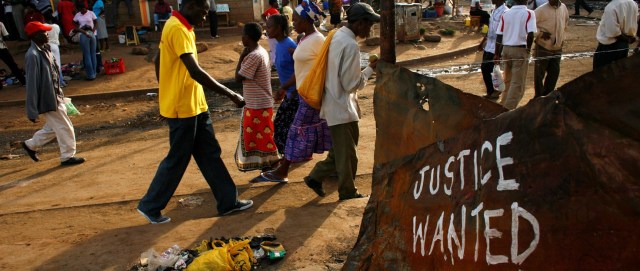
Last week, I reported at length about the trials and tribulations of this year’s Assembly of States Party’s conference. Most of the conference had a rather somber tone, due to frustrations and concerns over the Kenyan government’s attempts to subvert the independence of the ICC. But at such events, funny – even silly – things are bound to happen. One such moment came, inadvertently, thanks to members of Kenya’s delegation. That’s probably unsurprising given the sheer size of their delegation – estimated to have been around one-hundred people strong (and paid for by the Kenyan taxpayer!). In comparison, the core delegation of the UK consisted of five members.

Some of that public money apparently went to designing and disseminating the flashy flyer posted above with the title “Wrong Suspects – Flawed Trials”. The flyer, featuring Kenyan Deputy President William Ruto and his co-accused at the ICC, Joshua Sang, were distributed throughout the conference hall. As more than one commentator I heard ask, in all seriousness and quite rightly, if Ruto and Sang are the wrong suspects, then who are the right ones? If the Kenyan government knows, then why has no action been taken?

On a less serious note, the inspiration seems to be early-to-mid 1990s Hollywood flicks (just look at that snazzy gold banner!). But given Kenya’s insistence that the ICC is a tool of neo-colonial Western powers and a racist institution, I just wish they had taken the opportunity to give their handouts the title “White Men Can’t Jump Judge”.

Posted in Assembly of States Parties, Humour, Kenya, Kenya and the ICC | 1 Comment

Kenya Gambled and Lost at the ICC’s yearly Conference – But it’s not Game Over Yet

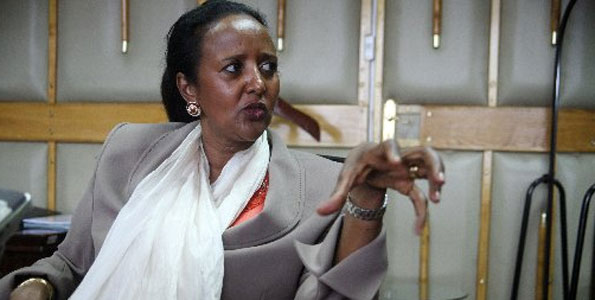
Kenyan Foreign Minister Amina Mohamed (Photo: AFP)

Kenyan Foreign Minister Amina Mohamed (Photo: AFP)

The African Group for Justice and Accountability (AGJA) had just been launched at one of the dozens of Assembly of States Parties (ASP) side events. There were a few minutes left and so, as the moderator of the event, I opened the session up for a public Q & A. A man seated near the front of the packed room introduced himself as the senate leader from Kenya and asked the panelists to discuss the International Criminal Court’s alleged double standards towards African states.

After a round of questions had been gathered, Navi Pillay, the former UN High Commissioner for Human Rights and member of AGJA, began to answer the senate leader’s question. But his attention was diverted. Instead of listening, he was playing on his phone and joking with those around him. “Mr. Senate leader”, Pillay sternly said, “I am talking to you…” Finally, he looked up only to be confronted with the best quip of the evening: “Before considering double standards on the  international level, you should confront double standards at home”. Understandably taken aback, the Kenyan senate leader could do little but nod in agreement.

In many respects, this episode was symptomatic of Kenya’s experience at the 14th ASP in The Hague. The country sent a one-hundred-person-strong delegation to the ICC’s annual conference. The bill for their flights, accommodation and expenses was footed by the Kenyan taxpayer. No delegation came remotely close to matching Kenya’s numbers. Delegates were instructed to attend all of the side events and make their presence known. The word ‘hijack’ came up on more than one occasion. A permanent feature at the World Forum, the convention centre where the ASP was held, was a gaggle of Kenyan representatives who persistently loitered in the halls of the ASP. They certainly succeeded in making their presence known, but in a way that frustrated not only ICC officials but delegates of all stripes.

The Kenyan delegation, headed by Foreign Minister Amina Mohamed, arrived at the ASP with one goal in mind: to ensure that Deputy President William Ruto would be acquitted on all charges relating to his role in the country’s 2007-08 post-election violence. To achieve their aim, Kenyan representatives put pressure on the ASP to guarantee that recanted evidence in Ruto’s trial could not be used retroactively to changes to ICC rules made in 2012. In fact and effect, they wanted the ICC’s member states to intervene in an ongoing judicial matter before the Court. Their efforts failed spectacularly.

Both the sheer size, as well as the undiplomatic behaviour of Kenya’s delegation, did the country no favours. When, in the opening plenary sessions, Kenya expressed its views, no other African states, other than Uganda, spoke in favour — not even South Africa, which many expected to buddy up with Kenya at the ASP. Throughout sensitive, behind-the-door negotiations, Foreign Minister Mohamed tweeted dozens photos of herself and other delegates, leaving the impression that she was more interested in giving the appearance of goodwill than actually searching for useful compromises.

In another public session, when a member of a civil society organisation mentioned allegations of the Kenyan government’s efforts to eliminate the Mungiki – a notorious and violent group that is responsible for many bouts of atrocities in the country – Mohamed exclaimed that the NGO representative was defending terrorism and needed to be expelled from the ASP. It wasn’t pretty.

Continue reading

Posted in Assembly of States Parties, International Criminal Court (ICC), International Criminal Justice, Kenya, Kenya and the ICC | Tagged , , | 2 Comments

The ICC, A Victims’ Court? It Could Happen

Stephen Smith Cody joins JiC for this post discussing a recently released, timely, and must-read report on victim’s expectations with, and engagement at, the ICC: The Victim’s Court – A Study of 622 Victim Participants at the International Criminal Court.

(Photo: Amnesty International)

(Photo: Amnesty International)

Many victims of war crimes and other atrocities have said they are disappointed in the International Criminal Court (ICC). As one victim said: “The court hears the voices of the people who perpetrated this violence, not the victims.” In a study of ICC victims, released this week at the Assembly of States Parties Conference in The Hague, we document the concerns of more than 600 of them.

Our findings suggest that the ICC has reached a critical juncture: It must invest in greater outreach and education programs to give victims the tools to meaningfully participate in trials or accept that it’s failing to meet its mandate to include them.

Our study shows that most victims participating in the court have insufficient knowledge to make informed decisions about their cases, rarely meet with court personnel, and feel frustration at the lengthy trial process, which can go on for years. “As victims, we do not understand. We need more information so we understand our case. Intermediaries are struggling to inform us. They provide information when they have it, but the problem is to reach us. Their means are limited. There are not enough efforts to keep the victims informed,” explained one victim.

When the Rome Statute created the ICC in 1998, it promised survivors of mass violence a new kind of international court—one that would give them an influential voice in criminal trials. Many at the court have made admirable efforts in The Hague and in victims’ communities to realize this promise, but much more needs to be done.

Unlike other courts where victims only testify as witnesses during trial, the ICC gives victims the right to present their views to judges at various stages of the proceedings, and even question witnesses during trials, so long as judges determine that they are exercising these rights in a manner consistent with a fair trial for the accused. Victims also have a right to receive reparations, including individual compensation in some cases.

These victim-centered innovations—controversial and vigorously debated during the Rome Statute negotiations—reflect a growing consensus that international criminal courts should not just punish the guilty, but also ensure that the voices of victims are heard.

But our study shows this experiment in international criminal justice is not fully succeeding, at least not yet. Our interviews in Uganda, Democratic Republic of Congo, Kenya, and Côte d’Ivoire show that ICC prosecutions to date have scarcely affected victims’ the daily lives. Others say the court built up hopes of convictions and reparations only to disappoint them.

Victims’ said that their satisfaction with international justice depends largely on their personal interactions with court personnel and feedback on their cases. Regular contact and communication can be even more important to victims than securing convictions of high-level perpetrators, who victims may see as less responsible for violence than local offenders. Continue reading

Posted in Guest Posts, International Criminal Court (ICC), International Criminal Justice, Victim Participation | Tagged , | 2 Comments

Five Take-Aways from the ICC’s Latest Bombshell Report

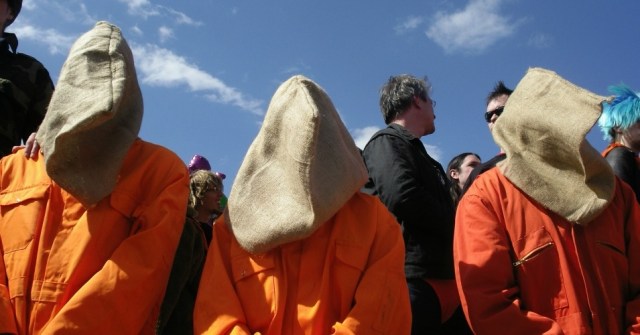
A Reprieve-organized protest against US torture allegations (Photo: Val Kerry / Flickr CC)

A Reprieve-organized protest against US torture allegations (Photo: Val Kerry / Flickr CC)

This year’s Report on Preliminary Examination Activities from the International Criminal Court (ICC) carried within it a number of fascinating – and crucial – details into who and what is falling under the ICC’s microscope. Below are five important takeaways that demonstrate and increasingly emboldened, provocative and courageous institution, not to mention one that really doesn’t look like it’s unfairly picking on Africa.

U.S. Torture in Afghanistan

The ICC’s examination into alleged atrocities committed in Afghanistan continues. In last year’s preliminary examination report, we saw the first-ever reference to the alleged “enhanced interrogation techniques” used by U.S. officials against Taliban forces, who are also under examination by the Court. American officials reacted coolly to the inclusion of torture allegations in the prosecutor’s last report, but it was back once again this year. Moreover, in a handful of hard-hitting paragraphs, the 2015 report laid down a challenge to U.S. officials to take allegations of torture – those investigated by the ICC as well as those outlined in the country’s own ‘Torture Memos’ – seriously.

While the report takes note of the judicial actions against U.S. citizens allegedly responsible for war crimes and crimes against humanity in Afghanistan, it insists that those efforts have been insufficient. Specifically, the report points out that two cases that involved the deaths of detainees in CIA custody “did not result in any indictments or prosecutions” and that thirteen Department of Defence investigations “were administrative enquiries rather than criminal proceedings”. In short, the U.S. isn’t doing nearly enough to take accountability for these alleged abuses seriously and, if it doesn’t, the ICC may have no choice but to open an official investigation.

In perhaps its most devastating paragraph, the report suggested that it was no longer questioning whether war crimes had been committed by U.S. forces but how systematic those crimes were. It also evoked the long-term pain and suffering of victims:

“The Office is assessing information relevant to determine the scale of the alleged abuse, as well as whether the identified war crimes were committed as part of a plan or policy. The information available suggests that victims were deliberately subjected to physical and psychological violence, and that crimes were allegedly committed with particular cruelty and in a manner that debased the basic human dignity of the victims. The infliction of ‘enhanced interrogation techniques’, applied cumulatively and in combination with each other over a prolonged period of time, would have caused serious physical and psychological injury to the victims. Some victims reportedly exhibited psychological and behavioural issues, including hallucinations, paranoia, insomnia, and attempts at self-harm and self-mutilation.”

In short, the ICC has reprimanded the U.S. for not doing nearly enough in pursuing accountability for these alleged abuses and has taken the rather remarkable step of suggesting that the perpetration of torture in Afghanistan may not have been the work of ‘bad apples’ but a plan or policy orchestrated at senior levels of the Bush administration.

Palestine and Israel

The 2015 report marked the first time that the preliminary examination into alleged war crimes committed by Palestinian and Israeli factions in Gaza has been detailed in a report. The section on Palestine is worth reading in full. But one interesting fact stands out: “On 9 July 2015, the government of Israel announced that it had decided to open a dialogue with the Office over the preliminary examination.” In other words, Israel has decided to cooperate with the ICC’s examination of alleged crimes perpetrated in Palestine. While this has been previously reported in the media, it was welcome news to see it in the ICC’s report. Engaging the ICC, as I have suggested elsewhere, is a wise move on the part of the Israeli government. Continue reading

Posted in Afghanistan, Africa, Complementarity, Georgia, Gravity, Honduras, ICC Prosecutor, International Criminal Court (ICC), International Criminal Justice, Iraq, Israel, Palestine, Ukraine, United Kingdom, United States | 5 Comments

A Way Forward: An Africa-ICC Expert Panel

(Photo: Picture Alliance / Landov)

In the world of international criminal justice, few issues have received as much attention as the relationship between the International Criminal Court (ICC) and African states and societies. While African constituencies were at the very forefront of pushing for, and establishing, an independent and effective ICC, today it is no secret that, in recent years, the relationship has not been (been) particularly healthy. Nevertheless, responses to this troubling situation have been insufficient in strengthening the Africa-ICC relationship, despite the obvious importance in doing so.

In this context, I am thrilled to announce the establishment of an Africa-ICC Expert Panel. The independent Expert Panel will be launched by the Wayamo Foundation, where I serve as Director of Research, during a side event at the Assembly of States Parties (Conference) to the ICC in The Hague next week (see below). The Expert Panel is currently made up of an impressive group of human rights and international criminal justice experts, including Athalia Molokome, Navi Pillay, Hassan Bubacar Jallow, Richard Goldstone, Betty Murungi, Femi Falana, Abdul Tejan-Cole, Mohamed Chande Othman and Fatiha Serour.

The independent Expert Panel will meet on a regular basis across Africa and host public conferences and meetings with local politicians, members of the judiciary, the media, students, and interested citizens. The project will be tasked with improving our understanding of, and overcoming, contentious issues pertaining to the ICC-Africa relationship. This will be achieved by engaging critically with issues between African constituencies and the ICC, clarifying misperceptions regarding the Court amongst African states, considering policy-relevant recommendations to strengthen and deepen the relationship between the ICC and African states, as well by advising interested parties on strategic issues.

African states have been and continue to be indispensable to the project of international criminal justice. However, in order to foster a productive and positive relationship between Africa and the ICC, proponents of international criminal justice need to devote time and energy to tackling misperceptions and points of contention between African actors and the Court. The Africa-ICC Expert Panel promises to help fill this lacuna.

For all readers interested in the project and available to attend, below is the event announcement:

As part of its ongoing strategies aimed at improving the relationship between Africa and the ICC as well as strengthening complementarity through capacity building, the Wayamo Foundation is launching the Africa-ICC Expert Panel. The Africa-ICC Expert Panel is to be established with the mandate to improve the relationship between African states and the International Criminal Court, to promote complementarity through capacity building and, more generally, to support efforts to strengthen justice and accountability measures in Africa.

The launch of the Africa-ICC Expert Panel will take place in conjunction with the Assembly of States Parties side event “Africa and the ICC – Looking Back, Moving Forward” co-hosted by the governments of Botswana, Finland, Germany, the Netherlands, Norway, Sweden, Switzerland, and the United Kingdom. The side event will take place between 18:00-19:30 on 23 November 2015 in Conference Room 7 at the Worldhotel Bel Air in The Hague, and will be followed by a reception.

Speakers at the side event will include Expert Panel members:

Human rights activist and lawyer Femi Falana (Nigeria)

Prosecutor at the International Criminal Tribunal for Rwanda and International Residual Mechanism for Criminal Tribunals Hassan Bubacar Jallow (Gambia)

Former Chief Prosecutor of the United Nations International Criminal Tribunal for Rwanda and the former Yugoslavia Richard Goldstone (South Africa)

Attorney General of Botswana Athaliah Molokomme (Botswana)

Former UN High Commissioner for Human Rights Navi Pillay (South Africa)

Director of Serour Associates for Inclusion and Equity Fatiha Serour (Algeria)

Posted in Africa, Africa-ICC Expert Panel, African Union (AU), Complementarity, International Criminal Court (ICC), International Criminal Justice | Tagged | Leave a comment

Transitional Justice without a Peaceful Transition—The Case of Post-Gaddafi Libya

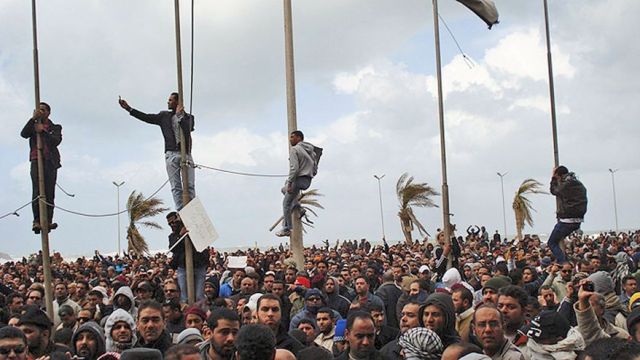
A demonstration / gathering in Benghazi in 2011 (Photo: AP)

A demonstration / gathering in Benghazi in 2011 (Photo: AP)

An ongoing question for scholars and constant challenge for practitioners is how to combine peacebuilding with transitional justice. There are, clearly, no easy solutions. The case of Libya demonstrates this vividly and is the focus of an article I recently wrote regarding the country’s experience with transitional justice mechanisms since the end of the Gaddafi regime. The result is a paper, entitled, Transitional Justice without a Peaceful Transition – The Case of Post-Gaddafi Libya. The paper will be part of the book: Building Sustainable Peace: Timing and Sequencing of Post-Conflict Reconstruction and Peacebuilding, edited by Arnim Langer and Graham K. Brown (Oxford University Press 2016). For those interested, the abstract of the paper, the full version of which can be found here, is below. The other contributions to this fantastic and promising volume can be found here. As always, your thoughts and feedback are welcome and appreciated.

This paper examines Libya’s experience with transitional justice since the conclusion of the country’s 2011 civil war and the onset of its post-Gaddafi transition. The core of the paper focuses on three transitional justice mechanisms: retributive criminal justice; lustration under Libya’s Political Isolation Law; and the amnesty granted to revolutionaries under Law 38. None of these mechanisms have been implemented within a peace or peacebuilding process. Libya’s experiences with all three of these transitional justice approaches have acted to perpetuate, rather than alleviate, a climate of selective impunity and vengeance against those associated with the previous regime whilst simultaneously elevating the revolutionary legitimacy of Libya’s rebel groups and militias. Transitional justice efforts to date have, as a result, frustrated the construction of a post-war peace. The paper concludes by arguing that the current UN-led peace negotiations may offer an opportunity to integrate transitional justice and peacebuilding processes.

Posted in Amnesty, International Criminal Court (ICC), International Criminal Justice, Libya, Libya and the ICC, Lustration, Transitional Justice | 4 Comments

Administering Justice: An Interview with the ICC Registrar

Shehzad Charania, Legal Advisor and Head of the International Law Team for the British Embassy in The Hague, joins JiC once again, this time for an interview with ICC Registrar Herman von Hebel. Shehzad spoke to von Hebel about why he had wanted the be Registrar, his experiences of working at the other international criminal courts and tribunals, the unique challenges within the ICC Registry, his hopes for the Court, and his own plans within it.

ICC Registrar Herman Von Hebel speaks with Shehzad Charania

ICC Registrar Herman Von Hebel speaks with Shehzad Charania

Why did he want the job?

I began by asking about his motivations for taking on his current role. The Registrar recalled that he had been part of the Dutch delegation dealing with ICC matters from 1995, continuing through to the Rome Conference in 1998. After this, he spent time working at the International Criminal Tribunal for the Former Yugoslavia (ICTY), the Special Court for Sierra Leone (SCSL) and the Special Tribunal for Lebanon (STL). He could see similarities and differences between, on the one hand, his roles at the other courts and tribunals, and,on the other, the ICC. He wanted to bring the experience he had gained in these other institutions, as well as the Dutch Ministry of Foreign Affairs, to the ICC, in order to address the ICC’s unique challenges. When he interviewed for the job of ICC Registrar, he had focused on the need for reform, and an overhaul of the existing structure.

Law or administration?

I asked why having spent so much of his early career – in particular with the Dutch Foreign Ministry, and the ICTY as Senior Legal Officer – dealing with the purely legal and judicial aspects of international criminal law, he had decided to move to the administrative side of the work of the legal institutions. The Registrar felt that the shift wasn’t so great. Law and diplomacy continued to be a central part of his current job, as they were in his previous roles. He needed to exercise his legal muscles on a daily basis. He did not consider the role of Registrar as a purely administrative job – of course, it was a major part, but there was also a significant focus on issues of leadership and forging a common vision.

Previous Registrar jobs

In terms of the differences between his jobs as Registrar at the STL and SCSL, and the ICC, the ICC stood out as being radically different from the others. The STL and SCSL, as well as the ICTY, had focussed on a single situation, be it Lebanon, Sierra Leone or the former Yugoslavia. This determined the organisational structure, and the way those institutions functioned. The ICC’s global reach had a huge impact on the way it was set up: it was almost a set of “mini-tribunals”, each dealing with a different country situation. The external governance structure of the various courts was also different. For example, to finalise the ICTY budget, the Tribunal had to go to New York every two years and answer the questions of the Advisory Committee on Administrative and Budgetary Questions for a week. After this, they presented their proposal to the UN Fifth Committee. With the STL and the SCSL, as Registrar he had to present his budget proposal to a Management Committee of ten and six members respectively. None of these relationships were as labour intensive as within the ICC, where the Court had to deal with the Assembly of States Parties (ASP), its Bureau, The Hague and New York Working Groups, and the various facilitations. His experience of the different governance structures made him question whether the current relationship between States Parties to the Rome Statute and the Court was the right one. After all, the ICC was not just another international organisation in the same mould as the United Nations or the Organisation for the Prohibition of Chemical Weapons. The ICC was a court of law, bound by the Rome Statute and the mandate encapsulated within it.

The ICC website

One of the specific issues the Registrar had said he wanted to tackle when he was first elected was the ICC website. On this, progress was being made. There had been a number of technical and design issues to tackle. But he had received positive feedback from a number of stakeholders  on test versions of the new site. He was hopeful of a launch in early 2016, after the Court had moved to its new building.

The Revision Project

We then moved on to talk about the “ReVision project” – the Registrar’s reorganisation of the Registry. The Registrar was adamant that his decision to undertake the project had been the correct one, despite the challenges he has faced since the work began. When he arrived at the Court, it was clear that the Registry was not functioning as well as the Registries in the other international courts he had worked in. This was reflected in ASP resolutions, reports of the ASP’s advisory body the Committee for Budget and Finance (CBF), and the 2013 report of Price Waterhouse Coopers on the organisational structure of the Court. He considered it an obligation to deal with the issues identified; he would rightly have been criticised if he had not taken action. And even though the ReVision project was almost complete, there was still work to do: on the management structure, ensuring all staff shared a common vision, the budgetary process, working even more closely with the other organs of the Court, building a single, internal case law database, and putting in place adequate performance management systems. Continue reading

Posted in ICC Registry, International Criminal Court (ICC), International Criminal Justice, International Law, Interview, Interviews | Tagged , | 1 Comment