A Way Forward: An Africa-ICC Expert Panel

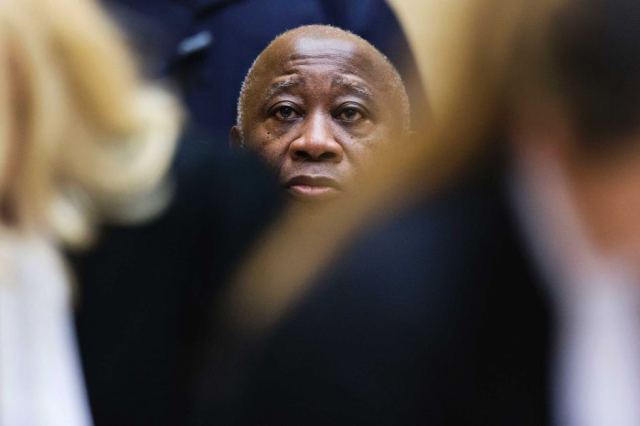
(Photo: Picture Alliance / Landov)

In the world of international criminal justice, few issues have received as much attention as the relationship between the International Criminal Court (ICC) and African states and societies. While African constituencies were at the very forefront of pushing for, and establishing, an independent and effective ICC, today it is no secret that, in recent years, the relationship has not been (been) particularly healthy. Nevertheless, responses to this troubling situation have been insufficient in strengthening the Africa-ICC relationship, despite the obvious importance in doing so.

In this context, I am thrilled to announce the establishment of an Africa-ICC Expert Panel. The independent Expert Panel will be launched by the Wayamo Foundation, where I serve as Director of Research, during a side event at the Assembly of States Parties (Conference) to the ICC in The Hague next week (see below). The Expert Panel is currently made up of an impressive group of human rights and international criminal justice experts, including Athalia Molokome, Navi Pillay, Hassan Bubacar Jallow, Richard Goldstone, Betty Murungi, Femi Falana, Abdul Tejan-Cole, Mohamed Chande Othman and Fatiha Serour.

The independent Expert Panel will meet on a regular basis across Africa and host public conferences and meetings with local politicians, members of the judiciary, the media, students, and interested citizens. The project will be tasked with improving our understanding of, and overcoming, contentious issues pertaining to the ICC-Africa relationship. This will be achieved by engaging critically with issues between African constituencies and the ICC, clarifying misperceptions regarding the Court amongst African states, considering policy-relevant recommendations to strengthen and deepen the relationship between the ICC and African states, as well by advising interested parties on strategic issues.

African states have been and continue to be indispensable to the project of international criminal justice. However, in order to foster a productive and positive relationship between Africa and the ICC, proponents of international criminal justice need to devote time and energy to tackling misperceptions and points of contention between African actors and the Court. The Africa-ICC Expert Panel promises to help fill this lacuna.

For all readers interested in the project and available to attend, below is the event announcement:

As part of its ongoing strategies aimed at improving the relationship between Africa and the ICC as well as strengthening complementarity through capacity building, the Wayamo Foundation is launching the Africa-ICC Expert Panel. The Africa-ICC Expert Panel is to be established with the mandate to improve the relationship between African states and the International Criminal Court, to promote complementarity through capacity building and, more generally, to support efforts to strengthen justice and accountability measures in Africa.

The launch of the Africa-ICC Expert Panel will take place in conjunction with the Assembly of States Parties side event “Africa and the ICC – Looking Back, Moving Forward” co-hosted by the governments of Botswana, Finland, Germany, the Netherlands, Norway, Sweden, Switzerland, and the United Kingdom. The side event will take place between 18:00-19:30 on 23 November 2015 in Conference Room 7 at the Worldhotel Bel Air in The Hague, and will be followed by a reception.

Speakers at the side event will include Expert Panel members:

Human rights activist and lawyer Femi Falana (Nigeria)

Prosecutor at the International Criminal Tribunal for Rwanda and International Residual Mechanism for Criminal Tribunals Hassan Bubacar Jallow (Gambia)

Former Chief Prosecutor of the United Nations International Criminal Tribunal for Rwanda and the former Yugoslavia Richard Goldstone (South Africa)

Attorney General of Botswana Athaliah Molokomme (Botswana)

Former UN High Commissioner for Human Rights Navi Pillay (South Africa)

Director of Serour Associates for Inclusion and Equity Fatiha Serour (Algeria)

Posted in Africa, Africa-ICC Expert Panel, African Union (AU), Complementarity, International Criminal Court (ICC), International Criminal Justice | Tagged | Leave a comment

Transitional Justice without a Peaceful Transition—The Case of Post-Gaddafi Libya

A demonstration / gathering in Benghazi in 2011 (Photo: AP)

A demonstration / gathering in Benghazi in 2011 (Photo: AP)

An ongoing question for scholars and constant challenge for practitioners is how to combine peacebuilding with transitional justice. There are, clearly, no easy solutions. The case of Libya demonstrates this vividly and is the focus of an article I recently wrote regarding the country’s experience with transitional justice mechanisms since the end of the Gaddafi regime. The result is a paper, entitled, Transitional Justice without a Peaceful Transition – The Case of Post-Gaddafi Libya. The paper will be part of the book: Building Sustainable Peace: Timing and Sequencing of Post-Conflict Reconstruction and Peacebuilding, edited by Arnim Langer and Graham K. Brown (Oxford University Press 2016). For those interested, the abstract of the paper, the full version of which can be found here, is below. The other contributions to this fantastic and promising volume can be found here. As always, your thoughts and feedback are welcome and appreciated.

This paper examines Libya’s experience with transitional justice since the conclusion of the country’s 2011 civil war and the onset of its post-Gaddafi transition. The core of the paper focuses on three transitional justice mechanisms: retributive criminal justice; lustration under Libya’s Political Isolation Law; and the amnesty granted to revolutionaries under Law 38. None of these mechanisms have been implemented within a peace or peacebuilding process. Libya’s experiences with all three of these transitional justice approaches have acted to perpetuate, rather than alleviate, a climate of selective impunity and vengeance against those associated with the previous regime whilst simultaneously elevating the revolutionary legitimacy of Libya’s rebel groups and militias. Transitional justice efforts to date have, as a result, frustrated the construction of a post-war peace. The paper concludes by arguing that the current UN-led peace negotiations may offer an opportunity to integrate transitional justice and peacebuilding processes.

Posted in Amnesty, International Criminal Court (ICC), International Criminal Justice, Libya, Libya and the ICC, Lustration, Transitional Justice | 4 Comments

Administering Justice: An Interview with the ICC Registrar

Shehzad Charania, Legal Advisor and Head of the International Law Team for the British Embassy in The Hague, joins JiC once again, this time for an interview with ICC Registrar Herman von Hebel. Shehzad spoke to von Hebel about why he had wanted the be Registrar, his experiences of working at the other international criminal courts and tribunals, the unique challenges within the ICC Registry, his hopes for the Court, and his own plans within it.

ICC Registrar Herman Von Hebel speaks with Shehzad Charania

ICC Registrar Herman Von Hebel speaks with Shehzad Charania

Why did he want the job?

I began by asking about his motivations for taking on his current role. The Registrar recalled that he had been part of the Dutch delegation dealing with ICC matters from 1995, continuing through to the Rome Conference in 1998. After this, he spent time working at the International Criminal Tribunal for the Former Yugoslavia (ICTY), the Special Court for Sierra Leone (SCSL) and the Special Tribunal for Lebanon (STL). He could see similarities and differences between, on the one hand, his roles at the other courts and tribunals, and,on the other, the ICC. He wanted to bring the experience he had gained in these other institutions, as well as the Dutch Ministry of Foreign Affairs, to the ICC, in order to address the ICC’s unique challenges. When he interviewed for the job of ICC Registrar, he had focused on the need for reform, and an overhaul of the existing structure.

Law or administration?

I asked why having spent so much of his early career – in particular with the Dutch Foreign Ministry, and the ICTY as Senior Legal Officer – dealing with the purely legal and judicial aspects of international criminal law, he had decided to move to the administrative side of the work of the legal institutions. The Registrar felt that the shift wasn’t so great. Law and diplomacy continued to be a central part of his current job, as they were in his previous roles. He needed to exercise his legal muscles on a daily basis. He did not consider the role of Registrar as a purely administrative job – of course, it was a major part, but there was also a significant focus on issues of leadership and forging a common vision.

Previous Registrar jobs

In terms of the differences between his jobs as Registrar at the STL and SCSL, and the ICC, the ICC stood out as being radically different from the others. The STL and SCSL, as well as the ICTY, had focussed on a single situation, be it Lebanon, Sierra Leone or the former Yugoslavia. This determined the organisational structure, and the way those institutions functioned. The ICC’s global reach had a huge impact on the way it was set up: it was almost a set of “mini-tribunals”, each dealing with a different country situation. The external governance structure of the various courts was also different. For example, to finalise the ICTY budget, the Tribunal had to go to New York every two years and answer the questions of the Advisory Committee on Administrative and Budgetary Questions for a week. After this, they presented their proposal to the UN Fifth Committee. With the STL and the SCSL, as Registrar he had to present his budget proposal to a Management Committee of ten and six members respectively. None of these relationships were as labour intensive as within the ICC, where the Court had to deal with the Assembly of States Parties (ASP), its Bureau, The Hague and New York Working Groups, and the various facilitations. His experience of the different governance structures made him question whether the current relationship between States Parties to the Rome Statute and the Court was the right one. After all, the ICC was not just another international organisation in the same mould as the United Nations or the Organisation for the Prohibition of Chemical Weapons. The ICC was a court of law, bound by the Rome Statute and the mandate encapsulated within it.

The ICC website

One of the specific issues the Registrar had said he wanted to tackle when he was first elected was the ICC website. On this, progress was being made. There had been a number of technical and design issues to tackle. But he had received positive feedback from a number of stakeholders  on test versions of the new site. He was hopeful of a launch in early 2016, after the Court had moved to its new building.

The Revision Project

We then moved on to talk about the “ReVision project” – the Registrar’s reorganisation of the Registry. The Registrar was adamant that his decision to undertake the project had been the correct one, despite the challenges he has faced since the work began. When he arrived at the Court, it was clear that the Registry was not functioning as well as the Registries in the other international courts he had worked in. This was reflected in ASP resolutions, reports of the ASP’s advisory body the Committee for Budget and Finance (CBF), and the 2013 report of Price Waterhouse Coopers on the organisational structure of the Court. He considered it an obligation to deal with the issues identified; he would rightly have been criticised if he had not taken action. And even though the ReVision project was almost complete, there was still work to do: on the management structure, ensuring all staff shared a common vision, the budgetary process, working even more closely with the other organs of the Court, building a single, internal case law database, and putting in place adequate performance management systems. Continue reading

Posted in ICC Registry, International Criminal Court (ICC), International Criminal Justice, International Law, Interview, Interviews | Tagged , | 1 Comment

Seven Things the ICC Could Do to Improve Its Communications and Standing

Visitors at the International Criminal Court (Photo: ICC)

Visitors at the International Criminal Court (Photo: ICC)

The International Criminal Court (ICC) is doing a lot of things right and, almost 15 years since its establishment, it is also doing many things better than it used to. But one area it continues to struggle with is its communications strategies. This is an area of its work that is only growing in importance. Indeed, it is arguable that the ICC’s greatest challenge going forward isn’t singularly legal or solely political; rather, it is the fight over the perception of its work. From the ongoing cases in Kenya to the Court’s relationship with global powers and African states, all of these are being fought on the battleground of public perception. With its limited and squeezed budget, the Court simply cannot compete with states or individuals that have millions, even billions, of dollars at their disposal. But smart public relations strategies can have an equalizing force that belies their low cost. As a result, for a struggling institution, establishing and harnessing smart, creative and effective communication strategies should be of immense importance.

It remains unclear why the ICC seems reluctant to do much about its communications work. Perhaps it’s bureaucratic ineptitude. Perhaps it is a lack of leadership or staff. Perhaps it is a resource issue. Perhaps it is all of the above or perhaps it is none. But, in the spirit of being helpful rather than merely critical, here are seven easy and cost-effective things the Court could do to boost its public relations profile and thus its standing in the world. Importantly, this is not simply about the ICC’s ‘outreach’ which I take to encompass the Court’s activities aimed at affected communities and constituencies. This is about thinking of the Court as what it truly is: an international institution in a turbulent world of politics. Doing so means acknowledging and accepting the importance of public diplomacy and public relations.

1. Get a New Website. Seriously: New Website.

At this point, it is beyond inexcusable that the ICC still has the same website. It is hard, if not impossible, to think of a good enough or sufficient reason why the same website is still in place. It has been two and half years since some observers, including myself, began criticizing the Court’s web presence. And it has been and two years since the company the ICC outsourced the new website to offered glimpses of an ‘alpha’ version of the site (which was, it must be noted, a phenomenal improvement on the current edition). Still, we see no change.

Currently, basic information, let alone relevant court documents, is impossible to find on the website. There is virtually nothing user-friendly about it. The font is tiny, the photos are minuscule, and there’s something just so 1998 about it. As a teacher, I would find it irresponsible to send a student to the ICC’s website to learn about the Court. But more importantly, it turns away more potentially interested people than it attracts.

If justice needs to be seen to be done, the website is the logical portal for achieving that aim. The website must be priority number one and whatever stands in the way of rolling it out, must be overcome. Getting a website might be a bit costly but the Court has already invested in it and, more importantly, it is worth every penny. I hope that rumours of a new site being rolled out shortly are true. It is beyond overdue.

2. Focus Groups

As I mentioned above, it has been almost 15 years since the ICC became a functioning reality. But it seems increasingly difficult to know what the Court’s story really is today. What is the ICC truly about and for whom? To find that out, the Court should explore the use of focus groups amongst its various relevant constituencies.

One of the greatest dangers in marketing is believing that everyone loves your product as much as you do. It’s almost certainly never the case. Instead, good public relations is based on understanding what a brand is – a set of ideas about a product that truly resonates with a targeted audience. Focus groups could help the ICC figure out what its brand, as a justice producer, is. That brand, and the handful of ideas its based on, could then be plugged into sophisticated – but relatively inexpensive – communications strategies.

This is another policy that might come at some financial cost but it doesn’t necessarily have to. To do this kind of work, the ICC could partner with regional civil society organizations or academic institutions that would, I have no doubt, chomp at the bit to do such research.

3. Stream Key Trial Moments on Various Social Media and News Sites.

Another frustration for ICC observers pertains to viewing key trial moments (e.g. opening statements or verdicts) online. There have been times when the site has simply shut down due to having ‘too much’ traffic. At other times, it is only possible to view the courtroom in a tiny little square on the computer screen.

One way to resolve this, and to make the Court’s work more accessible in the meantime, is to stream these key moments on social media and news sites. There is no reason why the ICC should not have simultaneous streams on Facebook or Reddit as well as local news sites and their international counterparts like the New York Times and Guardian that would almost surely be happy for the free traffic. This would cost the ICC nothing.

4. Engage Meaningfully on Social Media

The ICC has a potentially vast and loyal following. We know this because the Court is in the news daily and because groups like Save Darfur or Invisible Children make documentaries that chime with parts of the ICC’s mission and which capture global attention. Whether one agrees with their message or not, these organizations understand the importance and value of social media. The Court, however, has a very superficial and sterile presence on social media. While its recently increased use of photographs is a welcome effort in allowing people to see developments at the ICC, rather than grasping that social media is primarily about engagement, the Court’s web presence is a repository of “this is what happened at the ICC today” news with links to the Court’s website. More can and should be done to turn the ICC’s social media presence into a strength of its public relations and outreach efforts. 
 Continue reading

Posted in International Criminal Court (ICC) | 5 Comments

Tired of Waiting, Darfur Victims Withdraw from ICC Case Against Bashir

A witness testifies at the ICC

A witness testifies at the ICC

It has been a decade since the International Criminal Court (ICC) opened its investigation into alleged mass atrocities committed in Darfur. Those ten years have been, to say the least, a rocky ride for international justice. No official from the ICC has ever stepped foot on the Sudanese region. Despite a series of arrest warrants issued against alleged perpetrators of war crimes, crimes against humanity and genocide, there is no real prospect that anyone will be convicted. The international community has, by and large, turned a blind eye, leaving ICC prosecutors with little choice but to shelve their investigation. Today, the person receiving the most attention is the same person allegedly most responsible for human suffering in Darfur: Sudanese President Omar al-Bashir.

It seems that Bashir is constantly in the news. Despite two arrest warrants issued against him by the ICC, Sudan’s president has managed to travel to a number of countries in recent weeks and months, mostly notably to three of the so-called BRICs states: South Africa, China and India. Bashir’s state visits are no doubt a source of great frustration for proponents of the ICC, many of whom had previously insisted that the Court had severely restricted Bashir’s ability to travel. But Bashir’s gallivanting also points to the unfortunate combination of the ICC’s inability and the international community’s unwillingness to achieve any kind of justice for crimes in Darfur. And make no mistake: the primary loser of this impasse is not the Court or the advocates of international law. It is the victims of mass atrocities in Darfur.

The ICC prides itself as an institution that promotes the role of victims in its work and mandate. Granting victims rights as well as allowing them to participate and have legal representation at the ICC is what the Court calls a “great innovation”. There is no doubt that the ICC’s focus on victims is a crucial and significant improvement from the institution’s predecessors, the International Tribunals for the former Yugoslavia and Rwanda, where victims were, in principle and practice, only permitted to participate in proceedings as witnesses.

But what does the Court’s interest in victims truly mean? In their article on the subject, Sarah Nouwen and Sara Kendall have argued that the role and representation of victims at the ICC is severely limited and remains more abstract than real:

[I]n the practices of the ICC—which in this context involves not merely the Court, but also the epistemic community surrounding it—victims are both overdetermined and less represented than the claims suggest. They are overdetermined in that all victims are amalgamated into an abstract entity, ‘The Victims’, which serves as a rhetorical justification and rationalisation of the project of international criminal law. Meanwhile, as a result of juridification, very few individuals are actually personally represented in legal proceedings. This gap between the discourse surrounding victim representation and what transpires in the Court’s work, namely between the presentation of ‘The Victims’ as the raison d’être of international criminal law and the very limited role of victims in international criminal proceedings, coincides with a gap between the victim as an abstraction and as an actual victim of mass atrocity.

These views are shared by insiders. Based on a lecture given by former ICC Judge Adrian Fulford, a Chatham House report observed that “the way in which victims come to participate has been described as both arbitrary and highly selective”.

Court officials certainly take these criticisms and shortcomings seriously, as evidenced by former Fulford’s comments on the matter. Moreover, as Chris Tenove has written, while “we still lack in-depth assessments of the impact of victim participation in different cases, [t]here is clearly a desire at the ICC to continue to improve victim participation”. Continue reading

Posted in Darfur, International Criminal Court (ICC), International Criminal Justice, Sudan, Victim Participation | 8 Comments

Former ICC Prosecutor Slams U.S. Record on the ICC, International Justice

Former ICC Chief Prosecutor Luis Moreno-Ocampo (Photo: Reuters)

Former ICC Chief Prosecutor Luis Moreno-Ocampo (Photo: Reuters)

Luis Moreno-Ocampo is still in the game. The former chief prosecutor of the International Criminal Court (ICC) is involved in a human rights NGO in Libya and, more recently, has worked to bring a case forward to the ICC alleging that the Islamic State (ISIS) has perpetrated genocide against the Yazidis in northern Iraq. In light of his recent efforts, Moreno-Ocampo recently gave a lengthy interview to Richelle Carey of Al Jazeera America in which the former prosecutor ripped into America’s record in supporting the Court – and the project of international criminal justice.

In a segment regarding ongoing crimes perpetrated by ISIS, Moreno-Ocampo was asked if there was any role for the ICC to play in Syria. In response, he almost immediately turned to blaming Washington’s flip-flop policy on an ICC intervention:

In fact, yes, Russia veto[ed] a resolution on Syria. Before that, the U.S. was not interested to send the case to the ICC. They did it just at the end to shame Russia, but not at the beginning. The U.S. was proposing, you remember, striking because of chemical weapons. That will be a wrong policy. Because it’s not about just killing people with chemical weapon. You cannot kill people. So, yes, we lost opportunities.

These comments are honest and welcome, if a bit surprising coming from Moreno-Ocampo. But the former chief prosecutor is absolutely correct in observing both the inconsistent position of the U.S. and the Obama administration’s unfortunate manipulation of its eventual support for a referral as a means to blame Moscow. Following the May 2014 failure to pass a UN Security Council referral of Syria to the ICC, U.S. Ambassador to the UN Samantha Power delivered a highly questionable speech explaining why Washington had changed its mind on an ICC investigation of war crimes in Syria. Power decried the fact that it was possible for the Court to be active in Africa but not Syria and then blamed Russia and China not only for vetoing the 2014 referral but for Washington’s decision not to previously push for an ICC intervention. In doing so, Power exposed the hypocrisy behind the U.S. position on the ICC in Syria and beyond. As I argued at the time, Power’s comments smacked of a state jumping on the justice bandwagon late in the game only to be the first in line to bully those who hadn’t yet joined.

But Moreno-Ocampo wasn’t done there. He subsequently delivered a fierce assessment of the U.S.’s general position on international criminal justice:

They are against independent justice. That’s the problem. They don’t like an independent procedure deciding to open investigation without their consent…

…With time — I hope before everyone is killed in this country, in this world. Yeah, I hope [it] will change. The problem is, [the] U.S. is the biggest country in the world. They don’t like something checking them. That’s it.

Continue reading

Posted in ICC Prosecutor, International Criminal Court (ICC), International Criminal Justice, Luis Moreno-Ocampo, United States | Tagged , , | 3 Comments

Updated: Who’s Afraid of the International Criminal Court in Georgia?

 A destroy building in Georgia during its 2008 war with Russia (Photo: photo: Dmitrij Steshin / Wikimedia)

A destroy building in Georgia during its 2008 war with Russia (Photo: photo: Dmitrij Steshin / Wikimedia)

The International Criminal Court (ICC) has finally found its ‘road out of Africa’. The ICC judges have authorized an official investigation into the allegations of war crimes committed during the August 2008 war between Georgia and Russia over the territory of South Ossetia. This marks the first time that the ICC’s prosecutor has sought to investigate a situation outside of the African continent. It also puts a number of states in the Court’s cross-hairs. So who is – and should be – afraid of the ICC in Georgia?

The most obvious answer is Russia. After all, many blame Russia for the war in South Ossetia. Moreover, and perhaps more pertinently, a dominant narrative in international relations today pits Russia as a belligerent Goliath against innocent regional Davids. Moscow is up to no good in Ukraine. Moscow is up to no good in Syria. And, in 2008, Moscow was up to no good in South Ossetia. This “Cold War 2.0” rhetoric leads easily to the assumption that if there’s an investigation into a war Russia that is involved in, Russia must be at fault.

Indeed, remarks from the Russian foreign ministry suggest that Moscow is palpably concerned with what it sees as the ICC’s unfair focus on its role in the war:

Judging from conclusions made by the ICC prosecutor, intentional killings of the South Ossetians will not become an issue of international investigation. [ICC] Prosecutor’s office also has reservations about attacks carried out against the Russian members of the peacekeeping forces. But ICC investigators state their readiness to investigate actions of the South Ossetian militias against ethnic Georgians, as well as of the Russian forces, who, as the prosecutor supposes, ‘possibly participated’ in those actions.

Such interpretation of the August 2008 events, which is far from reality and which actually shields [former President Mikheil] Saakashvili’s regime, will hardly contribute to confidence towards the ICC prosecutor’s office. We hope that while considering the prosecutor’s request, the [ICC] judges will take [a] decision, which meets principles of fairness.

But does Russia really have that much to worry about? Not really. The ICC Prosecutor’s request to open an official investigation into the war in South Ossetia seems primarily focused on two crimes: 1) the alleged ethnic cleansing of Georgians from South Ossetia, and 2) an alleged attack by Georgian forces on a Russian peacekeeping base (which included a medical facility). While the prosecutor’s written request to open the investigation does note that “the information available suggests that Russia continued to exercise overall control over South Ossetian forces during this period”, it also observed that Russian forces set up check-points and acted in such a way as to protect civilian populations from South Ossetian violence. Overall, the prosecutor’s request gave a mixed, rather weak and very much inconclusive assessment of the actions of Russian forces:

The information available indicates that at least some members of the Russian armed forces participated in the commission of the alleged crimes while other members acted passively, and still others acted to prevent and punish such crimes. The issue of whether, additionally, individual criminal responsibility may be attached to members of the Russian armed forces for acts allegedly committed by South Ossetian forces will depend on the evidence collected during the course of any authorised investigation and an examination of the full range of forms of liability under the Statute. As described above, at least in some instances, the Russian armed forces appear to have been able to prevent and punish such acts consistent with the duties of an occupying power.

This isn’t exactly a strong condemnation of Russian forces or even a suggestion that they willfully and systematically perpetrated war crimes. Indeed, none of the above should have Moscow shaking its boots. So why, then, has Russia’s response been so virulent?

The answer is that Russia’s comrades in South Ossetia may be vulnerable to potential warrants of arrest. South Ossetian forces are allegedly responsible for the ethnic cleansing of Georgian citizens, perhaps the most high-profile charge the ICC is likely to levy. Russia, which annexed South Ossetia and which insists that the region is now part of the Russian Federation, will likely pursue a two-pronged strategy to protect its nominal enclave: 1) selectively cooperate with the ICC but deny the Court’s investigators access into South Ossetia and 2) continue to point the finger at Georgian forces and political figures.

Georgia, here, is a bit of a wild card. The country is an ICC member state and views itself as the victim of Russian aggression. It has also long allied itself staunchly with the West. As a result, it has generally welcomed the ICC’s intervention, at least insofar as it fits within that narrative of laying blame for the war – and the wider region’s instability – at Moscow’s feet. Despite the allegations that Georgian forces bombed a peacekeeping camp and targeted a medical facility, Georgian officials welcomed ICC Chief Fatou Bensouda in Tbilisi last week. At a press conference, Bensouda stated that Georgian authorities “are cooperating on everything”. Notably, the country’s justice minister, Tea Tsulukiani, declared that she hoped the Court would proceed in opening an official investigation. But she also openly worried that it wouldn’t “properly” reflect Russia’s role in the war.

While the pressure on Georgia to cooperate is high, it is also important to recognise that Western states, in particular the United States, may be less than keen to have Georgia under the ICC’s microscope. As a trusted American ally, the Georgian military was trained by U.S. troops and the then government of Mikheil Saakashvili propped up by Washington. The fate of Saakashvili, who was roundly defeated in 2012 and subsequently left, perhaps even fled, Georgia for the U.S., may prove a potentially awkward point for Western powers. Fearing “guaranteed imprisonment” in Georgia for charges of “exceeding his authority” as president, the former leader renounced his Georgian citizenship and was subsequently appointed governor of the Odessa Oblast region of Eastern Ukraine, a front-line province in the Ukraine-Russia crisis. Dozens of officials, including one of Saakashvili’s own former prime ministers, have been arrested in Georgia. If the former president comes under the ICC’s scrutiny, will Western powers protect him? Or will Tbilisi’s new governors see their former leader as a useful scapegoat?

Of course, it may take years before we know the answers to these questions. Crucially, there have been suggestions that the ICC would have preferred to have never opened an official investigation in the first place. As Alex Whiting, a professor of practice at Harvard University and the former investigations coordinator in the ICC’s Office of the Prosecutor has observed: “The Prosecutor is moving forward on Georgia not because she is necessarily eager to do so, but because after seven years the case demands it.” It is almost certain that Court officials will continue to push both Russian and Georgian officials to conduct genuine and credible investigations into the alleged crimes themselves.

Every ICC intervention is complicated. But the potential investigation into war crimes committed during the conflict in South Ossetia seems particularly complex. Western states, an aggressive regional and former global superpower, an annexed territory, a Western-looking country, and a cautious Court — these aren’t the ingredients of a cut-and-dry investigation. All have their own stakes in the ICC’s investigation. All are potentially vulnerable. And all should fear the Court’s intervention going awry.

Posted in Ethnic Cleansing, Georgia, International Criminal Court (ICC), International Criminal Justice, Russia, South Ossetia, War crimes | 8 Comments

Canada’s Back: Let it be – and have – an Ambassador of International Justice

It is often said that Canada historically punched above it's weight in international relations. Will it again? (Photo: CP)

Incoming Canadian Prime Minister Justin Trudeau takes time out to box during the recent federal election campaign. It is often said that Canada historically punched above it’s weight in international relations. Will it again? (Photo: CP)

Human rights and international justice advocates around the world breathed a collective sigh of relief this past week. After ten years in power, the Conservative government of Stephen Harper was replaced in a massive defeat at the hands of the Justin Trudeau’s Liberal Party in the 42nd Canadian federal election. But after a decade that has seen Canada’s reputation on human rights and international justice erode, the expectations of the new government are soaring. How will the Liberal Party’s slogan of “real change” translate in international relations?

In the coming weeks and months, the Liberal government will have to start meeting the expectations it set during the election. When it comes to international justice, there are many policies the new Canadian government could implement in order do so, as outlined in a public letter published two weeks ago. One specific policy that would dramatically improve Canada’s standing, impact, and influence in the international arena is to create and appoint a Canadian Ambassador of International Justice in the country’s Department of Foreign Affairs, Trade and Development. Here are four reasons why.

1) Creating the post of an International Justice Ambassador would signal to the rest of the world that Canada has turned a page and is once again serious about international justice. The failings of the previous government are well known and well documented. But any attempt to justify power by relying on the fact that “we’re not Harper” will quickly become old and insufficient. Moving forward, significant investments in restoring Canada’s international reputation need to be made. There is, of course, precedence for such a position. The United States has as Ambassador at Large for War Crimes Issues. Canada could emulate the mandate of its own International Justice Ambassador after the American model. In doing so, Canada could become a leader in instigating a movement whereby countries around the world do likewise and collectively elevate the diplomatic importance of international justice and accountability issues.

2) Canada has an embarrassment of riches when it comes to qualified candidates for such a post. These individuals deserve to not only be celebrated but empowered. There are many potential candidates but one that sticks out is Louise Arbour. Her qualifications are astounding. She has been the former Prosecutor for the International Criminal Tribunals for the Former Yugoslavia and Rwanda, the United Nations High Commissioner for Human Rights, a Canadian Supreme Court Justice, and the Executive Director of the International Crisis Group. When Arbour speaks, people listen – and if they don’t they should. Imagine her, or someone of a similar ilk, advocating for justice issues and representing Canada abroad. It just makes sense. Whether it is as an Ambassador of International Justice or otherwise, the government should do everything in its power to tap into Arbour’s diplomatic, legal and intellectual expertise.

3) Creating an International Justice Ambassadorship would serve the government’s interests. This isn’t simply an issue of rescuing Canada’s reputation on issues of international accountability for its own sake. The new government would clearly benefit from doing so. The position would help to recast Canada as a middle power investing in its soft-power capacities, something that the Liberal Party has said it will seek to do. Relatedly, it would garner the country prestige which Canada historically counted on in order to punch above its weight in other diplomatic and international political circles. It would also allow Canada to reclaim its expertise in understanding how respond effectively with accountability measures in times of conflict. The Ambassadorship’s would create an office of expertise for various and complementary approaches to justice and accountability issues as well as the various tribunals in one place. Finally, it would get the government into diplomatic circles and rooms that the Conservatives refused to enter or were ignored by and facilitate the government’s desire to have its finger on the pulse of issues far beyond those of international justice. Continue reading

Posted in Canada, Human Rights, International Criminal Justice, International Law | Tagged , | 7 Comments

The Price of War – Economic Crimes and Justice in the Central African Republic

Alain-Guy Sipowo join JiC for this post on the need to address economic crimes and injustice in the Central African Republic. Alain-Guy is Social Science and Humanities Research Council fellow at the McGill Centre on Human Rights and Legal Pluralism.

Militants watch as young men work in a mine in the CAR (Photo: Reuters)

Militants watch as young men work in a mine in the CAR (Photo: Reuters)

The resurgence of armed violence in Central African Republic (CAR) since the end of September 2015 came as a reminder to the international community that the conflict in that country is far from over. Yet, this new escalation comes after a period of relative calm. It has been announced that general elections will take place on 18 October and 22 November 2015. The recent uptick in violence thus raises serious concerns. But one cannot understand the CAR’s conflict if we do not also understand the war economy that feeds it. As such, any successful transitional justice process in the CAR must address economic crimes and the cycle of violence they fuel.

The Economy of War in the Central African Republic’s Conflict

We are currently witnessing what I would call the “Congolization” of the CAR – that the situation in CAR is looking more and more like the one in which the Democratic Republic of Congo has been trapped for decades: a vast country, heavily endowed with natural resources but whose governance is characterized by patrimonialization, the perpetuation of economic inequalities, and the strong ethnicization of politics. In this context, where the livid populations are neglected, citizen allegiance gradually slipped from the state to closer identity constructions such as the ethnic, religious, or armed groups. The intercommunal wars take precedence over the war against the central government, which is essentially nonexistent. Within this logic of violence, control over natural resources becomes synonymous to survival.

The report of the December 2014 Security Council Panel of Experts is scathing in its indictment of the place of the trafficking of natural resources in the CAR conflict. In May 2013, the country was suspended from the Kimberley Process. The year after, however, the Kimberley Process itself made the bitter observation that its earlier decision was ineffective, noting “cases of international shipment of diamonds of CAR origin”. According to the report of the Panel of Experts, since the exclusion of CAR from the Kimberley Process, 140,000 carats of diamonds totalizing US $ 24,000,000 clandestinely left the CAR, taking the road of Kinshasa and Dubai to meet up partly in a Belgian company.

Rebel groups are involved in the illegal trade of diamonds both directly or indirectly. The Anti-Balaka conduct artisanal production in the west of the CAR while in the east, members of the ex-Seleka armed group secure a financial windfall by protecting and taxing diamond collectors. The traffic of gold, another important determinant of the CAR’s wealth, follows the same pattern. After chasing the usual gold collectors, Anti-Balaka have taken over the mines of Lobaye since January 2014. In the prefecture of Ouaka, ex-Seleka militiamen receive $150,000 a year of the local production, which approximates 180 kg.

In July 2015, Global Witness pointed to the complicity of Lebanese, French and Chinese logging companies in the crimes committed by CAR’s armed groups. Under Michel Djotodia, these companies would have been entitled to pursue their activities only by making payments to ex-Seleka totaling €3.4 million for protection services. In 2014, the anti-Balaka benefited the same system, albeit to a lesser extent. How does this contribute to the economy of war?

In its report, Global Witness confirmed that looted resources enable armed groups to maintain their forces and acquire weapons. The UN Panel of experts was more reserved, affirming no breach of arms embargo by armed groups. However, the panel did stress that it had identified the presence of western mercenaries providing training and assistance to armed groups.

The situation described seems to be an iceberg of a much deeper scourge, one in which the CAR has repeatedly broken down under successive regimes. A Crisis Group report of June 2014 describes with meticulous detail how the country is trapped in the collapse of the formal economy to the benefit of illegal and parallel economy. In this light, a dose of economic justice must be introduced into the transitional justice process already underway.

International Criminal Justice in the CAR

The situation in CAR was referred to the ICC in 2005. To date, only one case has been selected, which concerned a Congolese accused of crimes resulting from the support of his armed group to former President Ange-Félix Patassé. The current Prosecutor announced the opening of a second investigation on 24 September 2014. So far, no other alleged perpetrators have been indicted. Notably, in neighbouring DRC, the ICC did not address the economic dimension of the crimes it has investigated. This makes the role of the CAR’s Special Criminal Court even more vital. Continue reading

Posted in Central African Republic (CAR), Economics of Conflict, Guest Posts, Special Criminal Court | 4 Comments

“Without Fear or Favour” – An Interview with the ICC Prosecutor Fatou Bensouda

Shehzad Charania joins JiC for this article reviewing his recent interview with the Prosecutor of the International Criminal Court, Fatou Bensouda. Shehzad is the Legal Advisor and Head of the International Law Team for the British Embassy in The Hague. You can follow him on Twitter here.

ICC Prosecutor Fatou Bensouda speaks with Shehzad Charania (Photo: Sam Shoamanesh)

ICC Prosecutor Fatou Bensouda speaks with Shehzad Charania

In my interview with Fatou Bensouda, I found the Chief Prosecutor to be open, frank and honest as she reflected on the challenges that she has faced in the three years since she assumed her role as well as some of the changes she has put in place since taking office.  We also spoke of her hopes for the future.

Why She Took the Job

I began by asking her to look back over her career.  The role of ICC Prosecutor is often billed as the hardest in the world. Why did she want the job?  The Prosecutor was clear: this was about her conviction for justice and accountability for the most serious crimes, in particular for victims. Her passion for justice developed from a young age when as a child she would skip school to sit in the law courts in Gambia.

As she observed the proceedings, she couldn’t help but feel that the victims – in particular, women – were not getting the justice they deserved. She felt a calling. Years later, she would jump at the chance to move to Arusha and work at the International Criminal Tribunal for Rwanda, leaving behind a comfortable and well-paid job as a banker.  Despite the huge challenges she and the Court face today, not a day passed that she has regretted her decision.

Challenges of the Job

I asked her about the challenges she referred to. Cooperation was clearly one of them.  The Prosecutor praised the authorities of Niger and Mali for their efforts in the recent transfer and surrender of Ahmad Al Faqi Al Mahdi (Abu Tourab), in which she had personally intervened at the highest level: it was the fastest transfer in the Court’s history from the issuance of the arrest warrant. Cooperation among individual African States was for the most part very good. But, equally, she lamented the fact that it was not always forthcoming, as the non-arrest of President Bashir of Sudan indicates.

The ICC without cooperation is a “moot Court”: the institution needed the support of States – they were the governing body, the financiers and the executing arm. Without full and timely cooperation, the Rome Statute system would collapse. In this respect, Bensouda had a very personal role: she had intervened many times over the years with Heads of State, governments and ministers in order to persuade them to execute requests for information and warrants of arrest. She reiterated the need for the UN Security Council to follow up on its referrals, and to ensure that those referrals came with funding.

Another challenge was Kenya. The Prosecutor described it as a “huge challenge”, and one that the Court was still dealing with. She recalled that the charges in the Kenyatta case were confirmed at the pre-trial stage, which demonstrated that there had been a solid body of evidence at one point. But, over time, this had eroded because of interference with witnesses – individuals recanting or disappearing. It was her professional responsibility as a Prosecutor to withdraw the charges when it was clear by the deadline given by the Trial Chamber that she would not have the evidence to prove guilt beyond a reasonable doubt. At the point of withdrawal, she still had crime-based witnesses; but she had lost the key “linkage witnesses” – those who could testify directly to the guilt of the accused. Lessons had been learnt across her office’s cases, and these were now being implemented, including through the new Strategic Plan.

It was unfortunate, and personally very hurtful, that the victims of the post-election violence had been unable to receive the justice they were craving – yet. She added “yet”, because Kenyatta had not been acquitted; the case could be resuscitated if more evidence becomes available, even once she and Kenyatta had left their respective offices. It would, however, have been irresponsible to have continued with a case where she did not have sufficient evidence to continue to trial.

I asked the Prosecutor whether this case revealed something more fundamental about the Rome Statute system: that it would be impossible to obtain full cooperation from a government whose Head of State was being prosecuted at the ICC, and therefore it would never be possible to prosecute such a person. The Prosecutor vehemently disagreed.  It would clearly be difficult: those in positions of power would make the process as tough as possible, and resist being held accountable. But States knew that this would be a problem when negotiating the Rome Statute. This was exactly why the institution was created: to deliver accountability where the State could not investigate and prosecute itself.  She emphasised the importance of state cooperation.

The ICC and Africa

On the broader challenges facing the Court, I asked her about the criticism that the Court was targeting Africa. As an African, how did she react to this?  Furthermore, how did she respond to accusations that, of all of the self-referrals and Article 12(3) declarations, the Court had only brought cases against the opposition side? Continue reading

Posted in Fatou Bensouda, Guest Posts, International Criminal Court (ICC), Interview | Tagged | 3 Comments