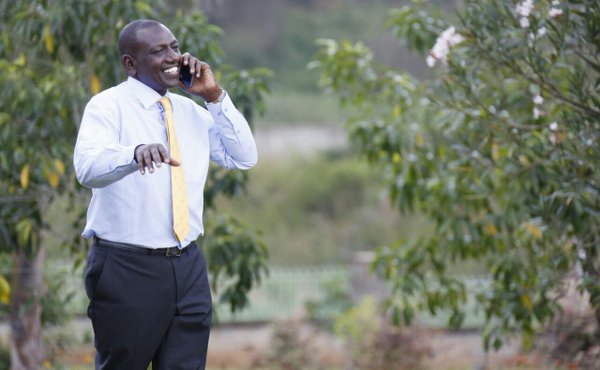
William Ruto received a string of congratulatory phone calls after the ICC Judges made their ruling (Photo: DPPS)
It’s over. Almost six years after the International Criminal Court (ICC) intervened to investigate those responsible for the 2007-08 post-election violence in Kenya, everyone of the Court’s targets has escaped judgement day. What started out as the “Ocampo Six” — a reference to the ICC’s first chief prosecutor and the six individuals he targeted for crimes against humanity — is now the “Ocampo Zero”. This afternoon, in a much anticipated decision, ICC Judges “terminated” the case of Deputy President William Ruto and his co-accused, journalist Joshua Arap Sang. They join others, most notably Kenyan President Uhuru Kenyatta, in being freed from their trial in The Hague. The ruling brings to an end a gruelling, dramatic, and controversial epoch in the Court’s history. Here are a few thoughts on what the ruling could mean going forward.
Witness Intimidation and Prospects for a Re-Prosecution?
In the opinion of presiding Judge Chile Eboe-Osuji, the case was a mistrial (the first such ruling in the ICC’s history). Eboe-Osuji concluded that a mistrial had to be declared “due to a troubling incidence of witness interference and intolerable political meddling.” This is somewhat of a peculiar view. The defendants got something that they desperately wanted (the end of their trial) but for reasons they couldn’t possibly agree with (that Kenyan operatives intimidated witnesses and interfered with the trial on their behalf). In other words, Eboe-Osuji rather curiously blamed the political forces behind the defendants for a mistrial which ultimately benefits them and sets them free.
But that isn’t the whole story. Sang and Ruto’s defence counsel had actually hoped for something more than a mistrial or termination of the case. They had sought a positive ruling with regards to their no-case-to-answer motion. Had they received that, neither Sang nor Ruto could be re-prosecuted in the future at the ICC. A mistrial, however, permits prosecutors to re-open the case in the future if new — and better — evidence comes to light.
At the moment, it is hard to imagine such a re-trial happening. But it may not be entirely impossible down the road if the Court’s prosecutors manage to prove that there has actually been witness tampering. There are currently three live warrants of arrest that have been issued for Kenyan nationals for what amount to allegations of obstructing justice at the ICC by intimidating and interfering with witnesses. These individuals — Walter Barasa, Paul Gicheru, and Philip Kipkoech Bett — remain in legal limbo as Kenya mulls whether it will surrender them to the ICC. But it is now up to prosecutors to prove these allegations of witness tampering. If they can do that, it could potentially help them (re)build cases and to eventually re-prosecute some of the alleged senior perpetrators of the post-election violence.
No Prospects for Domestic Justice
Make no mistake about it — the Kenya cases at the ICC stopped being about justice a long time ago. The ICC-Kenya debacle is a story about a state and government against an international court and institution. It has been a narrative about a whole bunch of things — politics, colonialism, power, diplomacy, money, reputation, messaging, etc. But it is genuinely difficult to remember a time when it was about achieving justice for the victims of post-election violence. If it had been, the government of Kenya could have simply demonstrated that it was prepared to take accountability — any accountability — for post-election violence seriously. It hasn’t and it likely won’t. Continue reading