The following is Dr. Mirza Buljubašić‘s contribution to JiC’s ongoing symposium on Alette Smeulers’ new book “Perpetrators of Mass Atrocities Terribly and Terrifyingly Normal?”. Buljubašić is a criminologist with a PhD, MA, and BA in Criminology, as well as degrees in Criminal Law and Security Studies. His research focuses on political violence, including atrocity crimes, terrorism, and extremism, as well as punishment, transitional justice, and intergenerational criminology. All other contributions to the symposium can be found here.
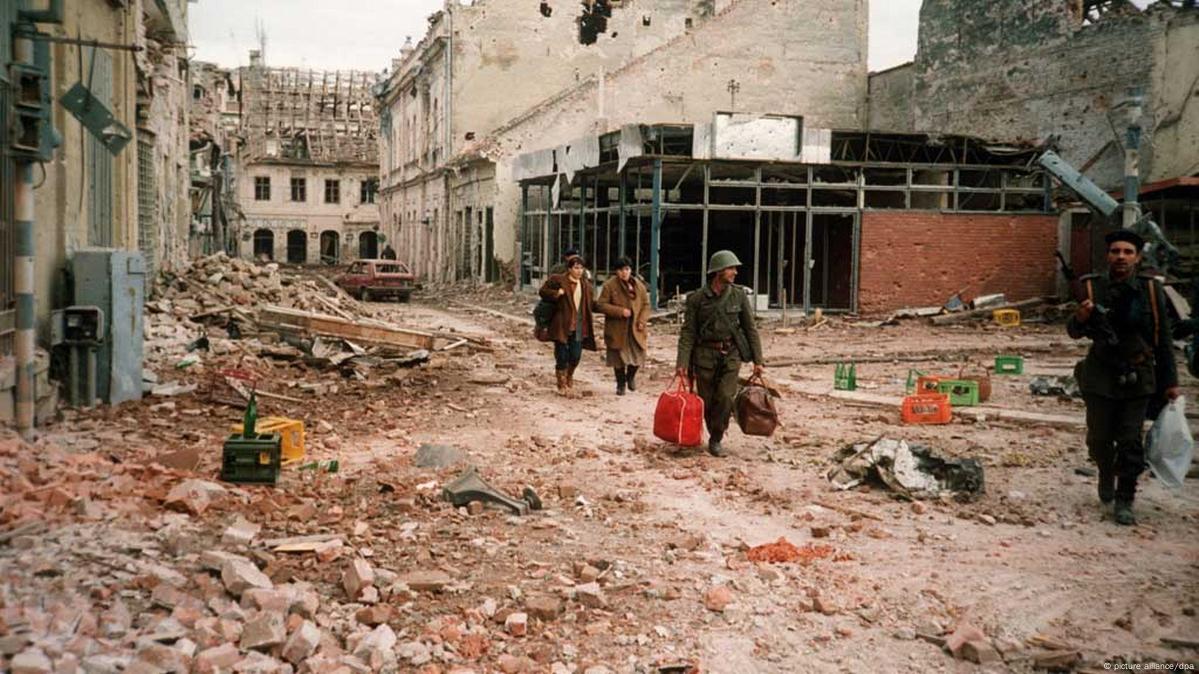
The warehouse in Srebrenica was suffocating with fear, its air thick with sweat and dust. Terrified men stood in clusters, their hands bound, pressed together as if proximity could offer protection. Outside, executioners adjusted their rifles with mechanical precision, their movements practiced, almost routine. Some among them were barely recognizable—neighbors, classmates, men who had shared streets and workplaces with their captives. Now, they were soldiers, policemen, paramilitaries, enforcers of an ideology that had hollowed them out. Some hesitated, fingers hovering over triggers, but their hesitation was fleeting. The weight of command, the collective momentum of violence, and years of dehumanization had left little room for conscience. Killing had become mechanical, detached, even necessary in their eyes. These were not mythical monsters but men shaped by war’s brutal logic. How does one become a murderer? Not in a moment, but through a slow erosion of boundaries, an incremental descent into a world where atrocity is not only permitted but expected.
What is normal? Can men who commit such acts ever be considered normal? Is war itself normal? A most haunting realization is that atrocity becomes routine, woven into daily life, its horror dulled by repetition. Normality is pliable, shaped by ideology, violence, and the silent complicity of those who look away. Alette Smeulers’ Perpetrators of Mass Atrocities: Terribly and Terrifyingly Normal? confronts this, dissecting the motivations of those who commit mass violence. Yet, can such a typology fully explain the Yugoslav Wars (1991–2001), where state and paramilitary, soldier and civilian, executioner and neighbor blurred beyond recognition? In this war, violence was not dictated solely from above but emerged in the everyday—in makeshift detention camps, in commandeered schools, in town squares where men who had once lived side by side turned on each other with chilling ease. It was not only the architects of war who bore responsibility but also the individuals who, in the right—perhaps more aptly, the wrong—circumstances, became willing executioners.
Political leaders like Slobodan Milošević, Radovan Karadžić, and Franjo Tuđman did not need to pull the trigger to be responsible for mass atrocities. Their power lay in the narratives they crafted—stories of historical victimhood, ethnic purity, and existential threat that transformed neighbors into enemies and violence into duty. They manipulated grievances, rode the waves of fear and resentment, and mobilized their own communities into war machines. Karadžić did not have to stand in Srebrenica to be complicit in genocide; his speeches, directives, and unrelenting far-right vision ensured others would carry it out. The killings were not a spontaneous explosion of hatred but a systematized project, embedded into the structures of war.
Continue reading




 Justice in Conflict