New Book Alert! Hybrid Justice: Innovation and Impact in the Prosecution of Atrocity Crimes 

Dear readers,

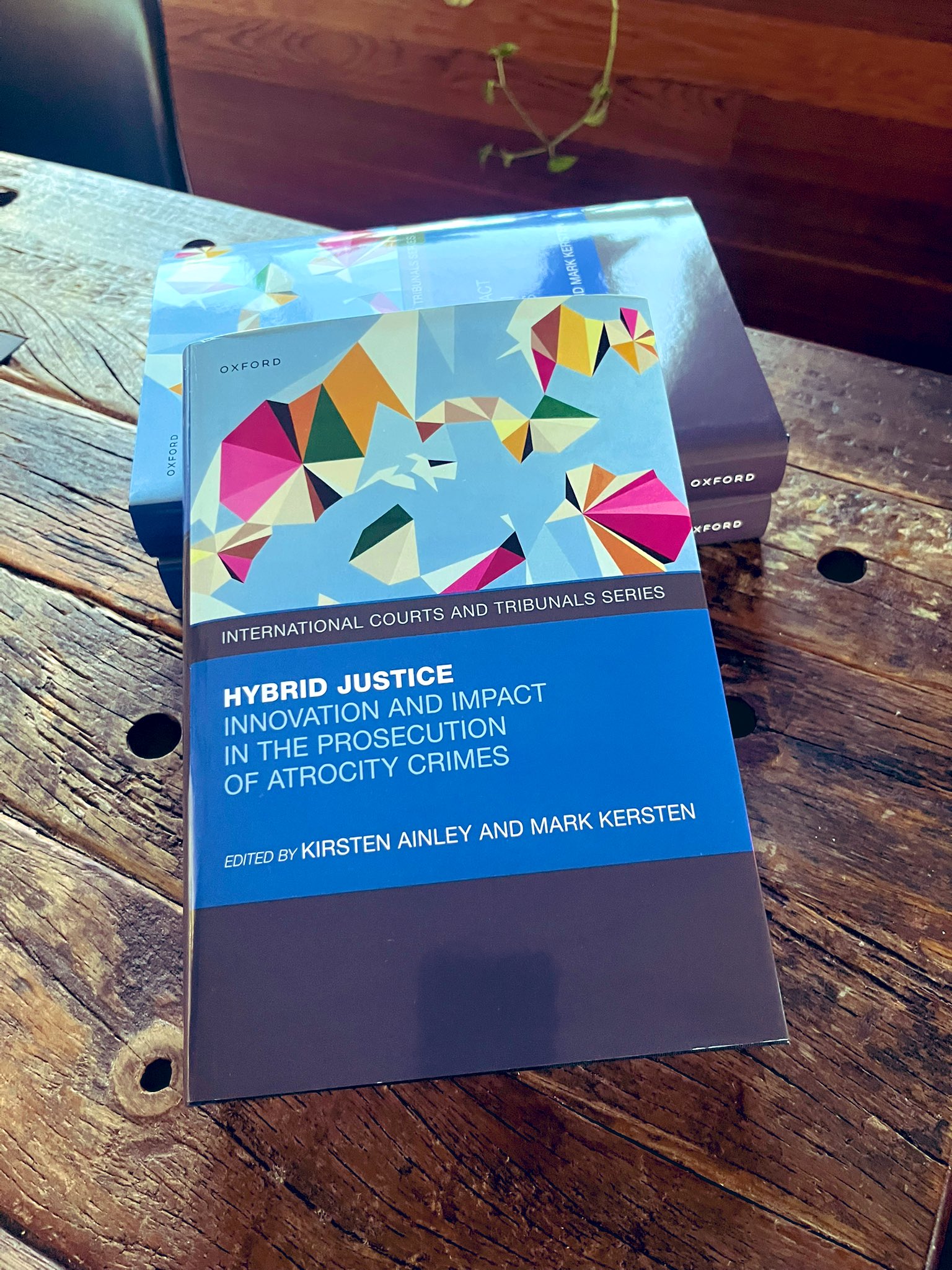
I am very happy and excited to announce the publication of a new book, co-edited by Kirsten Ainley and myself, entitled Hybrid Justice: Innovation and Impact in the Prosecution of Atrocity Crimes.

The volume is the product of the Hybrid Justice Project. Here is a synopsis of the book:

The last decade has seen the unexpected re-emergence of hybrid and internationalized courts, tribunals which operate with varying combinations of national and international law, procedure, and staff. The permanent International Criminal Court (ICC) should have made such hybrid mechanisms largely obsolete, yet hybrids have recently been established or proposed for crimes committed in Chad, South Sudan, Israel/Palestine, the Central African Republic, Kosovo, Syria, Sri Lanka, Myanmar, The Gambia, and Liberia, among others. One of the most pressing conversations in international criminal law is whether and how a hybrid tribunal can be set up to address Russia’s commission of the crime of aggression in Ukraine. Hybrid courts are often a response to the need to make justice more—albeit not entirely—local. They operate with differing degrees and elements of national and international law and staff. Some hold proceedings in the relevant situation country, others in third-party states, and yet others offer a mix of both. All contribute significantly to the broader ‘system’ of international criminal justice. This edited volume examines the resurgence of hybrids. The contributors—lawyers, academics, and activists—offer analyses of the ways in which hybrids have succeeded or failed to achieve their objectives and, in doing so, help to clarify what makes hybrids more or less likely to succeed in their mandates and impacts. The authors focus on hybrid courts and resilience: the resilience of hybrid mechanisms to withstand political and other pressures in order to deliver justice and accountability, and the potential contribution of hybrids to the resilience of affected communities. Chapters are grouped into sections on the fields, practices, innovations, and impacts of hybrid courts, to draw out lessons for the future of hybrid justice.

Continue reading
Posted in Books and Publications, Hybrid Court for South Sudan, Hybrid Courts, Hybrid Tribunals | Tagged , , , , , , , , , , , , , , , , , , | 1 Comment

It’s all about control: U.S. sanctions against the International Criminal Court and navigating a path forward

(Photo: AP)

The Trump administration’s Executive Order issuing sanctions against staff of the International Criminal Court (ICC) have been called many things: vindictivedisgraceful, as well as an act “that puts the United States on the side of war criminals at the expense of victims of grave crimes seeking justice.” As severe as they may be, these descriptions are nonetheless accurate. But who is targeted by theses sanctions, why were they issued, what impact might they have, and where do they leave the ICC? In what follows, I endeavour to answer these questions.

American sanctions against the ICC did not come as a surprise. It has been understood for months now that the Trump administration is infected by rapidly anti-ICC sentiments. Since the 2024 presidential election, it was accepted by the Court and states alike that the U.S. would resume its efforts to cripple the Court, initiated at the end of Trump’s first presidency. It is easy to forget the attacks on the ICC by the likes of National Security Advisor John Bolton – who called the Court “dead”, and Trump’s former Secretary of State Mike Pompeo – who called it a “Kangaroo court”. The most recent sanctions are a continuance on a theme, not an aberration.

In January, Republicans tried to pass a bill authorizing sanctions through Congress, but were blocked by Democrats in the U.S. Senate. As a result, the latest sanctions come via Executive Order. The greatest fear in recent weeks among proponents of the ICC was that the U.S. would issue sanctions not just against ICC staff, but against the Court itself. That would pose a potentially existential threat to the institution and its ability to function. Reflecting those fears, it was reported that staff at the Court were backing up data and evidence in case they would not be able to access the Microsoft platforms that the institution had become dependent on in recent years. 

For now, however, the White House has decided not to sanction the Court as a whole but rather focus on a list of individuals to be targeted. As this moment, only one person, ICC Prosecutor Karim Khan, has been listed. If the U.S. continues to target only individual ICC officials, the sanctions will neither paralyze nor destroy the Court. They may interfere with certain actions and will certainly be figured into decision-making. For example, will Khan be permitted to speak at the United Nations Security Council, which he does twice a year, or to attend the Assembly of States Parties of the ICC conference when it takes place at the UN in New York? Regardless of the answers to these questions, sanctions targeting individuals are manageable, especially if the European Union invokes its Blocking Statute to insulate sanctioned ICC staff and ensuring they can access financial and banking institutions.

Continue reading
Posted in Benjamin Netanyahu, Donald Trump, Gaza, Palestine, Palestine and the ICC, United States | Tagged , | Leave a comment

Here’s what needs to happen in the wake of Trump’s sanctions against the International Criminal Court

The International Criminal Court (Photo: ICC)

It wasn’t a surprise, but nevertheless, the Executive Order imposing sanctions on the International Criminal Court (ICC) are a deeply troubling development. As Amnesty International’s Agnes Callemard put it, the order “is vindictive. It is aggressive. It is a brutal step that seeks to undermine and destroy what the international community has painstakingly constructed over decades… The sanctions constitute another betrayal of our common humanity.”

It is difficult to know what to do when so much of what we care about and advocate for is under attack. What are we supposed to do? How do we protect the institutions that accountability advocates worked so hard to create – often against the odds? The threats posed by the Trump administration – whether punitive tariffs, arbitrary pauses on foreign aid, or attacks on the ICC – can leave us with a feeling of impending and paralyzing doom. But there are things that can be done to protect and promote institutions like the ICC. While far from perfect and undoubtedly in need of some reform, the Court is worthy of protection from efforts to kneecap and destroy it. In that spirit, here are some things that states and proponents of the institution can do as it faces a potentially existential threat from the U.S.

Hold firm. American decision-making often has the effect of taking all of the oxygen out of the room. President Trump, in particular, has a penchant for ‘flooding the field’: saying and doing multiple atrocious, racist, or hurtful things, in order to fragment media and diplomatic attention. But the ICC must not be deterred by the Trump administration’s bullying. While it may be easier said than done, the Court should not be deterred from continuing its work in the face of Washington’s threats. Its warrants for Israeli leaders are based on firm and compelling evidence. Its investigations into Palestine and Afghanistan are on solid ground. Backing down and showing weakness – especially against Trump – would only leave the Court more exposed to intimidation and vulnerable to interference.

The Court’s staff should likewise remember that when American frustration towards the ICC is at its greatest, that antipathy signals to the rest of the world – which, it should go without saying, matters as much as the United States – that the Court is challenging a political status quo where might is right and Washington can stomp on the rules-based international order when it so pleases. The fact that Trump and his sycophants are so hysterically and unreasonably upset with the ICC is a symptom of the Court’s success, not its failure.

Rally around the Court and its mission. The ICC is far from perfect. It is entirely legitimate and natural to criticize its decisions. But member-states and advocates need to remind themselves and others that the Court is a global achievement worth promoting and protecting, warts and all. It remains the only permanent international court capable of investigating and prosecuting international crimes. It has a role to play in contexts of political violence and it continues to have purchase for states whose civilians have faced atrocity crimes, as demonstrated by the recent decisions of Ukraine and Armenia to join the ICC.

Continue reading
Posted in ICC Prosecutor, ICC Registry, International Criminal Court (ICC), International Criminal Justice, United States | Leave a comment

Trump’s Gaza “Plan” would mean committing every core international crime

(Photo: AP)

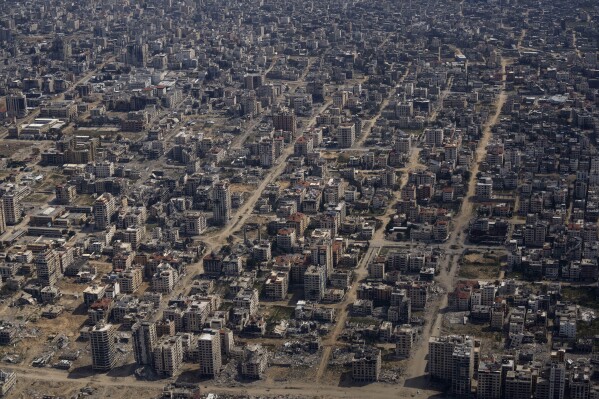
It is hard to keep track of the number of international crimes being proposed in Washington as a response to the destruction of Gaza. There are solid arguments to be made that President Donald Trump’s “plan” for the United States to “own” Gaza, transform it into a “Middle East Riviera”, and move Palestinians into neighbouring Arab states would require committing every core international crime under international law: war crimes, crimes against humanity, genocide, and the crime of aggression. It also erases the atrocities that led to the levelling of Gaza. Trump’s thinking must be resisted lest it normalize atrocity crimes.

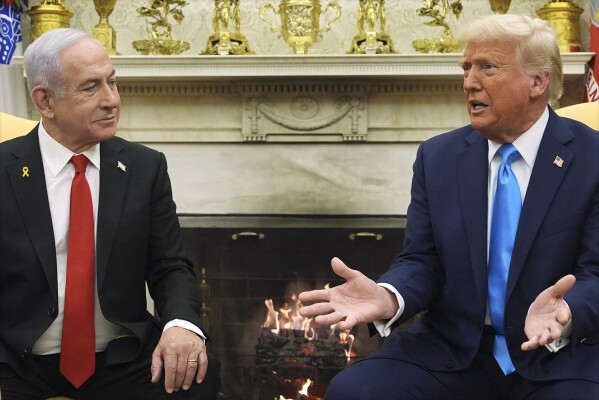
Trump’s “plan” has now been endorsed by right-wing politicians in Israel and called the “first good idea I’ve heard” by Prime Minister Benjamin Netanyahu. Here is a snapshot of the international crimes that would be committed if it was implemented.

Gazans have every legal right to stay in Gaza. Moving Gaza’s population would constitute a crime against humanity under the Rome Statute of the International Criminal Court (ICC) which prohibits the deportation or forcible transfer of a population. It is important to note that force does not always have to be by way of guns or bombs. It can come in various forms, like threats to violence or coercion. It is likewise worth noting that crimes against humanity need to be widespread or systematic; in the case of Trump’s plan the forcible transfer of Gazans to countries in the region would be both.

By removing Palestinians from their land, the depopulation of Gaza would also constitute ethnic cleansing. Ethnic cleansing is not, in and of itself, an international crime. But it is a harbinger for genocide. In order to ethnically cleanse a territory of its population, that population almost certainly must be destroyed in whole or in part. It is important to emphasize that the theft and colonization of land is among the most common motivations for genocide. It motivated the Nazis who sought to expel Jews and others from European territories to make way for a German “Lebensraum” and it motivated Canada’s genocide against Indigenous peoples. 

Continue reading
Posted in Crime of Aggression, Crimes against humanity, Gaza, Genocide, ICC Prosecutor, International Criminal Court (ICC), Israel, Palestine, United States, War crimes | Tagged , , , , , | Leave a comment

Settler Amnesty: Canada has a culture of impunity over Residential School atrocities. Here’s what that means

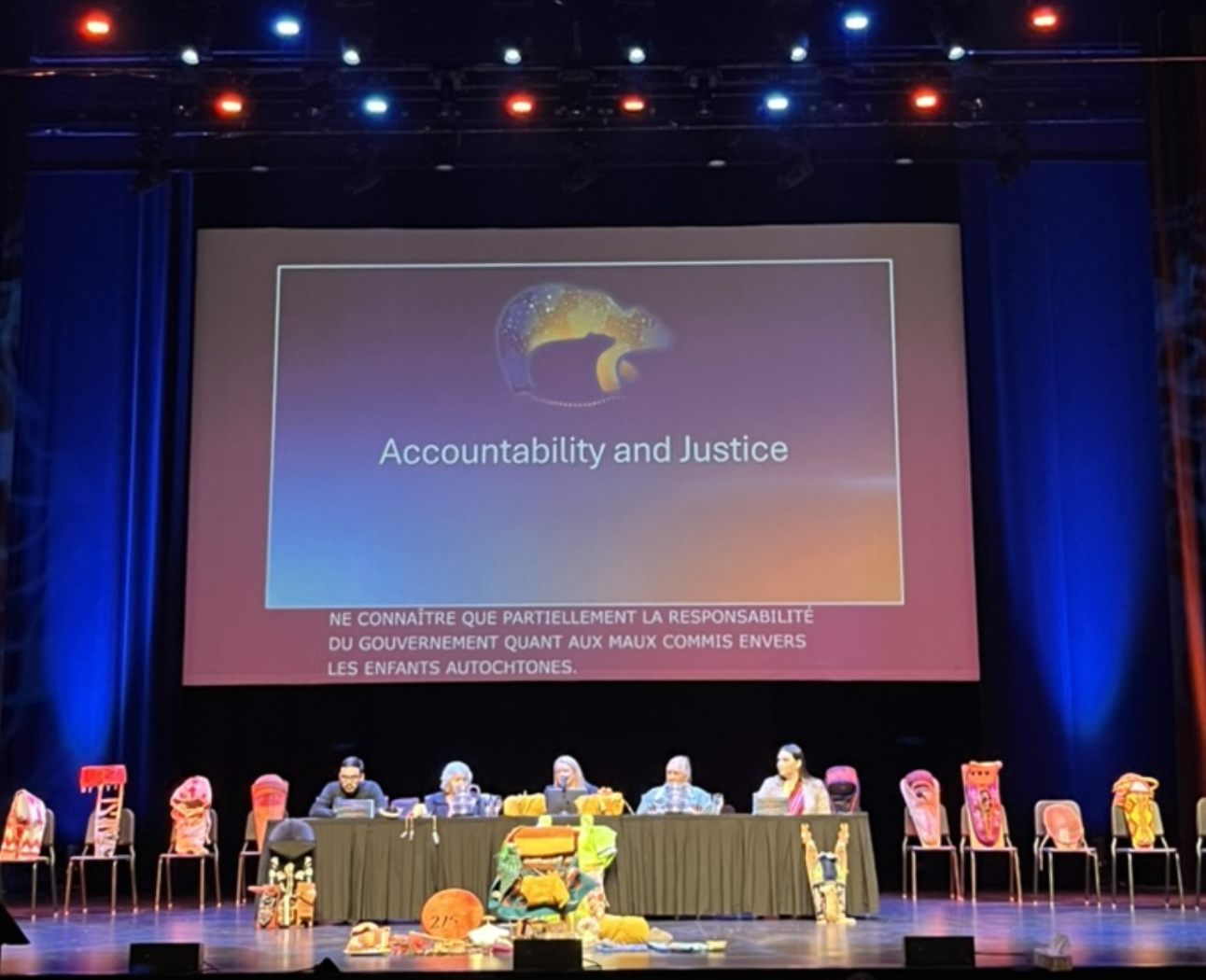
Last October, the Office of the Special Interlocutor for Missing Children and Unmarked Graves and Burial Sites associated with Indian Residential Schools in Canada released its final report. It called for Canada to refer itself to the International Criminal Court and to create an Indigenous-led commission with a 20-year mandate to investigate disappeared Indigenous children. Doing so, Special Interlocutor Kimberly Murray concluded, would help to combat the existence of a “culture of impunity” and “settler amnesty” in Canada over atrocities committed in the Indian Residential School System (IRSS). Some might be naturally ask: what does that mean? Others may wonder: Does Canada really have an impunity problem? The answer is yes.

As readers will know, I was honoured to work for the Special Interlocutor’s Office from 2022 to 2024, applying international criminal law and international human rights law to the horrors perpetrated against children in the Residential School system. Part of that effort sought to understand the particular form of impunity that exists in Canada and articulate how it operates to deny Indigenous Survivors and communities avenues for accountability. We did this by studying amnesty laws, and applying insights from the use and study of amnesties to the Canadian settler colonial context. What follows is based on those findings.

Canadians and people around the world increasingly know that the atrocities and human rights violations committed against Indigenous peoples were not sporadic or the result of ‘bad apples’; they were structural and systematic, committed by specific perpetrators along with the bureaucratic machinery of the Canadian state. There is a belated but growing acceptance of this reality. In 2022, the House of Commons unanimously accepted that the Residential School System constituted genocide – and not ‘only’ cultural genocide. Similar findings were made by the National Inquiry into Missing and Murdered Indigenous Women and Girls in 2019. The indignities and atrocities that children were subject to are increasingly taught in schools across the country. The space of denial has been shrinking.

But it is not just the atrocities against Indigenous peoples that is structural and systematic. Impunity – the lack of justice for these atrocities – has also been structural and systematic. While a small number of perpetrators were held to account for sexual and physical abuse at Residential Schools, none of those most responsible for IRSS atrocities have ever been investigated or prosecuted. The very systems that produced the Residential Schools are still in place; instead of transferring children into the institutions, Indigenous people are today transferred in grossly disproportionate rates into the child state care system and into Canadian prisons and jails, sometimes referred to as “the new residential schools”.

The federal government acknowledges some harms and has offered compensation to some classes of victims and Survivors. But it also fights them tooth and nail in the courts, at enormous expense to Canadian taxpayers.

Canada has likewise closed avenues for justice and accountability that might otherwise be used by Indigenous Survivors and communities. Consider the examples of genocide and enforced disappearances.

Continue reading
Posted in Amnesty, Canada, Enforced Disappearance, Enforced Disapperances, Indian Residential School System, Residential Schools | Tagged , , | Leave a comment

Impunity for Crimes against Migrants: How and why Italy ruined the best chance to bring accountability for atrocities committed against refugees on the Mediterranean

Refugees on a boat crossing the Mediterranean sea in 2016 (Photo: Wiki Commons)

The biggest concern for advocates of international law and justice this week was supposed to be the Trump administration’s incoming sanctions against the International Criminal Court (ICC). But then came the bombshell news that Italian authorities had arrested an ICC suspect only to release him and send him back to Libya on board an Italian secret services aircraft. With this appalling decision, Italy has just scuppered the best chance to address atrocities committed against migrants and refugees on the Mediterranean. How could this happen?

Here is what we know so far.

Libyan national and militia Osama Elmasry Njeem attended a Juventus-Milan football match in Italy last Sunday after arriving in the country by car, via France. The day before the game, the ICC issued a sealed arrest warrant for Njeem on charges of crimes against humanity and war crimes, including murder, torture, rape and sexual violence. The charges stem from Njeem’s alleged crimes committed in Libya since 2015 in the notorious Mitiga Prison, which Njeem is reportedly in charge of as part of Libya’s “Judicial Police”. According to the ICC, the crimes were committed against detainees for “religious reasons”, “immoral behaviour” as well as their support for other armed groups. Many of those imprisoned at Mitiga are migrants and refugees.

In line with Italy’s legal obligations as a member-state of the ICC, Italian anti-terrorist authorities arrested Njeem in his hotel room after the match. They asked ICC officials not to make any public pronouncements over the arrest, so the Court stayed quiet. But an Italian court decided to release Njeem, citing “procedural irregularities”. Authorities swiftly organized his transportation back to the Libyan capital of Tripoli. Media were alerted to his release twenty minutes after his flight left a Turin airport. How any irregularity could possibly require Italy to send home someone wanted on charges of war crimes and crimes against humanity has not been revealed.

Njeem arrived back in Libya where a crowd of men greeting him and celebrated his escape from justice. According to a statement by the ICC, Njeem was released “without prior notice or consultation with the Court,” and Italy has yet to explain its actions. One Italian Member of European Parliament has demanded answers: “The government must provide explanations, and they should do so especially for prisoners held in Libyan concentration camps.”

Continue reading
Posted in ICC Prosecutor, Immigration, International Criminal Court (ICC), International Criminal Justice, Libya, Libya and the ICC, Migration, Osama Elmasry Njeem, Refugees | Tagged | Leave a comment

The Time is Nigh – It’s up to states to save the International Criminal Court

The International Criminal Court (Photo: Mark Kersten)

If you listen carefully, you might be able to hear the applause of wanted war criminals, despots, and dictators around the world.

The passing of a bill imposing sanctions against the International Criminal Court (ICC) in the United States’ House of Representatives should be of concern to all countries that believe in a rules-based order. The sanctions pose a significant, perhaps even existential, threat to the world’s only permanent tribunal capable of prosecuting war crimes, crimes against humanity, and genocide. Will states stand up to support the very Court they created?

While they do not come as a surprise, America’s sanctions against the ICC will come into effect in the coming weeks. The purported reason for these coercive measures is that the Court has defied the interests of the United States, especially by investigating alleged war crimes and crimes against humanity committed by Israeli forces in Palestine as well as the Court’s decision to issue arrest warrants for Israel’s Prime Minister Benjamin Netanyahu and former Defence Minister Yoav Gallant.

But this is not the first time that Washington has sanctioned the ICC; it did so towards the end of President Donald Trump’s first term, in 2020. Indeed, the latest sanctions fit within a long-standing effort by Republican administrations to destroy the Court, beginning with the presidency of George W. Bush. What really seems to get their goat is that the ICC does not simply do America’s bidding. In that way, the incoming sanctions are something of a compliment: they indicate the independence and impartiality of the ICC, as well as its refusal to kowtow to narrow state interests that oppose accountability for mass atrocities.

The sanctions are aimed at the ICC as an institution, its staff and their family members, and those who provide material, financial, or technological support to the Court’s work in Palestine. Human rights advocates have rightly condemned the sanctions and the threats against the ICC’s independence and will continue to do so. But there is only so much they can do. The Court’s members states – including close allies of the United States – need to defend the ICC.

What does that look like? 

Continue reading
Posted in ICC Prosecutor, ICC Sanctions, International Criminal Court (ICC), Sanctions, United States | 2 Comments

A Return to Universal Jurisdiction? Canada reverses course, charges alleged ISIS fighter with War Crimes

Mr. Ahmed Eldidi and his son appear in court earlier this year (

In a major policy reversal, the Canadian government has decided to prosecute an alleged perpetrator of war crimes committed abroad in its own courts. Ahmed Eldidi has been charged by Canadian authorities with multiple war crimes, all relating to his apparent involvement in the torture and killing of an Islamic State detainee in northern Iraq. While questions still loom, this is an opportunity for Canada to do its part in achieving justice for victims of international crimes.

Mr. Eldidi was charged with the war crimes of murder, mutilation, torture, and outrages upon personal dignity under the Crimes Against Humanity and War Crimes Act of 2000. Thanks to the principle of universal jurisdiction, all of these crimes can be prosecuted in Canadian courts – even when they were committed abroad. The allegations stem from an ISIS propaganda film called “Deterring Spies”, which investigators believe shows Mr. Eldidi hacking the hands off a crucified detainee in northern Iraq.

Before the announcement that Mr. Eldidi would be prosecuted, Canada’s last universal jurisdiction case concluded in 2013. As I have explained before, the preference of Conservative and Liberal governments in Canada since then was to deport alleged war criminals out of the country while doing nothing to ensure they would subsequently be held to account. This is true despite the Department of Justice announcing in 2016 that at least 200 perpetrators of international crimes resided in Canada (the Department has since stopped publishing statistics on the topic).

So, what changed?

First, Mr. Eldidi’s alleged crimes were caught on camera. Open-source data is increasingly used in prosecuting war crimes – including by ISIS in countries like Sweden and The Netherlands. Canadian authorities were likely encouraged by the fact that they are not inventing the wheel in using open-source evidence to prosecute war crimes and, critically, that the cost of prosecution would be minimized if the video played a leading role in prosecuting Mr. Eldidi. 

Continue reading
Posted in Canada, Iraq, ISIS, Syria, Universal Jurisdiction | 2 Comments

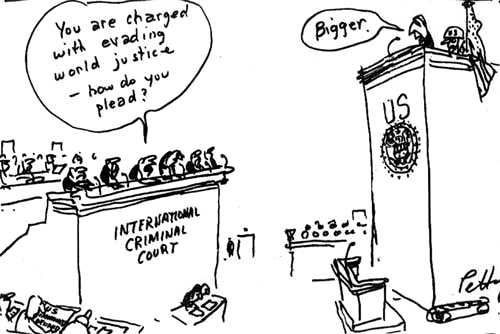
The International Criminal Court is facing an existential challenge from the United States. How does it survive it?

(Cartoon: Bruce Petty)

The world’s only permanent international tribunal mandated to prosecute war crimes, crimes against humanity, and genocide is facing its greatest challenge to date. With the incoming Trump administration and sanctions looming over the Court and its staff, a simple question looms: can the International Criminal Court (ICC) survive the next four years?

I ask this question after attending the Assembly of States Parties of the ICC, the yearly diplomatic conference of the Court’s member states. The gathering took place as dark clouds gathered – both figuratively and literally – over The Hague, where the ICC is headquartered. Sanctions are coming, and maybe sooner than later. 

It has emerged that the U.S. may not wait for Trump to be inaugurated before sanctions are issued. Instead, Republicans may attach sanctions to the National Defense Authorization Act, the bill that lays out Washington’s yearly defence budget and expenditures.  

The hope among proponents of the Court is that the sanctions will target senior officials at the Court and not the Court itself. The ICC can withstand sanctions against a few of its staff. But if the sanctions are issued against the institution, they are likely to have a much larger – and worse – impact. How could ICC investigators and officials travel? How would the court pay its staff if the banks and financial institutions it uses fear being found uncompliant with the sanctions? Could judges even use Microsoft Word to write their judgements?

Continue reading
Posted in ICC Prosecutor, International Criminal Court (ICC), International Criminal Justice, Israel, Palestine, Palestine and the ICC, United States | Tagged | 1 Comment

A window of opportunity for justice in Syria: Tracking Assad’s fleeing torturers and preparing for prosecutions

This image has an empty alt attribute; its file name is tempimagedhthsz.jpg
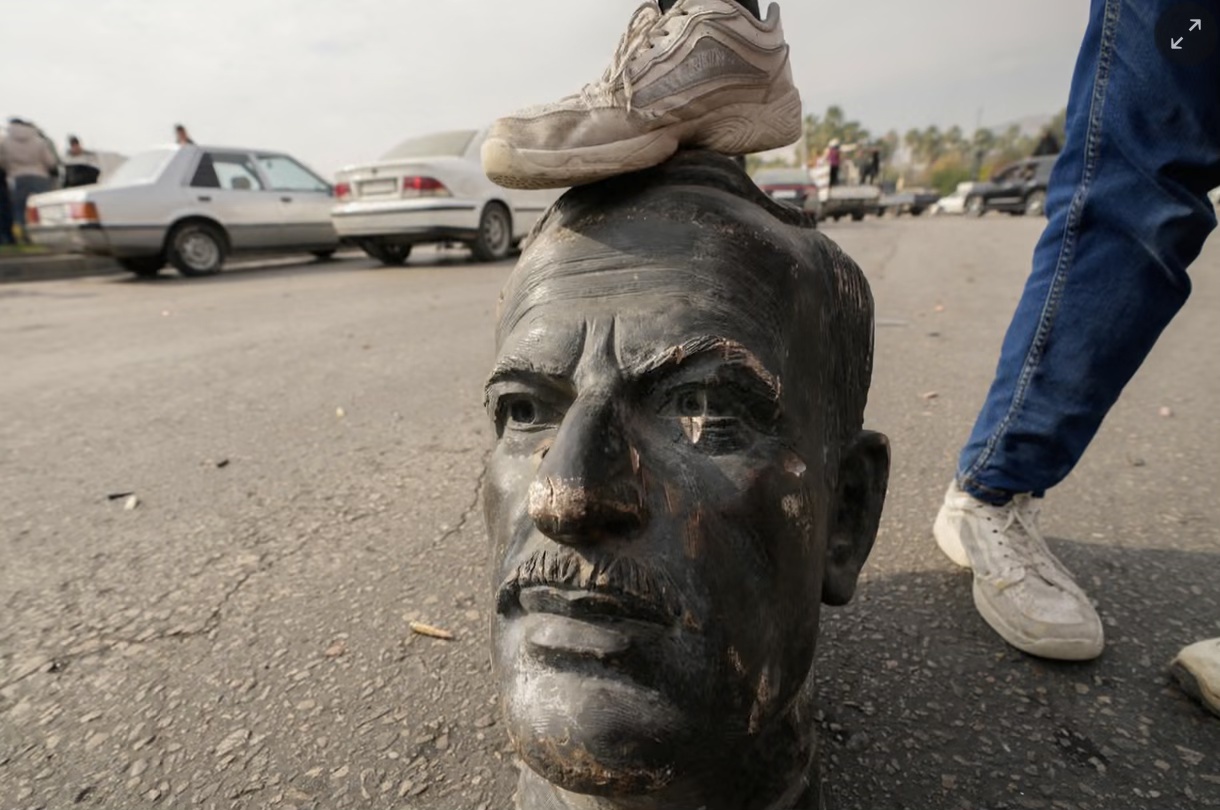
A person steps on the dismantled bust of former Syrian President Hafiz Assad (Photo: Hussein Malla/AP)

The list of atrocities committed since Syria’s civil war erupted in 2011 is almost endless. Every core international crime – war crimes, crimes against humanity, and genocide – has been perpetrated in a conflict that also left one-in-five Syrians living outside of the country. Diplomats have said the evidence of crimes committed in Syria is the strongest since the trials of Nazis at Nuremberg. With President Bashar al-Assad escaping to Moscow following a “perfectly timed rebel offensive” and thousands of his supporters as well as his henchmen fleeing the country, now is the time to deliver justice – in the courts of the countries they are running to and at the International Criminal Court (ICC) in The Hague.

When regimes collapse, the first thing officials and state authorities implicated in atrocities do is pretend to be someone else. Some try to save themselves by insisting they were opposition figures all along, or officers who were just trying to challenge the regime and mitigate its brutality from the inside. 

Others know that attempting to do so is futile; there’s too much blood on their hands. They change stripes and clothes, quite literally, to present themselves as innocent civilians. They hastily marshal whatever resources and assets they have and look for a quick exit, preferably to locations with diasporas where they can blend in. As they jump ship, these officials – many of whom are also perpetrators – create opportunities to hold them to account. 

How do we find them before they slip away and manage to disguise themselves among unsuspecting communities?

Continue reading
Posted in ICC Prosecutor, International Criminal Court (ICC), open source investigations, Syria, Universal Jurisdiction | Tagged , , | Leave a comment