
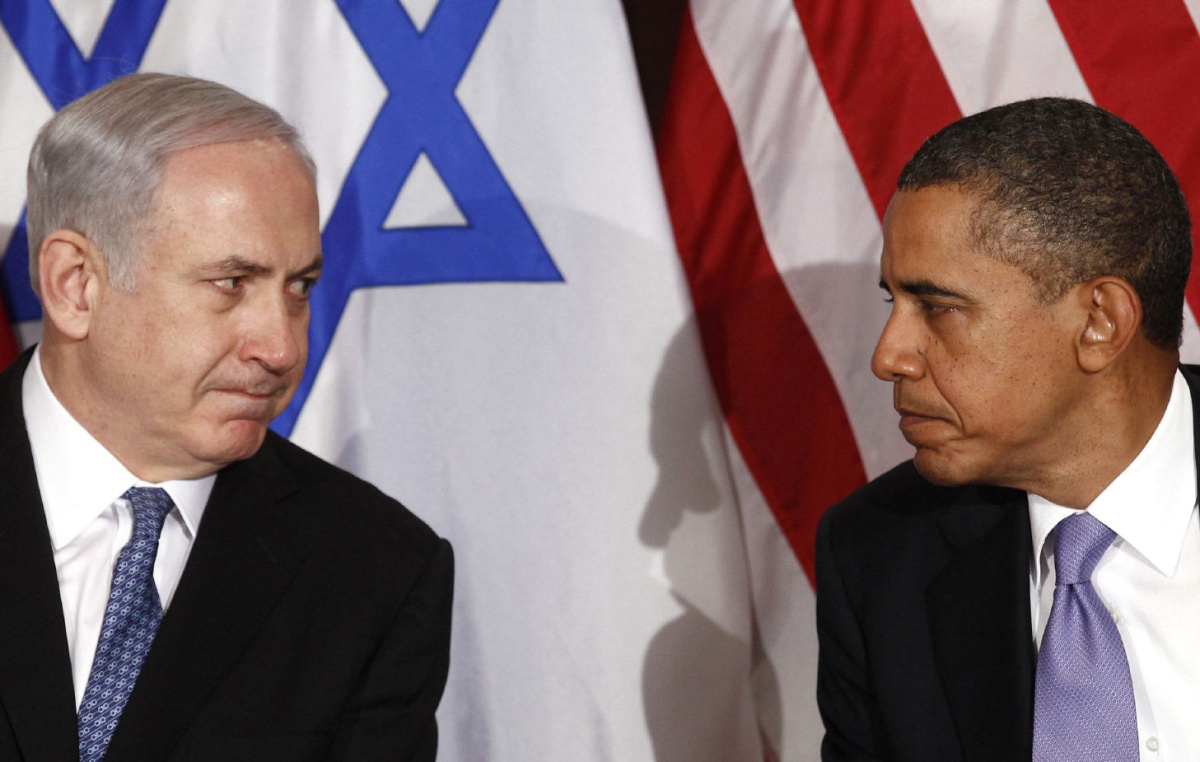
(Photo: Kevin Lemarque / Reuters)
In the wake of this week’s elections in Israel, Palestinian officials have exclaimed their intention to “intensify” their diplomatic campaign against Israel and bring forward charges against Israeli officials to the International Criminal Court (ICC). Could Palestine’s decision to pursue international criminal justice threaten the Middle East peace process? Or could it salvage moribund peace talks via a trade-off of ICC justice for peace between Palestine and Israel?
An Electoral Defeat of the Peace Process?
Anyone in favour of reviving the Oslo peace process is almost surely disparaging the results of Israel’s election which secured Benjamin Netanyahu a fourth term as Prime Minister. Fearing he would lose a tight race on the eve of the election, Netanyahu relied on the xenophobic strategy of asking Jewish Israelis to take up an electoral, voter-turnout war against the apparent bus-loads of Arab-Israeli citizens voting against his party. At the same time, in order to shore up the radical right of the political spectrum, Netanyahu declared that, if elected, he would never recognize a Palestinian state. To do so, he insisted, was to foster a breeding ground for terror and radical Islam.
It’s clear that the White House had its fingers crossed for a Netanyahu defeat at the polls. US President Barack Obama is apparently convinced that engaging with Netanyahu is futile and has outsourced any contact with Netanyahu to Secretary of State John Kerry. The White House criticized Netanyahu’s “divisive” rhetoric in the lead up to election day and is vehemently at odds with the Israeli leader’s position against recognizing Palestinian statehood.
Still, it may be premature to call the Oslo peace process dead. According to John Hudson and Colum Lynch, Washington may be preparing to ramp up efforts to push for a two-state solution at the UN Security Council. What are they using for leverage? The International Criminal Court.
The deliberations over the future of the U.S. diplomatic efforts are playing out just weeks before the Palestinians are scheduled to join the International Criminal Court, a move that is certain to heighten diplomatic tensions between Israel and the Palestinians. On Wednesday, the Palestine Liberation Organization’s top diplomat in the United States told Foreign Policy the Palestinians would move forward with plans to use the ICC to try to hold Israel accountable for alleged war crimes during last summer’s war in Gaza. (Israel says it worked hard to avoid civilian casualties, of which there were many, and blames Hamas militants for taking shelter in populated areas.)
“The fact that we have a government in Israel publicly opposing a two-state solution just reinforces our position that this conflict must be handled by the international community,” Maen Rashid Areikat said.
Ilan Goldenberg, a former member of the Obama administration’s Mideast peace team, told FP that Washington might be inclined to support a Security Council resolution backing a two-state solution as an alternative to the Palestinian effort to hold Israel accountable at the ICC.
“If it was done, it could protect Israel from a worse outcome,” he said.
Under this scenario, the United States would seek guarantees from the international community to hold off on ICC activity in exchange for a Security Council resolution outlining international standards for a final peace agreement between the Israelis and Palestinians.
“The Israelis will probably resist and say this is a bad idea, but they could also be convinced that this is better than the alternative,” said Goldenberg.
Specifically, the US appears interested in having the UN Security Council defer, under Article 16 of the Rome Statute, any investigation (or prosecution) by the ICC of alleged crimes committed on Palestinian territory in exchange for a resolution that galvanizes conclusive peace negotiations. Such a justice-for-peace trade-off would yield a curious blend of both costs and benefits.
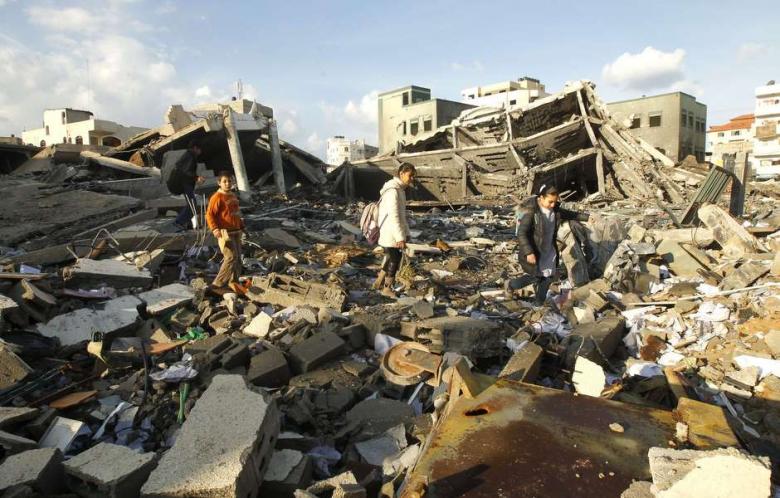
Gaza City in 2012 (Photo: Mohammed Abed / AFP)
The Costs and Benefits of Trading Justice for Peace
As David Bosco has pointed out, one drawback of trading justice for peace stems from the fact that an Article 16 deferral is inherently unstable. Article 16 requires that the UN Security Council agree to renew any deferral every twelve months. Any Permanent-5 member has the ability to veto such a deferral and it is unclear whether the France or the UK (both ICC member-states) would be willing to support an Article 16 deferral – now or in the future. At the same time, while a deferral may work once, there’s no guarantee it would work down the line. Indeed, if relations between Russia and the US continue to deteriorate, would Moscow throw in the wrench a year or two from now? It seems entirely plausible. Continue reading









 Justice in Conflict