
This is the fourth contribution in our symposium on Palestine, Israel and the Responsibility to Protect. The first three can be found here, here and here. James P. Rudolph is an attorney in Washington, D.C. and California where his work focuses on international law. He is a regular contributor to JiC.

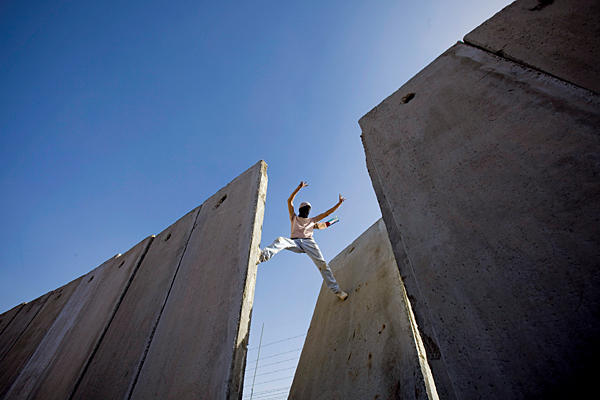
(Photo: IDF / Creative Commons 2.0)
The Responsibility to Protect (R2P) initially appeared in the Report of the International Commission on Intervention and State Sovereignty. The goal was, and remains, the reconciliation of the traditional concept of sovereignty, which involves exclusive control and supremacy over a defined territory, and the more modern notion that the sovereignty of a state includes the primary responsibility to protect its own people.
This notion of sovereignty has, by and large, been adopted by the international community, and is now enshrined in the so-called “three pillars” of R2P. First, the State carries the primary responsibility for protecting populations from genocide, war crimes, crimes against humanity and ethnic cleansing; second, the international community has a responsibility to encourage and assist States in fulfilling this responsibility; and finally, the international community has a responsibility to use appropriate diplomatic, humanitarian and other means to protect populations from these crimes. If a State is manifestly failing to protect its populations, the international community must be prepared to take collective action in accordance with the Charter of the United Nations.
With respect to the ongoing conflict in Israel and Gaza and applying the first pillar, the issue is whether any of this is dispositive. Are we, in other words, witnessing genocide, war crimes, crimes against humanity or ethnic cleansing? If we are not, R2P does not apply. Notwithstanding comments from Turkish Prime Minister Recep Erdogan that Israel is “committing genocide”, most people would likely conclude that Israel is not engaged in any kind of genocidal behavior. In the same vein, it appears doubtful that anybody would seriously claim that ethnic cleansing is occurring. Thus, the question is whether Israel is (or has) engaged in war crimes or crimes against humanity, the two remaining crimes recognised under the R2P rubric.
A crime against humanity requires that certain acts — murder, enslavement, deportation, imprisonment, torture, rape — must be directed against a civilian population, and that they be part of a widespread or systematic attack. Widespread means massive, large-scale action, whereas systematic means part of a preconceived policy. Israel’s response to the rockets from Gaza certainly has had consequences for Palestinian civilians, many of whom have been children. But none of these acts are occurring in Israel itself (if, indeed, they are occurring at all). R2P means that Israel has a responsibility to protect its own population from crimes against humanity. We are thus left with war crimes.
There may be a convincing argument that Israel’s self-defense has become excessive, and this would have ramifications under the laws of war (Geneva Conventions and customary international law). But, if anything, this is being directed at Hamas and Gaza. Stated differently, neither Israel nor Gaza is engaging in excessive force against its own population, so R2P, while an attractive prism through which to view the conflict, seems not to apply.
With respect to pillar two, moreover, the international community has been assisting both Israel and the Palestinians to fulfill their obligations under R2P,as evidenced by the recent Egyptian-sponsored cease-fire that was rejected by Hamas. Interestingly, this assistance has included diplomatic, humanitarian and other means to protect populations from these crimes. Accordingly, the use of force, which is contemplated under pillar three, is altogether inappropriate at this juncture, as it is to be used as a last resort after the state has manifestly failed to protect its own population. This is all to say that R2P has not, and likely will not, be triggered by this recent conflict.
Who has the responsibility to protect civilians in this ongoing war?
Civilians are, of course, protected by R2P. Indeed, the raison d’être of R2P is the protection of civilians. But, as noted above, R2P probably does not apply to the current conflict in Israel and Gaza. This is not to say, however, that civilians are devoid of any protection. International humanitarian law, the purpose of which is the protection of those who do not or cannot take part in armed hostilities, is considered the human rights component of the law of war, and it is codified in the four Geneva Conventions of 1949 and the two 1977 Protocols Additional to these treaties. (These conventions are also considered customary international law). The Fourth Geneva Convention, to which Israel is a party, deals with the protection of civilians during war. In each of the four Geneva Conventions, the High Contracting Parties assume a large number of obligations for the benefit of the protected persons. Article 33 of the Fourth Geneva Convention, for example, outlaws collective punishment, defined as mass punishment without an individual assessment of guilt. The Fourth Geneva Convention also imposes on signatories various due process requirements for trials and sentencing. Furthermore, the Geneva Conventions provide for a system of supervision administered by the so-called Protecting Powers, which, by and large, means the International Committee of the Red Cross. Continue reading





 Justice in Conflict