International Justice gets a dose of HARDtalk

Last week, the current President of the International Criminal Tribunal for the former Yugoslavia (ICTY), Theodor Meron, appeared on BBC’s HARDtalk. Meron, a luminary in the world of international criminal justice who has published widely and is universally respected for his work and thinking on matters of international justice, held his own on a show that isn’t known to be particularly easy with its guests. You could tell at various moments during the interview that host Stephen Sackur holds Meron and his work in very high regard.

The interview covers various issues, including the potential deterrence effect of international justice, the weighing of international criminal justice against other transitional justice mechanisms, the legality of Israel’s settlements on Palestinian territories, and the selectivity of international tribunals. Of course, no debate would be complete without touching on the ‘peace versus justice’ debate.

Specifically, Meron was asked whether Syria’s Bashar al-Assad should be granted amnesty in order to persuade him to step down. On this, the ICTY President claimed that we need to find ways where both justice and peace-making function simultaneously. He added that the trade-off was a question 0f sequencing or timing rather than a matter of principle but that without criminal accountability, there could be no sustainable democracy or respect for the rule of law.

The argument that peace and justice can be effectively sequenced reflects much of the current thinking in the ‘peace versus justice’ debate. But it’s not without its weaknesses, as I have argued previously. The reality is that no perpetrator of mass atrocities is likely to accept an amnesty that they believe would subsequently be revoked. It is likely for this reason that premeditated sequencing has no history (as far as I can tell) in practice.

Regardless, the episode is a must-watch. It’s another opportunity to get a glimpse into the thinking of an individual who, more than almost anyone else, has shaped the world of international criminal justice.

Enjoy!

Posted in ICTY, International Law, Justice | Tagged | Leave a comment

Update: Ntaganda Headed to The Hague

(Photo: RNW)

(Photo: RNW)

In the end, the fears that Rwanda might “inhibit” the transfer of notorious rebel leader Bosco Ntaganda from the US Embassy in Kigali to the International Criminal Court (ICC) in The Hague did not materialize. “The Terminator” is on his way to the ICC.

Just days ago, a delegation from the ICC arrived in Rwanda to facilitate Ntaganda’s transfer. Today Ntaganda left the US compound in Kigali in a convoy of cars headed for the airport in Kigali. He was then loaded onto a private jet bound for The Hague. He should arrive in the Netherlands in approximately 8 hours if the flight is direct. Ntaganda will be reunited with his old ally, Thomas Lubanga, in the ICC’s prison facilities in Scheveningen.

According to a tweet by Rwanda’s Foreign Minister Louise Mushikiwabo, Ntaganda’s transfer was the result of cooperation between the United States, Rwanda and the Netherlands. While it remains to be seen, it seems likely that the Dutch provided the aircraft to transport Ntaganda and the ICC delegation to The Hague. Under anti-ICC domestic legislation (The American Service-Members Protection Act), the US is prohibited from providing any funding in cooperation with the Court.

Here is what the ICC had to say:

Today, Friday, 22 March 2013, Bosco Ntaganda, against whom the International Criminal Court (ICC) has issued two arrest warrants, surrendered himself voluntarily and is now in the ICC’s custody. Bosco Ntaganda is currently escorted by an ICC delegation that has left Kigali (Rwanda) heading to the ICC detention centre in The Hague (Netherlands).

Upon arrival, Mr Ntaganda will receive a medical visit and will appear, as soon as possible, before the Judges in the presence of a Defence Lawyer. The date of the initial appearance hearing will be announced soon. During the initial appearance hearing, the Judges of Pre-Trial Chamber II will verify the identity of the suspect and the language in which he is able to follow the proceedings. Mr Ntaganda will be informed of the charges against him. The Judges will also schedule a date for the opening of the confirmation of charges hearing, a preliminary step to decide whether the case will be referred to a trial or not.

This is the first time that a suspect has surrendered himself voluntarily to be in the ICC’s custody. The Court is grateful for the support and cooperation of the Dutch and American authorities, both in Kigali (Rwanda) and in the Netherlands. This operation would not have been possible without the support of the Rwandese authorities.

Of course many pressing questions remain: why did the US sound the alarm in declaring its concerns that Rwanda would inhibit Ntaganda’s transfer to the ICC? Did Rwanda consider prohibiting Ntaganda from leaving Kigali? Why did Ntaganda surrender himself in the first place? Will he speak to his relationship with the government of Paul Kagame?

The answers to these questions will hopefully become clear in the coming days.

Over the coming days, JiC will add further updates as they come in. For the moment, here’s a pertinent video clip of what awaits Ntaganda:

Posted in Democratic Republic of Congo, International Criminal Court (ICC), Rwanda, United States | Tagged , | 2 Comments

Barrier to Justice: Could Rwanda Prevent Ntaganda from Reaching The Hague?

(Photo: AP / Jerome Delay)

(Photo: AP / Jerome Delay)

Troubling signs have emerged that the transfer of Bosco Ntaganda to the International Criminal Court (ICC) may be “inhibited” by the Rwandan government. On Monday, Ntaganda stunned the world when he surrendered himself to the ICC via the US Embassy in Kigali, Rwanda.

The US government, which has stated that it is keen to transfer Ntaganda to the ICC as quickly as possible, is concerned that Rwanda will frustrate its efforts. According to Melanie Gouby and Mike Corder,

The United States government appears to be worried that Rwanda won’t allow a warlord from Congo now camped out in the U.S. Embassy safe passage to the airport to be flown to the International Criminal Court for prosecution.

The U.S. hopes Rwanda will help facilitate the transfer of Congolese rebel leader Bosco Ntaganda from the U.S. Embassy in Kigali to the airport for a flight to the ICC in the Netherlands, the top U.S. State Department official on Africa, Johnnie Carson, said Wednesday.

“We hope that the Rwandan government will do its part,” Carson said in a telephone press conference from Washington. “It is a small but significant part to ensure that Bosco Ntaganda is able to move freely from the American embassy compound to the airport where he will board a plane and go to The Hague.”

Carson said it’s important that Ntaganda’s movement from the embassy to the airport “in no way be inhibited.”

Carson also indicated that Rwanda hasn’t yet assured cooperation with ICC officials en route to Rwanda. He noted that Rwanda, like the United States, is not a signatory to the Rome Statue that created the ICC and is not bound by international obligations to hand Ntaganda to the ICC.

The possibility of Rwanda seeking to undermine Ntaganda’s transfer shouldn’t come as a surprise. For the moment at least, Ntaganda’s surrender means that everyone comes out a winner – except for the Rwandan government.

Bosco-Ntaganda-9The American decision to help Ntaganda get to the ICC is a public and international relations victory for the country; in this case at least, the US appears firmly on the side of international justice. As far as the ICC is concerned, it will now have custody over a long sought-after rebel and can celebrate a very significant act of cooperation with the US. The Democratic Republic of Congo (DRC) is now rid of a potential obstacle which may help it progress in its fragile peace process with rebels in the country’s Eastern provinces, including the M23. As far as Ntaganda is concerned, it is increasingly clear that his personal and physical safety was in jeopardy prior to his surrender. US State Department spokesperson Victoria Nuland stated yesterday that Ntaganda has sought “sanctuary” at the ICC. The former rebel is likely relieved to be in the protective custody of the US Embassy. Most importantly, communities in the Eastern DRC no longer have to fear “The Terminator”. As one resident of Goma, where Ntaganda had hidden in plain sight for years, put it: “The war in Congo concerns every tribe; it doesn’t matter if you are Lendu, Hema, Tutsi or Hutu. Everyone is happy he has surrendered.”

As I argued in my post yesterday, however, Rwanda is in a precarious situation. The government of Paul Kagame supported and supplied Ntaganda and the M23. The government is surely anything but keen to see its relationship to rebels in the Eastern DRC further examined and exposed in The Hague. Continue reading

Posted in Democratic Republic of Congo, International Criminal Court (ICC), Rwanda | Tagged | 5 Comments

When an Alleged War Criminal Walks into a US Embassy and says: ‘Take me to the ICC’

jammas.hussain20130318225103190An ICC indictee walks into an American Embassy in broad daylight and asks to be transferred to The Hague. This could be the beginning of a good joke. But it isn’t. It is exactly what happened in Rwanda yesterday.

The world is abuzz with news that notorious rebel leader Bosco Ntaganda, wanted by the ICC on allegations, amongst other things, that he conscripted, enlisted and used child soldiers in the Democratic Republic of Congo (DRC), surrendered himself to the US Embassy in the Rwandan capital of Kigali. According to Victoria Nuland, spokesperson of the US Department of State,

[T]his morning Bosco Ntaganda, an ICC indictee and leader of one of the M23 factions walked into U.S. Embassy Kigali. He specifically asked to be transferred to the ICC in The Hague. We’re currently consulting with a number of governments, including the Rwandan government, in order to facilitate his request… I don’t think that we had any advance notice that he would plan to walk in. It sounds like it was something that happened this morning, and we are endeavoring to meet his request… We want to facilitate that request. As you know, we strongly support the work that the ICC is doing to investigate the atrocities committed in the Democratic Republic of the Congo, and we are going to continue to work with the ICC in this matter.

The question on everyone’s mind is: what convinced Ntaganda to give himself up? Unfortunately, despite rampant speculation on the subject, the truth is, we simply don’t know.

Here is what we do know: First, the M23, a rebel group in which Ntaganda had been a key leader, splintered recently and was hunting Ntaganda down. Second, there were rumours that Ntaganda would “sold out as part of any peace deal” in the DRC. Third, “The Terminator”, who is a very recognizable figure and has long been supported by the Rwandan government, managed not only to get into Rwanda but get all the way to Kigali and present himself at the US embassy. Fourth, despite not being a member-state of the ICC (and therefore having no obligations to the Court), the US will facilitate his transfer to The Hague. Fifth, at least publicly, neither the DRC nor Rwanda have a problem with him heading to the ICC.

(Photo: Reuters)

(Photo: Reuters)

Of course, we also know that something convinced Ntaganda that it was in his best interests to surrender himself rather than continue fighting. What that something is remains shrouded in secrecy. So too is the source of that something: was it Rwanda that pushed Ntaganda to surrender himself? Was it factions in the DRC? Did he make the decision on his own volition or was he coerced?

With Ntaganda’s surrender, Rwanda, in particular, is in a tricky position. It is quite clear that Ntaganda could ‘spill the beans’ on his closer and precarious relationship with Kigali. Given how much is already known about Rwandan support for the M23 and other rebel groups in the Eastern DRC, we probably wouldn’t learn much. But it would undoubtedly infuriate and embarrass the regime of Paul Kagame, which has gone to borderline absurd lengths to deny its relationship to Ntaganda as well as its role in fuelling conflict in the DRC over the last two decades. In short, Rwanda is unlikely to be particularly happy that Ntaganda is headed to The Hague for a lengthy trial. But it is precisely because of its close relationship with The Terminator that the government is likely to take a hands-off approach and claim that they are more than happy to see Ntaganda sent to The Hague. Any other course of action would immediately betray their position that they have had no relationship with him.

As for the ICC, it is understandably and unsurprisingly thrilled that Ntaganda will be surrendered to the Court. The rebel leader had been ‘hiding in plain sight’ for years, living a very public life in Goma, much to the chagrin of human rights and international justice advocates. After a very tough week, the ICC undoubtedly welcomed the news that a notorious criminal and source of deep embarrassment would soon be in its custody.  Continue reading

Posted in Democratic Republic of Congo, ICC Prosecutor, International Criminal Court (ICC), Rwanda, United States | Tagged , | 16 Comments

Canada Threatens to Undermine the ICC?

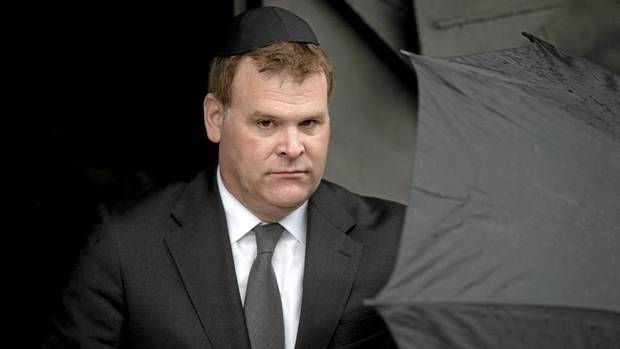
John Baird visiting the Yad Vashem Holocaust memorial in Jerusalem (Sebastian Scheiner/Associated Press/Sebastian Scheiner/Associated Press)

John Baird visiting the Yad Vashem Holocaust memorial in Jerusalem (Sebastian Scheiner/Associated Press/Sebastian Scheiner/Associated Press)

Too often in the past few years, when the Canadian government has come up in human rights related news, it has been for all the wrong reasons. This was the case once again when, last week, Canadian Foreign Minister John Baird was asked about what how Canada would respond if Palestine were to request the International Criminal Court (ICC) to investigate alleged crimes committed during the conflict between . Baird declared the following:

“We were very clear from the outset that further actions, like we’ve seen at UNESCO, like we’ve seen at the United Nations, particularly at the International Criminal Court will be ones which will not go unnoticed and will have certainly consequences in the conduct of our relations with the Palestinian Authority…We hope that they will honour the commitments that they made that they would not do that.”

In short, the Canadian government has deemed that Palestine must be punished with unspecified “consequences” for its acceptance into UNESCO, its recognition as a state by the UN General Assembly and, now, for its interest in referring itself to the ICC.

It’s one thing if the Canadian government wants to play a constructive role in establishing a lasting and durable peace between Israel and Palestine and genuinely believes that getting the ICC involved would hamper rather than help the Middle East peace process. Indeed, the utility of Palestine going to the ICC is debatable (see here and here).

Baird’s statement, however, is yet another example of the current Conservative government’s blunt ideological approach to international affairs getting in the way of reasonable and responsible policy-making in the international arena. This has – and will – come at a significant political cost. Any leverage the government may have had in pushing Palestine and Israel towards peace has been further squandered. It didn’t have to go down like this. Canada had previously played a constructive role as a mediating middle-power. As one observer wrote in the wake of Canada’s threats against Palestine when it sought recognition of statehood at the General Assembly:

It wasn’t always this way. Canada traditionally played a much more even-handed role in the conflict, realizing the need to support both Israel’s security and Palestinian aspirations for statehood. But over the last decade Canadian policy on the Middle East conflict has become increasingly one-sided in its affinity for Israel.

For its part, Palestine has been left stunned by the Canadian government harsh response. In response to Baird’s threats, Palestine’s chief negotiator Saeb Erekat stated: “We do not know why Canada is showing all this hostility against us.”

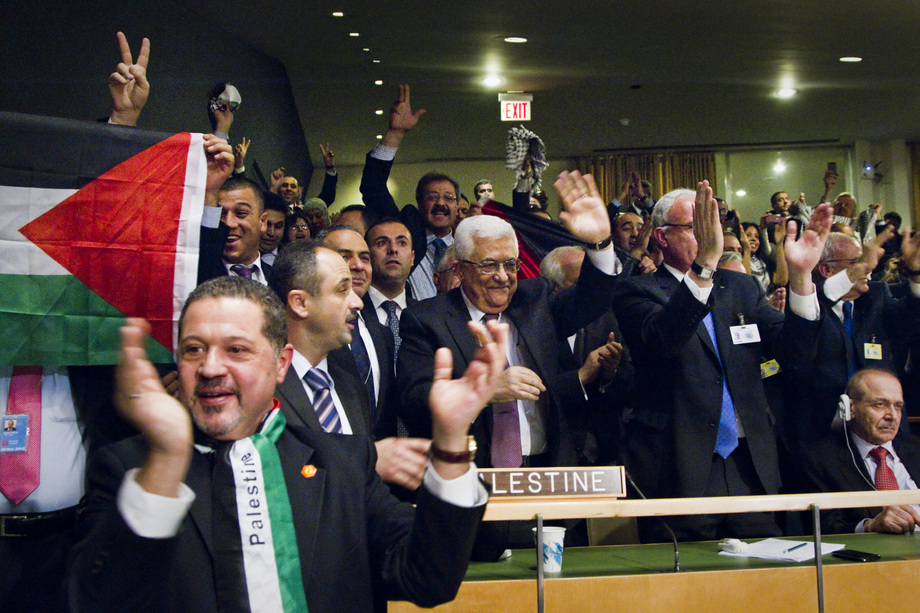
Palestine's Delegation to the UN celebrates the UN General Assembly vote in favour of recognizing Palestinian statehood. (Photo: UN / Rick Bajornas)

Palestine’s Delegation to the UN celebrates the UN General Assembly vote in favour of recognizing Palestinian statehood. (Photo: UN / Rick Bajornas)

But it is another thing altogether to threaten unspecified – but clearly coercive and punitive – “consequences” because an international judicial institution might be requested to investigate alleged crimes against humanity under its jurisdiction. In this context, Baird’s comments aren’t just a threat to Palestine, they are a threat to the ICC. In effect, Baird is suggesting that the Canadian government will undermine international justice if the ICC investigate Israel or Palestine. Continue reading

Posted in Canada, International Criminal Court (ICC), Palestine, Palestine and the ICC | 6 Comments

Praise for Fatou Bensouda, in the Wake of Kenyatta and Muthaura

Kenyatta's supporters celebrate his electoral victory (Photo: AFP/Getty)

Kenyatta’s supporters celebrate his electoral victory (Photo: AFP/Getty)

As readers are surely aware, it hasn’t been a good week for the International Criminal Court (ICC).

First, ICC indictee Uhuru Kenyatta won the Kenyan Presidential election while his running-mate and fellow indictee, William Ruto, is set to become Kenya’s next Vice President. But if the election of Kenyatta and Ruto weren’t enough, numerous commentators have now pointed to the possibility that the ICC contributed to their victory. For example, the widely respected scholar Mahmood Mamdani observes that:

“The ICC is the single factor with the most influence on this election. The ICC process has polarised politics in Kenya because the electoral process did not unfold on a level playing field. Led by individuals who stand charged before the ICC, one side in the electoral contest is, and so it can not contemplate defeat. The simple fact is that, if defeated, they would lose all.”

Writing in the New York Times, Michela Wrong came to a similar conclusion:

“Prosecutions are pending at the I.C.C. against the presidential candidate Uhuru Kenyatta and his running mate William Ruto for their alleged roles in a program of ethnic cleansing that traumatized Kenya’s Rift Valley after the 2007 elections. Yet those cases gave the two men’s Jubilee alliance a priceless fillip in last week’s general election.”

As observers recoiled from the reality that Kenya, a regional economic and diplomatic powerhouse, is set to join Sudan in having an ICC indictee as a sitting Head of State, ICC Chief Prosecutor Fatou Bensouda announced that she was dropping the charges against Francis Muthaura. A former civil servant, Muthaura was allied with Kenyatta and was indicted for his role in planning the 2007-08 post-election violence in Kenya. Kenyatta’s lawyers predictably responded to the charges against Muthaura being dropped by arguing that the charges against Kenyatta should likewise be discarded. For her part, Bensouda made clear that “this decision applies only to Mr Muthaura. It does not apply to any other case.”

At the same time, the international community hasn’t been particularly eager to lend its support to the ICC. On the contrary, it has failed to demand that Kenya cooperate with the ICC (which is at least part of the reason why the charges against Muthaura had to be dropped) or respond concretely to the reality that an ICC indictee will lead Kenya for the foreseeable future. In a thought-provoking post on the subject, David Bosco considers the likelihood of key ICC allies backing up the Court in the wake of Kenyatta’s victory: Continue reading

Posted in Fatou Bensouda, International Criminal Court (ICC), Kenya | Tagged , , | 5 Comments

A Fatal Attraction? The UN Security Council and the Relationship between R2P and the International Criminal Court

(Image: The Economist)

(Image: Satoshi Kambayashi / The Economist)

Many readers will know that, over the last year or so, I have been thinking quite a bit about the relationship between the International Criminal Court (ICC) and the Responsibility to Protect (R2P). It started barely a month into this blog’s existence, when I wrote a piece called ‘The ICC and R2P – Bridging the Gap‘. Since then, I have had the opportunity write and present on the subject. The fruit of that labour has produced a draft article on the subject, entitled ‘A Fatal Attraction? The UN Security Council and the Relationship between R2P and the International Criminal Court’. The article remains a work in progress but I hope that some readers find the article to be of interest. Here’s the abstract:

Few subjects so clearly expose the tensions between global justice and politics as the relationship between the international community’s two favoured approaches to ending mass atrocities: international criminal justice and humanitarian intervention. The relationship between the Responsibility to Protect (R2P) and the International Criminal Court (ICC), however, has escaped significant academic scrutiny and analysis. When it has been considered, the Court and R2P are seen to fit unproblematically within a ‘protection continuum’. This paper seeks to go further by illustrating that R2P and the ICC share a liberal cosmopolitan political ethos. It is subsequently argued that while this liberal cosmopolitan political ethos rests at the core of R2P and the ICC, both have become increasingly tethered to the real-politik of the UN Security Council, a trend which may undermine the ability of both R2P or the ICC to achieve their liberal cosmopolitan ends. The paper demonstrates this through an exploration of the case of Libya, and UN Security Resolutions 1970 and 1973 in particular, where both the ICC and R2P were invoked. It is argued that the role of the Security Council as the ‘dispenser’ of R2P and the ICC in Libya coloured the invocation of both in ways that reflected the particular political interests and attitudes of the Security Council members – a distant cry from their liberal cosmopolitan intention and justification. The paper concludes with some reflections on the future of both R2P and the ICC, their relationships to the UN Security Council and what they mean for liberal cosmopolitan projects in international relations and international law.

You can download the paper here. As always, comments and feedback are welcome!

Posted in Libya, Responsibiltiy to Protect (R2P), UN Security Council | 9 Comments

Egypt to Join the ICC but also Guarantee Bashir Immunity

(Photo: Carsten Koall/Getty Images)

(Photo: Carsten Koall/Getty Images)

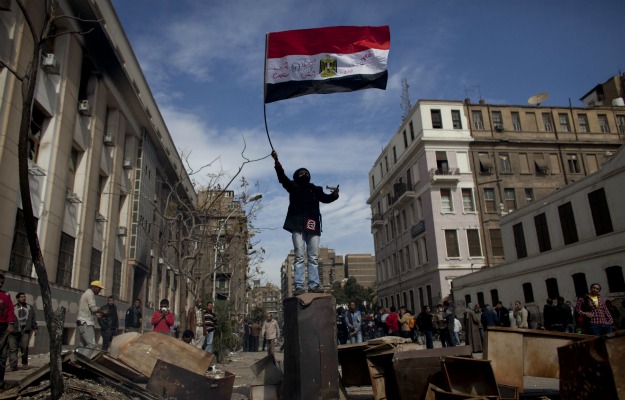
Many, many months ago, I wrote that Egypt had declared it was set to join the International Criminal Court (ICC). That was back in early April 2011, when the country was in the midst of the ‘Arab Spring’. Nearly two years later, Egypt’s Minister of Justice, Ahmed Mekki has announced that the the country will soon join the Court. But that wasn’t all. Mekki also announced that Egypt will sign an Article 98 Bilateral Immunity Agreement with Sudan in order to prevent Sudanese President Omar al-Bashir from being arrested and surrendered to the ICC. Bashir, as readers will know, has been charged by the ICC with crimes against humanity, war crimes and genocide for his role in the Darfur conflict.

Back in April 2011, Egypt’s Foreign Minister declared that the country was on the road to joining the ICC:

“Egypt is currently taking the required steps to join all United Nations agreements on human rights and to join the International Criminal Court…I think the events that have taken place in Egypt in recent days and the arrest of senior officials is evidence that the state wishes to follow the rule of law… domestically and internationally.”

Despite these comments, until today there has been virtual silence regarding Egypt’s plans to join the ICC. One of the reasons for this was likely the relationship between Egypt and neighbouring Sudan, particularly in regards to the fate and role of Bashir. Egypt has previously invited and hosted Bashir on its territory, drawing the ire of human rights groups. Still, nothing in the country’s behaviour has suggested that it planned to support the Sudanese leader’s surrender to the ICC. Before joining the Court, Egypt thus needed to square its relations with Bashir with its intention to signing up to the ICC. In my original post on the subject, I wrote that Egypt would have to clarify how it expected to have its cake and eat it too by both joining the Court and maintaining good relations with Sudan.Here is how Mekki has explained Egypt’s approach:

“We recognize the difficulty of ratification by Egypt of the Rome Statute and joining the International Criminal Court in the presence of relations of Egypt with Arab countries such as Sudan, which has its leader wanted by the ICC for crimes against his people, but we can avoid this embarrassment with Sudan by concluding bilateral agreements with some countries, including the Sudan, with Egypt being the state headquarters of the Arab League.” Continue reading

Posted in Darfur, Egypt, International Criminal Court (ICC), Sudan | Tagged , , | 2 Comments

When Alleged Perpetrators of Crimes Against Humanity…Have a Presidential Debate

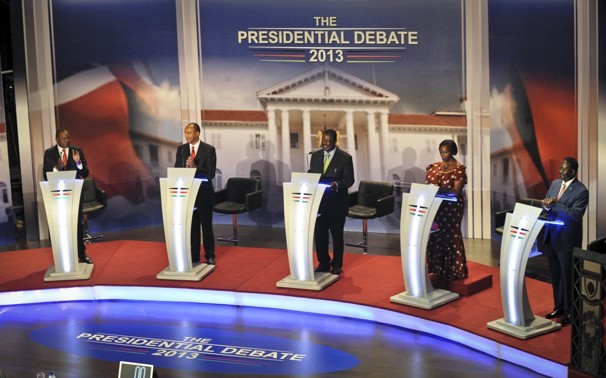
Kenya ICC

Kenya ICC

Imagine candidates in a presidential debate arguing over who should end up at the International Criminal Court (ICC). Bizarre, right? Well, imagine no more; that is exactly what happened in Nairobi earlier this week when Kenya’s presidential candidates squared off in a debate that, in many respects, looked similar to when leadership hopefuls in the US square off.

But there was one striking difference: the conversation. Almost half an hour of the debate focused on the allegations against Uhuru Kenyatta who has been indicted by the International Criminal Court for his alleged role in the 2007-08 post-election violence that ravaged Kenya.

The key question in the debate – and on everyone’s mind leading up to the March election – was what would happen if Kenyatta, as an ICC indictee charged with crimes against humanity, were to be elected. Kenyatta is scheduled to stand trial in The Hague just days after the election takes place and he is, according to most sources, among the front runners to become President.

One of the candidates, Martha Karua, argued that Kenyatta should put aside his ambitions to become the next Kenyan President. Indeed, she claimed that Kenyan law obliged Kenyatta to step down.

While he appeared nervous and uncomfortable, Kenyatta remained unfazed and stuck to his script. He declared that his candidacy was a matter for the Kenyan people to decide and that voting for him was a vote of confidence in his ability to both run the country and clear his name.

To this, Raila Odinga, another front runner, provided the best quip of the evening when he responded: “I know that it will pose serious challenges to run a government by Skype from The Hague.”

The debate then shifted away from the issues pertaining directly to the ICC to questions of whether Kenya was able to prosecute perpetrators of atrocities itself (see video below).

Andrea Russell recently wrote that 2013 will be a decisive year for Kenya and the ICC. Following the unsavoury footsteps of Sudan, there is a good chance that the country could become only the second country with a sitting head of state indicted by the ICC.

Of course, how the Kenyan election and ICC trials shake out is anyone’s guess. But one thing is for sure: the ICC has never had a situation like this, with an indictee standing at a lectern during a Presidential debate declaring that he is able and willing to face his charges and to run his country simultaneously.

Here’s the relevant debate footage pertaining to the ICC (via Reporting Kenya):

Posted in International Criminal Court (ICC), Justice, Kenya, Ocampo Six | Tagged , , | 12 Comments

Responding to Allegations of Human Rights Abuses – A Lesson from Libya’s Justice Minister

(Photo:  AFP / Charles Onians)

(Photo: AFP / Charles Onians)

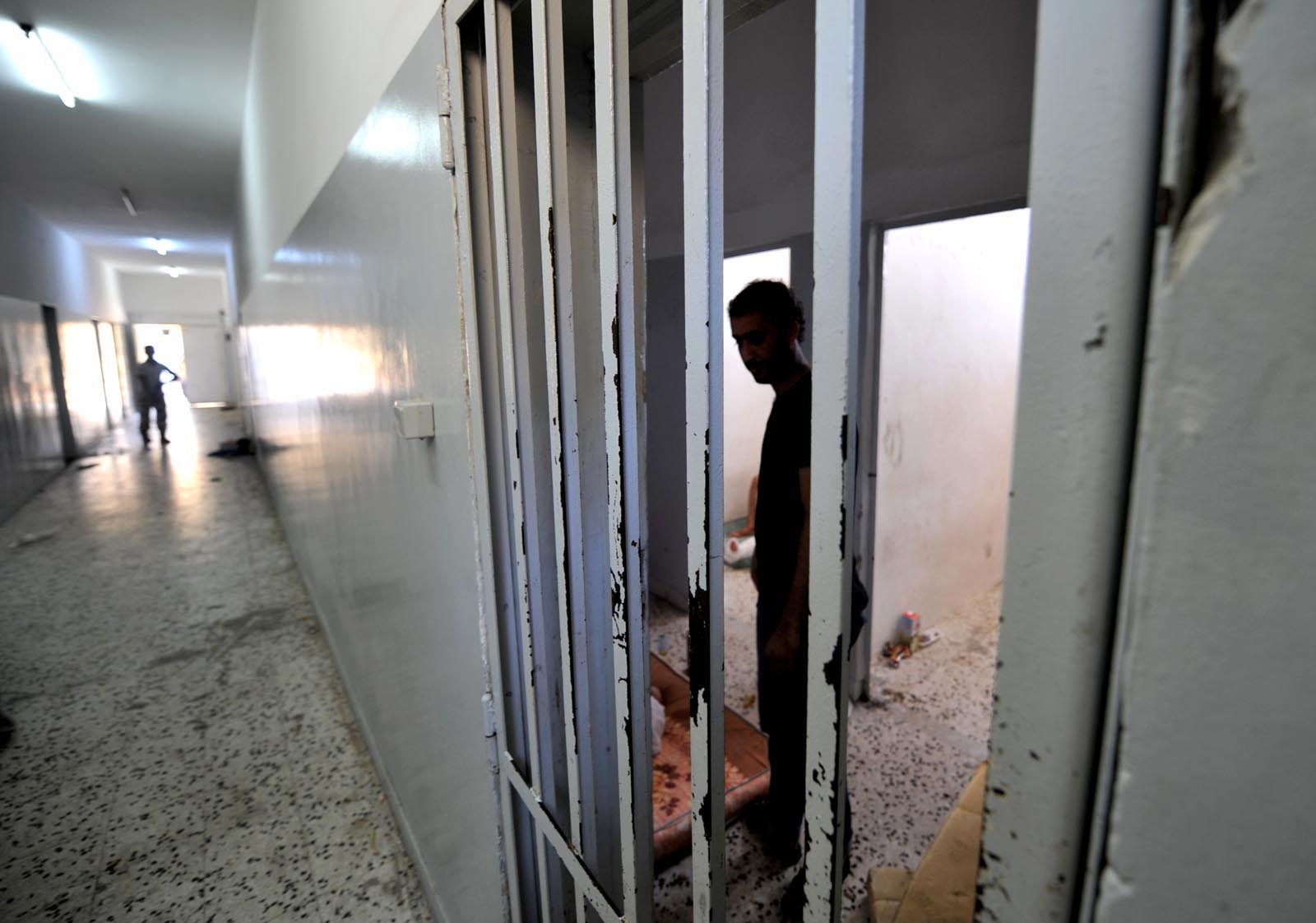
Human Rights Watch (HRW) recently published its annual World Report. In the report, the human rights organization examined the records of 90 states, including those emerging from the “Arab Spring”. Suffice to say, they didn’t hold back when it came to Libya.

While acknowledging some positive developments, including Libya’s first democratic elections in over forty years, HRW ripped into the current human rights situation in the country. It decried the country’s inability to disarm and demobilize militias, the significant number of individuals who remain in detention, allegations of torture, the lack of justice and accountability for rebel and militia crimes, and the forced displacement of 35,000 Tawerghans. Here’s a snippet from HRW’s press release:

“Libya is still plagued by serious rights abuses, including arbitrary arrests, torture, and deaths in detention nearly a year-and-a-half after the overthrow of Muammar Gaddafi…Reining in the myriad armed groups that formed in 2011 to fight Gaddafi’s forces remains a pressing and essential task, Human Rights Watch said. These groups have refused to give up their weapons and act as a law unto themselves, and some are committing serious crimes, such as unlawful detentions and torture.”

In short, it is a pretty harsh report. Many states would respond to such criticism by throwing their hands up in disgust, by vehemently denying such allegations or attacking the integrity of HRW. Take Rwanda as an example. Despite a mountain of evidence, the country refuses to acknowledge that it has funded and supported rebellion in neighbouring Democratic Republic of Congo. The government of Paul Kagame reacts with fury when states or NGOs make claims (based on evidence!) that Rwanda is complicit in the ongoing violence in the DRC. This comes as little surprise. After all, governments generally despise having light shed on their darker practices or having their internal affairs criticized. They typically become defensive when NGOs or international organizations put their human rights records under the microscope. So how  might we expect Libya to respond? By kicking HRW out of the country? By ignoring it altogether? With anger? Obstinacy? Incredulity?

The answer is none of the above. Libya’s Justice Minister Salah Marghani responded to the report honestly and with integrity:

The Ministry of Justice acknowledges receipt of the HRW 2013 World Report and specifically the Libya chapter thereof. The Ministry is very grateful for HRW’s observations.

The Ministry expresses grave concern about the recorded human rights abuses in 2012 and unequivocally condemns such evil practices. The Ministry feels very saddened that the new Libya has so far failed expectations of the Libyan people who revolted against the tyranny of the Gaddafi regime in the hope that the new Libya would never allow Human rights abuses unchecked. The Ministry still hopes that this will change and change soon.

Salah Marghani

Salah Marghani

Minister Marghani, who has been celebrated for his commitment to human rights (which included working with HRW), continued by stating that while he “does not contest the report’s findings”, his Ministry has instituted a number of measures which are aimed at “ending or drastically reducing such unacceptable practices”. He outlined five, including one on justice and accountability:

Issuing laws on transitional justice, prohibiting trails of civilians in front of military courts and preventing torture, which would promote reconciliation. This would allow fact-finding reparations and trials in relation to the grievances suffered by the Libyan people during the tyranny of Gaddafi and other sufferings and injustices during the transitional period, as well as trials without compromising international standards. Continue reading

Posted in Activism, Human Rights, Libya | Tagged , | 2 Comments