JiC is thrilled to welcome back Kara Apland for this thoughtful and thought-provoking guest-post. Drawing on the Liberian experience, Kara delves into the oft-neglected subject of economic crimes in the context of transitional justice. Enjoy!
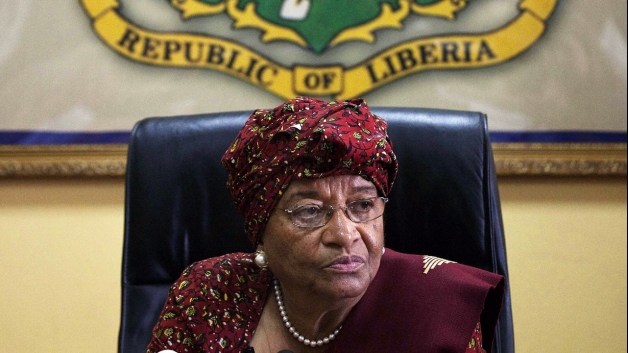
 Ellen Johnson Sirleaf, Liberian president, winner of the Nobel Peace Prize and Africa’s first democratically elected female president, has come to be known as a hero of Liberia’s post-conflict recovery. “Liberia’s leading lady” has succeeded in bringing high levels of aid and foreign investment into the country while securing the forgiveness of over a billion dollars in foreign debt. Yet Sirleaf has also been the target of many critical voices within Liberia. In a controversial move that served to delegitimize its work in the eyes of the international community, the Liberian Truth and Reconciliation Commission recommended that Sirleaf be barred from office for her role in supporting war criminal Charles Taylor.
The TRC is by no means Sirleaf’s only critic. Days after Sirleaf was elected for a second term as Liberia’s president, an op-ed by two Liberian land rights campaigners, Silas Siakor and Rachel Knight, appeared in the New York Times. “Mrs. Johnson Sirleaf’s government may now be sowing the seeds of future conflict by handing over huge tracts of land to foreign investors and dispossessing rural Liberians,” they wrote.
While Sirleaf is certainly not the first high-profile Liberian politician to elicit controversy, her disputed reputation in Liberia illustrates the challenge of renegotiating power in political transition, and particularly the question of how to address economic crimes and allocate control of natural resources. Resource control and mismanagement by government and multinational corporations played a major role in the Liberian civil conflict. Not only did control of natural resources (especially rubber, timber, gold and shipping) serve as a motivating factor in the war, those resources ended up funding the armed groups perpetrating the conflict, particularly Charles Taylor’s NPFL. And on a more structural level, corruption, exploitation of natural resources and resulting economic marginalisation and extreme poverty served as underlying causes of the conflict.
Given the intimate role that corruption and resource control played in the Liberian conflict, it would seem that addressing “economic crimes” and securing just, sustainable and democratic policies with regard to natural resources are critical to breaking down norms of impunity and achieving a sustainable transition. But as Siakor and Knight point out, policy in Liberia has been geared toward attracting foreign investment rather than responding to Liberians’ conceptions of economic justice. Between 2006 and 2011, Sirleaf gave the rights to over one-third of Liberian land to logging, mining and agro-industrial industries. Land ownership is a source of conflict in Liberia, as hundreds of millions are being displaced from their homes and farmland to make room for international investment.

Liberian President Ellen Johnson Sirleaf
The flip side of current debates over just policies regarding natural resources in Liberia is impunity with regard to economic crimes of the past. The Liberian Truth and Reconciliation Commission is one of the few transitional justice mechanisms that has been mandated to address economic crimes, having been charged with
“investigating human rights violations and violations of international humanitarian law as well as abuses that occurred, including…economic crimes, recommending measures to be taken for the rehabilitation of victims of such violations.” Continue reading →

 Dear readers,