Ugandan Holiday? Thoughts on the Offer of Asylum to Gaddafi

Qhaddafi

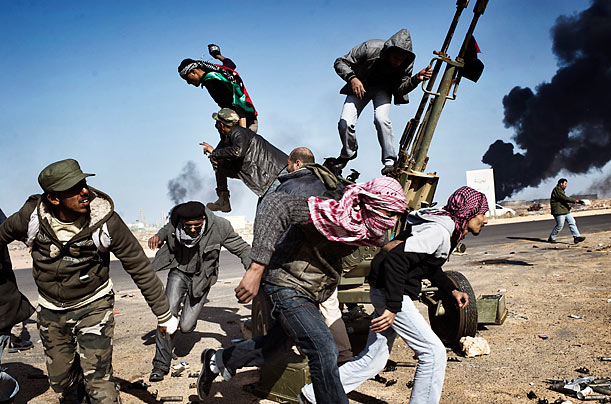
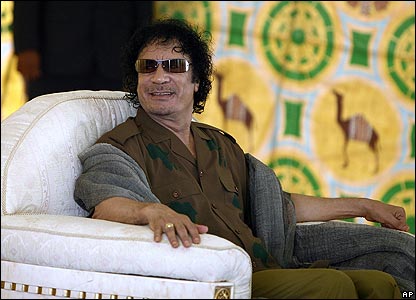
Would Gaddafi "peace out" and head to Uganda? (Photo: undergroundrepublik.com)

Uganda has become the first country to offer asylum, if asked to do so, to Libya’s Gaddafi. This comes at a time when ambiguity proliferates as to what fate the international community sees as necessary for Gaddafi.

A few thoughts on the subject:

1. Words matter and the offer of asylum was not an offer of exile. Exile occurs when an individual is either forcibly or voluntarily removed from his/her native country. Asylum, on the other hand, has a long legal history, and requires a state to protect and provide immunity from extradition to an individual who fears being persecuted in their native country. Much of the talk thus far has been on exile. Uganda, as well as other potential asylum destinations for Gaddafi (Chad, Mali, Niger, Eritrea, Sudan, Venezuela, Cuba and Nicaragua), however, have taken their commitment a step farther. Whether it’s far enough is another question (see below).

2. Uganda is a member-state of the ICC and its offer of asylum puts it in an awkward position given that the situation in Libya is being investigated by the Court, and Gaddafi himself is being investigated for potential crimes against humanity and war crimes. However – and this is a big however – if Gaddafi were to accept the Ugandan offer, Uganda would currently be under no obligation to detain Gaddafi.

The investigation in Libya by the ICC is currently in a holding pattern until the Court decides whether arrest warrants should be issued. My understanding is that prior to an arrest warrant being issued, no member-state of the ICC has the obligation to arrest Gaddafi.

3. In the case of Gaddafi, the offer of asylum is an implicit recognition that he has committed crimes (see comments for clarification). Yes, asylum would grant Gaddafi immunity, but immunity is only granted to those who “require” it. In other words, if Gaddafi were to be granted asylum it would be an acknowledgment that he has committed crimes. Unfortunately, this type of acknowledgment would be vastly insufficient for those who have suffered because of him.

Gaddafi rebels

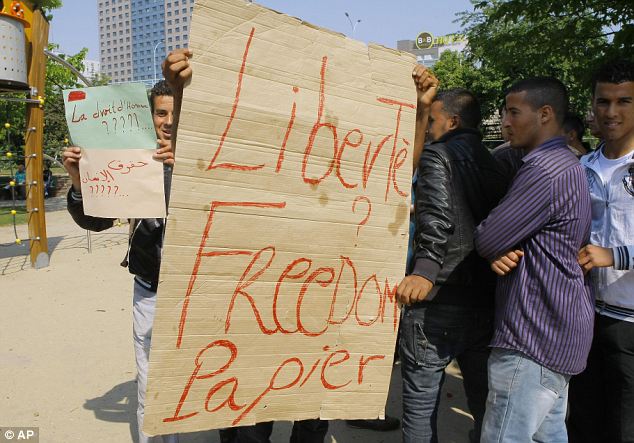
Will Gaddafi accept an offer of asylum in Uganda or elsewhere? (Photo: The Guardian)

4. It remains unlikely that Gaddafi will, in fact, leave Libya. I think that is obvious by now, although given his unpredictability, it may be wiser to refrain from guessing what Gaddafi will do next. The uncertainty about what the international community believes should be Gaddafi’s fate certainly hasn’t helped. On the contrary, the ambiguity they are exhibiting may provide incentives for him to stay in power. A conference in London with dozens of foreign ministers this past week did not rule out the possibility of allowing Gaddafi’s exile. Paul Koring observed that:

The tough talk of relentless pressure aimed to oust the unpredictable and brutal despot who has ruled Libya for 41 years didn’t entirely drown out hints of possible exile and the possibility of avoiding a war crimes trial.

Ambiguity is rife. The Guardian described the myriad of disagreements as such:

the conference hall exposed fault lines in the international community over the next vital stages: whether to arm and recognise the rebels, and whether Gaddafi might leave voluntarily if he was given a chance to take exile rather than stand trial either in Libya or at the international criminal court.

There is a very delicate and, some would say, precarious diplomatic balancing of peace and justice being conducted right now. It is obvious that numerous states, particularly Western states, would like to see Gaddafi brought to the ICC. Gaddafi, however, retains large pockets of support in numerous African states and they, amongst others, have expressed reservations over bringing Gaddafi to the Hague. The emerging compromise appears to be exile.

The problem, of course, is that the longer the international community remains ambiguous about what it sees as the appropriate fate for Gaddafi, the greater incentive he has to continue fighting. While most reports focus on the rebels, Gaddafi clearly has strong backing from many Libyans as well as the money to fund soldiers and perhaps even mercenaries. Orthodox conflict resolution theory suggests that when conflicts cannot be exhausted by the complete victory of one side over another, a negotiated settlement with power-sharing provisions should be sought. Paradoxically, then, the more Gaddafi illustrates his might, the more support he will gain for either a negotiated settlement in which he retains power or a negotiated settlement in which a close of ally (perhaps his son Saif?) shares power and he gets a cozy villa to retire in.

Continue reading

Posted in African Union (AU), Amnesty, Article 16, Exile, Libya, Sierra Leone, Special Court for Sierra Leone, Uganda, UN Security Council | 6 Comments

The ICC and R2P – Bridging the Gap

rebels in Benghazi

R2P and the ICC have both been invoked in Libya (Photo: Reuters)

Update: I have written an article on this subject which can be downloaded here. See here for an abstract. Comments and feedback are very much welcome!

****************************************

I have wondered for some time now about the relationship between the ICC and the Responsibility to Protect (R2P). The reason is pretty simple  – prior to concentrating on the ICC during my masters studies, my academic focus and interests was on R2P. I felt that there was an affinity between the two concepts as well as important threads or narratives that linked them. No work that I know of has systematically examined the practical, political and ethical relationship between R2P and the ICC. This post represents an effort to try to wrestle with and illuminate the potential links between the two in practice, politics and ethics.

As many readers will know, the R2P doctrine asserts that the international community has the responsibility to intervene in a sovereign state if that state is unwilling or unable to prevent or stop genocide, war crimes, ethnic cleansing and crimes against humanity. As a concept, it was developed by the International Commission on Intervention and State Sovereignty (ICISS) in the wake of controversy over the humanitarian intervention in Kosovo and the question of whether a “right to intervene” existed. In 2005 with some modifications (tethering it to the UN Security Council, for example), R2P passed unanimously as a resolution at the UN’s General Assembly.

In 1998 the international community agreed to set up the ICC which subsequently came into being in 2002. The Court’s mission is to end impunity by holding individuals who are “most responsible” for war crimes, crimes against humanity, and genocide accountable. It currently has six states under official investigation and a handful of cases are being heard at its headquarters in the Hague, Netherlands.

The precise relationship between the ICC and R2P has rarely been made explicit or clear. In a recent discussion about the two concepts, Benjamin Schiff says that getting to the bottom of the relationship is “irritating”. Nevertheless, there seems to be an increasing recognition that these two concepts – typically considered separately – are, in fact, intimately linked.

Before looking at Schiff’s arguments of the practical relationship between the two concepts as well as mine on the political and ethical underpinnings of both R2P and the ICC, let’s consider some broader possible links.

First, typically those groups and individuals who support ICC, support R2P and vice versa (see the Enough! Project, for example). Likewise, those who are suspicious of the ICC will almost surely be suspicious about R2P (we all know what John Bolton thinks!) Sure, context will determine when either is supported or not, but this suggests that there’s some subtext that bridges the ideas behind R2P and ICC.

benghazi rebels

Rebel fighters in Benghazi. Where the language of R2P has been invoked the langauge of international criminal law has never been far behind (Photo: Reuters)

Second, while many consider R2P a doctrine of humanitarian military intervention, in actuality, it is much broader than that. It is a doctrine based on a continuum of responses along which legal action or the threat of legal action to stop or prevent atrocities has a place.

Third, when the rhetoric of R2P is invoked, the language of international criminal justice is rarely far behind. Libya is a case in point. The language of responsibility for protecting Libyan civilians paralleled the language of bringing Gaddafi to account for alleged crimes against humanity. Even when the language of R2P was not explicitly employed as in Resolution 1970 which referred the situation in Libya to the ICC, the basic tenets of R2P were at play. One observer remarked:

“R2P is not mentioned in the resolution [1970]: nonetheless, its flavour impregnates the decision. In referring the situation to the ICC, and thus sending a clear signal to unscrupulous leaders that their crimes will not go unpunished, the UN Security Council brings the responsibility to protect to the forefront of the battle to maintain international peace and security in the world.”

All of this suggests a proximity of the concepts and institutions of R2P and the ICC. But it doesn’t illustrate the nature or foundation of the proximity.

Schiff argues that there are numerous similarities between R2P and the ICC. Both are products of the 1990s but have genealogies which stretch back further into history. Each address similar governmental failures, namely the failure (or unwillingness) of governments to prevent atrocities. Both thus speak to the responsibilities that governments have to their citizens and imply that when governments fail or are unwilling to uphold those responsibilities, external interventions are warranted. Interestingly, with the exception of ethnic cleansing and aggression, R2P and the ICC also cover the same crimes – crimes against humanity, war crimes, and genocide. Both R2P and the ICC thus recognize the same acts as the most egregious crimes to commit against people and as justifications for intervention.

There are also important differences between the ICC and R2P. While the ICC is an institution, R2P lacks any institutional structure. Rather, R2P is a concept, perhaps even an emergent norm, that is embedded within the UN. In its current form it is subject to the political machinations of the UN Security Council. At the level of perception, R2P is clearly political whereas the ICC presumes itself to be apolitical, although the notion that the ICC can exist in a political vacuum has been increasingly challenged.

Denmark NATO

A Danish F-16 returning from a mission into Libya as part of the no-fly zone campaign (Photo: AP)

Schiff concludes by suggesting a potential practical relationship between R2P and the ICC. He argues that R2P can probably and sensibly use the Court, presumably as a part of the R2P continuum of interventionary options. However, the ICC, if it continues to view itself as apolitical, cannot invoke R2P. In practice then, Schiff argues that the relationship between R2P and the ICC is asymmetrical. Theoretically, R2P and the ICC, I would argue, are the progeny of the same liberal political and ethical projects.

Politically, the ICC and R2P are both elements of the liberal peace project. The liberal peace, in the most general sense, attempts to promote and construct peace in states emerging from violent political conflict and/or authoritarianism by adhering to a particular formula: democratization, liberal economic reforms, rule of law, and respect for human rights. At the heart of the liberal peace – which is promoted by global civil society, international institutions like the UN, as well as key Western states – is the notion that the formula can and should be applied universally; if all states were liberal, democratic polities, then the incidence of war could be dramatically reduced or even eliminated.

Continue reading

Posted in Human Rights, International Criminal Court (ICC), Liberal Peace, Libya, Responsibiltiy to Protect (R2P) | 5 Comments

Contradictions in Kenya: Kenyan PM Backs the ICC Trial of the Ocampo Six

Odinga

Kenyan PM Raila Odinga (middle) with President Kibaki (left) and Kofi Annan (right). Odinga has voiced his support for the trial of the Ocampo Six at the ICC (AFP: Simon Maina)

It appears that Kenyan efforts to defer the ICC prosecutions of the “Ocampo Six” are destined to fail. But it may not only be because of international pressure or lack of consensus in the UN Security Council. Rather, the final nail in the coffin may have come from the Kenyan government itself.

The Kenyan government has been working hard to ensure that investigations into six senior officials (the so-called “Ocampo Six”), including the current Prime Minister and Finance Minister, the Minister of Higher Education as well as key political allies of the current government are deferred. Kenyan officials have gone on a diplomatic road-show to dozens of states in an attempt to convince other members of the international community to pressure the UN Security Council to invoke Article 16 of the ICC’s Rome Statute. Article 16 allows the Council to defer an ICC investigation or prosecution by 12 months, renewable yearly. Earlier this month, the Kenyan government officially requested the Security Council to defer the cases and they have gained the support of numerous African states in their efforts.

Kenya has argued that ICC prosecutions are no longer necessary because the government will now establish a credible and legitimate judicial institution to look into crimes committed after the 2007 elections. The President of Kenya, Mwai Kibaki, has argued that “a local tribunal “will boost our efforts [for] peace, justice and reconciliation as well as uphold our national dignity and sovereignty; and prevent the resumption of conflict and violence.”

Nevertheless, a few of the so-called Ocampo Six have said they would appear before the ICC. Earlier, I suggested that, their willingness to appear before the Court seriously undermined the government’s attempt to have the ICC’s investigations deferred. Why would Kenya need to defer the investigation if the alleged perpetrators were themselves willing to sit trial at the ICC?

Now, however, Kenya’s Prime Minister Raila Odinga, a key figure in President Kibaki’s Orange Democratic Movement, may be the chief undermining source. A chasm has been created within the Kenyan government regarding the issue of accountability and the ICC investigations which can only weaken the government’s claim that the cases must be deferred. In an exclusive interview with Radio Netherlands Worldwide, Odinga, declared his support for the ICC:

“The trial should take place in The Hague, that’s what I think. The trial should proceed there, until Kenya has put in place a competent local mechanism, which I don’t think will be achievable.”

kenya war

The post-election violence in Kenya resulted in 1,200 deaths and hundreds of thousands civilians fleeing from their homes (Photo: Simon Maina/Agence France-Presse)

Odigna further rejected claims by those like President Kibaki that proposals for a tribunal to be set up by the government to investigate post-election crimes would be legitimate.

“Putting up a bill is a long process; it doesn’t mean that we want to quit the ICC track at all!…Parliament rejected a local tribunal twice! That’s why the matter went to the Hague. What they are talking about right now is not a truly independent local tribunal, but a kangaroo court which they can manipulate to get these people acquitted. That is not acceptable.”

Continue reading

Posted in African Union (AU), Article 16, International Criminal Court (ICC), Kenya | Leave a comment

Impressions on the State of the Art in Transitional Justice

Post-conflict justice

Many who studies Transitional Justice now consider themselves as Transitional Justice scholars (Photo: University of Minnesota)

I had the opportunity to attend the four-day academic marathon that is the International Studies Association (ISA) annual conference last week in Montreal. The opportunity gave me the chance to meet and hear from those at the vanguard of transitional justice. Inspired by Alana Tiemessen’s post at Global Transitional Justice, I decided to share my thoughts on the state of the art in transitional justice.

1. The most striking development, in my view, is that those who study transitional justice (TJ) are challenging the boundaries of what typically constitutes TJ. What falls within the remit of the field has expanded dramatically. TJ scholars are increasingly considering oft-neglected yet critically important subjects: Bronwyn Leebaw is examining the question of resistance and relating it to the mandates of truth and reconciliation commissions; Mark Drumbl is challenging the victim-perpetrator perceptions of child soldiers; Benjamin Schiff is asking what the relationship between the Responsibility to Protect (R2P) and the International Criminal Court (ICC) is; Chandra Lekha Sriram is relating the conflict resolution paradigm of power-sharing to the capacity to achieve justice in post-conflict societies. Next year, I hope to present on post-conflict architecture/reconstruction and transitional justice reconciliation. In short, TJ is increasingly creative and shaking off the traditional notion that only trials and truth commissions fall under its mandate.

2. Transitional Justice sees itself as a discipline. For some this might be obvious, but for others (including myself), not so much. I asked numerous individuals at the ISA whether they considered themselves “TJ scholars”. Most said they did. Further, as Tiemessen points out, there has been a sharp increase in TJ courses. There are obvious benefits and risks to this development. As a discipline, TJ can carve out an analytical space for itself and begin to develop methodological and unique disciplinary traditions. However, TJ is an area of study that draws on numerous other fields – law, ethics, and anthropology, etc. I, for one, consider myself a conflict and peace studies scholar who studies TJ rather than a TJ scholar. There is a risk of cutting TJ off from other disciplinary traditions on which it relies. It is important to remember that not long ago, TJ was wrestled from being almost exclusively within the legal domain.

transitional justice

Transitional Justice as a field of study has become increasingly self-reflexive and scholars have begun exploring oft-neglected issues (Photo: Cambridge Transitional Justice Research Network)

More fundamentally, there remain important questions to ask as to what “TJ” means and what it assumes. First, the term “transitional justice” implies that justice is necessary in transitions. A few years ago, this may not have been problematic. However, with recent studies by Mark Freeman, Louise Mallinder, and Leigh Payne (et al) on the question of amnesties, not doing justice is as much a choice within transitional justice as doing justice. Second, what exactly states are meant to transition to remains largely assumed – and thus omitted – in TJ literature. What is the end-point of the transition in which justice is meant to play a role? For some, it is clear. The end is a liberal polity and TJ forms both an element and a conduit of the liberal peace project. This remains, however, a largely unexplored assumption of TJ.

3. Amnesties are all the talk in TJ. Some of the most fascinating academic work being done right now is on amnesty laws for past human rights violators. TJ has long suffered from treating concepts like “justice”, “truth”, “reconciliation”, etc. as monolithic. However, past years have seen challenges to this approach. Freeman (2009) and Mallinder (2008) have helped to unpack the concept of amnesty and problematize it in important ways. Mallinder, for example, notes that amnesties differ along three lines: who is amnestied, what crimes are amnestied and whether amnesties are conditional or not. The empirical work by Payne et al poses a serious quandary: they illustrate that amnesties, in combination with trials, have positive effects on human rights and democratic development. I will post a blog looking at these issues more closely soon, but the nexus of problematizing and identifying different types of amnesties along with early empirical findings hold great promise for better understanding the impact of different responses to past atrocities.

4. Whither the peace versus justice debate? TJ appears to have largely moved on from the so-called “peace versus justice” debate. On a selfish note, this makes my life easier as the debate becomes less cluttered. More importantly, my guess would be that this is the result of frustrations over what has increasingly become considered an “artificial debate” and a “false dichotomy”. Critically, however, the move away from the debate certainly is not because there is a settled understanding of how particular forms and combinations of transitional justice mechanisms affect certain types of peace.
Continue reading

Posted in Amnesty, Liberal Peace, Transitional Justice | Leave a comment

ICC Wanted Broader Jurisdiction in Libya: Moreno-Ocampo

Benghazi tank

Children play on a tank near Benghazi (Photograph: Kim Ludbrook/EPA)

The UN’s referral of the situation in Libya sharply restricted the temporal jurisdiction of the ICC. The referral says the Court can have jurisdiction only over crimes committed in Libya since February 15th 2011. In a recent post, I argued that this would bias the potential for political accountability as well as the historical record, particularly in relation to relationships between Western states and Gaddafi.

ICC Prosecutor Luis Moreno-Ocampo also wanted a more expansive jurisdiction, but for different reasons. Tucked away in an article by Al Arabiya about Egypt’s cooperation with the ICC on the investigation of events in Libya, is the following:

“Ocampo had hoped that Security Council resolution 1970 mandate would allow him to investigate crimes in Libya since 2002, rather than Feb. 15, 2011, Al Arabiya sources said.

This expanded time frame that would have allowed him, according to the sources, to show a pattern in the Libyan regime’s behavior.”

Where is this information in mainstream western media? The lack of critical thinking on Resolution 1970 has been frustrating. The role of the ICC been portrayed through a predictable and frustratingly artificial dichotomy: either the referral marks an incredible moment in international cooperation and commitment to international law (see here and here)  or it will give Gaddafi more reasons to stay in power and continue killing Libyan civilians (see here, here, and here).

Moreno-Ocampo’s argument needs analysis, separate from the question of the politically-oriented choice of jurisdiction by the UN Security Council. It points to the fact that a restricted jurisdiction is precarious both in terms of justice as well as the law. Presumably, Moreno-Ocampo wants to establish that any of the alleged crimes against humanity committed in Libya are part of a systematic pattern of violence and criminal activity. If any Libyan officials are ever brought to trial, this would no doubt help in the prosecution’s case. Unfortunately for the Court’s Prosecutor, this won’t be possible.

At a recent conference, one well-regarded Transitional Justice academic referred to Libya as a “poisoned chalice” for the ICC. How the referral affects the legitimacy of the Court can only be judged in the months and perhaps years to come, but it is, at the very least, important to consider the possibility that the politically inspired directives of Resolution 1970 are not necessarily a good thing for the Court or international criminal law in general.

Posted in International Criminal Court (ICC), Libya, Transitional Justice | 1 Comment

The West and Libya: The Politically Imposed Limits of Justice


Western leaders Gaddafi

In recent years Gaddafi agreed to numerous economic, political and weapons deals with numerous Western leaders (Photo: Oli Scarff/Getty Images Europe)

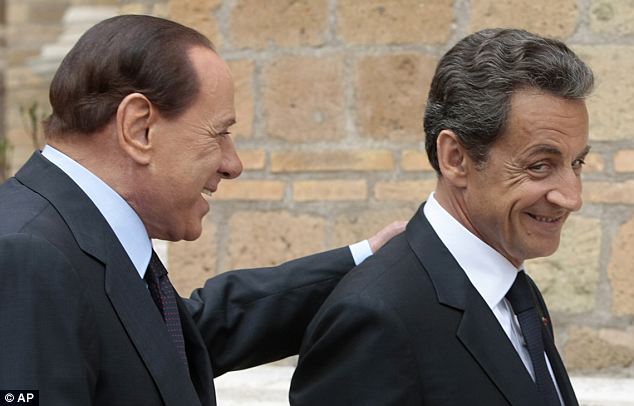
There was a time, just a few years ago, when Libyan leader Muammar Gaddafi was ostracized by the international community. Then he became a key, if quirky, ally and business partner of the West. Fast-forward a few years and Gaddafi is back to being ostracized and vilified for his violent crackdown in Libya. The narrative of Gaddafi and Libya that is told in years and decades from now, however, may simply omit those inconvenient and uncomfortable years when the West buddied-up with Gaddafi, enthusiastically shook his hand, smiled at photo-ops and accepted his money in exchange for weapons, some of which could feasibly have been used by Gaddafi-backed troops against Libyans.

There is much to be said about the “limits of law”. International law isn’t the solution to all politics nor is it a solution to peace. Increasingly, the limits of what law can achieve are being recognized and the expectations of law calibrated. Yet, when the UN Security Council referred the situation in Libya to the ICC, the Council actually imposed a political limit to the Court’s jurisdiction and thus what it could and could not investigate.

Operative paragraph 4 of UN Security Council Resolution 1970 (2011) reads:

“4.   Decides to refer the situation in the Libyan Arab Jamahiriya since 15 February 2011 to the Prosecutor of the International Criminal Court;

Thus, the ICC’s investigation is limited to the events that have occurred since February 15. This is not an arbitrary decision nor was it included to ensure that the Court did not have too much on its plate. It was a carefully deliberated political decision by member states of the UN Security Council seeking to ensure that embarrassing, political facts could not be brought forward in the process of a trial.

Italy Libya

Some would say that the relationship between Libya and Italy, in particular, was too close (Photo: Reuters/Remo Casilli/Files)

In his excellent post on the debates surrounding the Libya deferral, Xavier Rauscher argues that the legality of the time is not particularly questionable because “[i]t would not necessarily be good administration of justice to constantly give the ICC full jurisdiction time-wise, especially as the Court grows older.” This may be, but there is a difference in giving the Court full jurisdiction back to 2002 and giving the Court a very myopic jurisdiction, beginning just weeks ago. What will be lost with this curtailed temporal investigation is precisely how Gaddafi was able to commit human rights violations on the scale of crimes against humanity.

Xavier adds that:

“Cynics would however not be entirely wrong to point out that political motives may also be at play here, as States would rather avoid having the Court look too closely at possible unsavory ties governments had with Gaddafi prior to the recent rebellion.”

Cynical or not, the limited jurisdiction was politically motivated. This is why:

A recent and rather shocking piece by The Guardian broke down the EU arms deals to Libya. The key points included:

  • The EU granted export licenses for €834.5m worth of arms exports in the first five years after the arms embargo was lifted in October 2004 2009 is the highest amount ever: €343.7m
  • Italy is the top exporter, with €276.7m over the five years
  • The UK got off to a big start in 2005, with €58.9m of the €72.2m total. UK licenses over the five years are worth €119.35m
  • Malta saw some €79.7m of guns go through the Island en route to Libya in 2009 – apparently sold via an Italian company

Add to this the following curriculum vitae of less than savoury deals between Western states and Libya:

  • Just six weeks before the violence erupted in Libya, Russia announced that it had signed a $1.8 billion arms deal which included small arms, fighter aircraft, tanks and a sophisticated air defence system
  • The US recently had a $77 million deal with Libya in place to provide Gadaffi with 50 refurbished armored troop carriers
  • Italy’s relationship with Gadadffi’s stands alone: Libya is Italy’s largest supplier of oil while Gadaffi owns 7.5% of Unicredit, Italy’s largest bank, 2% of the Italian oil company ENI, 2% of the country’s second largest industrial group, Finmeccanica and 7% of the Turin-based Juventus soccer club; In 2008, Italy agreed to invest $5 billion in Libya in exchange for tight immigration controls for African migrants in Libya. As Time Magazine put it, Italian Prime Minister Berlusconi “went gaga for Gadaffi”.
  • In 2007, Libya and France signed a £200m arms deal which was viewed as an indication of thawing relations between the West and Libya; it also signed agreements on immigration and security.
  • In 2007, British PM Tony Blair travelled to meet Gaddafi in Tripoli and called relations between the UK and Libya “completely transformed” and added that “[w]e now have very strong cooperation on counter-terrorism and defence.” The countries then signed a £450 million agreement allowing BP to establish gas exploration projects in Libya which, if it reached its full potential, could be worth £13 billion.

    Blair in Libya

    Former British PM Tony Blair assured critics that Gaddafi was no longer an international outcast and that relations were "completely transformed" (Photo: Getty Images)

This just barely scratches the surface of the complex web of economic, political and military relations between the West and Libya. The point isn’t that it was wrong for Western states to engage with Libya. Rather, as Stephen Glover recently wrote: “What is not defensible is the subsequent indulging of this horrible man, and treating him as though he were a normal leader of a normal country.”

Continue reading

Posted in Arms Deals, European Union (EU), France, International Criminal Court (ICC), Italy, Libya, Russia, United Kingdom, United States | 9 Comments

Outreach, Politics and Justice: An ICC TV Show in Kenya

Outreach

The ICC has increased its outreach efforts with sessions in communities including northern Uganda. Now its outreach also includes a TV show (Photo: http://www.icc-cpi.int)

In comparison to criticisms such as the effects of the ICC’s work has on peace, on the costs of the Court’s trials, and on the Court’s supposed Western, colonial mode of justice, the issue of it’s lacking capacity for outreach has largely escaped scrutiny. Today, however, outreach is at the heart of the work of tribunals which recognize that justice cannot only be done it has to ‘be seen to be done.’ The ICC’s increased attention on outreach is an implicit recognition of the political implications and consequences of its work and mandate.

While it is easy to forget, the ICC is still a young institution and it is learning its way. Sometimes the process of learning has been a struggle. It has made some mistakes along the way and it will undoubtedly make errors in judgment as it continues to develop as an institution. One oversight in its early investigations was taking into consideration how it would be perceived in the contexts in which it investigated crimes. There seemed to be an assumption that if the Court opened an investigation or began a prosecution, that the citizens of the states where those investigations took place would understand what was happening. Given that the Court’s work has been focused on societies where the rule of law has been largely or entirely absent as a result of violent political conflicts, this was a pretty unfounded assumption to make.

Take, for example, the case of the ICC’s judicial intervention in Uganda. The brutal conflict in northern Uganda was referred to the ICC by the Ugandan government in 2003. In 2005, following its investigation, the ICC indicted five senior officials of the Lord’s Resistance Army (LRA) including its notoriously brutal leader, Joseph Kony. The ICC, however, miscalculated or simply did not consider how the public manner of its decisions would be perceived by the Ugandan public. Sure, the Court understood that its supporters would hail the ICC’s investigations and indictments as a victory for humanity. But when ICC Prosecutor Luis Moreno-Ocampo spoke about the investigations at a joint press conference in London with Ugandan President Yoweri Museveni, it entrenched views that the Court was biased and would only investigate crimes committed by the LRA and not by the Ugandan government. In Trial Justice, which remains the single best account of the ICC’s work in Uganda, Tim Allen writes:

“In Uganda, there are specific reasons why the ICC has been open and vulnerable to local criticism and pressure. First, the court made an error in judgement in January 2004 when the chief prosecutor held a joint press briefing with President Museveni. From that time onwards, his office has had to struggle to demonstrate that it is not simply ‘in the pocket’ of the Ugandan government.”

Vincent Otti LRA

Joseph Kony (second from right) and Vincent Otti (far right), both indicted by the ICC. The Court was heavily criticized for appearing to be biased in favour of the Ugandan Government (Photo: langoweb.net)

Such misjudgements are part of the growing pains of an institution that has struggled to understand the political implications of its work, often preferring to deny it affects or is affected by political realities. Yet, as the old marketing adage goes, it can be dangerous to assume that everyone loves and knows your product as much as you do.

Sara Kendall and Alpha Sesay recently pointed out that “transitional justice has grown increasingly self-reflexive about its audience and its objectives.” The Court has not only engaged more productively with its critics but has also began to reflect on its own practices and record. This is a sign of an increasingly confident and mature institution. In this context, the ICC has understood that for it to be effective in the situations within which it intervenes, it must invest in pathways of outreach. The Court now conducts outreach sessions in many local communities. This past summer, the ICC announced that it would be establishing a liaison office in Addis Ababa, Ethiopia, in order to “encourage dialogue” and the “exchange of information” between the Court and the African Union, which has had a less than comfortable relationship with the Court in recent months.

Continue reading

Posted in African Union (AU), International Criminal Court (ICC), Kenya, Lord's Resistance Army (LRA), Outreach, Uganda | Leave a comment

Will Kenya’s Most Wanted Walk the Walk or just Talk the Talk?

Justice Kenya

The six alleged perpetrators are referred to as the "Ocampo Six" (Photo: rnw.nl)

On the same day that the ICC summoned six senior Kenyan officials to appear before the Court to face charges linked to post-election violence in 2007/2008, Kenya officially asked the UN Security Council to suspend the ICC investigation under Article 16 of the Rome Statute. A number of the six senior officials, including the current Prime Minister and Finance Minister, the Minister of Higher Education as well as key political allies of the current government, have previously offered to appear before the Court. Will they fulfill their commitment? Will they have to?

Following the Kenyan Presidential election in 2007, in which incumbent Mwai Kibaki was declared the winner, violence, largely inspired by ethnic and socio-economic tensions, erupted. The result was 1,200 casualties and hundreds of thousands civilians fleeing from their homes. Originally, it appeared that Kenya would investigate the crimes through its own judiciary by setting up a tribunal to examine the post-election violence. Under the ICC’s complementarity regime, which stipulates that the Court can only investigate crimes when a state is unwilling or unable itself to investigate and prosecute, the ICC would not have been able to open an investigation. However, as it became clear that Kenya, a member state of the ICC, was unwilling to open a credible investigation into post-election crimes, the situation fell within the jurisdiction of the Court. Last December, ICC Prosecutor Luis Moreno-Ocampo named six officials, dubbed the “Ocampo Six”, as allegedly bearing the most responsibility for the violence, which Ocampo described as constituting crimes against humanity.

Immediately, fears arose that the Court’s pursuit of accountability could destabilize the fragile peace in Kenya. The country appears divided between those who welcome the Court’s investigation in the hope that impunity at the highest political levels will end and those who worry that targeting these senior political officials may catalyze renewed violence. The Kenyan Parliament even voted to pull out of the ICC’s Rome Statute. In short, the peace-justice debate has been in full-swing in Kenya.

One of the more interesting elements of this story was the willingness on the part of the alleged Kenyan perpetrators to appear before the Court.  Unlike numerous other high-profile, political figures, some of the “Ocampo Six” declared that they would voluntarily appear at the ICC. William Ruto, the Minister of Higher Education and an influential figure in Kenya’s Rift Valley where the most brutal violence occurred, maintained that while he felt the charges were politically motivated, he was prepared to face justice. In reaction to the summonses, two alleged perpetrators – former police chief Mohammed Hussein Ali and Joshua arap Sang, a radio executive – have said they would appear before the Court in order to prove their innocence.

Kenya Justice

The ICC has named and summoned six Kenya officials for their role in the 2007 post-election violence (Photo: CBC)

Kenya appears to be employing a two-pronged approach to the question of accountability. On the one hand, the accused officials have said they would face justice with a clear conscience in order to clear their names. On the other hand, the government has gone on a diplomatic road-show to persuade states that the ICC’s investigation should be deferred by the UN Security Council. They argue that Kenya is now prepared to open its own local tribunal to examine the post-election atrocities. President Kibaki has said that a local tribunal “will boost our efforts [for] peace, justice and reconciliation as well as uphold our national dignity and sovereignty; and prevent the resumption of conflict and violence.” In a significant diplomatic victory, Kenya received the backing of the African Union in its bid to defer the Court’s investigations. In other words, the accused have said they would fight the charges at the ICC while the government in which many of them hold key posts has worked tirelessly to ensure they would never have to.

Continue reading

Posted in Article 16, Elections, Human Rights, International Criminal Court (ICC), Kenya, UN Security Council | 2 Comments

Engaging John Bolton on Libya and the ICC

John Bolton UN

John Bolton derides the decision to refer the situation in Libya to the ICC (Photo: Richard Pohle)

I hesitate to even attempt to comment on anything that John Bolton says. His commentary is so stubbornly right-wing and predictably political  that arguing with him would be akin to trying to move concrete walls with your forehead. Nevertheless, Bolton’s recent piece critiquing the UN Security Council’s referral of the situation in Libya to the ICC does deserve some attention, in part because, at least this time, it’s not all venomous rhetoric. Bolton points to two substantive claims that need to be addressed within the field of international criminal justice: the question of outsourcing responsibility for peace and justice and the capacity of the ICC to deter future crimes. Regardless of the source, no doubt unsavoury for supporters of the Court, Bolton’s criticisms should be engaged with.

Of course, Bolton’s commentary must always be understood as an element of his political project. The man is multilateralism’s worst enemy. James Traub describes Bolton’s tenure as the American ambassador to the UN during attempts to reform it as “a nuclear strategy”. With regards to the ICC, Bolton’s attitudes serve as the fiercest example of American distrust towards the Court. Bolton has been one its staunchest critics. Bolton has described the Court as contradictory to the constitutional ideals of America, as an overreaching and unaccountable institution, and an institution which America should “isolate it through our diplomacy, in order to prevent it from acquiring any further legitimacy or resources.” When, in 2002, the Bush administration took the unprecedented step to ‘unsign’ the Court’s Rome Statute, Bolton described it as “the happiest day of my life.” Today, Bolton is considering a run for the 2012 Republic presidential nomination. Advocates of international cooperation and international law just collectively shivered.

In his border-line vitriolic piece on Libya and the ICC, however, Bolton does highlight a few important points along with some stunningly incorrect assertions and a confusing reference to the Valerie Plame scandal.

First, Bolton argues that by referring the situation in Libya to the ICC, the US – and his more specific target, President Obama – abdicated responsibility. In a similar vein, I recently argue that the future of peace in Libya depends on the UN Security Council and not the ICC and that there is a danger of the Security Council outsourcing responsibility for peace to the ICC. Bolton’s assertion of abdicating responsibility may be a bit over-the-top, but the question of where responsibility lies and how it is shifted between international institutions is not always clear.

Libya civil war

Libyan rebels engaged in combat. Bolton brings up the important question of whether the ICC can deter crimes (Photo: MSNBC)

Second, Bolton brings up the issue of the ICC its capacity to deter crimes, arguing that:

“Champions of the ICC theorize it will deter future crimes. Reality proves otherwise…The plain if deeply unpleasant fact is that history’s hard men are not deterrable by the flimsy threat of eventual prosecution.”

Continue reading

Posted in Deterrence, International Criminal Court (ICC), Libya, UN Security Council, United States | 2 Comments

Would Gaddafi Accept a Deferral-for-Peace Deal?

Libya civil war

Is a Libya without justice and without Gaddafi better that a Libya with Gaddafi? (Photo: Daily Sun)

In yesterday’s post, I mentioned that it is generally assumed that perpetrators of human rights violations would accept a deferral-for-peace deal. It isn’t obvious that they necessarily would.

The scenario in which Article 16, which allows the UN Security Council to freeze an ICC investigation or prosecution for a year, renewable yearly, would be used in the case of Libya would look something like this: diplomats from UN Security Council states would approach Gaddafi or members of his government, likely behind the scenes, with an offer of deferring the ICC’s investigation against him in exchange for a cessation of violence, his removal from power and perhaps his move into exile. In other words, the deal would trade accountability for Gaddafi for peace in Libya.

Some believe that the ICC can be instrumentalized in this way; that the Court can, and perhaps even should, be leveraged to achieve political ends, in this case to achieve some sense of peace and to rid Libya of Gaddafi. Others would support this scenario because they feel a Libya without Gaddafi and without justice is better than a Libya with Gaddafi being pursued by the ICC. In other words, a deferral of justice would constitute a ‘necessary evil’. Individuals with this view may also recognize that while Gaddafi can’t be brought to justice now, that does not preclude his arrest in the future. It is not that justice isn’t necessary, but that justice must follow peace. An illustrative example of this view is India’s position towards the UN Security Council’s referral of the situation in Libya to the ICC.

India declared that it would have preferred a “calibrated approach” to pursuing justice in Libya. India (as well as Gabon, Brazil and Portugal) wanted an approach which sequenced peace with justice. Yet sequencing or calibrating implies that justice will be pursued, just not necessarily immediately and not simultaneously with peace. Interestingly, there have been no negative reactions against this position from those who view that any deal that let Gaddafi off the hook would constitute a miscarriage of justice and that the resulting peace would not really be peace because there is “no peace without justice.”

Rebels in Libya

An Article 16 deferral would temporarily trade accountability for peace (Photo: rssbroadcast.com)

But what about Gaddafi himself, or other individuals wanted by the ICC for crimes against humanity, war crimes or genocide? Would they accept such a deal?

Because Article 16 is fundamentally temporary and needs to be renewed yearly, it is not clear that a one-year deferral would be enough for Gaddafi to relinquish power. Increasingly common views that justice can be delayed and pursued in the future, following amnesties or deferrals, aren’t likely to inspire confidence in authoritarian leaders who would want to be assured that they will never be brought to trial or thrown in jail and not that they won’t be for the next year or two.

Continue reading

Posted in Article 16, Libya, UN Security Council | Leave a comment