
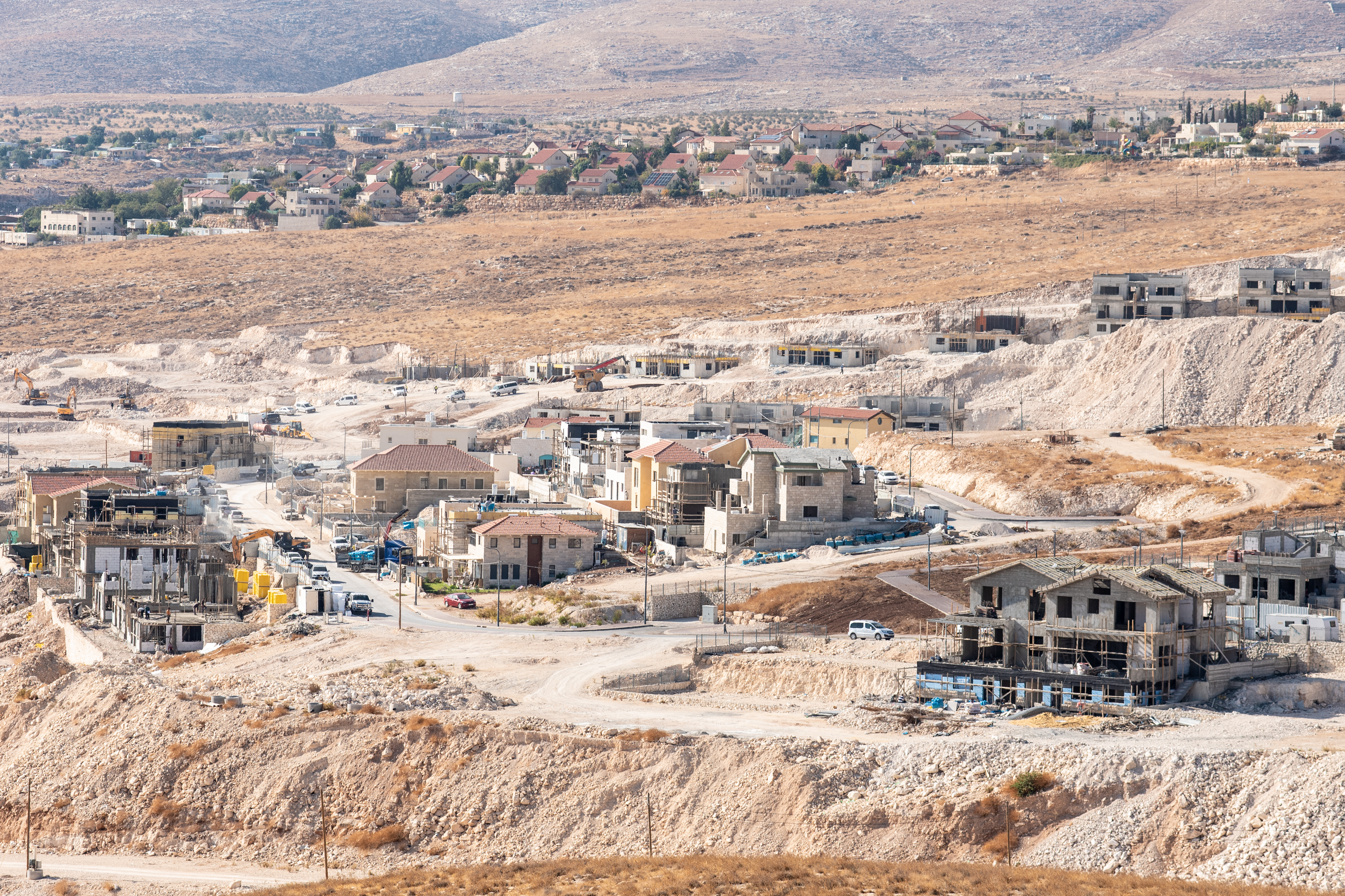
In late May, nine Western leaders issued a statement regarding the situation in the West Bank. It was largely a repeat of past condemnations of settler violence and Israeli moves to displace Palestinians and establish new illegal settlements, including the so-called E1 plan. But one aspect of their statement was novel: a direct warning to businesses to avoid complicity in West Bank atrocities. This emphasis on corporate responsibility for international crimes, including war crimes and crimes against humanity, is much needed and welcome. Without addressing the profit-motivated aspects of atrocities, accountability is incomplete.
In recent months, the states behind the May statement have had their patience with Tel Aviv run thin. Five of the nine have recognized Palestine as state. Some have done so with the intention of thwarting Israel from erasing Palestine and any two-state solution. But few if any have pointed to the contributions of businesses to the ongoing occupation of Palestinian territories and the relentless effort to forcibly displace Palestinians from their homes and communities. Until now.
The statement by the leaders declared that:
“Businesses should not bid for construction tenders for E1 or other settlement developments. They should be aware of legal and reputational consequences of participating in settlement construction including the risk of involving themselves in serious breaches of international law.”
The signatory states have thus issued a warning: those who run companies involved in operations in the illegally occupied West Bank could face prosecution for their involvement in serious breaches of international law, namely war crimes and crimes against humanity. Their position is in line with the Nuremberg legacy, the post-WWII trials of industrial leaders, and the understanding that mass atrocities are never committed without corporate sponsorship.
It matters the warning to companies was made by Western states because Western companies have been disproportionately involved in the dispossession and destruction of Palestinian life in the West Bank. The United Nations Office of the High Commissioner for Human Rights (OHCHR) has compiled a database of businesses involved illegal Israeli settlements in the West Bank. Naturally, most of the companies on the OHCHR list are based in Israel, but many others are from the West: Canada, France, Germany, Luxembourg, the Netherlands, Portugal, Spain, the United Kingdom and the United States. The companies are engaged in so-called “listed activities”, which include supplying equipment to build Israeli settlements and destroy Palestinian communities, the surveillance of Palestinians, renting out homes in illegal settlements, banking and financial operations, and the use of Palestinian natural resources, such as water and land.
Many of the companies will be familiar to readers. For frequent travelers, the companies involved in allowing properties in illegal settlements to booked include Airbnb, Booking.com, Expedia, and Trip Adviser. Others, like Motorola, are engaged in supplying “security services, equipment and materials to enterprises operating in settlements” as well as “the provision of services and utilities supporting the maintenance and existence of settlements”. Canadian company Metrontario is involved in the “use of natural resources, in particular water and land, for business purposes” in the West Bank.
While these companies are largely based in the United States, they have operations around the world. Other states should make it clear, whenever warranted: if the companies continue operating in West Bank settlements, they risk liability, sanction, and an end to operations in their jurisdictions.
Such efforts can work. The OHCHR’s report lists seven enterprises that are no longer involved in nefarious activities in the West Bank; five are from Western states. In Canada, a popular campaign called out top financial institution Scotiabank for its subsidiary’s heavy investment in Israeli arms manufacturer Elbit Systems. It took time, but by February 2026, it was reported that the 1832 Asset Management subsidiary had dissolved its stake in Elbit.
It shouldn’t be left to citizen activism to get companies to do what’s right and avoid fueling atrocities. States should have a responsibility to act – and there are indications that they are willing to, at least sometimes.
The former chairperson and former CEO of Lundin Oil are facing trial in Sweden for aiding and abetting war crimes in Sudan between 1999 and 2003. Earlier this year, a Paris court found French company Lafarge and four of its executives guilty for financing terrorism and violating international sanctions for their payments to ISIS and the al-Nusra Front in Syria. The cement giant made €5.5 million in payments between 2013 and 2014 to keep its operations ongoing, despite ISIS’ crimes, including genocidal violence. In Canada, in the wake of Russia’s 2022 invasion of Ukraine, Canada not only sanctioned Russian companies involved in Moscow’s war of aggression but seized their assets and moved to repurpose them as reparations.
In a world in which powerful players see war and its horrors as lucrative, much more can be done to address the complicity of businesses in fueling violations of international law, including in the occupied West Bank. In its 2024 Advisory Opinion on the consequences of the illegal occupation of Palestinian territory, the International Court of Justice pronounced that “it is for all States… to ensure that any impediment resulting from the illegal presence of Israel in the Occupied Palestinian Territory to the exercise of the Palestinian people of its right to self-determination is brought to an end.”
All states have an obligation to work to end the illegal occupation of Palestinian lands. That means holding accountable those companies that lubricate Israeli operations in the West Bank while lining their pockets.


