

The situation in Syria has deteriorated rapidly. Hundreds have been reported killed by Government forces
Syria has gone from bad to worse. According to reports, hundreds of peaceful, pro-democracy protesters have now been killed by authorities cracking down on any attempt to undermine the regime. This statement, or something approximating it, has probably been written and read thousands of times in the past few months as citizens across the Middle East and the Arab world have agitated against long-standing regimes in what has now been dubbed the Arab Spring.
The pattern in Egypt, Tunisia and Libya has been remarkably similar. While each, of course, are context-specific, all have experienced popular protests followed by significant levels of violence against, and repression of, citizens. All have seen subsequent calls for international criminal justice. Tunisia and Egypt have declared their intention to ratify the Rome Statute, while Libya was referred to the ICC by the UN Security Council. All of this seems to set a transformational precedence about the role of international criminal justice in the region.
This brings us to the question: should the ICC become involved in Syria? For some, it is a no-brainer.
Prof. William Harris argues that the actions of Syrian President Bashar Assad clearly constitute crimes against humanity and thus fall within the mandate of the ICC:
“It would be hard to find a clearer case of such offenses than the Syrian regime’s systematic repression of peaceful demonstrations through the past six weeks, with indiscriminate use of live ammunition against its own people on a countrywide scale.”
Barry Rubin, the director of the Global Research in International Affairs Centre adds that the Syrian regime has:
“gone to the third level…heavy repression and killing people in order to destroy the protests and intimidate people from participation.”
Amnesty International has explicitly called on the UN Security Council to refer the situation to the ICC. Further, while no reference to the ICC was made, the International Commission of Jurists recently issued a statement imploring the UN to act in the case of Syria and that:
“Those ordering and carrying out these attacks, including those firing live rounds into crowds, must be held criminally accountable.”
It’s hard to argue with Harris’s claims that crimes against humanity have occurred after seeing the horrifically graphic video, linked at Max Boot’s blog, of what appears to be indiscriminate attacks on peaceful Syrian protesters. (I cannot stress enough that not everyone should watch the video – it is perhaps the most gruesome video I have seen to date).

The international community set a precedence in the past three months concerning justice and accountability
But will the international community do anything about Syria? As a number of commentators have pointed out, the international community has been eager to intervene in Libya but painfully slow to do anything more than condemn Assad for the atrocities in Syria. Adrian Blomfield of the Telegraph, for example, notes that:
“Critics complained that while the West has been comparatively quick to go to the aid of the Libyan people, Syrians struggling against one of the Middle East’s most repressive regimes had largely been abandoned to their fate.”
Regarding the ICC’s involvement, Dominic Waghorn writes:
“It took just two weeks for the International Criminal Court to begin investigating Gaddafi, his sons and commanders over allegations their security forces had attacked peaceful demonstrators.
More than six weeks into Syria’s unrest, Assad’s security forces are gunning down their own people in their hundreds and the west still has not moved beyond words of condemnation.”
So will the international community seek the involvement of the ICC? While it is increasingly evident that it should, it is not yet clear whether it will.
Syria is not a member of the ICC, and thus outside of the jurisdiction of the Court. As Tobias Hanson reminded me (see comment below), the only way for the Court to achieve jurisdiction would be for the UN Security Council to refer the situation in Syria to the ICC, à la Darfur and Libya.
It is unclear what the zest for international criminal justice is among the Security Council members. Some states expressed reservations about referring Libya to the ICC. India, Brazil, Gabon and Portugal expressed concerns regarding the sequencing of peace and justice.
At the moment, the conflict in Libya looks far from resolved. America’s most senior military officer, Mike Mullen, admitted that despite NATO efforts, Libya is “moving towards a stalemate.” Some states, for better or worse, may believe that the referral of Libya to the Court has complicated efforts to find a political resolution to the crisis.
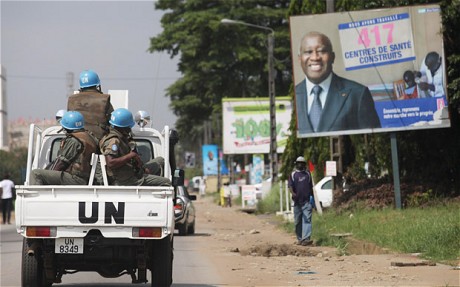
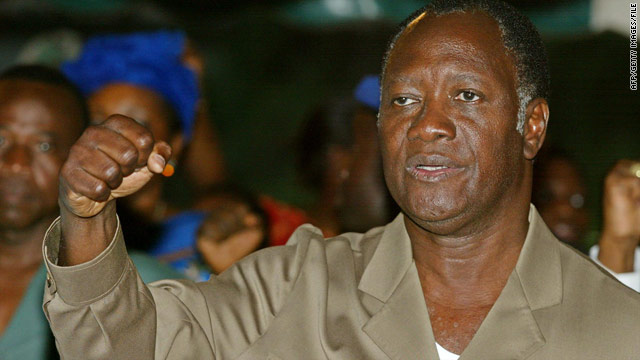
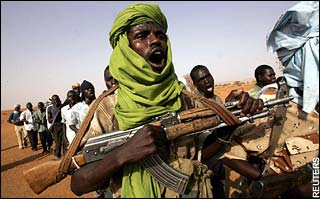
Another issue is the question of judicial overstretch: can the ICC handle its case load? In the first eight years of its existence, the Court opened four official investigations (Uganda, the Democratic Republic of Congo, the Central African Republic and Sudan). In the April 2010, the Court opened an investigation in Kenya and this past February, the ICC added Libya to its growing list of cases. Ivory Coast seems likely to be investigated as well.






 Justice in Conflict