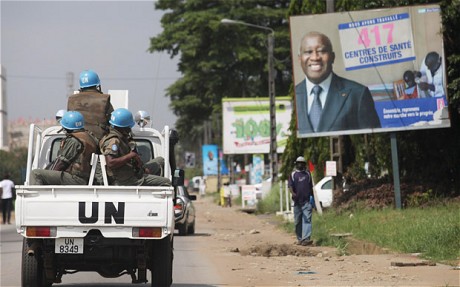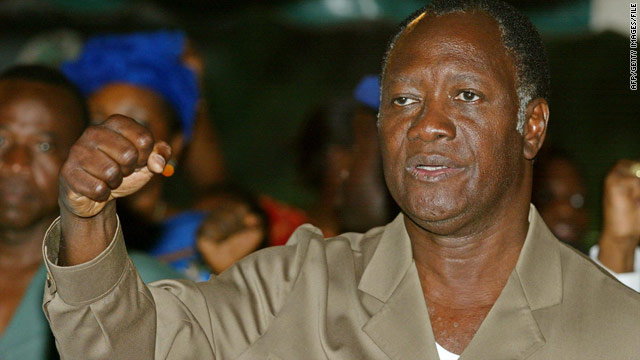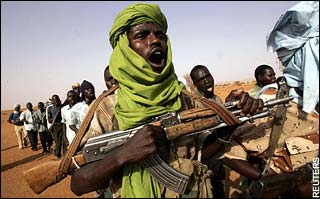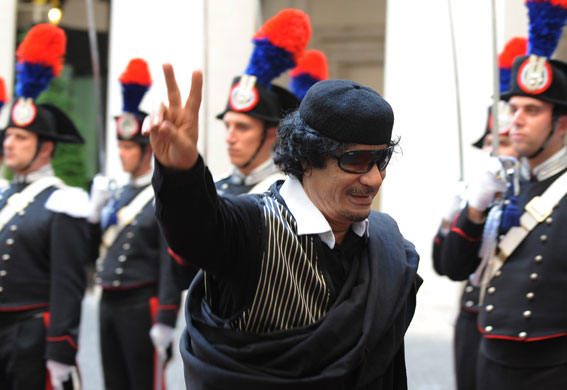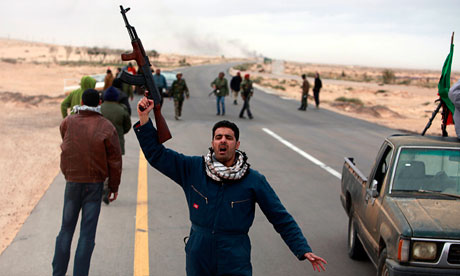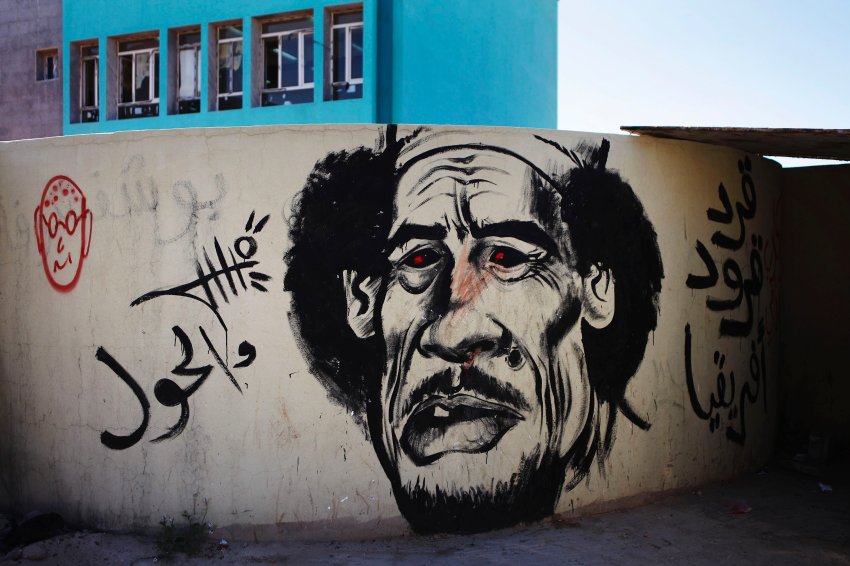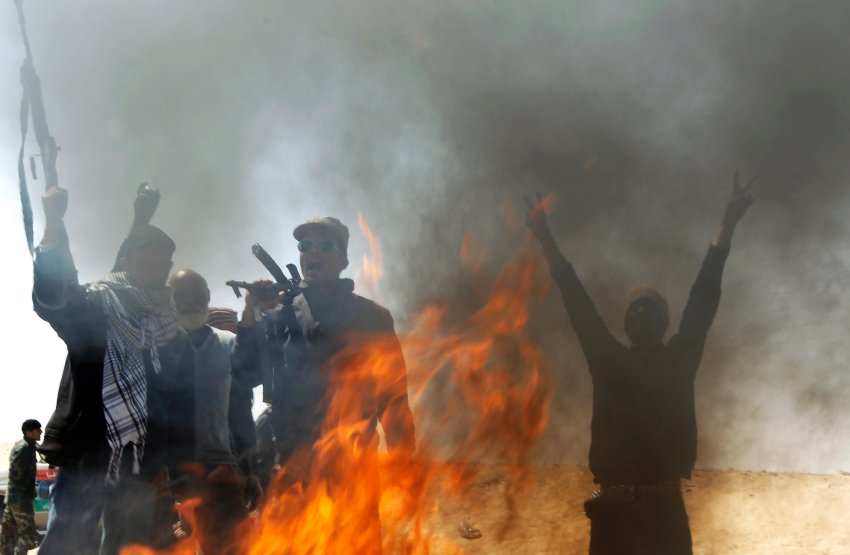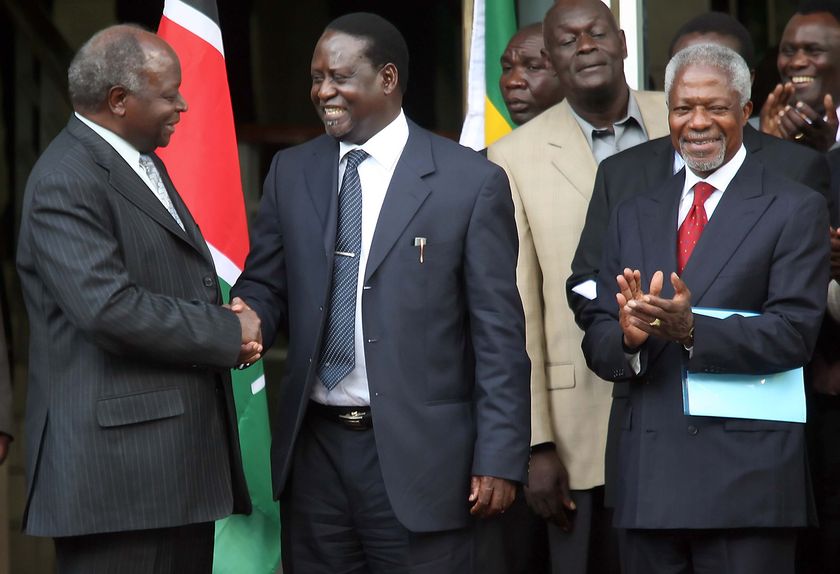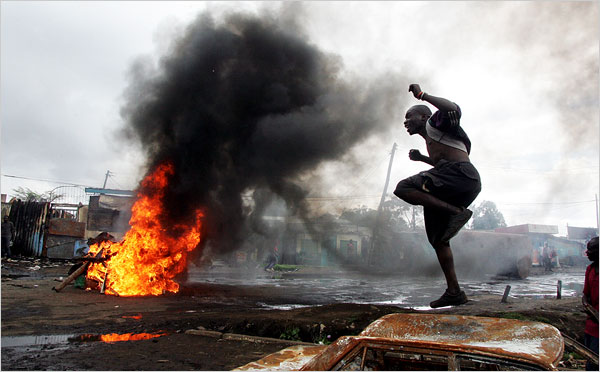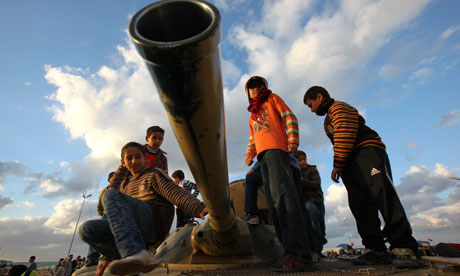
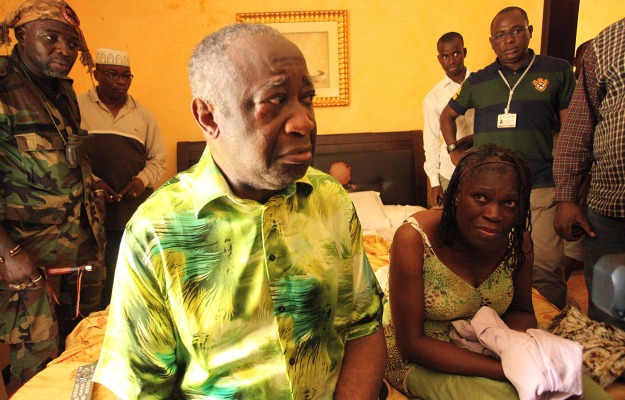
It seems clear that former Ivory Coast President Laurent Gbagbo will be brought to trial but there are allegations that forces loyal to new President Ouattara may also have committed atrocities (Photo: Foreign Policy)
The worst appears to be over. The detention of Laurent Gbagbo yesterday by French forces, (or was it Alassane Ouattara troops?), appears to have closed an ugly, brutal and costly chapter of Ivorian history.
Over the past few days there has been a buzz in the air about the possibility of the International Criminal Court investigating possible crimes against humanity in the Ivory Coast. The ICC’s Prosecutor, Luis Moreno-Ocampo, has expressed a desire to open an investigation and there’s a sense that it isn’t a matter of whether he will initiate an investigation, but when he will.
In line with the remarkable spread of the use of accountability and transitional justice language, President Ouattara’s camp has expressed its desire to create a Truth and Reconciliation Commission and to put Gbagbo on trial. Ivory Coasts’ representative to the UN declared that Gbagbo will be brought to justice:
The question is whether the international community, and the ICC in particular, should sit back and see whether Ouattara’s government can and will investigate and prosecute those responsible for atrocities or whether it should intervene now.
Skeptics of the ICC’s involvement will argue that the Court has no place in intervening in Ivory Coast, at least not until it is obvious that the new government refuses to bring individuals responsible for crimes to account. They will sensibly argue that Ivory Coast should have the “first shot” at establishing the rule of law and respect for democracy. Criminal prosecutions, after all, are most fruitful and effective when conducted locally.
I largely agree with this view and agree that Ivory Coast should have primacy over an investigation and trial. However, the ICC’s involvement would not undermine the capacity for Ouattara to initiate credible and legitimate trials. On the contrary, it might provide an impetus to do so.
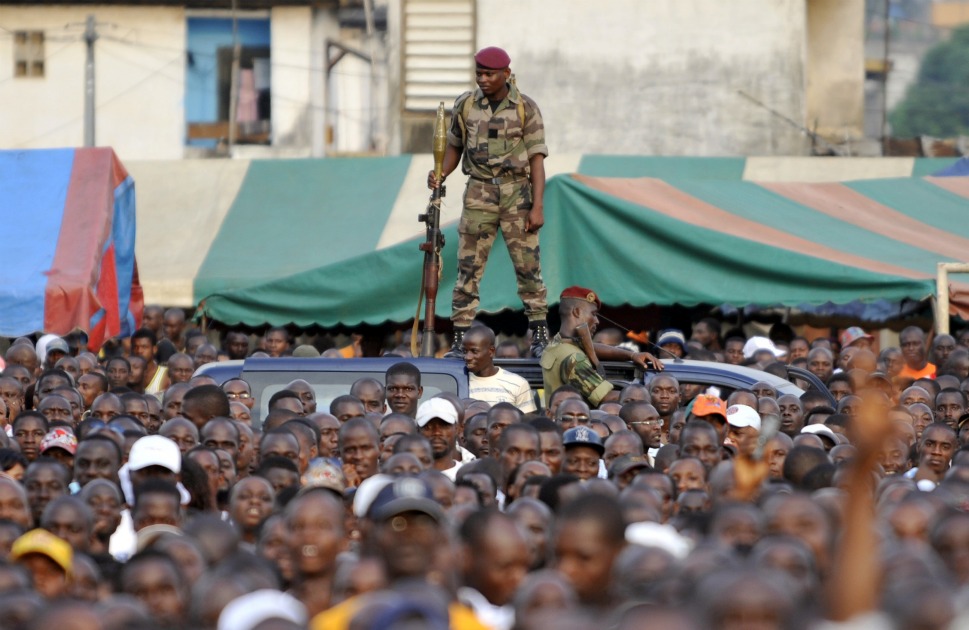
While Gbagbo has been detained, Ivory Coast still faces many challenges ahead (Photo: Sia Kambou/AFP/Getty Images)
The situation in Ivory Coast remains incredibly sensitive. It is far from a foregone conclusion that the country will not return to violence. While the hope of weathering the storm and returning to calm has increased, the country is still in turbulent waters. As one observer accurately described it: “whether this country will be able to bounce back from the depths of violence, propaganda and hate that he dragged it into is anything but certain.” A state whose streets have been littered with the bodies of victims does not transform to peace, security and stability overnight.
The delicacy of the current situation is further complicated by the sharp divisions that run through the country and which may provide fodder for future violent conflict. Indeed, the French denials that their special forces were responsible for detaining Gbagbo and their adamant assurances that it was Ivorian forces which nabbed him, are intended to prevent any provocation of the deep chasm that divides Gbagbo’s and Ouattara’s supporters.
Further complicating the situation is that troops on both sides of the conflict have allegedly committed atrocities. Ivory Coast is not a black-and-white story of bad guys committing atrocities (Gbagbo forces) against good guys fighting for democracy (Ouatttara forces). It is clear that Gbagbo’s troops committed crimes that must be investigated and as one Human Rights Watch (HRW) official argued,“Gbagbo has been credibly implicated in crimes against humanity and other atrocities for which he should be held to account.” However, evidence suggests that Ouattara’s forces may also be responsible for human rights abuses.
A recent report by HRW suggested that Ouattara’s forces killed hundreds of civilians, raped more than twenty alleged Gbagbo supporters, and burned at least 10 villages in Côte d’Ivoire’s far western region. The UN has expressed fears that Gbagbo supporters could be the target of retributive violence. Further, as Phil Clark writes in his lucid account of Ouattara’s and Gbagbo’s history, despite having the support and backing of most of the international community, Ouattara’s history gives reason to “question his democratic credentials and his ability to ensure stable governance.”