
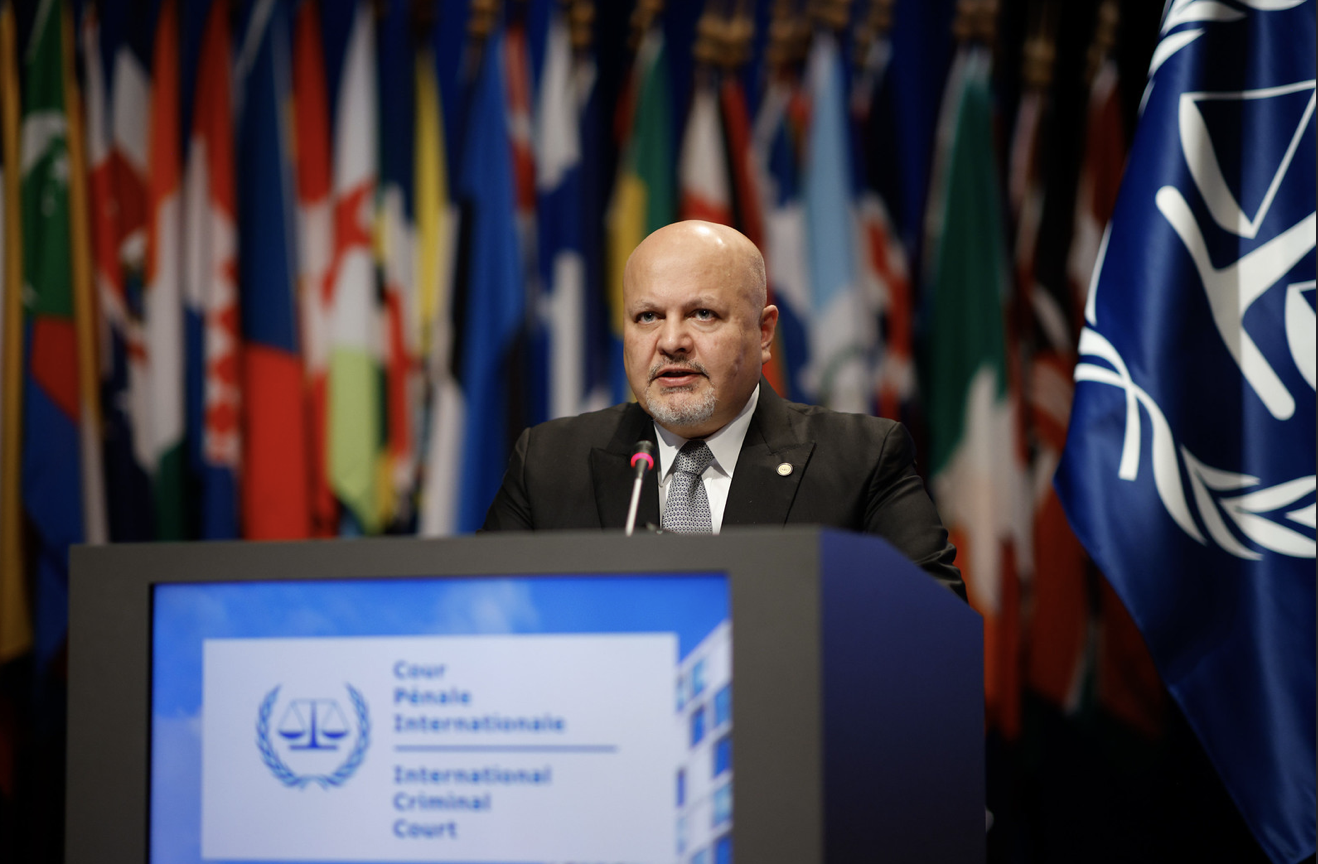
Member-states of the International Criminal Court (ICC) have voted to oust chief Prosecutor Karim Khan. The British lawyer has faced serious allegations of sexual misconduct by a member of his staff and was also a lightning rod for criticism from some quarters over his prosecutorial decisions, none more so that his investigation into the situation in Gaza. With Khan gone, what happens now to this beleaguered institution?
First, some clarifications. There has been a great deal of misinformation spread by certain media outlets and states about the allegations that Khan faces. This much is clear: the allegations against the now former chief Prosecutor had nothing to do with his decision to issue arrest warrants for Israeli Prime Minister Benjamin Netanyahu and former Defence Minister Yoav Gallant over war crimes and crimes against humanity committed in Gaza. Khan’s accuser herself has made that repeatedly clear and spoke about how she hesitated to come forward with her allegations because of how it would be weaponized by those seeking to discredit the ICC over its investigation into atrocities in Gaza. She has also said: “I fully and entirely support the court’s investigations.”
At the same time, there is no credible evidence that the allegations against Khan are part of a conspiracy orchestrated by Israel or the United States to oust him. When the accusations of sexual harassment were first made, some – including in the Court –assumed it must have been part of a plot against the institution organized by politically-motivated actors. But that does not appear to be the case.
None of this is to say that states supported Khan’s decisions or didn’t want him gone. It has been reported that some state authorities, including form UK Prime Minister David Cameron and late U.S. Senator Lindsey Graham (who said the ICC was “for Africa and thugs like Putin”), exerted pressure on Khan in attempt to dissuade him from prosecuting international crimes committed by Israeli leaders in Palestine. Israeli journalists have reported that the country’s Foreign Minister and embassies pushed ICC member-states to vote in favour of Khan removal. Some capitals undoubtedly had Khan’s decision-making as much as the allegations he faced in mind when they voted, by secret ballot, 82-13 (with 15 abstentions) to remove him as prosecutor.
All of this leaves the ICC in unchartered waters. The position of chief Prosecutor is one that invariably receives criticism; it’s part of the job description when you seek to hold accountable powerful political leaders. But never has one been removed.
What won’t change are any of the warrants issued to date, and for good reason. The ICC is bigger than any one person. The arrest warrants against Netanyahu and Gallant were not issued by Khan. They were the result of exceedingly careful evidence collection by world-leading investigators and war crimes experts. The warrants were approved – and ultimately issued – by judges who were convinced by the evidence they were based on. And let’s be clear: to anyone who has been watching events in Gaza, the evidence of war crimes and crimes against humanity is overwhelming.
It is not yet clear who will replace Khan. It is possible that one of the ICC’s two Deputy Prosecutors will do so, or that a new candidate will be brought forward by states. Whoever takes up the mantle will have to navigate a court seeped in a crisis. As such, they must be a person of high integrity and fortitude, someone willing to preserve the independence and impartiality of the Court at a time when many want it to bow to political exigencies. In particular, the next prosecutor will have to demonstrate that the Court’s ongoing investigations – including a reported warrant prepared for Israel’s notorious Minister of National Security Itamar Ben-Gvir – continue unabated and without undue political influence from outside.
The next prosecutor will also have to deal with an administration in Washington that is hell-bent on destroying the ICC. Earlier this month, Secretary of State Marco Rubio announced Washington’s intention to “dismantle” the Court, “brick by brick.” The U.S. administration has also levied sanctions against ICC staff, including Canadian judge Kimberly Prost.
If the U.S. succeeds in its mission to destroy the Court, only those who perpetrate atrocities – Russia’s President Vladimir Putin, the Taliban’s leadership, and the Burmese junta – will benefit.
Ultimately, the ICC cannot survive without the support of its states, especially the institution’s founders. Yet many have been conspicuously silent as the institution comes under relentless attack. It won’t be one Prosecutor’s decisions or American belligerence that will kill the Court, but the indifference of its purported backers.
This is the most precarious moment facing the ICC in its history. If the Court is to survive and fulfil its mission to prosecute international crimes, without fear or favour, states need to double down and back the institution now, more than ever.


 Justice in Conflict