
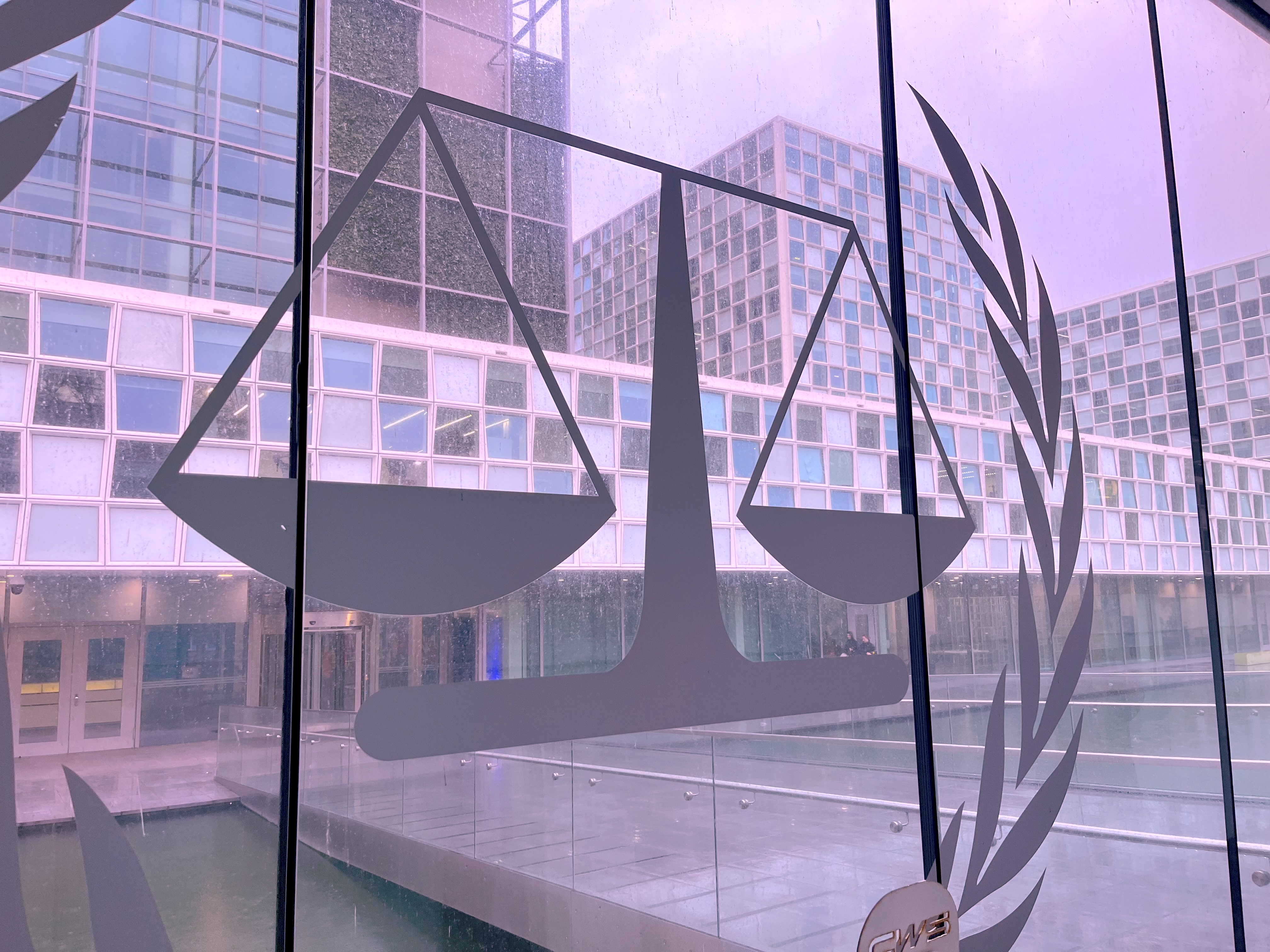
It has been barely two weeks since U.S. Secretary of State Marco Rubio announced Washington’s intention to “dismantle” the International Criminal Court “brick by brick”, and now two states have announced their withdrawal from the Court. Both Venezuela and Chad have claimed that their decisions were the result of the ICC’s alleged biases. In reality, American pressure drove each to please (or appease) the Trump administration, with both Caracas and N’Djamena being pushed in recent days to leave the Court. Not surprisingly, their decisions were celebrated in the Trump administration, which is encouraging “all members of the ICC to withdraw from the Rome Statute.”
The situation facing the ICC will get worse before it gets better. The withdrawals of Venezuela and Chad will be followed by others. To save the institution, those states that still believe in the Court’s mission should meet America’s campaign for ICC withdrawals by organizing a coherent and comprehensive membership drive aimed at getting states to join the Court.
The Trump government knows that it cannot destroy the ICC alone. If it could, it would have done so long ago. It needs other states to join its cause. A logical prong in its efforts to destroy the ICC is thus to push member-states to leave the Court. The way for the ICC to survive is to directly counter this campaign by ensuring that its membership remains robust. But it cannot do this alone. It needs the help of its members.
The departure of Venezuela and Chad from the ICC hurt, for separate reasons. While the ICC will retain jurisdiction over both for the duration of their time as members of the Court (and for a year after they deposit their official notice of withdrawal with the United Nations’ Secretary General), each has featured prominently in ICC operations.
Venezuela, of course, is under investigation by the ICC. Last October, the Office of the Prosecutor closed its satellite office in the country and made noise about taking action (i.e. preparing to issue arrest warrants) over alleged crimes against humanity committed in the country under the regime of former President Nicolas Maduro. Since then, Maduro was kidnapped by American armed forces and whisked away to the United States, where he faces charges of ‘narcoterrorism’. With the exception of its erstwhile leader, the Venezuelan regime remains entirely in place in Venezuela, operating, in many respects, as a client of the Trump administration. In this context, Caracas’ decision to withdraw from the ICC should be seen as doing Washington’s bidding but also preparing for the real possibility of forthcoming warrants for some of its leaders as well as, perhaps, Trump administration figures.
Chad’s relevance to the operations of the ICC is altogether different. There is no investigation into any alleged war crimes, crimes against humanity, or genocide being committed in the country. However, there is an investigation ongoing on Chadian territory. Because of the massive number of people forcibly displaced from Darfur into neighbouring camps in Chad and because of the impossibility of comprehensive evidence collection in Darfur, Chad has been the primary base of investigative activities conducted by ICC officials to date. Estimates suggest that, since 2023 alone, almost 900,000 people have fled to Chad to escape conflict and violence in Darfur. If Chad leaves the ICC, it may very well also undermine the Court’s access to evidence witnesses and victims – none of whom had a say in whether Chad would stay or leave the Court.
This is, of course, not the first time that the ICC has had to deal with withdrawals. In recent months, the military governments of Burkina Faso, Mali and Niger have withdrawn from the ICC. Facing investigations into crimes against humanity, the government of Burundi withdrew the country from the Court in 2017. South Africa also signalled its intention to withdraw from the ICC in 2016 before reversing course. The Philippines withdrew from the ICC in 2019, but not before investigators and prosecutors worked to prepare arrest warrants over crimes against humanity committed during former President Rodrigo Duterte’s so-called “drug war”. In March 2025, Duterte was surrendered to the ICC where his trial over extrajudicial killings is set to begin in November 2026. Notably, Filipino authorities continue to cooperate with the ICC and its investigators, despite not formally being a member-state of the Court.
While the ICC has experience with withdrawals, those recently instigated by American attacks on the ICC pose a distinct threat to the institution. The response of states should be more than statements or tweets; it should take the form of meaningful action to counter the threat of withdrawals, including with a full-court press to get more states to join the Court. What might that look like?
First, member-states of the ICC should gather in an emergency session of the Assembly of States Parties to strategize how to respond to the uniquely grave threat to the Court – their court – emanating from Washington. In doing so, they should invite a host of non-member states from around the world who have previously considered but decided not to join the ICC. Those states should be encouraged to articulate what has held them back and what would convince them to join the Court. All member-states of the ICC should then explore how they could openly encourage heretofore reluctant capitals to join.
Some capitals will surely say that they do not want to risk financial or economic consequences by angering the U.S. and joining the ICC. Money talks, and many governments may be reluctant to scupper possible economic deals or possible breaks on tariffs. However, it is important to emphasize that states are being threatened and punished with tariffs regardless of what they do. Whether they appease Trump or stand firm against his hysterics, it doesn’t seem to matter, because there is no coherent logic in the U.S. administration’s conduct. The words “ally of the United States” have been rendered meaningless. In other words, if a state is going to get punished or tariffed regardless of whether it joins or backs the ICC, then the real issue isn’t joining the Court at all.
At the same time, member-states can put their money where their principles are too, by encouraging accession to the ICC in their own trade negotiations with states. The Trump administration has made a mockery of economic relationships, threatening or altogether tearing apart long-standing trade agreements. The result is that states have looked to diversify their multilateral partnerships. For example, in the last 14 months, Canada has committed to twenty new trade deals and finalized four. The European Union has at least four new trade deals since Trump came into power, with more on the way. This new latticework of deals creates the opportunity to tie trade negotiations with both a principled commitment to international law and a powerful refusal to the Trump administration’s bullying.
Will states have the courage to stand up for the ICC and tie trade negotiations to support of the Court? It remains to be seen. But they should understand that protecting the ICC is about much more than the Court. The Trump administration’s relentless attacks on the institution – the sanctions, coerced withdrawals, open threats, etc. – are part of a wholesale attack on international law and on international institutions. The ICC is a canary in the coal mine, whose failing health embodies the Trumpian virus infecting the global rule of law. To save the Court, then, is to save international law itself.


Important issue.
There is no need to tie indeed, between membership in Rome statute and strict interests in money and trade etc. Such attitude, would only cause things to come around and go around. The court in the Hague, has to do with far greater more fundamental things over trade and money or financial discretion.
What the post is missing, and fundamentally so with all due respect, is the following:
The popular perception of common people, all over the world.
In this regard, the prestige of the court in the Hague, has only been enhanced, and significantly so. Why is that:
Simply, the war in Ukraine, and the war in Gaza and Iran. It has raised issues of leaders getting a way with it, and without accountability. It can’t go on like this. For too many citizens of the world, it can’t simply. All this, has significantly, elevated the awareness to the need of international criminal court, and effective one.
Sure, the common people have no political power to change things all around, and right here, right now. But, the shift, has already started. And it is a huge one. And right leverages would do it.
I shall leave some links, later maybe.
Thanks
Hereby, a link, describing how public opinion in the US, is shifting in favor of Palestinians or against the Israeli state ( the US, is traditionally considered as strong hold of the Israeli state in this regard):
https://www.washingtonpost.com/politics/2026/07/07/us-opinions-toward-israel-are-shifting-poll-finds/
This is one negligible illustration. Maybe later, from Europe, East Asia etc… this is huge shift, all over the world
Pingback: Non sarà Trump a mettere fine alla Corte penale internazionale | Porta da Estrela