Crimes against migrants and asylum seekers in Libya: Here’s how the ICC Has Jurisdiction

Alessandro Pizzuti and Alice Giannini join JiC for this two-part guest post the International Criminal Court and its possible investigation into crimes committed against migrants in Libya. Alessadro is the co-founder of UpRights. Alice is a lawyer and PhD student in criminal law at the Universities of Florence and Maastricht and the Head of StraLi’s Cyber Team and a member of the International Criminal Law team.
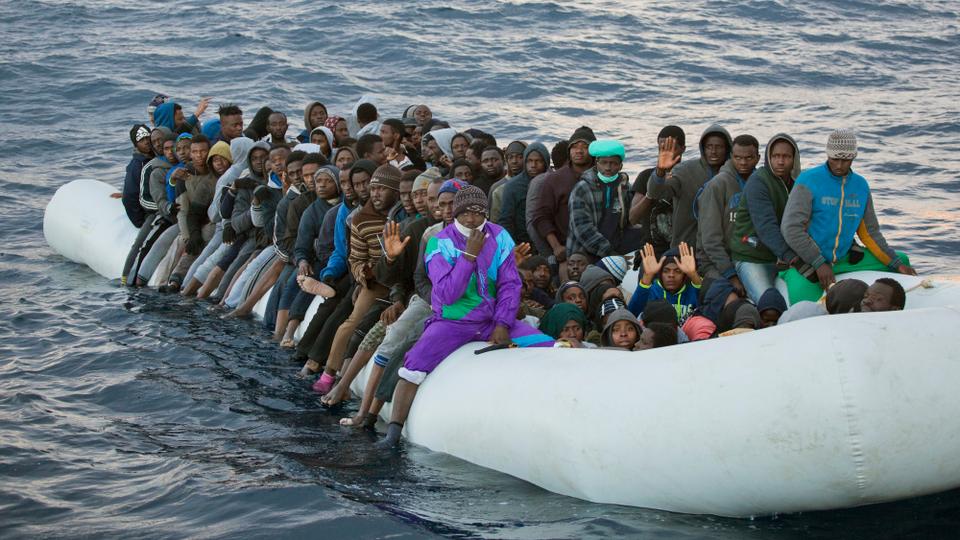
Migrants off the shore of Libya in 2017 (Photo: AP)

On 28 April 2022, during a regular briefing to the UNSC on the situation in Libya, the Prosecutor of the International Criminal Court (ICC) reported that crimes committed against migrants in Libya may amount to crimes against humanity and war crimes and fall within the ICC jurisdiction. Never before had the Prosecutor been so clear on the nature of these crimes or his Office’s intention to pursue such a line of investigation. These conclusions are consistent with the Article 15 Communication filed on 17 January 2022 by UpRights, Adala for All, and StraLi, referred in the Prosecutor’s report. In this two-part blog post we first address the key role of the nexus between the crimes and the conflict in Libya. This will serve to assess, on one hand, the qualification of the crimes committed against migrants as war crimes and, on the other hand, the ICC’s jurisdiction. In our second piece, we address the potential implications of the identification of such conduct as international crimes.    

As reflected in our January 2022 Communication, the Libyan conflict has deeply affected the migration dynamics in the country (Communication, paras.24-117). Originating from the 2011 revolution, the conflict has been characterized by a lack of a functioning government and the proliferation of armed groups. The specific characteristics of the Libyan crisis have been fuelled continuous unrest, which enabled armed groups to perpetrate crimes against migrants in detention centres.

It is in this context that the mass migration through Libya towards Europe has allowed for an already vulnerable population to become the subject of international crimes. Indeed, the fragmentation of power shaped the smuggling/trafficking industry in Libya. Between 2012 and 2017, armed groups used their position to gradually take over the business of operating detention centres, including those under the nominal control of the Department for Combatting Illegal Migration (DCIM). From 2017 onwards, with growing pressure from European States to stem migration flows from Libya, the same armed groups re-focused their activities on migration control, using DCIM detention centres to prevent migrants from crossing the Mediterranean Sea.

War crimes

The abuses committed against migrants in DCIM Detention Centres between 2017 and 2021 qualify as war crimes (Communication, paras.129-402). The Communication identifies as concrete examples six DCIM Detention Centres where such crimes have allegedly been committed: Abu Salim, Tarik al-Matar, Tarik al-Sikka, Al-Mabani, Tajoura, and Al Nasr. These centres are under the effective control of armed groups and have hosted thousands of migrants, a large part of whom were intercepted at sea by the Libyan Coast Guard, and who have been subject to regular violence and abuses. Being closely linked to the conflict in Libya, these abuses meet the requirements provided under Articles 8(2)(c) and (e) of the Rome Statute.

Continue reading →
Posted in ICC Prosecutor, Immigration, International Criminal Court (ICC), Libya, Libya and the ICC, Migration, Refugees | Tagged , | 3 Comments

The Forgotten Victim of War: The Natural Environment in Ukraine

David Krott joins JiC for this guest post on damage inflicted by the war in Ukraine on the natural environment, and its possible treatment by international criminal law. David is as a research assistant at the FH Aachen (Germany) and am PhD candidate at the Vrije Universiteit Brussels, specialising in international environmental criminal law. David has previously written for JiC on climate change and international law here.

A sign demarcating a radioactive zone near Chernobyl Power Plant (Photo: BBC)

Fires in the closed and highly radioactive exclusion zone around Chernobyl, the leak of ammonia from a factory in Sumy, and missiles hitting Europe’s largest nuclear power plant in Zaporizhzhia. These stand as examples of the damage wrought upon the environment by the ongoing war in Ukraine. They represent the harm and threat potential for humans found within these acts of environmental warfare. They also underline how closely warfare is linked with human suffering and environmental harm.

The war in Ukraine has challenged international relations and brought unspeakable harm to the population of Ukraine, its culture, and its infrastructure. In these kinds of conflicts, the natural environment often recedes into the background. But the environment in Ukraine is still suffering a great deal under the war. The threat of environmental harm in Ukraine reaches far across the country’s borders and should be viewed through the eyes of international criminal law.

The natural environment as a victim in the Ukraine war

The natural environment is a major loser in any armed conflict. History is full of examples where the environment was a prime victim of warfare. The environment has even been used as a means of warfare, such as when belligerents apply scorched earth tactics, pollute their enemy’s water supply, or use biological or chemical weaponry directly in combat. Grave environmental harm resulting from war is evident once again in the current war in Ukraine. While the environmental damage cannot be tied to any single event, it stems from the impact of bombs and other explosive projectiles, attacks on fragile infrastructure and industry, as well as secondary causes ignited by hostilities, such as wildfires.

In Ukraine, incidents damaging the environment have ranged from water, soil and air pollution and wildlife harm, to a potential radioactive catastrophe. During the first month of the invasion, many of the country’s most vulnerable ecosystems, which lie in active war zones, have been affected heavily by the fighting. Every bomb and missile launched contains waste and heavy metals, polluting the soil and potentially the groundwater. Relevant infrastructure closely linked to environmental matters may also be targeted as a means of warfare. There have been repeated attacks on fossil fuel infrastructure, electricity stations, water supply systems, and nuclear facilities. The country possesses strong industry, including chemical factories, steel plants and weapon factories. Those industries present a wide array of potential environmental hazards. One particular threat arose with an ammonia leak in a chemical factory that was caused by shelling.

The potential threat to the environment is not only of particular concern to Ukraine. Readers will know well that one of the worst environmental catastrophes of the 20th century took place in Ukraine: the explosion of the nuclear reactor of the Chernobyl power plant. The incident had effects far across the borders of Ukraine. During this war, Russian troops took control of Chernobyl in the first days after their invasion, leaving the world in the dark about its security. Furthermore, Europe’s largest nuclear power plant, Zaporizhzhia, was also directly attacked. Fears of another nuclear catastrophe are high. The potential harm resulting from a fatal hit on a nuclear power plant would cause significant transnational fallout. These consequences do not arise from the immediate effects of a potential nuclear disaster alone. The pollution of waterways and the air by radioactive particulates would likewise pose a global environmental threat.

Continue reading →
Posted in Ecocide, Environment, Guest Posts, Russia, Ukraine, War crimes | Tagged | 1 Comment

What an investigation into war crimes, crimes against humanity, and perhaps even genocide in Ukraine looks like

(Photo: Reuters)

With every passing day, fresh allegations of war crimes, crimes against humanity, and even genocide in Ukraine emerge. A small battalion of organizations, international courts, and states have responded by investigating atrocities committed in the country in the hope that evidence can be marshaled and perpetrators held to account. But what does it take to investigate an international crime?

Investigations into international crimes are immensely difficult, especially when there is an ongoing conflict. It is fairly easy to point to the bombing of a theatre sheltering children in Mariupol or a massacre in a town or village like Bucha and determine that an atrocity has been perpetrated. Digital evidence collected and authenticated by an unprecedented number of investigation outfits have helped to expose these crimes. But investigations like that being conducted by the International Criminal Court (ICC) with the help of states like Canada aren’t only seeking to establish what happened; they are trying to find out who is most responsible.

Identifying those criminally liable for war crimes requires what investigators call “linkage evidence,” information that connects an act of atrocity to specific perpetrators. Investigators work backwards by stitching together a chain of evidence. But they are not looking to prosecute foot soldiers – the Russian officers shelling Ukrainian towns from tanks or jetfighters. They are trying to pin responsibility on more senior military and political figures. The hope of many is that that chain reaches all the way to the Kremlin and President Vladimir Putin himself.

Investigators will have to build a matrix of evidence that connects atrocities, perpetrators, and a structure of authority all the way up to Moscow. Doing so would illustrate a conspiracy among the Kremlin’s ringleaders to commit international crimes. But that won’t be easy. Neither Mr. Putin nor those in his inner circle have stepped foot in Ukraine during the war. So, how can investigators build a case against the Russian President and his coterie in Moscow?

A couple of strategies could be in play. In villages and towns attacked by Russian forces, there are invariably abandoned tanks and other military hardware. Their contents could yield important evidence. Every cellphone, computer, or manual left behind can help investigators build a case that reaches further up the echelons of power.

Continue reading →
Posted in Crimes against humanity, Genocide, International Criminal Court (ICC), Investigations, Ukraine, War crimes | 3 Comments

States and the ICC must avoid creating a two-tier justice system

Ukrainian soldiers in patrol on the front lines (Photo: Getty)

The International Criminal Court (ICC) has been asked – by forty-one states – to investigate allegations of mass atrocities committed in Ukraine. That’s no easy task. Nor is it cheap. In a show of unprecedented support for the ICC, a number of Western states have volunteered help to bolster the Court’s investigation. Should the ICC accept this support, or does it risk deepening the inequalities of international law and justice?

Investigating atrocities is difficult at the “best” of times, when evidence is readily available, investigations are well funded, and violence has subsided. The ongoing conflict in Ukraine presents far from ideal conditions, and the ICC is far from flush. The Court is a cash-strapped institution because many states, including some of those now sending it voluntary donations, have long insisted that its budget be restricted despite its increasing workload.

Soon after announcing the Court’s decision to open a war crimes investigation in Ukraine, ICC Chief Prosecutor Karim Khan asked the international community to offer support. A number of states answered Khan’s call. Among others, Lithuania, the United Kingdom, Canada, and France sent the ICC additional funds and/or their own legal authorities to support the probe in Ukraine. The level of support for the ICC’s investigation in Ukraine is impressive and could increase Ukrainians’ chances of finding justice. But many are asking: will such support for accountability be offered to victims of mass atrocities outside of Europe?

In answering this question, it is important to distinguish self-serving “whataboutism” from the pleas of those asking: “why not us?”.

The former is a vacuous tool of distraction, used by governments such as those of Russia and Israel to deflect from allegations of war crimes they themselves are facing. They and their backers insist atrocities should not receive scrutiny from the ICC because justice has not been meted in Iraq, Syria, or Afghanistan.

Continue reading →
Posted in Canada, International Criminal Court (ICC), International Criminal Justice, Israel, Russia, Syria, Ukraine | 3 Comments

Canada sends Investigators to Help the ICC out in Ukraine. Will it do any good?

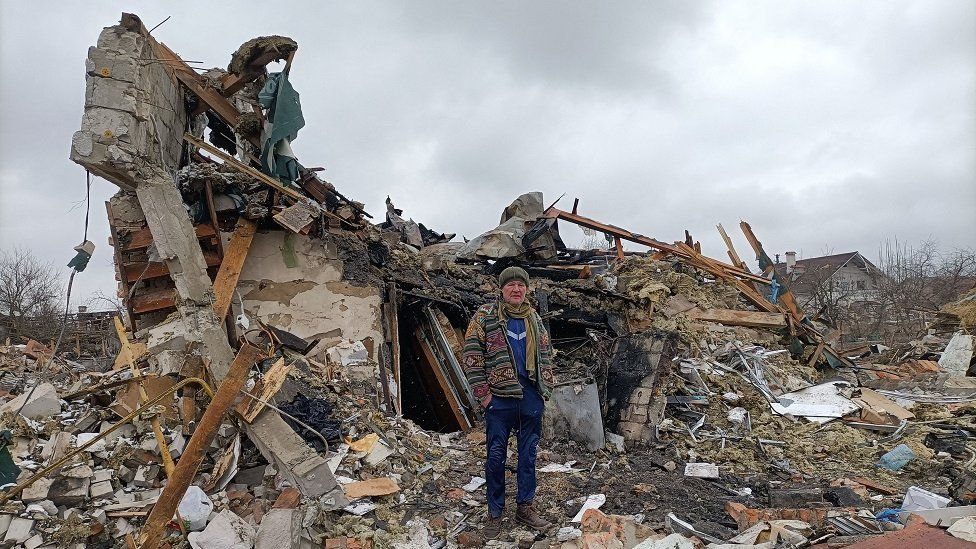
Destruction in Zhytomyr, west of Ukraine’s capital Kyiv (Photo: Getty Images/BBC)

Canada has announced that it is sending a team of Royal Canadian Mounted Police (RCMP) officers to support the International Criminal Court (ICC) in its investigation into war crimes in Ukraine. The move is unprecedented. No Canadian government has ever sent or seconded such a team, not even for other investigations that the country has pushed the ICC to conduct. What does it mean for the investigation, for the ICC, and for Canada’s role in pursuing justice for international crimes?

Earlier this month, forty-one-member states of the ICC, including Canada, referred the situation in Ukraine to the Court. It was a remarkable show of collective and symbolic support for an institution that only recently was battling severe and vindictive animosity from the U.S. over its investigation into alleged atrocities in Afghanistan.

In opening the Ukraine investigation, ICC chief Prosecutor Karim Khan asked for help and resources. A number of states followed through, with Canada now also jumping on board. On 28 March, Public Safety Minister Marco Mendicino announced that RCMP officers would be shipped out to support the ICC’s efforts. He stated that the Canadian team would assist in collecting and preserving evidence and interviewing witnesses.

Canada’s decision is a welcome one. The ICC is something of a cash-strapped institution. That is in part because states like Canada have insisted over the past decade that the Court’s budget should remain effectively frozen. This has frustrated advocates who lament that while these states ask the ICC to do work investigating international crimes, they don’t back it up with the resources required to undertake complex investigations. Placing money where its mouth is has not been Ottawa’s strong suit. In 2018, Canada joined a group of Latin American states in referring Venezuela to the ICC, but offered no money or investigators to conduct the investigation.

Many thus hope that Canada – and other states – are setting a precedent in bolstering their support of the ICC, not only in Ukraine, but in other situations of mass atrocities, like Myanmar, Afghanistan, and Palestine.

Continue reading →
Posted in Canada, Funding, International Criminal Court (ICC), International Criminal Justice, Russia, Ukraine, Universal Jurisdiction | Tagged , , | Leave a comment

Justice and Accountability for Ukraine – Combining Transnational and International Criminal Law

Jill Coster van Voorhout joins JiC on this post examining the intersection between international criminal law and transnational criminal law. Jill is an Associate Professor of International and Transnational Criminal Law at the Faculty of Law, University of Amsterdam and a research fellow at the Amsterdam Center for Criminal Justice, the Amsterdam Centre for International Law and the Institute for Advanced Study. 

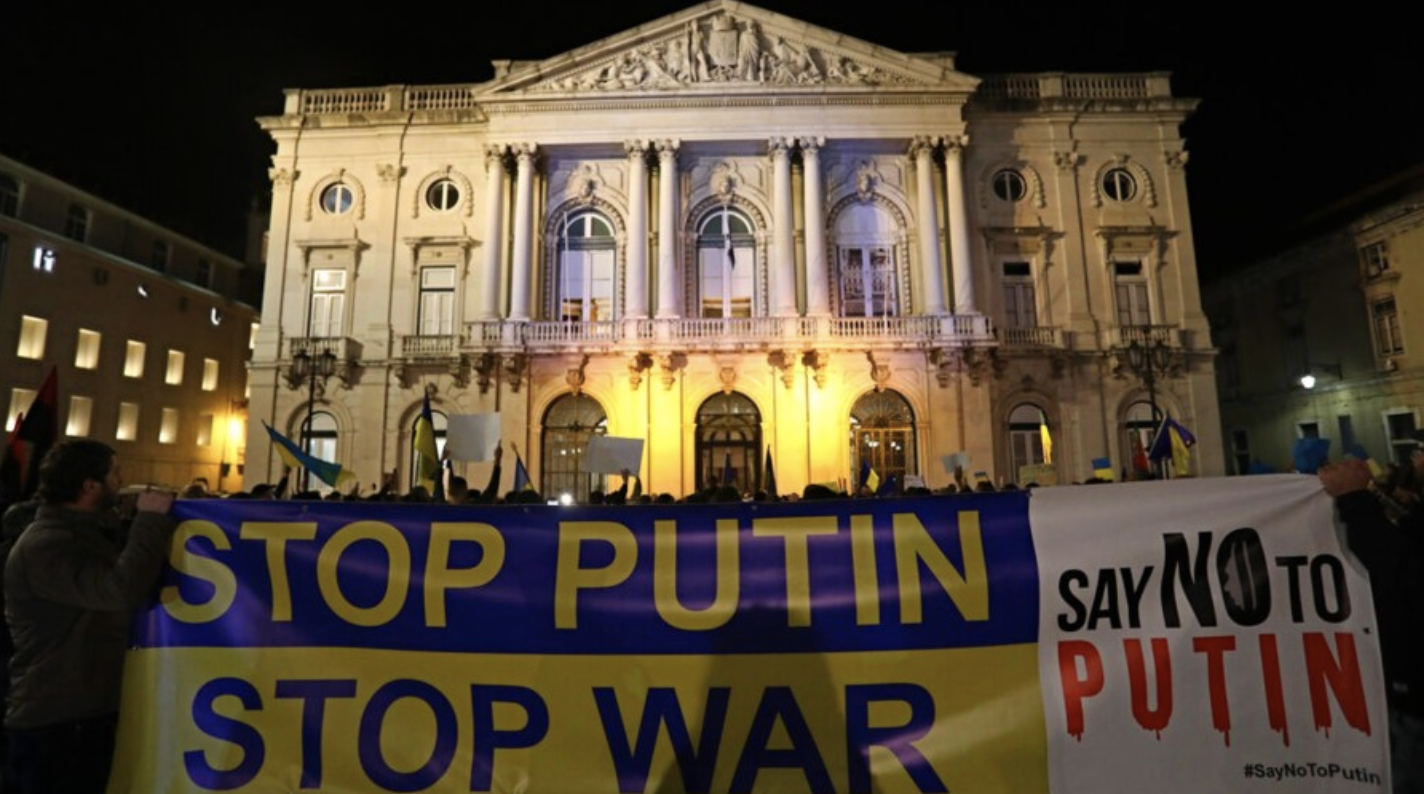
Anti-war protestors in Lisbon (Photo: AP)

“We are coming for your ill-begotten gains”, President Biden said during his 2022 State of the Union about his plans to seize yachts and luxury apartments from influential Russians with wealth parked in the United States. “Putin, The Hague is waiting for you” has been spray-painted on the road opposite the Russian embassy near the Lithuanian capital Vilnius. While both are resonating sentiments, they also serve as helpful illustrations of how discussions about transnational criminal law (TCL) and international criminal law (ICL) develop in parallel and with little interaction. These siloed approaches are unhelpful, because confiscated assets can be used as (financial) evidence for crimes committed in Ukraine and abroad, especially if the proverbial paper trail can be followed to those most responsible for the Russian invasion of Ukraine and the atrocities that we see daily.

This post is a call for an integrated TCL-ICL strategy. But it should not be misunderstood as though either field of law or their combination is a panacea, nor that they should replace political, economic and, most importantly, diplomatic tools. Rather, it is a request to specialists and students of TCL and ICL to think of what Hannah Arendt labelled “renewal” – our collective power of thinking of a better international rule of law.

President Putin’s Achilles’ Heel – His War Chest and Foreign Assets

Russian President Vladimir Putin’s Achilles’ heel could well be his war chest in the foreign reserves of the sanctioned Russian central bank and assets funnelled to countries with a stronger rule of law that offer legal protection. Putin could not hold such assets himself – and certainly not in his own name. For years, funds from the Russian State were syphoned out of the country through laundering schemes and was then spent in a small number of wealthy stable countries. This is why effectuated and announced sanctions against Russia include shutting the government and banks out of global financial markets, restricting technology exports and freezing and confiscating assets of influential Russians.

While this focus is important, we must also realize that we currently live in what Oliver Bullough has labelled “Moneyland”.  Money is borderless, while law stops at borders. Our best source of evidence of this free international flow of money is the few criminal prosecutions and relevant document leaks such as the Panama Papers, FinCEN Files, Paradise Papers, and, more recently, Suisse Secrets. Against this backdrop, we see a State like Switzerland, notorious for its banking secrecy during World War II and Russia’s annexation of Crimea, implement the above-mentioned sanctions. Legal, accountancy and tax firms also announced they ended their relationship with Russia’s government.

Continue reading →
Posted in Asset Recovery, Economics of Conflict, Guest Posts, International Criminal Justice, Russia, Transnational Criminal Law, Ukraine, Vladimir Putin | Tagged | 1 Comment

Peace versus Justice? On the Effects of the ICC on the War in Ukraine

(Photo: EPA / BBC)

When thirty-nine states asked that alleged war crimes in Ukraine be investigated by the International Criminal Court (ICC), they bolstered the chances that perpetrators will one day be held to account. But will the pursuit of ICC justice bring peace to Ukraine? Will the investigation de-escalate violence and deter atrocities, or could it make matters worse?

The short answer is that no one should expect that the ICC will deliver peace, solve the root causes of conflict in Ukraine, or lead to a wholesale reduction in violence. Expectations need to be managed. The ICC is in the accountability game, not the conflict resolution game, and as my research and book on the subject illustrate, the Court’s effects on peace are often ambivalent. But that does not mean that the Court’s pursuit of justice is not worth supporting. Far from it.

Based on what we know about the war in Ukraine, here’s what may – and may not – happen.

The ICC and Putin’s Existential War

There is no doubt that Russian President Vladimir Putin is a war criminal. For decades prior to Russia’s invasion and the horrors that followed, Putin unabashedly made war crimes a central part of his modus operandi. Whether it was his war in Chechnya in the late 1990s, his fabricated conflict in Georgia in 2008 (which is also under ICC investigation), his sadistic bromance with Syria’s Bashar al-Assad and their use of chemical weapons against civilians, or his annexation of Crimea and lethal proxy war in eastern Ukraine, there is ample evidence that Putin cares little for human life – whether Ukrainian, Russian, or otherwise.

At the same time, there are signs that the war in Ukraine has become existential for the Russian leader. With states devising new sanctions by the day, companies fleeing operations in the country, and landslide votes condemning his actions at the United Nations General Assembly, Putin is severely isolated. It is no longer implausible that elites, not wanting to go down with a sinking ship, will attempt to take power from Putin. It may very well be that Putin thus feels he must “win” or at least appear to win the war in Ukraine to survive it.

Under these conditions, it is unlikely that Putin is losing any sleep over the ICC’s investigation. To date, he has not responded to the Court’s intervention into Ukraine and it is likely of minor relevance to him given the stakes he has in the conflict he started.

Continue reading →
Posted in "Peace versus Justice" Debate, International Criminal Court (ICC), International Criminal Justice, Peace Negotiations, Peace Processes, Russia, Ukraine, War crimes | 7 Comments

After all this time, why has Ukraine not ratified the Rome Statute of the International Criminal Court?

The following is a guest post B. Aloka Wanigasuriya on why Ukraine has not ratified the Rome Statute of the International Criminal Court. Aloka is an Australian lawyer and a PhD scholar at the Faculty of Law, University of Copenhagen (Denmark).

(Photo: AP)

The International Criminal Court (ICC) recently initiated an investigation into the situation in Ukraine. The country is now the second post-Soviet state that is both at loggerheads with Russia and the site of an ICC investigation, following the situation in Georgia, which has been under investigation since 2016. Ukraine became a signatory to the ICC’s constitutive instrument, the Rome Statute, on 20 January 2000. However, despite an ongoing lobbying campaign by Ukrainian civil society urging the ratification of the Statute as well as assurances by president Volodymyr Zelensky’s office that ratification would be one of the president’s priorities, Ukraine is yet to become an ICC state party. The question posed by many is: why?

Background: Ukraine and the ICC

The relevance of the ICC within the Ukrainian context came to the fore with respect to the alleged international crimes that were committed during the Maidan protest movement in the winter of 2013-2014. At the time, given that Ukraine had not ratified the Rome Statute, the ICC had no jurisdiction to probe the alleged crimes. Consequently, the Ukrainian government lodged two separate declarations pursuant to Article 12(3) of the Rome Statute accepting the ad hoc jurisdiction of the ICC, the first, in 2014 and the second, in 2015.

Initially, in response to the Maidan crimes, the Verkhovna Rada of Ukraine (the Ukrainian parliament) adopted a declaration accepting the ad hoc jurisdiction of the ICC, which in its temporal scope, covered the alleged crimes committed during the protests. This declaration was lodged with the ICC on 17 April 2014 and accepted the Court’s jurisdiction over alleged crimes committed on Ukrainian territory from 21 November 2013 to 22 February 2014. Subsequently, on 25 April 2014, the ICC’s Prosecutor announced the commencement of a preliminary examination into the situation in Ukraine. However, concluding that the alleged crimes did not constitute crimes against humanity due to lack of evidence that such crimes were committed as part of a widespread or systematic attack against the civilian population, the Prosecutor decided not to proceed further with the preliminary examination into the Maidan events.

The following year, on 8 September 2015, in light of events that unfolded in Crimea and eastern Ukraine, the Ukrainian government lodged a second Article 12(3) declaration accepting the ad hoc jurisdiction of the ICC, which covered alleged crimes associated with the occupation of Crimea and the fighting in eastern Ukraine. Unlike Ukraine’s first declaration, this second declaration, which applied from 20 February 2014, had no prescribed temporal limitations. Based on this latter declaration, on 29 September 2015, the ICC Prosecutor announced the extension of the preliminary examination of the situation in Ukraine to include alleged crimes committed after 20 February 2014 in Crimea and eastern Ukraine.

Throughout the preliminary examination, Kyiv displayed a receptiveness to the ICC’s activities, with the Ukrainian government and civil society organizations furnishing the Court with relevant information regarding the conflict-related crimes. However, despite this active engagement with the Court, the process for Ukraine becoming a fully-fledged member state to the Rome Statute encountered multiple obstacles. The initial obstacle to ratification was a Ukrainian Constitutional Court decision from 2001, which found that the ICC’s principle of complementarity was in conflict with the Constitution of Ukraine. Here, the Constitutional Court found that any potential ICC involvement would be contrary to the constitutional provision which conferred exclusive competence in matters of the judiciary to the Ukrainian national courts.

Continue reading →
Posted in Guest Posts, International Criminal Court (ICC), International Criminal Justice, Russia, Ukraine | Tagged | 12 Comments

The epidemic of coups exposes political fragility in Africa, but military rules aren’t the answer

The following is a guest-post by Olusegun Akinfenwa, a correspondent for Immigration Advice Service. Olusegun’s work raises awareness about the harsh socio-political realities confronting African communities, with a view to bringing lasting solutions to them.

Malians demonstrate following the military coup in Mali in 2021 (Photo: BBC/EPA)

The recent wave of coups in Africa has exposed the political fragility in many countries in the continent and reintroduced the debate on whether military rules are indeed a thing of the past. Given human rights violations and failed efforts to institute democratic governance by civilian authorities, some might welcome military rule. But it is not the solution to good governance and stability on the continent.

This “epidemic of coups” started in Mali in August 2020 after Col Assimi Goita overthrew President Ibrahim Boubacar Keita. In March 2021, an attempted coup was reported in Niger amidst the contestation of President Mohamed Bazoum’s election victory.

The wave moved to Chad in April 2021 after the killing of President Idriss Deby on the battlefield. The constitution was bypassed, as he was hurriedly replaced by his son, Gen. Mahamat Idriss Deby.

In May 2021, Mali again witnessed what has been termed a coup within a coup, as Col. Goita overthrew transitional government leaders and proclaimed himself president. In September, Guinea President Alpha Conde, who was re-elected to a third term in office in 2020, was overthrown by Col. Mamady Doumbouya.  

In October, the military forcefully took control of the civilian-military transitional government and deposed the civilian arm led by Prime Minister Abdallah Hamdok. This marked the last of a string of coups in 2021, making it among the years with the highest number of military takeovers in Africa.

The coup epidemic would later resurface in January 2022, as the army led by Col. Paul-Henri Sandaogo Damiba overthrew President Roch Marc Christian Kabore. A few weeks later, an attempted coup was reported in Guinea Bissau on February 1. Though it was a failed attempt, several casualties were recorded.

These many takeovers within just 18 months are a stark reminder in Africa of the past and a reality check for the continent’s political leaders. Between 1956 and 2001, 80 successful military coups and 108 failed attempts were reported in sub-Saharan Africa. But as more countries embraced civilian rules in the past two decades, there was a great reduction in coup d’états. As such, many concluded that military rules were a thing of the past. But the recent events may have proven otherwise.

Continue reading →
Posted in African Union (AU), Chad, Coups, Economic Community of West Africa (ECOWAS), Guinea Bissau, Mali, Niger, Sudan | Tagged | 2 Comments

States that Neutered the Crime of Aggression have a Special Responsibility to Address War Crimes in Ukraine

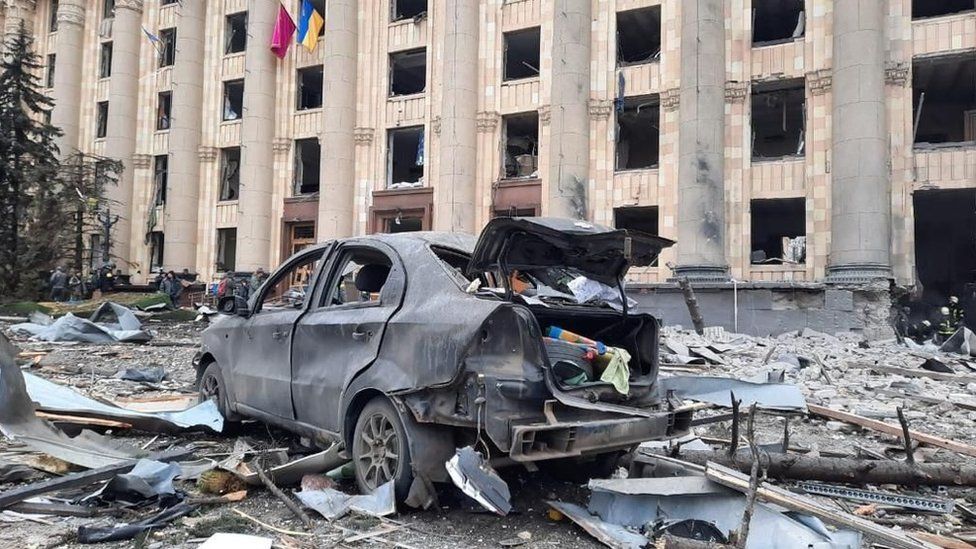
Destruction following the shelling of Kharkiv, Ukraine (Photo: BBC / Getty)

In an unprecedented move, thirty-nine states have requested that the International Criminal Court (ICC) investigate atrocities committed in Ukraine. It is a welcome and important development. But one crime that the ICC will not be investigating is the crime of aggression, despite Russia’s invasion of Ukraine is a textbook example of a criminal invasion. Why? Because the crime’s definition was neutered by Western states. States that handicapped the ICC’s ability to investigate aggression have a special responsibility to step up to the plate and help to achieve justice for atrocities.

The word aggression is on the tips of the tongues of diplomats and observers describing events unfold in Ukraine. For many, the illegal invasion of Ukraine by Russian forces clearly fits the bill of an illegal, aggressive war. It was for exactly these kinds of situations that the ICC was given jurisdiction over the crime of aggression under the Rome Statute. But when states negotiated its definitional contours, they left it a largely impotent shell of its potential self.

Over a decade of contentious negotiations over the contours of the crime of aggression, the likes of Canada France, the UK, and Japan, sought to severely restrict the definition of the crime. Noah Weisbord, a Canadian law professor who has written a book on the subject has observed that Canada’s position, for example, was viewed by other states as providing “avenues for rogue leaders to use force as they please”.

The result of the negotiations was two troubling requirements that curtail the ICC’s jurisdiction: one, the Court could only investigate the crime of aggression if both states – the aggressor and the invaded party – were members of the Court, and two, if ICC member-states “opted-in” and accepted jurisdiction over the crime of aggression.

Even if Kyiv decided to join the ICC tomorrow, the Court could not investigate the crime of aggression in Ukraine. The only way for the ICC to be able to initiate such an investigation would be if the United Nations Security Council referred the situation in Ukraine to the Court. But with Russia sitting plum on the Council with a veto in its back pocket, that’s not going to happen.

Given its involvement in watering down the crime of aggression, those states that neutered the definition of aggression under the Rome Statute have a special responsibility to address other international crimes being committed in Ukraine, including war crimes and crimes against humanity.

The referral of Ukraine to the ICC is a good first step. The decision matters, because without a member-state of the ICC like Canada or Lithuania referring Ukraine, the Court’s Prosecutor, Karim Khan, would have to undertake the cumbersome process of asking judges in The Hague to authorize the investigation. Put otherwise, the move saves the Prosecutor some time and expedites the investigation. According to Khan, a team of investigators was already on its way to Ukraine last week.

But more can be done. Governments should consider putting money where its proverbial mouth is.

With Western states now actively sending the ICC Prosecutor jobs, they should abandon their position that the Court’s budget should be effectively frozen and consider making voluntary contributions to the ICC’s work. This is not unprecedented. Amidst allegations of genocide, in 2005 the Canadian government of Paul Martin contributed $500,000 to the ICC to support its investigation into atrocities committed in the Darfur province of Sudan.

Continue reading →
Posted in Canada, Crime of Aggression, France, International Criminal Court (ICC), Rome Statute, Russia, Ukraine, United Kingdom | Tagged | Leave a comment