The Long Read: Waiting for Bashir – Will the Deposed Sudanese Dictator Ever Stand Trial in The Hague?

Victor Peskin, Eric Stover, and Alexa Koenig join JiC for this piece on the prospect of holding deposed Sudanese President Omar al-Bashir to account at the International Criminal Court. Victor is an associate professor in the School of Politics and Global Studies at Arizona State University and a senior research fellow at the Human Rights Center, University of California, Berkeley. Eric is the faculty director and Alexa is the executive director of the Human Rights Center. Peskin, Stover, and Koenig co-authored Hiding in Plain Sight: The Pursuit of War Criminals from Nuremberg to the War on Terror (University of California Press, 2016).
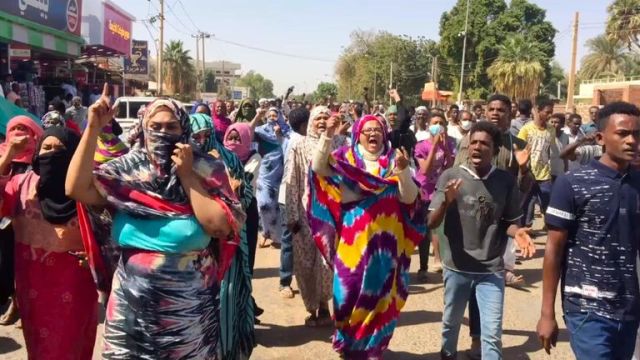
(Sudanese protestors rally against the regime of Omar al-Bashir in 2019. Photo: Sky News)

Sudanese President Omar al-Bashir has long been the bane of the International Criminal Court (ICC). For the last decade, the Court has sought his arrest and transfer for atrocity crimes in Darfur. But with Bashir’s dramatic ouster last month, his detention by the Sudanese military, and ongoing protests urging a transition to civilian rule, could his days of evading international justice soon be over? Justice advocates certainly hope so. But are their expectations misguided?

At the behest of the UN Security Council, the ICC launched an investigation of atrocities in Sudan’s Darfur region, which resulted in Bashir being charged with war crimes, crimes against humanity, and genocide for the slaughter of some 300,000 people and the displacement of another 2.5 million. Initially, the ICC appeared to enjoy the backing of the 120-plus ICC member states and even the support of the United States, China, and Russia, who are not members.

While activists and Darfuri victims applauded the decision of the ICC’s first chief prosecutor, Luis Moreno-Ocampo, to target Bashir, there was also pushback. His indictment of the head of state of one of Africa’s most strategically important states sent shock waves through the region while discomfiting Western officials who had sought Bashir’s cooperation to end the war in Darfur, allow peacekeeping missions, and facilitate humanitarian relief. Consequently, the international community never mustered the political pressure to bring the Sudanese leader to trial.

Moreno-Ocampo, meanwhile, lost his best chance to apprehend the Sudanese leader when he failed to use a sealed arrest warrant. Once the warrant became public, Bashir strategically avoided travelling to ICC member states that might have arrested him. However, he made numerous visits to African ICC member states, like South Africa and Nigeria, that were legally obligated to transfer him to The Hague but instead welcomed him with open arms. Bashir also travelled with seeming impunity elsewhere in Africa, throughout the Arab world, and to his patrons in Beijing and Moscow.

Even worse for the ICC, the Bashir indictment – and a subsequent indictment of Kenyan President Uhuru Kenyatta – prompted the African Union to call for an end to ICC prosecutions of sitting heads of state. Soon thereafter, Kenya launched a campaign urging the 30-plus African state parties that belonged to the ICC to withdraw their membership. To date, Burundi is the only African country that has withdrawn, but the threat of a mass exodus still looms. Accusing the ICC of anti-African bias, some states have argued that the Court is nothing more than a political tool deployed by the West to topple African leaders. This claim of Western control now has greater resonance in light of an April 12 ICC pre-trial chamber ruling denying Chief Prosecutor Fatou Bensouda’s request to investigate crimes in Afghanistan, including those by US armed forces and the CIA. The pre-trial chamber blocked the Afghanistan investigation, citing the low prospects of American cooperation from an avowedly obstructionist Trump administration, arguably incentivizing other countries to refuse to assist ICC investigations.

In the initial wake of the ICC indictment, Bashir became a pariah, at least in the West. But as the years passed, his notorious image began to fade. Global attention to the crimes of the Khartoum regime had been buoyed by the activism of the prominent U.S.-based Save Darfur movement and celebrity figures like George Clooney. For a time, as Rebecca Hamilton wrote in a recent commentary in Foreign Policy, “Bashir’s face appeared on wanted posters on subway platforms and online platforms were designed to track Bashir’s movements.” But activist scrutiny of Sudan has since subsided.

Until anti-government protests broke out in December, several Western states were even warming up to Bashir in an effort to secure Khartoum’s assistance in combating terrorism and curbing the flow of refugees crossing the Mediterranean. Late in the Obama administration, the U.S. lifted some sanctions on Sudan despite on-going government atrocities, including a 2016 chemical weapon attack that reportedly killed some 200 Darfuri civilians including scores of children. Bensouda grew so disillusioned with the Security Council’s lack of support that, in 2014, she suspended her investigation of the Bashir case, prompting the Sudanese president to declare victory.

What does the fate of other fallen leaders tell us about Bashir’s future? 

What are the ICC’s chances of prosecuting Bashir now that he is reportedly confined to a jail cell In Sudan’s notorious Kober prison? Examining the fate of other heads of state can illuminate the conditions that could possibly lead to an international trial of the deposed Sudanese leader. Continue reading
Posted in Darfur, Guest Posts, International Criminal Court (ICC), International Criminal Justice, Omar al-Bashir, Sudan | Tagged , , | 2 Comments

Between Punishment and Mercy – Alternative Sanctions and the Special Jurisdiction for Peace

The following post on the use of alternative sentences to blend restorative and retributive justice in Colombia was written by Luke Moffett. Luke is a senior lecturer at Queen’s University Belfast and the Principal Investigator on the ‘Reparations, Responsibility and Victimhood in Transitional Societies‘ project.

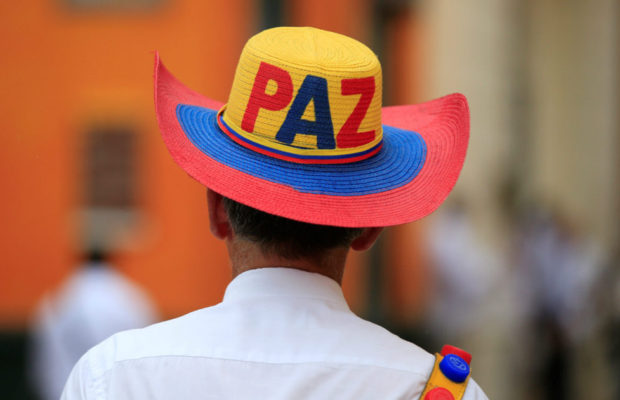
(Photo: Colombia Informa)

How do you deliver peace and justice after fifty years of conflict that saw millions of civilians victimised? This has been the core issue Colombia has been grappling with as part of the peace agreement between the FARC and the Colombian government in 2016. One of its main bodies of the comprehensive transitional justice system is the Special Jurisdiction for Peace (JEP), established to investigate and prosecute international crimes. The JEP is attempting to tackle the perennial challenge of how to square the circle of doing justice, ascertain the truth and achieving peace in a post-conflict society that is facing ongoing violence and insecurity. It hasn’t been easy and has required compromise, especially on the question of combining restorative and retributive justice through its alternative sentences for those who perpetrated crimes during the civil war.

The JEP

It began its work in March 2018 and currently has seven cases including kidnappings, forced disappearances, use of child soldiers and a range of violations in different territories. The JEP has only recently received approval for its governing law from the lower house, but awaits the Senate vote later this year, reflecting the continuing and contested transition in Colombia since the peace agreement.

Beyond political contestation, the JEP also faces the legal challenge of attenuating punishment to encourage perpetrators to tell the truth, contribute to community service, and provide symbolic reparations to victims. In return for being truthful and expressing remorse, perpetrators in the FARC and Colombian government could benefit from reduced sentences of 5-8 years through alternative punishment arrangements, such as house arrest or other restricted freedoms.

There are some who view these alternative sanctions as impunity. However, this overlooks the experience of transitional justice, the demands of victims and human rights jurisprudence that doing nothing and remaining silentis impunity. Providing a space to coax perpetrators to confront, acknowledge and remedy some of the harm they have caused can go a long way to reconstituting the dignity of victims and their lived experience. More broadly, courts in post-conflict societies play an important expressive role through prosecution and punishment in re-establishing the rule of law and reaffirming moral values.

In light of these challenges, over the past few months our project team have been engaging the JEP and drawing from international practice in order to inform the alternative sanction regime. In our recently released report on alternative sanctions at the JEP, we outline the experiences of other states and international jurisprudence on matters of restorative justice, victim participation, sentencing and the contribution of ex-combatants. This report in part draws from our ongoing research project on reparations in post-conflict transitional societies, in particular the contribution of non-state armed groups.

Restorative Justice 

Victims are a central part of the peace agreement and restorative justice is the paradigm under which their rights and restoration is key.

Restorative justice in transitional justice is nothing new, it was used in the South African Truth and Reconciliation Commission along with ubuntu. The Community Reconciliation Process in Timor Leste, paramilitary punishment attacks in Northern Ireland and to a lesser extent the gacaca courts in Rwanda, have used more measured forms of retributive justice informed by restorative principles to adjudicate on international crimes. This is the compromise that the JEP is also seeking to make in trying to break new ground in addressing international crimes by evoking the notion of restorative justice, by bringing the victims and perpetrators together to acknowledge, and by finding appropriate responses to the crimes through community service and symbolic reparations. Continue reading

Posted in Colombia, Reparations, Restorative Justice, Sentencing | Tagged | 4 Comments

Bashir to the ICC? Seeing the Forest for the Trees, While Preparing for One to Fall

This article was originally published at Open Canada.

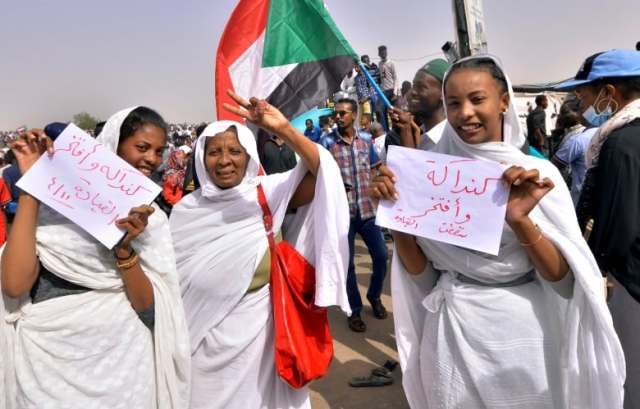
A large percentage of protestors in Sudan have been young women. (Photo: Reuters)

After 30 years as president of Sudan, Omar al-Bashir is out of power. It is difficult to overstate how remarkable it is to write those words. After four months of popular protests, Bashir has been deposed and, according to the Sudanese military, is currently in detention.

The question on the minds of observers is: what happens next? Who will replace Bashir and where will the former president end up? Could it be in The Hague to face justice at the International Criminal Court (ICC)?

Bashir has had arrest warrants issued against him for over a decade. In 2005, the United Nations Security Council referred the situation in Sudan’s Darfur region — where, under Bashir’s watch, hundreds of thousands were killed or displaced from their homes — to the ICC. Over the next four years, the court issued two arrest warrants against Bashir for the alleged crimes he is responsible for in Darfur. Collectively, the warrants charge him with the unholy trinity of the court’s core crimes: war crimes, crimes against humanity and genocide.

Unsurprisingly, Bashir has rejected the very premise of the ICC and, despite the arrest warrants, has been able to secure diplomatic support from various states around the world, as well as from the African Union, and travel abroad regularly — including to a number of ICC member-states.

Many hope that his luck has finally run out.

However, while recent events are undoubtedly remarkable and demonstrate the power of people coming together to demand change, the situation in Sudan remains precarious. Despite heaps of evidence, we often forget just how dangerous and volatile transitional contexts can be in the wake of the removal of a head of state. This is perhaps especially so when a state’s military subsequently takes over, which is currently the case in Sudan despite protestors clamouring for a civilian government.

Proponents of international criminal justice often believe that getting rid of a political leader will invariably lead to peace. But that is not enough. Getting rid of Bashir will rid Sudan of its figurehead, but not of a system that is replete with perpetrators of atrocities. The figures that are currently serving as Sudan’s ‘new’ leaders were core members of Bashir’s regime. They are not ‘nice guys’ with democratic or peace-loving credentials. As international justice expert Thijs Bouwknegt points out, the first to take over was the head of the military, General Awad Ibn Auf, who faced American sanctions from 2007 to 2017 and has been referenced at least five times in the warrants of arrest for Bashir, regarding his own alleged role in atrocities in Darfur. Auf has now stepped down and retired, but it remains unclear who will ultimately come out ‘on top’ in Sudan. It would be wrong to assume that they will invariably be proponents of international justice and human rights.

Right now, the safety of civilians needs to be prioritized. There remains a real risk of civil strife and potentially civil war.

When it comes to the ICC and its interventions, there is also an ever-present need to see the forest for the trees. Observers should avoid over-emphasizing the role or impact of the ICC simply because it is what observers and proponents of the court focus on. According to Alex de Waal, perhaps the most important writer and researcher on Sudanese politics and history outside of the country:

One thing that the opposition has not demanded is that Mr Bashir be handed over to the International Criminal Court (ICC), where he faces prosecution for crimes committed in Darfur 15 years ago. For them, the fate of the country is bigger than bringing one man to justice.

This is not to say that the ICC or its warrants against Bashir are irrelevant. On the contrary, reports suggest that a council set up to elect — or, more likely, select — someone as interim leader of the country is apparently looking for someone specifically not wanted by the ICC. But it is important to stress that the ICC has had a minimal impact on developments on the ground in Sudan to date.

Continue reading

Posted in International Criminal Court (ICC), International Criminal Justice, Omar al-Bashir, Sudan | 3 Comments

Why the ICC Should have Opened an Investigation into Afghanistan. And How it could ‘Win’ a Confrontation with Washington

A version of this article originally appeared in Al Jazeera. Readers interested in today’s decision should also these excellent commentaries from Dov Jacobs and Kevin Jon Heller.

(Photo: BBC)

Judges at the International Criminal Court have denied a request to open an investigation into atrocities committed in Afghanistan. Their decision comes 1.5 years after the Prosecutor requested authorisation from the judges to open an official investigation into war crimes and crimes against humanity in Afghanistan. That was a momentous request for one reason in particular: prosecutor Fatou Bensouda made it clear that the torture allegedly committed by US forces and the CIA would be investigated. For the first time in history, the alleged atrocities committed by US forces would be put under the scrutiny of an international criminal tribunal.

But ICC Judges ruled today that an investigation would not be in the “interests of justice”. This marks the first time that Judges have invoked this argument, yet the ruling was meagre on its application, devoting just 3.5 pages to the subject (short for any international judge!) and, remarkably, did not reference any other cases or jurisprudence on the subject. Prosecutors will now seek appeal that decision and the Court still has a chance to reverse course.

For some, however, the decision is a ‘good’ one for the Court. Many believe that an investigation could only hurt the court because no American would ever end up before judges at the ICC. In denying the investigation, Judges stated that noted that changes in the “political landscape” in non-member states (i.e. the U.S.) “make it extremely difficult to gauge the prospects of securing meaningful cooperation from relevant authorities for the future.” In short, they believed that an investigation would be too difficult to be worth trying and therefore not in the interests of justice or the court.

But they are wrong. A lack of cooperation from Washington or other states should not have prevented the ICC from investigating alleged atrocities in Afghanistan. Even without cooperation, such an investigation would likely bolster – not undermine – the court’s credibility.

The waiting game

That it took judges 1.5 years to come to today’s decision will only fuel speculation that the they were acting politically, fearful of the political implications of an investigation and, possibly, Washington’s wrath.

At the same time, the ICC prosecutor’s office has been plagued by numerous high-profile setbacks. Within the last 12 months alone, judges acquitted both former Vice President of the Democratic Republic of the Congo Jean-Pierre Bembaand former President of Ivory Coast Laurent Gbagbo. It has also come to light that the ICC’s own President, Chile Eboe-Osuji, is suing the Court for higher pay at a time when the institution is struggling to resource its current workload.

Against this backdrop, it is tempting to conclude that the ICC should be risk-averse, focusing only on suspects who are likely to be surrendered to the court. In line with such thinking, it would have been ill-advised for the ICC to investigate atrocities in Afghanistan as cooperation wouldn’t be forthcoming. Such is the advice of many observers of the ICC.

The cooperation game

Followers of the ICC have repeatedly pointed out that US cooperation with the court would cease if the ICC opened an investigation into Afghanistan. They insist that there “will be no cooperation from the Afghan government, the Taliban, or the US”. Moreover, without any prospects of a successful trial of US officials along with the cessation of cooperation, “[t]here would be significant cost to the ICC, for little gain”.

These fears were confirmed when US NSA John Bolton threatened the ICC and its staff with sanctions while declaring that the US would “use any means necessary to protect our citizens and those of our allies from unjust prosecution by this illegitimate court.” They were further corroborated when Washington revoked ICC chief Prosecutor Fatou Bensouda’s entry visa to the United States. Continue reading

Posted in Afghanistan, ICC Prosecutor, International Criminal Court (ICC), International Criminal Justice, United States | 9 Comments

Companies Helped Sustain the Gaddafi Regime. They Should be Held to Account

The following was written for and initially published by the Global and Mail, in response to the ongoing scandal surrounding the Canadian government and the Canadian company, SNC-Lavalin. 

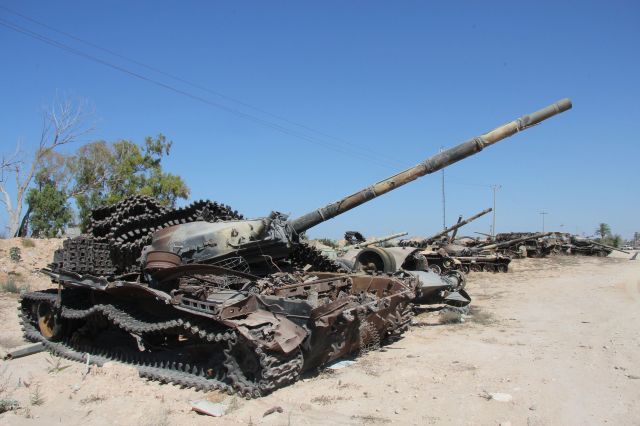
Damaged tanks outside of Misrata, Libya (Photo: joepyrek / Creative Commons)

Canadians have been battered with news about the SNC-Lavalin scandal. The Trudeau government wants to compel people to make a choice: Do we want jobs, or do we want to hold SNC-Lavalin to account for accusations of bribing officials in Libya? But this affair isn’t just about Canada, Canadians or jobs. Holding SNC-Lavalin to account represents an opportunity to challenge the status quo where states and companies can underwrite brutal dictatorships with impunity. It’s an opportunity to tell a different and all too rare kind of story about holding the enablers of autocracy to account.

I first came across SNC-Lavalin when conducting research into the 2011 civil war in Libya. The company’s name popped up in discussions about what (and who) had sustained the regime for so long. At that time, images of then Libyan leader Moammar Gadhafi sharing the stage with world leaders were still fresh. A litany of states and businesses – including Western ones – had spent a decade rehabilitating a regime and lavishing it with contracts. Those entities have never been held accountable for their role in legitimizing a regime that would ultimately exchange its accumulated wealth for the weapons and mercenaries needed to commit atrocities against its own people.

What we tend to believe is Mr. Gadhafi went berserk in response to the 2011 uprising in Libya. This isn’t the whole story.

When conflict erupted in Libya, states sought to minimize scrutiny of the previous 10 years. But that decade is crucial to understanding the conditions which sustained the regime and created fertile ground for Mr. Gadhafi’s subsequent atrocities. From about 2002, countries engaged in a concerted effort to rehabilitate the regime in exchange for vague promises of democratization (which didn’t happen), dismantling a nuclear program (which was nascent at best and which Mr. Gadhafi did not fully comply with) and withdrawing support for terrorist organizations (which he did).

A coterie of Western leaders, including former prime minister Paul Martin and former British prime minister Tony Blair, embraced Mr. Gadhafi. Mr. Martin would later say that his visit was a reward for the Libyan leader’s “fundamental shift in position” away from sponsoring terror to being a responsible member of the international community. Britain and Italy (whose former prime minister Silvio Berlusconi “went gaga for Gadhafi”) signed lucrative oil deals with the Libyan leader, who, in turn, promised to tighten controls on immigration from Africa to Europe via the Mediterranean. France, the United States, the European Union and Russia had arms deals. Canada sold Libya almost $250-million in goods in 2010 alone, while SNC-Lavalin allegedly wooed regime figures for contracts.

As I wrote in my book, which covers the Libyan conflict, countries – especially Western ones – tethered the popular notion in the 80s and 90s of Mr. Gadhafi as the “mad dog of the Middle East” to the 2011 image of a lunatic lashing out at his own people. The inconvenient middle bit – the rehabilitation of Mr. Gadhafi and the political, military and financial investment into the regime – fell out the bottom. Continue reading

Posted in Canada, International Criminal Court (ICC), International Criminal Justice, Libya, Libya and the ICC | Tagged | 2 Comments

Filling the Vacuum: Syria and the International Criminal Court

Toby Cadman and Carl Buckley join JiC for this post on their recent application requesting the Prosecutor of the International Criminal Court (ICC) to investigate the deportation of Syrians into Jordan. Carl is a Barrister with Guernica. Toby is the Co-founder of The Guernica Centre for International Justice, which submitted an amicus curiae to the ICC on Myanmar and which also submitted an Article 15 submission to the ICC Prosecutor concerning jurisdiction for Syria by way of application of the Myanmar decision.

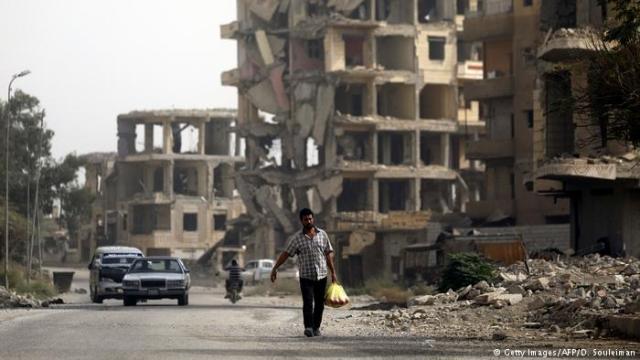
(Photo: Getty Images / D. Souleiman)

It’s your turn, Doctor’. These were the words that initiated one of the cruellest conflicts in the recent history of the Middle East.

A group of seven teenagers in the Syrian town of Daraa, inspired by the winds of freedom and democracy blowing from the Arab Spring in Tunisia, Egypt and Libya, adorned their school walls with these words in defiance of the Syrian oppressive regime. Basher-al-Assad, the Syrian dictator whose family has tyrannically ruled the country for more than four decades, is a doctor specialized in ophthalmology.

The response of the Syrian State Security Forces was brutal and prolonged. It treated with extreme violence the young authors of the graffiti. The town of Daraa in turn lit the flames of revolution, initiating with their actions a conflict which is now entering its ninth year and has no clear end in sight.

This war has witnessed unimaginable atrocities. More than half the pre-war population have been either killed, disappeared, or displaced. Most of those who were forced to flee due to the brutal conduct of the Syrian State Security Forces have not been able to return for the very same reasons that forced them to leave. Those responsible, including the Syrian President Assad, must be brought to justice and held accountable.

Spinning the Tires of Jurisdiction?

In recent years, numerous conflicts have been characterized by credible allegations of war crimes and crimes against humanity. The initial reaction to such allegations is to call for the International Criminal Court (ICC) to investigate and prosecute such atrocities.

The basis upon which the ICC can investigate a situation however, is often misunderstood; it does not, contrary to what many believe, have the mandate to investigate any and all instances of conflict-related international crimes, no matter how severe that conflict, no matter how credible the allegations, and no matter how grave the suffering of the victims. The ICC Prosecutor, can commence an inquiry into a situation in one of three circumstances: (i) where the offences are alleged to have been committed within the territory of a ‘State Party’ to the Rome Statute, in which case, jurisdiction is automatically conferred; (ii)  where a non-state party ‘self-refers’ itself and thereby grants jurisdiction; and (iii) where the UN Security Council (UNSC) refers a situation. The net result of this limited form of jurisdiction is that there are many situations that the ICC simply cannot consider, no matter how much it may want to. It is here where the issue lies concerning Syria.

Syria is not a State Party of the ICC and given that it is alleged to be directly responsible for atrocites, it is hardly likely to ‘self-refer’.  As a result, the only other option is through the UNSC.  This in itself has proven to be impossible given its overtly politicised nature and that one of the permanent members, Russia, being an ally of Syria and directly involved in the conflict, has consistently exercised its right of veto over any resolution tabled to refer the matter.  It is noted that China has also consistently sided with Russia vetoing any resolution and the United States has previously argued that it would veto any referral that included the disputed territory of the Golan Heights which borders Israel.

Here’s the catch: the position insofar as jurisdiction is concerned however is now more nuanced than previously thought. In 2018, the jurisdiction of the ICC was widened thus presenting the millions of Syrian victims a route, albeit one that is restrictively narrow in scope, to justice.

Learning from the Rohingya

Like in Syria, the world was horrified by allegations in Myanmar of horrific crimes being committed against the Rohingya in a vacuum of accountability. As a result, the ICC Prosecutor requested a ruling of the Pre-Trial Chamber, asking whether jurisdiction could be exercised for the crime of forced deportation of the Rohingya from Myanmar into Bangladesh.

Continue reading

Posted in Guest Posts, ICC Prosecutor, International Criminal Court (ICC), International Criminal Justice, Syria | 4 Comments

Acquittals and the Battleground Over the ICC’s Legitimacy

Victims, survivors and their relatives of the 2010 electoral violence in Ivory Coast gather in Abidjan (Photo: AFP)

For many, the recent acquittal of former Ivorian President Laurent Gbagbo and his political ally, Charles Blé Goudé, marked another failure for the International Criminal Court (ICC). Many close observers were undoubtedly pained to see another high-profile case collapse, leaving the Court with the dubious distinction of having yet to successfully prosecute a government official in its seventeen years of existence. But initial reactions obfuscated the invariably mixed effects that such developments have on the Court’s legitimacy.

Of course, ‘legitimacy’ is a notoriously slippery concept. For our purposes, I define legitimacy as a measure of the distance between expectations and reality. The closer reality lines up to (or exceeds) expectations, the more legitimate the institution. If reality doesn’t live up to expectations, then we have the inverse situation: a legitimacy gap. Whether acquittals bolster or blemish the ICC’s legitimacy depends on whose expectations we are considering.

The Prosecution

Many people expect the ICC to convict. This is due to at least three dynamics. First, the ICC generally focuses on those “most responsible” for war crimes, crimes against humanity, and genocide. As a result, we expect that if the Court issues an arrest warrant for someone, they must be the “most responsible” – and therefore guilty.

Second and relatedly, only a tiny fraction of perpetrators in any given situation are targeted by the ICC. In the Ivory Coast, that amounts to three figures: Gbagbo, Blé Goudé, and former First Lady Simone Gbagbo. This selectivity propels the notion that these few individuals must bear responsibility for the crimes they have been charged with.

Third, the public face of the ICC is the Prosecutor, and because she is the most visible and vocal personality in the Court, this feeds into perceptions that the institution’s primary role is to successfully prosecute – rather than put people on trial.

For many people, then, the Prosecutor’s legitimacy suffers with acquittals precisely because they expect the Prosecutor to secure convictions.

Gbagbo and his Defence

Yet, this view neglects the importance of the defence to the legitimacy of the Court. Sareta Ashpraph, for example, stated in response to the Gbagbo acquittal that we should “be thankful” and recognize the role of the defence in ensuring fair trials. From this perspective, the acquittal of Gbagbo therefore contributes, rather than detracts, from the legitimacy of the ICC because acquittals demonstrate respect for due process and a functioning criminal court.

This shows just how many strands of ‘legitimacy’ are present at any time. The ICC’s legitimacy can suffer and prosper with acquittals. On the one hand, it demonstrates that the law and due process is functioning above the political prerogative of getting convictions. On the other, it suggests that something is wrong with the way that the prosecution is building cases and prosecuting its targets. Continue reading

Posted in International Criminal Court (ICC), International Criminal Justice, Ivory Coast / Côte d'Ivoire, Ivory Coast and the ICC, Laurent Gbagbo | 4 Comments

Perceptions of Justice: Continuing the Conversation on Managing Perceptions at the ICC

Patryk Labuda joins JiC again with this response to Mark Kersten and Carrie McDougall on the Prosecutor of the International Criminal Court’s meetings with ‘unsavoury’ leaders and managing perceptions of the ICC. Patryk is a Hauser Global Fellow at New York University. His article kicking off this conversation can be found here.

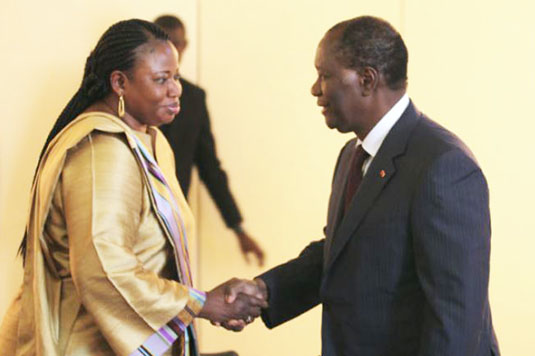
ICC Prosecutor Fatou Bensouda meets with President of the Ivory Coast, Alassane Ouattara in July 2013. (Photo: Getty Images)

I want to thank Mark Kersten and Carrie McDougall for their thoughtful responses to my post on the ICC’s meetings with ‘unsavory’ leaders. I’ll begin by underscoring that I agree with much of what Mark and Carrie say in their posts. Both make compelling points about the need to engage leaders with questionable human rights records, while drawing attention to several issues that received insufficient attention in my original post. Many people on Twitter have also weighed in (see here, here and here), adding nuance to this debate.

In this post, I would like to address three themes emerging from the various responses: how much transparency is necessary, whose perceptions matter, and where to draw the line between the good, the bad and the ugly. I hope my response will add clarity to any remaining points of disagreement, while fostering a more informed debate on what, admittedly, is likely to remain a divisive topic.

Meetings and Confidentiality

The first point that bears emphasizing is the symbiotic yet fraught relationship between the act of convening such meetings and the subsequent release of information (including images) about those meetings. I initially saw these two issues as distinct, but the longer I thought about it the more I realized that dissociating the image from the meeting is not quite so simple. In other words, the image may be the whole point of the meeting, and I think Carrie’s post does a good job of highlighting the resulting tension.

Indeed, these meetings may in some cases be less about the substance and more about the photo op. In that sense, while I sympathize with Mark’s plea for more transparency, I tend to think, per Carrie, that diplomacy often requires secrecy. I am not sure there is anything wrong with diplomatic confidentiality per se(and I include ICC diplomacy under that rubric), although I agree that we should be attuned to the risks that Mark identifies in his post, in particular: what does the ICC do if photos are leaked in bad faith? I am not sure one can craft a solution to all these dilemmas, but I do think we need to give more thought to the relationship between meetings and images. This brings me to the next question.

Whose Perceptions Matter?

It is clear that meetings between high-ranking ICC staff and governmental leaders can serve desirable ends. In addition to cooperation or universal membership, the ICC can try to improve its difficult relationship with the African Union (AU) and build support for its work among African states. Carrie praises the Prosecutor for leveraging her status as a Gambian to correct misconceptions about the ICC in Africa, while underscoring that Bensouda was only doing what the ASP had asked her to do. Intriguingly, Carrie also suggests that Bensouda was encouraging “African leaders to give more thought to African victims, rather than focusing on alleged African perpetrators.” On Twitter, Stephen Lamony echoes this argument, noting that I and others may simply be making assumptions about what victims want. Continue reading

Posted in ICC Prosecutor, International Criminal Court (ICC), International Criminal Justice | Tagged | 1 Comment

Taking Stock: An Interview with Nicholas Opiyo on Justice and the Rule of Law in Uganda

Dear readers,

I wanted to share the a recent interview that I did with Nicholas Opiyo, the renowned Ugandan human rights lawyer and founder of the Human Rights organisation Chapter Four Uganda.

Nicholas’ work is extraordinary and speaks for itself. Among many things of interest to readers will be his work as part of the defence counsel for former commander of the Lord’s Resistance Army (LRA), Thomas Kwoyelo. What makes his commitment to due process in this case all the more remarkable is that Nicholas’ family was directly affected by LRA violence (see this excellent story on this here). Nicholas is also now the lawyer for Ugandan opposition leader Bobi Wine.

In this interview, Nicholas sheds light on the ongoing trial of Kwoyelo, the impact of the International Criminal Court in Uganda, what he sees as the prevalent pursuit of victor’s justice in the country, and ongoing violence directed at minority groups in Uganda.

The interview was conducted in November 2018, during an international symposium organized by the Wayamo Foundation (where I work as Deputy Director) in Arusha, Tanzania, on the theme, “Beyond narrow interests – justice and accountability in East Africa.” For those interested, Justice Talks are a series of interviews about justice and accountability in Africa and beyond, featuring experts and leaders from the fields of human rights, international criminal law, politics and civil society.

Posted in Complementarity, International Crimes Division (Uganda), International Criminal Court (ICC), International Criminal Justice, Interview, Interviews, Kwoyelo Trial, northern Uganda, Uganda | Tagged | 2 Comments

International Justice has done little for Syria, but Syria has done a lot for International Justice

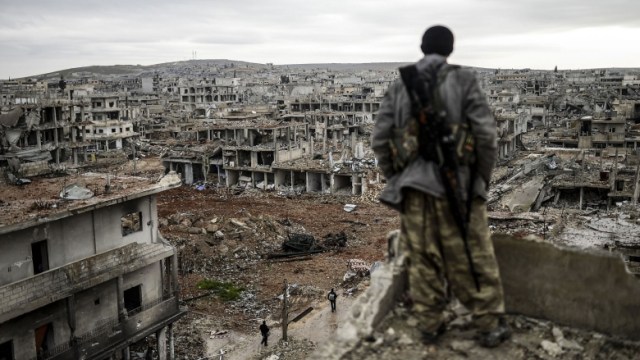
A Kurdish fighter looks over the destroyed Syrian town of Kobane on January 30, 2015. (Photo: AFP / Bulent Kilic)

Eight years after the onset of the civil war, international justice has done little for Syria, but Syria has done a lot for international justice. Strategic accountability efforts are yielding important results. Sweden, France, and especially Germany are at the forefrontof investigating and prosecuting Syrian perpetrators of international crimes. These states are flexing their ability to use universal jurisdiction, whereby perpetrators of international crimes can be prosecuted in these states irrespective of their citizenship or where their crimes were committed.

In addition to the modest number of prosecutions in Europe, there have been a handful of other important developments in the pursuit of accountability for atrocities committed in Syria. In January, a court in Washington ordered a reward of $302.5 million to the relatives of Marie Colvin, the renowned journalist who was killed in an attack by the Syrian Army in Homs in 2012. Following the European Union’s example, Congress also passed a bill that would place sanctions on firms and individuals who “knowingly, directly or indirectly, provides significant construction or engineering services to the Government of Syria.”

Of course, expectations need to be managed. What has been achieved is important but is a drop in the ocean given the scale and nature of atrocities committed in Syria. It does not mean that Syrian President Bashar al-Assad ‘is next’ or will inevitably be prosecuted. It is no secret that accountability for mass atrocities committed during the Syrian civil war has been lacking. Yet this absence of accountability has pushed proponents of global justice to design creative mechanisms when their conventional tools — international courts — are unavailable. What happens next will depend on whether states take advantage of outstanding opportunities to prosecute perpetrators of atrocities in Syria.

New international (criminal) justice tools

From the earliest days of the Syrian civil war, international criminal justice has had little to offer victims and survivors. At first, even the Obama administration, for example, refused to entertain a U.N. Security Council referral of the situation in Syria to the International Criminal Court (ICC) lest it undermine the Syrian peace process. After talks aimed at ending the war failed, the United States threw its weight behind a referral to the ICC in 2014. But Russia, by this point a lifeline for Assad’s regime, balked. Along with China, Moscow vetoed the referral. Efforts to set up an ad hoc tribunal also went nowhere.

Against this backdrop, two important initiatives were launched. The first was the creation of the Commission for International Justice and Accountability (CIJA), which uses on-the-ground Syrian investigators to collect evidence of international crimes committed by the Assad regime as well as the Islamic State. CIJA’s model reverses the conventional wisdom regarding justice for mass atrocities. Rather than waiting for a tribunal to be set up before investigating atrocities, CIJA initiated investigations and offered any prospective court — domestic or international — the evidence that it gathered. The evidence collected by them and others such as the European Center for Constitutional and Human Rights(ECCHR), is reportedly better than what was available at the trials of senior Nazis at Nuremberg.

The second initiative established was the International Impartial and Independent Mechanism (IIIM) for Syria, which works to gather, collate, and preserve existing evidence of atrocities in Syria. The hope is that evidence will be eventually used in an appropriate court. The IIIM was created by the U.N. General Assembly, therefore bypassing the deadlock of the Security Council — and making it unique among accountability mechanisms.

Illustrative of the contribution that the situation in Syria has made to international criminal justice, the work of CIJA and the IIIM will be replicated as tools of global justice. There is now an IIIM for Myanmar, also known as Burma, for example. Meanwhile, evidence of atrocities committed in Syria and collected by CIJA and the ECCHR continues to be used in war crime trials in Europe.

Taking Responsibility

It is ironic that a Syrian perpetrator of war crimes traveling to Europe is more likely to be prosecuted than a Westerner who traveled to Syria to perpetrate atrocities returning home. No Western state is eager to prosecute their own nationals who went to fight for the Islamic State and committed crimes abroad. This is due to at least two reasons. Continue reading

Posted in Commission for International Justice and Accountability (CIJA), Impartial and Independent Mechanism (IIIM), International Criminal Court (ICC), International Criminal Justice, Syria | 3 Comments