
The Dakar Guidelines on the Establishment of Hybrid Courts
Look ma, we made something useful!
I am beyond excited (and proud) to announce that my colleague and friend Kirsten Ainley and I have published the Dakar Guidelines on the Establishment of Hybrid Courts! They can be found, in full (and for free), here.
Here is the gist of what the Guidelines offer:
The goal of the Dakar Guidelines is to provide a reference guide on the establishment of hybrid courts. As such, the Dakar Guidelines do not represent a roadmap, nor are they a best practices manual. Rather, the Guidelines offer national, regional, and international actors involved in the establishment of hybrid tribunals a set of key decision points and design options that should be considered when establishing and running a hybrid court. The Guidelines are particularly tailored to two purposes: (1) to highlight issues that have proven complicated or had long-term implications for past hybrid courts and so should be given special consideration in the design phase, and (2) to suggest design components that may increase the resilience of the court (i.e., the court’s own capacity to act independently and to resist political, financial, and other pressures), and the resilience of affected communities through engagement with the court. They further offer interested observers, academics, researchers, and students a comprehensive and coherent study of the hybrid court model. They are, in short, a practical set of guidelines on the establishment of hybrid tribunals meant to be of utility to a broad array of constituencies.
The Dakar Guidelines are an output of the Hybrid Justice Project. The project, which is a product of its members’ interest in the intersection between international criminal law and international relations, focuses on hybrid courts and resilience. Resilience in this context refers to the ability of hybrid courts to withstand political and other pressures in order to deliver justice and account- ability, while also bolstering the resilience of affected communities. The interest of the project in hybrid courts is thus not on the traditional focus of efficiency, rates of convictions, prosecutorial strategies, or the value for money that hybrids offer. Rather, its interest is in the design options available to the creators of hybrid tribunals as well as how their design affects the resiliency of these institutions.
The issues arising when designing a court are complex, and the Guidelines endeavour to outline the choices available and to explain their advantages and disadvantages in different contexts. The Guidelines do not propose a single model to fit all situations. This is not a checklist or a box-ticking exercise. The Dakar Guidelines offer a series of lessons learned, questions to ask, and recommendations based on prior experience. In each section of the Guidelines, we discuss the design choices to be made, their implications and, in many sections, recommendations. These recommendations are based on extensive research, the experience of the practitioners who have been involved in drafting the Dakar Guidelines, reports by courts, legal practitioners and civil society organisations, and academic literature.
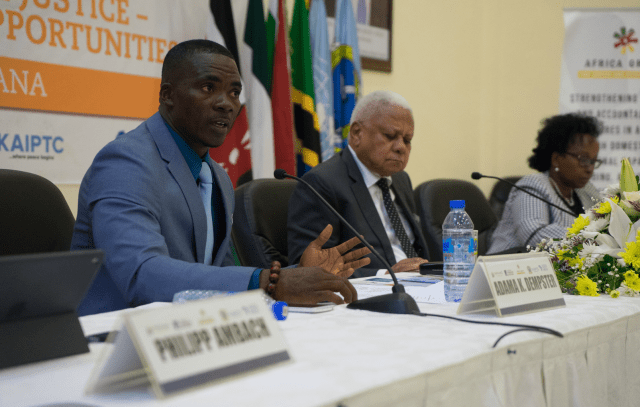
The Guidelines are the product of over two years of work and research. We are indebted to a brilliant team of drafters with whom we have been working since our first meeting in Dakar in the summer of 2017: Philipp Ambach, Fidelma Donlon, Elena Baylis, Tiya Maluwa, and Angela Mudukuti. For their indispensable contributions and support, thanks also go to Stephen Rapp, Dov Jacobs, Sareta Ashraph, Maddalena Procopio, Claire Wilmot, Kelly-Jo Bluen, and Hanna Rodehau-Noack. Finally, none of this would have been possible without the unflappable encouragement and support of the Wayamo Foundation and the LSE Institute of Global Affairs.
The Dakar Guidelines can be found and downloaded here. They were part of a larger project on Hybrid Justice. For more, see our website here.