
Carrie McDougall joins JiC for this piece on our continuing conversation regarding the publication and dissemination of photos of the Prosecutor of the ICC and state leaders Dr. McDougall is a Senior Lecturer at Melbourne Law School and was formerly a legal specialist at the Australian Department of Foreign Affairs and Trade, in which capacity she led on Australia’s engagement with the ICC.

ICC Prosecutor Fatou Bensouda meeting with (former) DRC President Joseph Kabila in New York, in 2017 (Photo: ICC)
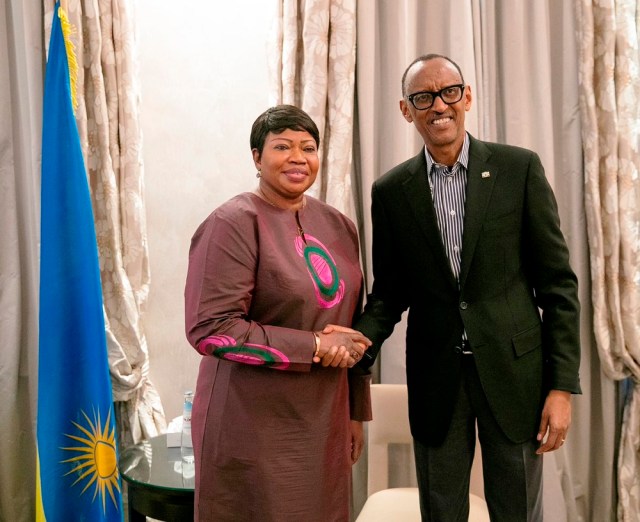
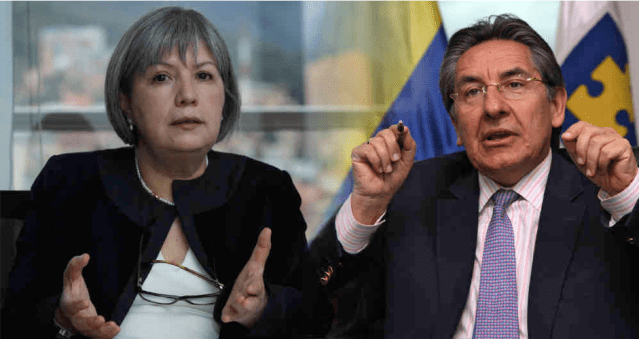
In a thought-provoking post last week, Patryk Labudatook exception to a photo published by the International Criminal Court (ICC) on social media of ProsecutorFatou Bensouda with the President of Rwanda, Paul Kagame. Patryk suggested that the ICC needs a policy on non-essential contacts with what he termed ‘unsavoury personalities’, and any publicity given to such meetings.
Mark Kerstenpublished a reply in which he argued that there were probably good reasons for the meeting and that not publishing the photo would have been to the detriment of the Court. At the same time, he argued that the ICC needs to do more to manage perceptions, suggesting that the best way of doing this would be to publish meeting read outs.
While I agree with much of what Mark wrote, in my view, there is still more to be said on the matter.
The ICC must meet with its critics
Both Partyk and Mark acknowledged that the ICC must meet with State representatives in order to bolster cooperation. In passing, Patryk also suggested that the opportunity might be used to encourage accession to the Rome Statute. As important as they are, I suspect that neither cooperation nor accession were the main items on the agenda in the meeting with Kagame.
In the course of his post, Mark noted that the meeting might have been aimed at countering criticisms that the ICC is targeting Africa, which he kindly noted is something that I raised on Twitter in response to Patryk’s original post. This is a point that I believe deserves some elaboration.
Rwanda has been one of the ICC’s most vocal critics, and has been thedriving force behind the African Union’s hostile stance towards the Court. In this context, I suspect that the primary motivation for the meeting was to try to build a more constructive relationship. The Prosecutor has made good use of her status as a Gambian to engage in outreach on the continent, attempting to address misperceptions and encourage African leaders to give more thought to African victims, rather than focusing on alleged African perpetrators. This is something we should commend. While others also have a role to play, the plain fact is that relations are unlikely to improve without a proactive effort on the Court’s part, regardless of the fact that, at least in my view, it is not to blame for the ire directed at it by detractors like Rwanda.
It is important to note that in engaging in such dialogue, the ICC is not off on a frolic of its own. The annual omnibus resolutionof the Assembly of States Parties (ASP) “emphasizes the need to pursue efforts aimed at intensifying dialogue with the African Union… and calls upon all relevant stakeholders to support strengthening the relationship between the Court and the African Union.” As someone involved in the negotiation of this text, I say with some confidence that the reference to “the African Union” was not intended to be interpreted narrowly, but to encompass key members of the Union whose views impact on its relationship with the Court. In other words, the Prosecutor did exactly what States Parties asked her to do.
I would in fact argue that such outreach should not be limited to African interlocutors. Bearing in mind the fundamental principles of both cooperation and complementarity that underpin the Rome Statute, I would argue that the ICC should aim to meet with the Heads of State and Government and relevant ministers of all States in order to promote accountability and discuss the role that the ICC can play – unless a specific individual is wanted by the Court, for reasons outlined below. Continue reading



 Justice in Conflict