
This is the second post in a three-part series in which Thomas Obel Hansen explores the recent referral of Kenya to the International Criminal Court’s Assembly of States Parties. The referral followed a finding by ICC Judges that the government of Kenya failed to cooperate in the case against President Uhuru Kenyatta. The previous post can be found here.
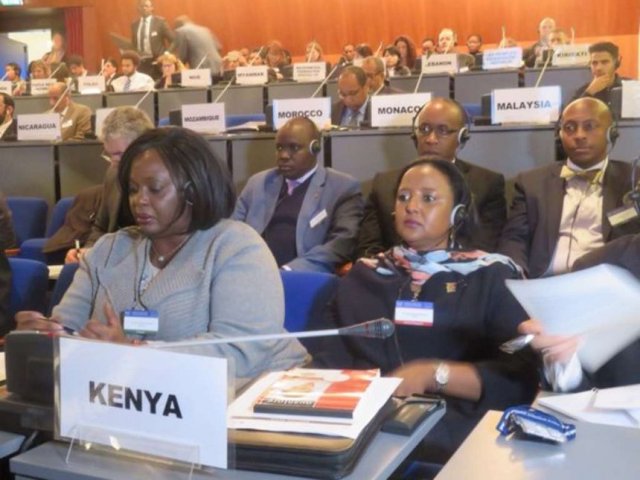
Dozens of Kenyan delegates attended last year’s Assembly of States Parties (Photo: Courtesy)
On 19 September 2016, Judges at the International Criminal Court (ICC) referred the Government of Kenya to the Assembly of State Parties (ASP) for its failure to comply with its obligations under the Rome Statute in the Kenyatta case. Following from on my first piece in this three-part commentary, this post discusses the judge’s decision from the perspective of the ICC’s cooperation and enforcement regimes.
The Trial Chamber’s decision follows an extremely lengthy legal process, which not only raises questions about the Court’s efficiency but also whether ICC Chambers should time their decisions in ways to limit controversy with State Parties even if this is to the detriment of the ICC’s cooperation regime.
To briefly summarize: almost three years ago, in November 2013, the Prosecutor filed a petition that the Trial Chamber make a finding of non-compliance under article 87(7) of the Rome Statute against Kenya on the grounds that the Kenyan government did not comply with the Prosecutor’s April 2012 request concerning the provision of evidence. Next, in December 2014, the Trial Chamber decided not to refer Kenya to the ASP, notwithstanding its finding that the conduct of Kenya had “reached the threshold of non-compliance”. In particular, judges held that Kenya had provide none of the requested material with respect to company, land transfer and telephone records. Following the Prosecutor’s appeal of the decision not to refer Kenya to the ASP, in August 2015 the Appeals Chamber decided to reverse the Trial Chamber’s decision and required that it make a fresh determination of the matter on the basis that it had erred in the exercise of its discretion. It took the Trial Chamber more than a year to act on that and to deliver its final decision.
This raises questions concerning the extent to which the Chambers have actually been committed to addressing Kenya’s failure to cooperate with the Court. The last submissions by the parties on the issue were filed in October 2015, and there were no significant legal or factual issues to resolve: The Trial Chamber simply needed to apply the standards set forth by the Appeals Chamber to the factual findings it had already made in its initial decision (tellingly, the Trial Chamber’s 19 September 2016 decision comprises only 18 pages, at least half of which are devoted to a summary of the proceedings and the parties’ submissions). The most obvious conclusion is, therefore, that the Trial Chamber was seeking to limit the controversy an ASP referral of Kenya would create by delivering its decision at a point where there was less attention on the Kenyan ICC cases (and the conduct of the parties).
The timing of the decision may also reflect a broader weariness within the ICC of dealing with anything relating to the Kenyan situation following the embarrassment connected to all of the PEV-related cases collapsing. It could also by symptomatic of a conflict between the Chambers within the Court concerning whom should take responsibility for making “hard decisions”. The Trial Chamber’s legal reasoning for initially not referring Kenya to the ASP, despite its findings on the lack of cooperation, was, at best, dubious. It created a hereto unknown distinction between “formal” and “informal” judicial findings, which the Appeals Chamber called “inappropriate”. In the view of some commentators this was primarily aimed at avoiding referring Kenya to the ASP despite its lack of cooperation. Once before it, the Appeals Chamber could have made the decision itself to refer Kenya to the ASP, rather than deferring the issue back to the Trial Chamber on the grounds that it is “better placed to identify and assess the relevant facts and circumstances” of the case and whether “engaging external actors under article 87 (7) of the Statute would be an effective measure to foster cooperation” when in fact the Trial Chamber had already set out in detail the areas where Kenya had failed to comply with its orders and its reasons for not referring it to the ASP. Continue reading








 Justice in Conflict