Mass Atrocity Monday, 2/1/2016: The Andijan Massacre

Greetings, Justice in Conflict readers.

For those who don’t know me, I’m a political scientist and former human rights lawyer, currently based at Stanford’s Center for International Security and Cooperation. I also run the blog Wronging Rights. I spend most of my time writing and thinking about the dynamics of mass atrocities and the politics of justice for serious international crimes. For obvious reasons, the rest of my time is spent consuming a steady diet of brightly-colored, loosely-plotted TV comedies, bourbon, and chocolate.

I’ll be here on the first Monday of every month with the details of a lesser-known atrocity and any efforts to bring those responsible to justice. This feature, a.k.a. Mass Atrocity Monday, originally ran on Wronging Rights in 2014 as a companion piece to the dataset of atrocities I coded for my PhD dissertation. Now I’m revisiting that dataset and Mass Atrocity Mondays as I turn the dissertation into a book. (It’s called Just Enough: The Politics of Accountability for Mass Atrocities. Look for it in bookstores any year now.)

In general, I’ll be covering events from the post-WWII era, because that’s when the possibility of prosecuting the perpetrators of atrocities became A Thing. But I reserve the right to make an occasional side trip into Ye Olde Historical Carnage. So, buckle up.

Today’s atrocity is the 2005 massacre in Andijan, Uzbekistan.

President Islam Karimov of Uzbekistan. By Ernests Dinka, Saeimas Kanceleja [CC BY-SA 2.0 (http://creativecommons.org/licenses/by-sa/2.0)], via Wikimedia Commons

Islam Karimov, President of Uzbekistan.
Photo credit: Ernests Dinka, Saeimas Kanceleja via Wikimedia Commons

Uzbekistan’s president, Islam Karimov, has been in office since before the country declared its independence from the U.S.S.R. in 1991. He’s kept a tight grip on power by repressing civil society, censoring the independent media, and occasionally boiling his opponents to death. Harsh anti-Islamist policies have routinized targeting and harassment of Uzbekistan’s Muslim community. After the 9/11 attacks, Karimov’s regime benefited from the opportunity to recast these policies as part of the Global War on Terror, in part because of Uzbekistan’s role as a critical partner in the U.S.’s campaign in Afghanistan. Human rights groups say that more than ten thousand Uzbek Muslims have been jailed since 2002, many of them facing torture during their detention.

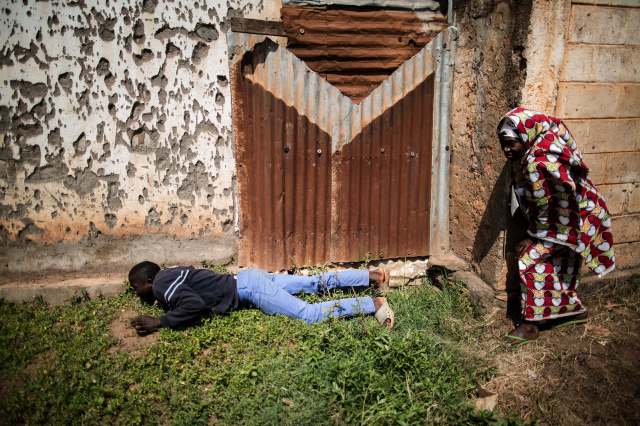
In May of 2005, the arrest and trial of 23 local businessmen sparked a conflagration in the eastern city of Andijan. The men were accused of membership in the Islamist organization, Akramiya. At the time, observers suggested that this was pretext, and that the men were simply being targeted for a refusal to pay bribes. When their verdict was postponed, armed supporters staged a prison break the night of May 12 and seized control of a nearby government building. Emboldened by their actions, crowds of protestors gathered nearby calling for an end to injustice. But instead of meeting their demands, the government responded with deadly force.

According to eyewitness testimony, Karimov’s forces opened fire on the protestors with no warning. Unarmed civilians were killed as they attempted to flee. In the aftermath, the death toll was hotly contested. Rumors spread about covert military operations to remove the bodies and mass graves outside of town. Eventually, the Uzbek government acknowledged the deaths of 187 people, most of whom were “terrorists”. Human rights groups put the total much higher. On the 10 year anniversary of the massacre, Human Rights Watch reiterated its belief that hundreds of unarmed civilians were killed by their government that day.

Some of the Andijan protesters escaped across the border into Kyrgyzstan. For those who remained, the situation was precarious. In the aftermath of the massacre, Karimov launched a vicious crackdown against anyone who might threaten his stranglehold on power. Journalists who had covered the events at Andijan were forced to flee, and almost every foreign NGO found itself expelled from the country. While members of the international community called for an independent investigation into the massacre, the government pursued criminal charges against those suspected of involvement in the “uprising”, and convened a window-dressing parliamentary commission to validate the official narrative of an attempted Islamist revolution.

In the months following the massacre, the Karimov regime’s relationship with the West soured. Uzbekistan lost millions of dollars in aid and arms sales, and, angry about Western interference, ended its air-base agreement with the U.S. But the estrangement didn’t last. The EU lifted its arms embargo in 2009, the U.S. in 2012. And just in time for the Andijan massacre’s 10 year anniversary last May, the U.S. announced a new five-year plan for military cooperation with Uzbekistan.

In retrospect, Karimov’s approach of brutal repressing civil society while waiting for international attention to wane looks smart. With domestic demand for justice suppressed, and international demand subordinated to strategic concerns, for now, at least, he’s gotten away with murder.
Posted in Mass Atrocity Monday, Uzbekistan | Tagged | 2 Comments

Mattresses and “Democratic Bombs”: Charles Blé Goudé in his Own Words

Sophie T. Rosenberg joins JiC once again for her analysis of ICC-indictee Charles Blé Goudé’s recently published book. For her previous post on Laurent Gbagbo’s book, please see here.

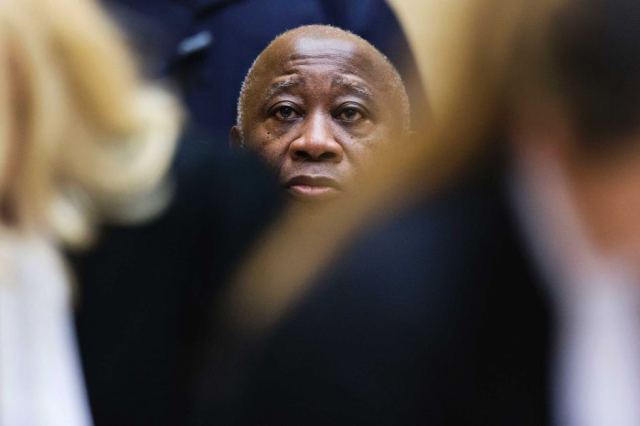
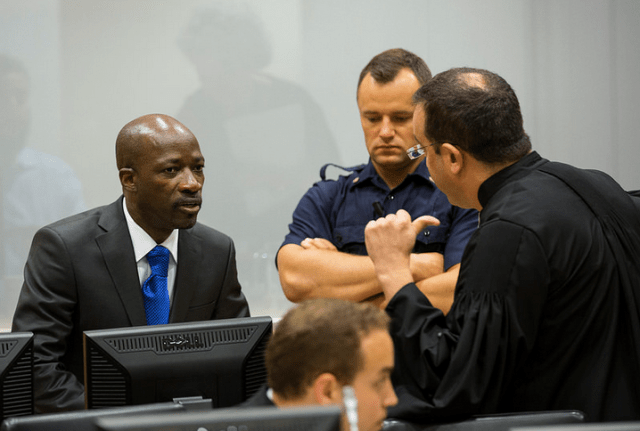
Charles Blé Goudé consults his defence counsel at the International Criminal Court (Photo: ICC)

Charles Blé Goudé consults his defence counsel at the International Criminal Court (Photo: ICC)

At the end of his book, which very few people even know about, Charles Blé Goudé rejects all the accusations made against him. “No, I am not anti-French. No, I am not a militia leader. No, I am not the alleged assassin of northerners. No, I am not a supporter of violence!”

Though his trial at the ICC is set to begin, Blé Goudé has already made his defence. Indeed, after fleeing Côte d’Ivoire in April 2011 at the peak of post-election violence, the former leader of the political youth movement “Young Patriots” wrote a book from exile entitled Traquenard Electoral (The Electoral Trap).

Published in December 2011, the book is framed as a plea of innocence to a fictional judge. Blé Goudé, whose charisma and magnetism easily rallied huge crowds, was already subject to an arrest warrant issued by Côte d’Ivoire. But it would be nearly two years until the ICC would unseal an arrest warrant against him in September 2013.

He is now being tried for crimes against humanity in a joint trial with ex-president Laurent Gbagbo, whom Blé Goudé refers to in his book as his political mentor and even a father figure. Following the 2010 disputed elections, Gbagbo appointed Blé Goudé as Minister of Youth, though his government was not recognised internationally. Their proximity is key to the trial, as the prosecution aims to establish that Blé Goudé held a crucial role in Gbagbo’s “inner circle” and served as the link to the pro-Gbagbo youth militias during the 2010-2011 crisis.

The situation in Côte d’Ivoire has calmed down since Blé Goudé galvanized crowds and ignited feelings of vengeance in politicized youth. But, in a tug of war with the past, his defence at the ICC could bring back to the fore those tense times for Ivoirians following the trial.

So, besides being a consultant of political communication, as he introduced himself to the ICC judges, how does Blé Goudé want to be seen and how does he view the court?

A Pacifist on Trial?

In his book, Blé Goudé seeks to counter the perception of himself as a demagogue who incites youth to xenophobic violence. He wants to be seen, instead, as a non-violent resistance fighter in a two-front struggle. For him, he peacefully defended his country against an armed revolt and French neo-colonialism – but ended up as a victim of international criminal law, governed not by fairness but by power.

Though a clearly self-serving and biased portrait – and one that I do not endorse – Blé Goudé’s crafted persona is a pacifist who models himself after Mahatma Gandhi and Martin Luther King, Jr. but who has the misfortune of living in the era of the ICC.

A Life-Long Youth Leader

Now in his forties, Charles Blé Goudé has been a youth leader for quite a long time. Having served as Secretary-General of the infamous student union, Federation of Students and School Pupils of Côte d’Ivoire (FESCI), he was also involved in creating and leading several political youth movements, including the Alliance of Youth Patriots for National Survival (AJPSN), or “Jeunes Patriotes”.

When, in September 2002 a coup took place that triggered a long civil war, Blé Goudé was in England studying at the University of Manchester. “Sacrificing my scholarship and the occidental freshness” (possibly a jab at British weather?), Blé Goudé returned to Côte d’Ivoire to “defend my land” against the perceived aggression by the armed group Forces Nouvelles.

Throughout the 2002-2011 conflict, President Gbagbo benefitted from Blé Goudé’s talent to mobilise pro-Gbagbo youth. It isn’t difficult to understand how he became known as the “Street General.”

Placed under UN sanctions in 2006, Blé Goudé has been accused of inciting violence against foreigners (namely the French) and those deemed to be non-Ivoirians, primarily those with links to neighbouring countries such as Burkina Faso who were viewed as being pro-Ouattara. Blé Goudé’s ICC trial concerns such targeted attacks against opposition supporters by pro-Gbagbo youth, who were allegedly acting under his instructions during the 2010-2011 crisis.    Continue reading

Posted in Guest Posts, International Criminal Court (ICC), International Criminal Justice, Ivory Coast / Côte d'Ivoire, Ivory Coast and the ICC | Tagged | 1 Comment

On the Rebirth of Hybrid Tribunals

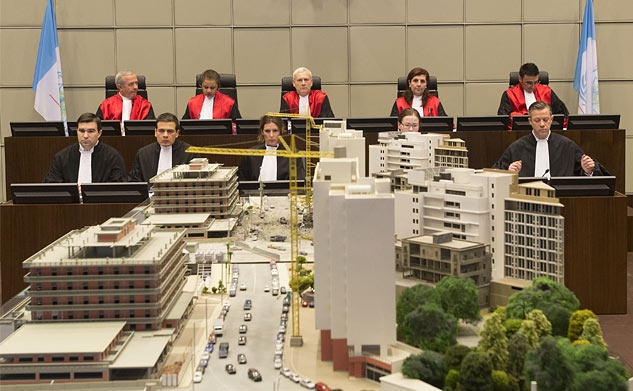
Judges at the Special Tribunal for Lebanon look over a model of the area of Beirut where former Prime Minister Rafiq Hariri was assassinated (Photo: STL)

Judges at the Special Tribunal for Lebanon look over a model of the area of Beirut where former Prime Minister Rafic Hariri was assassinated (Photo: STL)

International criminal justice is an emerging marketplace. It has a diversity of stakeholders, different ‘business’ models, and is based, like all markets, on supply and demand — although demand clearly and vastly outstrips supply. Something of a political economy of international criminal justice is developing and a growing number of observers and scholars are concluding that no tribunal type can or should have a monopoly over the provision of international accountability.

In this context, I have recently written about renewed interest of hybrid international criminal tribunals. In broad terms, such tribunals (as well as ad hoc courts more generally) have been justified on the basis that they can act as stop-gaps for the short-comings of the International Criminal Court (ICC). Because the ICC can’t be everywhere it is needed, we need to explore alternatives. This is undoubtedly true. But in thinking through a marketplace of international criminal justice, is it useful to create a pecking-order of tribunal types that views the ICC as its apex and other courts as second best options? I’m less and less convinced.

There is no cookie-cutter concept of what a hybrid tribunal should look like. As Sarah Williams has written:

While there is no definition, such tribunals tend to apply a mix of national and international law (both procedural and substantive) and feature a blend of international and national elements, in particular international and national judges and personnel. While there is some disagreement as to those institutions that are properly considered hybrid or internationalized, the following tribunals are generally included in this category: the Special Court for Sierra Leone (SCSL), the Extraordinary Chambers in the Courts of Cambodia (ECCC), the Special Panels for Serious Crimes in Timor Leste (SPSC), the International Judges and Prosecutors Program in Kosovo (IJPP, or Regulation 64 Panels), the War Crimes Chamber in the State Court of Bosnia and Herzegovina (WCC), and the Special Tribunal for Lebanon (STL).

The above excerpt and list of hybrid tribunals was published in April 2014. The most recently created tribunal Williams lists is the Special Tribunal for Lebanon, established in 2009 to prosecute those responsible for the terrorist attack in Beirut that killed then Prime Minister Rafic Hariri and twenty-two others.

Fast-forward just two years from Williams’ observations and the proof of the hybrid tribunals’ rebirth is in the pudding. According to Beth Van Schaack, a professor of international law at Santa Clara and a former Deputy U.S. Ambassador-At-Large for War Crimes Issues,

the international community in 2015 considered new hybrid accountability mechanisms for a range of historical and current atrocity situations, including Syria, the Central African Republic (CAR), the Democratic Republic of Congo (DRC), Colombia, Sri Lanka, Chad, Kosovo, and even the July 2014 downing of Malaysian Air Flight 17 over rebel-controlled Ukraine.

In other words, the international community considered creating eight additional hybrid tribunals. If all came to fruition, the number of hybrid tribunals established to date would rise by 133%. But why this sudden surge of interest in hybrid tribunals? Continue reading

Posted in Hybrid Tribunals, International Criminal Court (ICC), International Criminal Justice, Kosovo, Kosovo Relocated Specialist Judicial Institution (KRSJI) | Tagged | 9 Comments

A Portrait from The Hague: All You Need to Know About What Laurent Gbagbo Wants You to Know

Not all ICC indictees spend their days awaiting trial by writing self-serving biographies. But that is exactly what Laurent Gbagbo, the former President of  Côte d’Ivoire, has done. Sophie T. Rosenberg joins JiC for this  post on Gbagbo’s recently published book. Sophie is a PhD candidate and Gates Cambridge Scholar at Cambridge University, conducting research on the politics of international justice in Côte d’Ivoire and Mali.

Laurent Gbagbo (Photo: ICC)

Laurent Gbagbo (Photo: ICC)

Laurent Gbagbo, president of Côte d’Ivoire between 2000 and 2010, holds the dubious honour of being the first former head of state to face trial at the International Criminal Court (ICC). Yet, according to interviews with him by French journalist François Mattei, Gbagbo appears confident that his trial for crimes against humanity committed during the 2010-2011 post-election crisis could finally shed light on what really happened.

Published in 2014, over two years after Gbagbo’s transfer to The Hague, For Truth and Justice: Revelations on a French Scandal features extensive passages from the journalist’s conversations with Gbagbo over several years, during which the former president seeks to set the record straight – according to him. Though later changed, the book’s first version even listed Gbagbo as a co-author.

Since Gbagbo retains strong influence and many dedicated followers in Côte d’Ivoire, understanding his viewpoint (albeit a clearly biased one) is crucial for grasping the trial’s significance for both pro-Gbagbo and pro-Ouattara Ivoirians. Without endorsing or challenging the account, in this post I want to sketch out the self-portrait that Gbagbo would like his readers to see. So, beyond a defendant accused of international crimes, how does Laurent Gbagbo want to be seen and how does he view his trial at the ICC?

More than just Defendant – A Defender

First, Gbagbo wants to distance himself from the portrait that was painted of him, one of a power-hungry dictator and tyrant whose refusal to cede power to the 2010 election’s winner triggered a period of violent unrest that claimed the lives of over 3,000 people. Rather, Gbagbo wants to be seen as the lawful, democratic leader whose efforts to reconcile the country were stunted by what he sees as disingenuous rebels who enjoyed support from France, the former colonial power, and who now govern the country.

Second, in his mind, he is a rare African leader who stood up to France but was never anti-French. He argues that his transfer to The Hague is the dénouement of a political contest that had already been “fixed” by France. His trial is thus just another episode in a perennially fraught relationship between Gbagbo and Côte d’Ivoire’s former colonial rulers. But, for a politician as experienced and eloquent as Gbagbo, the defendant’s seat at the ICC provides him a political pulpit from which he’d like the truth, or at least his truth, of the 2010-2011 crisis to come to light.

A Man of Peace & Democracy  

In his interviews from jail, sensing he is the victim of a campaign of character assassination, Gbagbo throws an oft-repeated accusation at the ICC: that his detention is purely political. According to Gbagbo, his record shows that he has always been committed to peace and democracy. For example, Gbagbo writes that he issued a general amnesty after the 2002 attempted coup as a “message of peace” and “always chose to speak to everyone”. He insists that he made many concessions during negotiations with “the rebels” throughout the 2002-2010 civil war, even accepting the leader of the rebellion, Guillaume Soro, as his Prime Minister in 2007.

He equally challenges the accusation that he ignored the will of the people, maintaining instead that he has always been a pro-democracy activist, even going to jail for his views. In 1992, after participating in a political demonstration promoting multi-partyism, Gbagbo was detained for six months on the orders of none other than then-Prime Minister Alassane Ouattara. Once he became president in 2000, Gbagbo voided an international arrest warrant – purportedly in the spirit of democracy – that had previously been issued against Ouattara. But in 2011, in bitter irony for Gbagbo, he found himself behind bars on the orders of President Ouattara. Though it is clearly up for debate, the imagery of Ouattara sending Gbagbo to jail twice is salient in the Ivoirian political consciousness. For many, Gbagbo’s political activism has landed him, yet again, in jail. And this time, it’s “chez les blancs” (“with the whites”), as some Ivoirians have described it to me.

Rocking the Boat isn’t easy

Many people know there is a tunnel in Abidjan, “the most famous tunnel on the continent”, that links the residences of the Ivoirian president and the French ambassador. Pointing to the tunnel as a symbol of undue French influence, Gbagbo argues that he vociferously defended Côte d’Ivoire’s sovereignty against French policies that kept his country in an anachronistic cage more reminiscent of the colonial era than of the 21st century. Against neo-colonialism, Gbagbo challenged the use of the West African franc (which is pegged to the Euro) as the national currency, the continued presence of the French army in the country, and the heavy French influence over the Ivoirian economy. Continue reading

Posted in Guest Posts, International Criminal Court (ICC), International Criminal Justice, Ivory Coast / Côte d'Ivoire, Ivory Coast and the ICC, Justice, Laurent Gbagbo | Tagged | 3 Comments

The New Kosovo Tribunal – Turning Victors’ Justice on its Head?

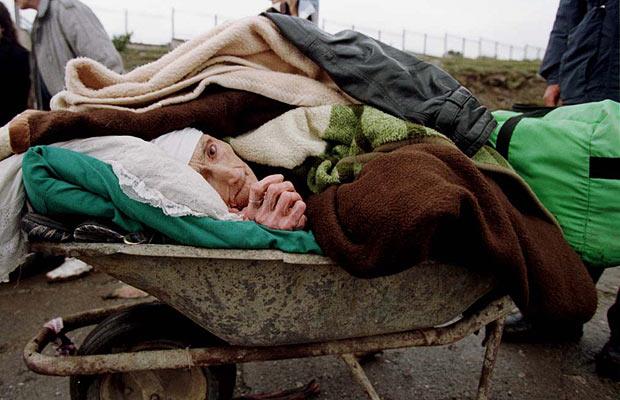
A man pushes his ailing grandmother in a wheelbarrow to Albania during the Kosovo war.

An international criminal tribunal has been set up to prosecute the victors of the 1999 war in Kosovo. Yes, you read that right. A court has been set up with a mission to investigate and bring to justice those members of the victorious Kosovo Liberation Army (KLA) allegedly responsible for heinous human rights violations and atrocities committed against ethnic minorities and political opponents in the region. An outgrowth of specialist chambers set up by Priština last summer, the lumpily named Kosovo Relocated Specialist Judicial Institution (KRSJI) will be hosted in The Hague. This marks the first time that a special court has been established with the express purpose to prosecute the victors of a war. But can it succeed?

Perhaps the most stubborn, unyielding criticism of international criminal tribunals is that they suffer from victors’ justice. Nuremberg only prosecuted Nazi crimes — and not the ghastly crimes of the Soviet Union or the Allied Force’s carpet bombing of Dresden; The International Criminal Tribunal for Rwanda only prosecuted the Hutu perpetrators of the genocide, leaving all others — including some who subsequently enjoyed political power — to enjoy impunity; the International Criminal Court (ICC) generally prosecutes one side of a conflict — and its targets are typically on the losing side. But in the case of Kosovo, there has been a push to ensure that new structures are created to combat one-sided accountability and to ensure that victors’ justice is itself vanquished.

The product of long-term negotiations aimed at integrating Kosovo into the European Union, the KRSJI will focus exclusively on KLA combatants, many of whom are revered in Kosovo. Precisely because of the controversial nature of prosecuting widely celebrated figures, all sides agreed that the tribunal should be housed away from the scene of the war. According to the government of the Netherlands,

prosecuting KLA members “is a sensitive issue in Kosovo. Possible suspects may be seen by sections of Kosovan society as freedom fighters, and witnesses may feel threatened in Kosovo. This is why the option of trying cases outside Kosovo was explored.”

The court itself is a sort of hybrid of a hybrid tribunal. Rather than having an international-domestic mix between the various elements — judges, prosecutors, staff, funding, etc., the EU will foot the entire bill, all of the judges will be internationals, and everything else will ostensibly come from Kosovo. Notably, it remains unclear who will be responsible for witness protection, especially given the fact that many witnesses have already been moved out of Kosovo.

As noted above, the special court will be based in The Hague — in some undisclosed location until the former Europol headquarters can be retrofitted with a courtroom. Some, however, don’t see it as an international tribunal at all. Because it was set up under Kosovan law, rather that under international law or some mix of the two, the government of the Netherlands has insisted that the KRSJI “will not be an international tribunal, but a Kosovan national court that administers justice outside Kosovo.” Again, however, all of the funding and all of the judges will be come from outside of Kosovo.

The big question is whether the tribunal — international or not — can manage to successfully pursue and prosecute KLA perpetrators. This is an undoubtedly daunting task. Not only is the KLA broadly supported in Kosovo but some of its most senior members remain in positions of political power. For one, Kosovo’s former Prime Minister and its current Foreign Minister is Hashim Thaçi, a founder of the KLA as well as its  political chief. Thaçi was named in a 2011 Council of Europe report as a being involved in organized crime networks that committed war crimes and were involved in the sex trade as well as and organ trafficking. Unsurprisingly, Thaçi, who has hired a British PR firm to improve his image and profile, was less than supportive when asked about his cooperation with the KRSJI:

We’ll do our utmost not to allow for the perpetrators of crimes [Serb forces] and the victims of crimes to be equals in the book of history … This was a defensive war and I expect nothing else but this will be proven.

Not only has Thaçi declared that the allegations against KLA members were “groundless” but, according to some reports, he also at one point threatened to release the names of all ethnic Albanians who assisted the Council of Europe investigation. Continue reading

Posted in Balkans, Kosovo, Kosovo Liberation Army (KLA), Kosovo Relocated Specialist Judicial Institution (KRSJI) | 6 Comments

A Tug of War for Justice — Confusion over Complementarity and Cooperation in the Congo

Patryk I. Labuda joins JiC for this timely and important update on critical events relating to international criminal justice in the Democratic Republic of Congo (DRC). Patryk is a Ph.D. Candidate at the Graduate Institute of International and Development Studies and a Teaching Assistant at the Geneva Academy of International Humanitarian Law and Human Rights.

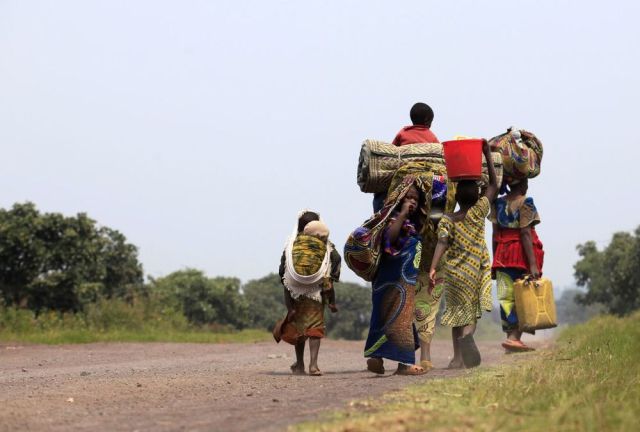
A family flees violence and heads towards Goma in the Eastern DRC (Photo: James Akena / Reuters)

A family flees violence and heads towards Goma in the Eastern DRC (Photo: James Akena / Reuters)

The Democratic Republic of Congo (DRC) has been the most active state party to the International Criminal Court (ICC). Twelve years after President Kabila referred his country to the ICC, three Congolese nationals — Thomas Lubanga, Germain Katanga, and Mathieu Ngudjolo — have been tried and another, Bosco Ntaganda, is currently on trial before the Court. A fifth Congolese, Jean Pierre Bemba, is also being tried in The Hague but on charges stemming from the situation in the neighbouring Central African Republic. He and three other DRC nationals also face obstruction of justice charges relating to Bemba’s case. In total, the ‘Congolese cases’ account for over half the ICC’s trials to date.

Yet even by these standards, the last few weeks in the DRC have seen remarkable developments that go to the very heart of the ICC’s mandate and raise interesting questions for the international criminal justice project more generally. First of all, after nearly fifteen years of political horse-trading, the Congolese authorities finally incorporated the Rome Statute into domestic law. On 2 January 2016, President Kabila officially promulgated a series of legislative bills, known collectively as la loi de mise en œuvre du Statut de Rome, which brings key aspects of Congolese criminal law into line with international standards. Long resisted by parts of the DRC’s political establishment, the bills’ adoption concluded a lengthy struggle led by Congolese civil society and international NGOs under the banner of complementarity, i.e. the principle that gives states priority to prosecute international crimes. Though not a legal obligation flowing from the Rome Statute itself, it is widely believed that domesticating the ICC’s definitions of crimes, procedural safeguards, and other cooperation obligations will enable national judicial systems to more effectively meet the challenges of prosecuting international crimes domestically.

It quickly became apparent that these moves were more than just a symbolic victory for the international justice and human rights community. Although international crimes have already been prosecuted before some Congolese military tribunals, the first test of this new legislation may come sooner than anyone anticipated.

On 19 December 2015, the ICC announced that Katanga and Lubanga had been transferred back to the DRC to serve out their sentences. This caught many ICC observers by surprise. It has long been assumed that international criminal defendants not only prefer trials before international tribunals (considered more impartial than their domestic counterparts) but also that the conditions at Scheveningen prison, used by the ICC as well as other tribunals in The Hague, are relatively comfortable — especially when compared to prisons in the DRC.

Yet what is most surprising about Katanga and Lubanga’s transfer is that both risk prosecution by the Congolese authorities once they complete their ICC-mandated sentences. It should be remembered that Lubanga and Katanga were already under investigation in the DRC before their surrender to the ICC. A the time, this prompted some observers to question whether the ICC’s exercise of jurisdiction in these cases was in conformity with the principle of complementarity, which seemed to require that the ICC defer to the Congolese investigations. The question today is whether the Congolese authorities can re-open those investigations when Katanga and Lubanga are back in Congo. Sure enough, just a few days after their transfer to Kinshasa, Human Rights Watch reported that the Congolese government plans to try Katanga once his ICC-mandated sentence expires. Given that the former rebel commander is set to be released later this month, his decision to willingly go back to the DRC seems astonishing and incomprehensible in equal measure.

If and when it materializes, Katanga’s domestic trial before the High Military Court in Kinshasa raises further questions about the nature of complementarity. For one, the military judges will surely apply the recently domesticated Rome Statute in this case. La loi de mise en œuvre introduced a number of fair trial guarantees that had hitherto been conspicuously absent from the Congolese code of criminal procedure. While Congolese military tribunals have in the past applied some Rome Statute principles in some trials, this will mark the first time that Congolese defendants are held to account in conformity with internationally recognised principles of due process.

But the real question is how Katanga’s (and presumably, at some point in the future, Lubanga’s) trial can be squared with the principle of double jeopardy. Article 20 (2) of the Rome Statute provides that “[n]o person shall be tried by another court for [international crimes] for which that person has already been convicted or acquitted by the [ICC].” This provision is hardly a model of clarity. Crimes against humanity and genocide are by their very nature composites of multiple crimes, so it is not very hard to argue that defendants were prosecuted for only one underlying crime (for instance, murder as a crime against humanity) but not another (for instance, rape as a crime against humanity).

Given the ICC Prosecutor’s practice of charging suspects with only a few crimes (usually those easiest to prove), there is a very real prospect that people convicted or acquitted by the ICC will, after their release, face domestic prosecutions in relation to charges that the ICC ‘missed’. Not only is this a serious challenge to the idea of equitable justice, but it also undermines the principle of complementarity: what is the point of international trials if people tried in The Hague then face domestic prosecutions for conduct closely related (though not identical) to the crimes pursued by the ICC? How the Congolese answer this question may have knock-on effects in other situations where defendants, after serving their sentences, will presumably have second thoughts about the prospect of returning home.

As news of Katanga and Lubanga’s transfer to Kinshasa broke, another remarkable story was unfolding in the DRC. On 7 December 2015, the Congolese government announced it had custody of Ladislas Ntaganzwa. Wanted on charges of genocide and crimes against humanity and on the run for nearly twenty years, Ntaganzwa is one of nine fugitives who managed to evade justice before the International Criminal Tribunal for Rwanda (ICTR). In 2012, ahead of the ICTR’s planned closure, Ntaganzwa’s case was transferred back to the Rwandan prosecution authorities, but little was known about his whereabouts… until now. Continue reading

Posted in Complementarity, Democratic Republic of Congo, Germain Katanga, Guest Posts, International Criminal Court (ICC), International Criminal Justice, Rwanda, Thomas Lubanga | Tagged | 3 Comments

The Case for a Permanent Hybrid Tribunal for Mass Atrocities

Muslim civilians in Bangui take cover to avoid heavy gunfire directed towards the Baya Dombia school where voters were gathering for the Constitutional Referendum on December 13, 2015. (Photo: Marco Longari / AFP)

Muslim civilians in Bangui take cover to avoid heavy gunfire directed towards the Baya Dombia school where voters were gathering for the Constitutional Referendum on December 13, 2015.
(Photo: Marco Longari / AFP)

There is no point denying it. The current global production of mass atrocities far outweighs the tools and institutions that exist to respond to them. There is a far greater demand for, than supply of, international justice. We often hear about the development, growth, and entrenchment of a “system” of international justice. But Stephen Rapp, the former U.S. Ambassador-at-Large for War Crimes Issues, recently remarked: “there isn’t a global system of justice, just some cases in The Hague and a few other places”.

Despite lofty rhetoric, the International Criminal Court (ICC) was never going to be a silver-bullet solution to creating a system of international justice. That’s not the institution’s fault, but it is high time the international community look beyond the ICC towards establishing a network of institutions and organisations that can, together, cohere into such a system of global accountability. As just one part of that, serious consideration should be given to the establishment of a permanent hybrid tribunal to prosecute mass atrocities.

In 1998, when states gathered to negotiate the Rome Statute of the International Criminal Court, the preponderant idea was to move away from an ad hoc approach of international criminal justice to a permanent system that would, eventually, become universal in reach. And who knows, it might yet achieve that aim. But it won’t do so any time soon. While most states are members of the ICC, the most powerful countries — including Russia, China and the U.S., as well as the vast majority of the world’s population — lie outside of the Court’s jurisdiction. Moreover, if the lack of adequate funding of the ICC as well as the UN Security Council’s apathy and inaction on matters of international criminal justice are any indication, state interest in an effective and independent ICC is lukewarm — at best.

Making matters worse, states that were once staunch supporters of the Court are, at the very least, re-thinking their allegiances. The ICC’s Office of the Prosecutor itself understands its limitations, publicly admitting that the institution has a “basic size”, meaning that it can only afford to open a small number of investigations and have a small number of ongoing trials in any given year moving forward. Some, like Elizabeth Evenson of Human Rights Watch and Jonathan O’Donahue of Amnesty International, have described this situation as “the ICC’s capacity crisis”. But even if the ICC wasn’t facing such difficult times, the Court is inherently limited in what justice it can mete out. Even in an ideal world, the Court is structured in such a way that it would never be able prosecute all actors responsible for international crimes. And neither can states, particularly those emerging from violent political conflict. Some ‘outside the box’ thinking is needed.

The limits of what the ICC can achieve with regards to delivering justice and accountability point to the need to think beyond The Hague as the sole capital of international criminal justice. In the world of international criminal law, the ICC should not be, does not need to be and cannot be, the only game in town. Today, the widespread view that the Court should displace all ad hoc and hybrid tribunals seems as trite as it is misplaced. No tribunal type should be discarded entirely, certainly not in the name of the ICC, an institution that structurally and politically can only prosecute a tiny sliver of perpetrators.

As a result of the ICC’s limited reach, the incapacity of states to prosecute international crimes themselves, and the increasing expectation that justice be pursued in the wake of mass atrocities, we are witnessing the rehabilitation of other forms for tribunals, including the hybrid model. Last year, the Central African Republic (CAR) passed legislation establishing the Special Criminal Court. Early signs suggest that if any criminal tribunal is set up in South Sudan to deal with recent unrest, it also will take the form of a hybrid tribunal. While the push for a Security Council referral of Syria to the ICC has absorbed the lion’s share of global attention, there has also been persistent talk of the potential to create an ad hoc, possibly hybrid, court to deal with crimes perpetrated during the Syrian civil war. All of these tribunals, like their predecessors for Cambodia, Sierra Leone, Lebanon, etc., would be temporary. But what if there was a single institution which could host all of these hybrid courts? Continue reading

Posted in Complementarity, Human Rights, Hybrid Tribunals, International Criminal Court (ICC), International Criminal Justice, International Criminal Tribunal for Rwanda (ICTR), International Law | 6 Comments

The UN Library’s Most Checked-Out Book Doesn’t Bode Well for International Justice

The United Nations Dag Hammarskjöld Library, New York (Photo: John Gillespie/Flickr CC)

The United Nations Dag Hammarskjöld Library, New York (Photo: John Gillespie/Flickr CC)

The United Nations’ Dag Hammarskjöld Library has announced its most checked-out book of 2015. Maybe something on the UN, you say? Maybe a breezy read on climate change? Or perhaps the latest treatise on the refugee crisis? Okay, maybe diplomats and staff go to the UN’s library for less serious matters and the most popular book is E L James’ Fifty Shades of Grey or the latest release of Stephen Covery’s Seven Habits of Highly Effective People (wouldn’t that be great!). But no. The most checked-out book was entitled Immunity of Heads of State and State Officials for International Crimes. According to Dylan Matthews of Vox,

The book in question isn’t a UN document — it’s a doctoral thesis from the University of Lucerne by Ramona Pedretti, pursuing the question of when heads of state and other government officials can be charged in foreign courts. Generally, she explains, there are two forms of immunity in international law from which heads of state can benefit.

“Immunity ratione personae prevents incumbent Heads of State from being subjected to foreign criminal jurisdiction,” Pedretti writes. “In contrast, immunity ratione materiae protects official acts, i.e. acts performed in an official capacity on behalf of the State, from scrutiny by foreign courts.”

She concludes that immunity ratione personae is absolute, and thus that domestic courts in one country can’t indict the sitting leader of another nation, whereas ratione materiae can be invalidated for defendants who’ve left office — as happened with the arrests of the Nazi fugitive Adolf Eichmann by Israel and Chilean dictator Augusto Pinochet by Spain. Basically, Pedretti is arguing that incumbent heads of state can’t be charged and prosecuted by a foreign court, whereas past heads of state can.

This isn’t exactly great news for proponents of international justice and, in particular, the principle of universal jurisdiction.

Weirdly, the UN Library sort of bragged about the book on Twitter – despite the institution’s mission to, you know, fight global impunity. As Hayes Brown rightly chirped: “…Guys. Why would you brag about this [-] this is not good.” There is a silver lining, though. Clearly diplomats are taking international criminal justice seriously and evidently some (rightfully, we should add) see it as threatening. Like it or not, the possibility of heads of state being prosecuted for international crimes is indelibly part of the world of diplomacy.

Now, how badly do you want the catalog of people who checked out the book – and the breakdown of states they work for?

Posted in International Criminal Justice, United Nations | 3 Comments

An Institution within an Institution – An Interview with the ICC President

Just a few days after the International Criminal Court moved to its permanent premises, Shehzad Charania was honoured to be received as ICC President Silvia Fernández de Gurmendi’s first-ever visitor in her new office. On that unusually mild and sunny December afternoon, there was a spring in everybody’s step. But how does the President see her time at the ICC, the Court’s record to date, and the future of the institution?

ICC President FernandezA New Dawn

I began by asking the President how she was settling into her new surroundings.  She described the building as impressive. Being purpose-built, the new premises were, above all, a much more “functional” group of buildings than the ICC’s previous home. They now had an excellent library, and the courtrooms were modern, light, and much less claustrophobic. The President also sensed a feeling of renewal, and boost in morale among staff. She would look to take advantage of this rejuvenated atmosphere, and ensure that it created momentum towards a improved working environment as well as better leadership and management.

Becoming a Judge …

The President had been involved with the International Criminal Court in one way or another since the mid-1990s. I asked her why she had wanted to become a Judge in 2008. She explained that this had never been her intention when she was part of the Argentinean delegation in Rome. After the Rome Conference in 1998, she remained involved as the Chair of the Drafting Committee of the Rules of Procedure and Evidence. The former Prosecutor Luis Moreno Ocampo then invited her to join his office (OTP), where she worked for four years. After this, she returned to Buenos Aires, thinking that her ICC days were over. But when her government proposed her nomination as an ICC judge, she felt compelled to give it serious thought. In the end, she realised that this was an offer and a challenge she was unable to resist; she has never regretted that decision since.

… and then the President

Standing for ICC President in March 2015 was a natural progression for Judge Fernández. When she was elected as a Judge in 2008, she thought she could change many things such as expediting proceedings and making the Court generally more efficient. But she soon saw that the changes she could implement in her position as a Judge were limited to a single chamber; it was much more difficult to have an impact beyond that. In order to expedite proceedings in any serious and meaningful way, there had to be a more collective judicial effort in conjuction with collaboration with the other organs. This required a systemic shift in thinking and, with that in mind, Judge Fernández decided to stand for President.  She thought that her previous experience would be an advantage: having been at Rome, part of the OTP, and then a Judge, she was intimately familiar with the interconnections and synergies between all the different parts of the Court.

Expediting Trials

I asked the President why she had singled out expediting proceedings as her “number one priority”. Surely dispensing international justice while ensuring the rights of the accused were preserved would, and should, take time, and not be rushed for the sake of efficiency. The President agreed that justice takes time.  But the issue was how long the Court could take in conducting its trials while still maintaining credibility. Anyone involved in the prosecution of international crimes, nationally or internationally, recognised that such proceedings were slow, and complex. But, with respect to the length of proceedings at the ICC, the Court could do better. Of course, the trials during the Court’s first decade were testing the Rome Statute system. They revealed many procedural obstacles, which the Court now understood better how to overcome, and could avoid in the future. But it was also clear that the reasons for the slowness of the trials was not just because of the complex nature of the crimes, but also due to issues such as the Court’s working methods, and the lack of harmonisation between the different chambers. These were factors within the control of the Judges; the move from four to three years for a trial would provide an opportunity for  substantial improvement.

Achievements to Date

I then asked Judge Fernández what she felt she had achieved in her first nine months in her role as President. Her response was: “a lot”. After her election, she had organised a retreat in Nuremberg. Even the issue of what the Judges would discuss, and the basis of those discussions, could have been contested. But it had been an excellent retreat and the Judges made real and tangible progress in achieving common agreement on how to handle certain aspects of the proceedings. Upon their return, they had produced a Pre-Trial Manual reflecting such agreement. The first part of the Manual had focussed on Pre-Trial issues, but they had now added sections on common systems applying to various stages of proceedings, including handling of evidence, disclosure, and victims applications.  The updated version would be issued shortly.

Looking towards the next twelve months, the Judges would formally propose adoption of an amendment to the Rules of Procedure and Evidence (RPE) to reduce the number of Judges required to sit in Article 70 trials (cases involving offences against the administration of justice). Other proposals for amendments to the RPE were also in the pipeline. The Court as a whole would also be taking forward the issue of performance indicators – an important mechanism through which the Court’s progress could be assessed.

Improving and enhancing the governance of the Court was another key focus. The first step therein was to improve the budget process. Discussions on this question had already begun between the principals — the President, the Registrar and Prosecutor. For the President, the budget was not just about mere numbers; it involved aligning visions and required that all parts of the Court move forward together in the same direction. Continue reading

Posted in ICC President, International Criminal Court (ICC), International Criminal Justice | Tagged , | Leave a comment

The Best, Worst, Weirdest, Funniest, and Most Frustrating of 2015 – Plus a Surprise for to 2016!

Happy 2016!

The Best Development of 2015

It has been yet another fascinating year in the realm of international criminal justice. After twenty years, the International Criminal Tribunal for Rwanda finally closed its doors. By opening an investigation into Georgia, the International Criminal Court (ICC) made its first intervention outside of Africa. A peace deal between the rebel FARC rebel group and the government of Colombia included widely touted plans for transitional justice. Ukraine opened itself up to an ICC investigation since 2014. Dominic Ongwen, a former child solider turned Lord’s Resistance Army rebel, was detained and transferred to The Hague. Hissène Habré finally went on trial for his crimes against the people of Chad. The Central African Republic moved to establish a hybrid Special Criminal Court to prosecute international crimes perpetrated during its most recent bout of political violence. Palestine provided the ICC jurisdiction crimes committed on its territory since June 2014. And these are just a some of the key developments in international criminal justice in 2015 that we covered here at JiC.

But what, in my view, takes the cake for the best development in 2015 is the growing possibility and expectation of the ICC doing what it always promised: pursuing impartial justice globally, without fear or favour. They may not be overwhelming, but there are growing signs that the Court is taking crimes perpetrated by powerful states more seriously. This was evidenced most strongly in the ICC’s 2015 preliminary examination report, released last November. Within it can be found an implicit warning to Western states, particularly the UK and the US, that if they don’t hold senior perpetrators of international crimes perpetrated in Iraq and Afghanistan to account themselves, the Court will open an official investigation into their conduct. It is worth stressing: the ideal here, as in any situation where the ICC intervenes, is for states – and not the Court – to conduct fair and genuine investigations and, if necessary, prosecutions. But if they don’t or choose note to, Court prosecutors should move to open investigations. Refusal to do so is increasingly untenable. Of course, questions abound as to whether the ICC will ever have the gumption to prosecute powerful actors from powerful states. It’s far from clear and global politics don’t lean in the institution’s favour. But if the ICC is to move beyond the rampant allegations that it is a biased institution that targets the weak and protects the powerful, being bolder and more confident in how it deals with Western crimes is of the essence. As Toby Cadman recently argued: “With the world beset by conflict, an equitable system of international justice – and a functioning institution to deliver it – is needed more than ever.”

The Weirdest Development of 2015

There are couple of nominees for the strangest development in 2015. Who can forget the stunningly whacky idea, proposed by a former senior official in the administration of George W. Bush, that it should be a federal crime in the United States to prosecute American citizens at the ICC? Yeesh!

At the Court itself, while unforseen developments are seemingly always around the corner, the surrender of Ahmad Al Faqi Al Mahdi to The Hague from Mali certainly took  justice followers by surprise. Al Faqi had been charged with perpetrating cultural crimes — specifically the destruction of religious shrines in Timbuktu, Mali. The exact details of how he ended up at the ICC remains shrouded in secrecy and the ICC’s Office of the Prosecutor decided against shedding any light on the matter. It issued a press release on his surrender in the wee hours of a Saturday morning (ensuring that few, if any, media would cover the story) and then chose not to elaborate on this major event the following week. Remarkably, this should be a good story of the institution — one that demonstrates close cooperation from a number of African states and the Court’s willingness to effectively go after perpetrators of cultural crimes. While JiC did cover what we do know to date, hopefully 2016 brings new details.

The Worst Development in 2015

While the lack of any justice for the people that desperately deserve it in places like North Korea and Syria is an ongoing stain on the international community, there is no doubt about what was the worst single development for international criminal justice, and the ICC in particular, in 2015: the visit of Sudanese President Omar al-Bashir to to South Africa. Bashir has been indicted by the Court on charges of crimes against humanity, war crimes, and genocide. South Africa, on the other hand, has historically been a strong supporter and defender of the ICC. While there may be ‘silver linings’ and important details to the story, Bashir’s visit seemingly put a spanner into the notion that South Africa would continue to stand strong with the Court and defend the institution against its political interests in currying favour with other African states. Moreover, it should make observers think twice about how states’ preferences towards the institution have evolved with time — it simply isn’t good enough to insist that, because African states joined the ICC, they must approve of, or support, the Court fifteen years later. States change and so do their interests and preferences. We need much richer thinking on the Africa-ICC relationship. But perhaps more than anything else in 2015, Bashir’s bolstered the widespread view that the ICC has a serious ‘Africa problem’. Continue reading

Posted in JiC News | Leave a comment