ICC Justice in Ukraine May Have to Wait

I recently had the opportunity to write an op-ed for the Moscow Times on the potential investigation of recent events in Ukraine by the International Criminal Court (ICC). Will the ICC intervene in Ukraine? If so, would former President Viktor Yanukovych ever face prosecution or will Russia shelter him from accountability? What would an ICC intervention mean for the (very) tense relations between the ‘West’ and Russia?
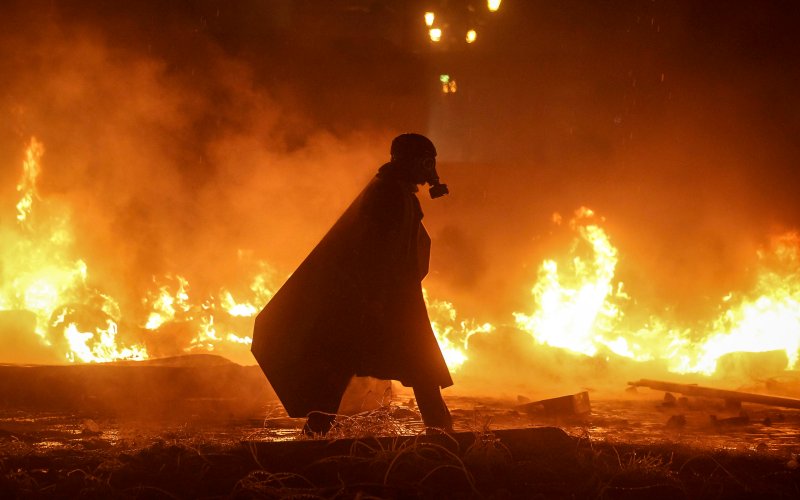
(Photo: Valentyn Ogirenko / Reuters)

(Photo: Valentyn Ogirenko / Reuters)

The ongoing crisis in Ukraine has been fuelled by speculation concerning the murder of protestors on Kiev’s Maidan Square during pro-European Union demonstrations. Broadly speaking, supporters of Ukraine’s turn west have accused police snipers. Those in favour of closer ties to Russia, meanwhile, have said far-right anti-Russian provocateurs, hoping to discredit the then-government, were responsible.

Lost in this turmoil are objective answers about who was responsible for the violence on Maidan and whether or not they will be ever be held to account.

Following a request from the Ukrainian parliament, the International Criminal Court, or ICC, opened a preliminary investigation into alleged crimes committed in Ukraine between 21 Nov. 2013 and 22 Feb. 2014. These dates mark the beginning of protests on Maidan and the Ukrainian parliament’s vote to oust pro-Russian President Viktor Yanukovych.

Of course, the ICC’s involvement does not mean that any conclusion about the violence on Maidan will be reached soon.

Opening a preliminary investigation does not, in itself, mean that the court will open an official investigation — let alone issue arrest warrants. Some situations, like the war in Afghanistan or the conflict in Colombia, have toiled for years in the judicial purgatory that is the ICC’s preliminary investigation list.

Moreover, the time-period that the ICC can investigate essentially restricts the court to investigating alleged crimes on the Maidan Square in Kiev. If prosecutors find that the time-period referred to the ICC was intended to narrow the court’s focus against specific parties, namely former President Viktor Yanukovych and his cronies, then the ICC can and should decide not to proceed. Prosecutors may also fear intervening whilst fragile negotiations between the West and Russia over Ukraine’s future are ongoing.

States tend to believe that when they refer themselves to the ICC, they are, in fact, referring their adversaries. While the history of one-sided prosecutions by the ICC in Uganda, the Central African Republic, Libya and elsewhere give credence to their thesis, there is nothing to prevent the ICC from targeting all sides of a conflict.
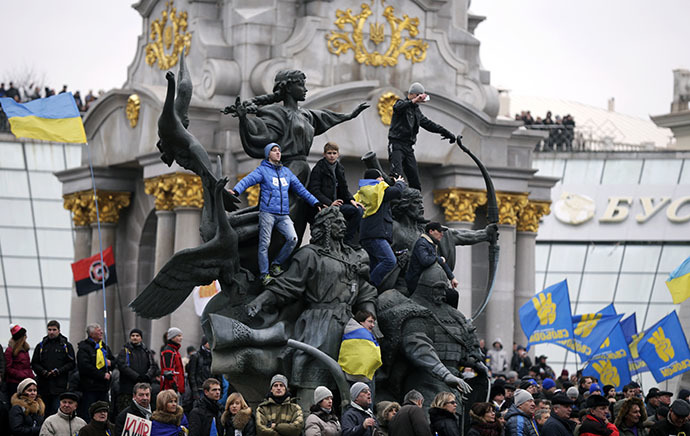
(Photo: Sergey Supinsky / AFP)

(Photo: Sergey Supinsky / AFP)

If ICC prosecutors do proceed, it is hard to imagine that Yanukovych could possibly escape scrutiny. He is, in the eyes of many, the top-prize for justice in Ukraine, accused by some of ordering the police to open fire on the Maidan protestors. The trouble is, after fleeing Kiev and seeking refuge in Russia in late February, Yanukovych is no longer within easy reach. Would Moscow ever hand over their former political proxy? Or is Yanukovych destined to be a fugitive from justice, protected by his Russian patrons?

In the midst of mudslinging rhetoric between the West and Russia over Ukraine and Syria, it may be tempting to believe that Moscow is inherently opposed to an ICC intervention in Ukraine. U.S. Ambassador to the UN Samantha Power recently placed the blame over the failure to refer Syria to the ICC as well as the selectivity of international justice squarely at the feet of the Kremlin. If we are to believe the hype, big bad Russia is a major obstacle to achieving international accountability. Continue reading
Posted in International Criminal Court (ICC), International Law, Justice, Russia, Ukraine, Uncategorized | Tagged , , | 1 Comment

Not Everyone Thinks the ICC in Syria is a Good Idea

Not everyone thinks an intervention by the International Criminal Court would be conducive to peace. Professors Rianne Letschert and Marc Groenhuijsen of the International Victimology Institute at Tilburg Law School, argue that there is too little empirical evidence to suggest that the ICC should get involved in active and ongoing conflicts like the one ravaging Syria.

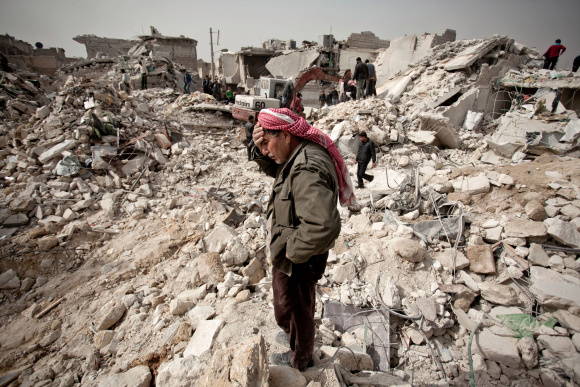
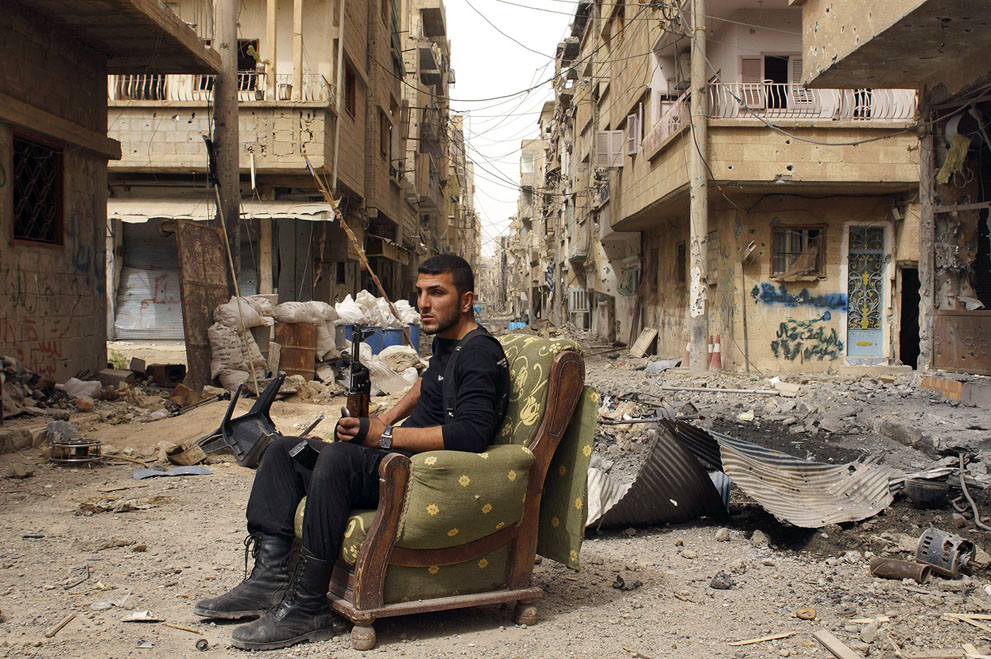
A member of the Free Syrian Army sits amidst rubble in Deir al-xor (Photo: Khalil Ashawi / Reuters)

A member of the Free Syrian Army sits amidst rubble in Deir al-xor (Photo: Khalil Ashawi / Reuters)

A group of international NGOs has been lobbying for a referral of the situation in Syria to the International Criminal Court (ICC) in The Hague. Such a referral is only possible through a UN Security Council resolution and would mean that the Prosecutor may start an investigation into possible committed crimes against humanity, war crimes or genocide by all parties to the conflict. So far, Russia and China have blocked any referral of Syria to the ICC. We have known for a long time that these countries support the regime of Assad and that the West supports the opposition. But is it right to criticize Russia and China for blocking a referral? And should the discussion not focus more on the possible effects of an intervention by the ICC in an ongoing conflict on those most affected? A look at recent history may guide such discussion.

During the Balkan war, the UN Security Council decided to establish the International Criminal Tribunal for the former Yugoslavia (1993) with the aim of bringing about peace and reconciliation in the region (the Tribunal was established under Chapter 7 of the UN Charter which deals with the promotion of peace and international security). But the aim of bringing about peace was an impossible goal, for which a criminal institution cannot be held responsible. Two years after the creation of the Tribunal, after all, the world witnessed the Srebrenica drama (1995) which killed more than 8000 people. And everyone will understand how difficult it was for the Tribunal to start criminal investigations in a country where the war was still ongoing.

Regarding the conflict in Libya, the Security Council adopted Resolution 1970, referring the case to the ICC (2011). The Council unanimously requested the ICC to investigate the violence of the Libyan regime of Colonel Muammar Gaddafi against the protesters. Investigations led the ICC to issue arrest warrants against Gaddafi, his son Saif al-Islam Gaddafi and Abdullah al-Senussi, the Chief of the security services. They were accused of crimes against humanity in the first twelve days of the Libyan uprising. We still know too little about the positive or negative effects of international arrest warrants on finding political solutions aiming to end massive violence. But the arrest warrant against Gaddafi could have been a complicating factor in the search for a political solution to the war that raged for three months. Some commentators argue that if Gaddafi had considered stepping down, it now became very unattractive by the prospect that he could end up in a cell in The Hague. On the other hand, as Richard Dicker of Human Rights Watch noted: “It beggars belief that a dictator who has gripped power for over forty years would be frozen in place by this arrest warrant.”

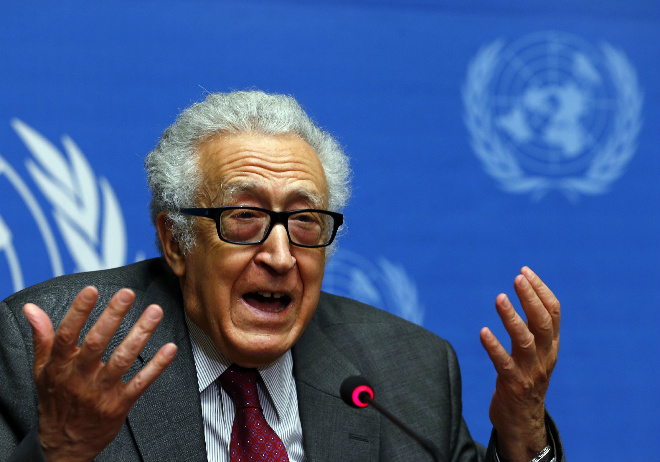
Lakhdar Brahimi recently resigned from his post as U.N.-Arab League envoy for Syria (Photo: Balibouse / Reuters)

Lakhdar Brahimi recently resigned from his post as U.N.-Arab League envoy for Syria (Photo: Balibouse / Reuters)

With regard to Gaddafi a move to a prison in The Hague became moot when he was eventually killed by his opponents in October 2011. A more recent ICC decision regarding Libya again caused fierce discussion in Libya and beyond. The ICC decided that the case against Gaddafi’s son was admissible because Libya would not be able to conduct the trial back home. According to the NGO ‘No Peace Without Justice’, there is a risk that this decision will ‘further deepen the ongoing crisis and to give another blow to the trust of the Libyans people in the capacity of their State to administer justice on crimes under international law committed on its territory by its citizens.’ We can only guess what the effects of the ICC intervention in 2011 and its more recent decisions have been on this fragile country that is still struggling with many transitional justice dilemmas. What we do know is that the situation in Libya is not getting any better. Just last week the United States called on all citizens to leave the country. And we also know that a proper assessment of victim’s perceptions on how ‘justice’ should be delivered is lacking. Continue reading

Posted in Guest Posts, International Criminal Court (ICC), Syria | 1 Comment

Event: Syria and International Justice

Dear readers,

On 30 June 2014, the LSE Centre for International Studies Dialogue will be hosting what promises to a fascinating roundtable on Syria and International Justice. The roster of participants will be Kevin Jon Heller, Leslie Vinjamuri, Jason Ralph, Dov Jacobs, Kirsten Ainley and myself. 

The event will also be live-tweeted with the hashtag: #LSESyriaICC

Put the event in your calendars and hopefully we’ll see many of you then!

Mark

Syria and International Justice

Posted in Events | Tagged , , , , , | Leave a comment

The Onion Targets the ICC

Mark Kersten ICC

(Photo of ICC: Mark Kersten)

International criminal justice and transitional justice are rarely funny. There are a few jokes. But outside of the hilarious, periodically knee-slapping pieces by Amanda and Kate at Wronging Rights, jokes about this stuff are few and far between.

Every now and then, though, international justice is made fun of. And it’s doubtful that anyone has done it better than The Onion. Their jokes are wickedly incisive. In their most recent gag, they take aim at the ICC’s record on sentencing:

Militia Leader Sentenced To 6 Months’ Probation For War Misdemeanors

THE HAGUE—Following his 15-minute appearance today before the Civil Ordinance division of the International Criminal Court, Mai Mai Kata Katanga militia leader Emile Kyenge was sentenced to six months’ probation for several war misdemeanors committed in the Democratic Republic of the Congo, sources confirmed. “Mr. Kyenge’s crimes against the community, from trespassing on private land during nighttime raids to torching entire villages without a burn permit, have been a disruption to public order,” said Chief Prosecutor Fatou Bensouda, adding that Kyenge has previously appeared before the tribunal for littering public grounds with the bones of his enemies, failing to pay taxes on sales of captive women, and allowing child soldiers to sit in his armored vehicle’s front seat. “In light of the damage he has caused, Mr. Kyenge will be required to complete 30 hours of community service and submit a letter to the tribunal apologizing for his actions. He will also be levied the standard fine of $250, as well as the $50 International Criminal Court processing fee.” Bensouda added that under the terms of Kyenge’s probation, the rebel warlord must henceforth inform the court whenever he leaves the state of Katanga to massacre civilians.

This isn’t the first time The Onion has taken aim at the ICC or international justice. They have targeted the lack of public interest in atrocity crimes and genocide. Perhaps their best came in 2011 with this gem: “International Criminal Court Announces New ‘3 Strikes’ Genocide Policy”. They’re funny. But they are also insightful and, because they masquerade deeper truths within absurd story-lines, sad. Maybe there is something to Mark Twain’s observation that “The secret source of humor is not joy but sorrow.”

If you have any good international justice jokes, be sure to share them!

Posted in Humour, International Criminal Court (ICC) | 2 Comments

Unnecessary & Counter-Productive: Samantha Power Explains US Position on ICC & Syria

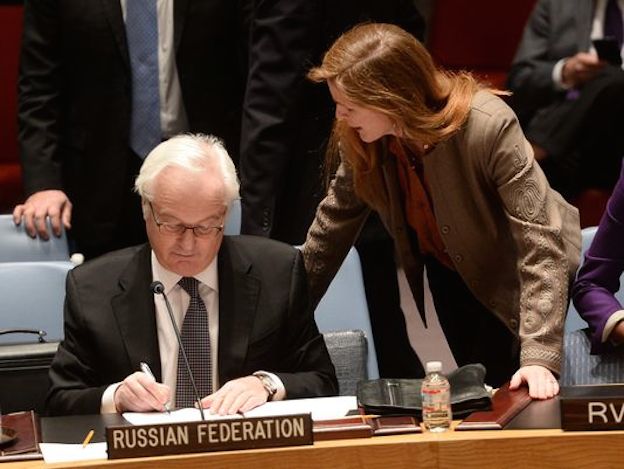
Samantha Power and Vitaly Churkin

Samantha Power speaks with her Russian counter-part Vitaly Churkin during a meeting of the Security Council earlier this year (Photo: EPA)

Yesterday, I highlighted Argentina’s eloquent and conscientious defence of the International Criminal Court’s integrity and independence in response to the Security Council’s failure to refer Syria to the ICC. Today, I want to focus on the response by the United States’ Ambassador to the UN, Samantha Power.

As readers will know, about two weeks ago, the US changed its policy towards a referral of Syria to the ICC. That paved the way for a French-drafted resolution to be tabled at the Security Council. Predictably, Russia and China vetoed the referral. I say predictably not because observers of the Court and Council knew it would happen but because Russia, in particular, had been unequivocal that it would veto any referral of Syria to the ICC.

Still, no one really knew why the US had made such a dramatic change in its policy towards an ICC intervention in Syria. But in the wake of the failed referral, US Ambassador to the UN, Samantha Power explained Washington’s position. Here’s a snippet:

“Today is about accountability for crimes so extensive, so deadly, that they have few equals in modern history. Today is about accountability for Syria. But it is also about accountability for this Security Council.

It is this Council’s responsibility to stop atrocities if we can and – at a minimum – to ensure that the perpetrators of atrocities are held accountable. It was toward that minimum that we sought to make progress today. My government applauds the vast majority of members of this Council who voted to support – and the some 64 countries who joined us in co-sponsoring – this effort to refer these atrocities to the International Criminal Court.

Sadly, because of the decision by the Russian Federation to back the Syrian regime no matter what it does, the Syrian people will not see justice today. They will see crime, but not punishment.

…In the past, when extraordinary crimes have been carried out, the International Criminal Court has been able to act. Why is it that the people of Uganda, Darfur, Libya, the Central African Republic, the Democratic Republic of Congo, Cote d’Ivoire, Mali, and Kenya deserve international, impartial justice, but the Syrian people do not? Why should the International Criminal Court pursue accountability for atrocities in Africa but none in Syria where the worst horrors of our time are being perpetrated? For those who have asked the Security Council this very reasonable question, today you have your answer: the Russian and Chinese vetoes.

Our grandchildren will ask us years from now how we could have failed to bring justice to people living in hell on earth…

…Month after month, and year after year, we have each spoken about the importance of justice and the need for accountability in Syria. Victims and survivors have begged for action and cried for justice. The international community has supported ad hoc efforts to collect evidence, to record testimony. We’ve launched commissions of inquiry to find facts, and we’ve held meeting after meeting. But we have not, before today, brought forward a resolution to refer the situation in Syria to the International Criminal Court. We have not done so because we were afraid that it would be vetoed.

But the victims of the Assad regimes’ industrial killing machine and the victims of terrorist attacks deserve more than to have more dead counted. They deserve to have each of us, the members of this Security Council, counted and held to account. They deserve to have history record those who stood with them, and those who were willing to raise their hands to deny them a chance at justice. While there may be no ICC accountability today for the horrific crimes being carried out against the Syrian people, there should be accountability for those members of this Council that have prevented accountability…”

Let’s break this down.

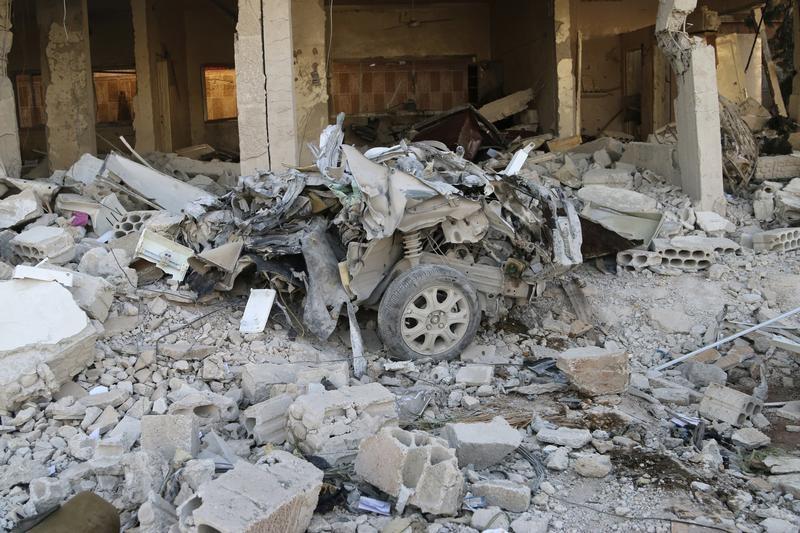
Wreckage of a car in Kaheel village, Syria (Photo: Mohamed Fares/ Thomson Reuters)

Wreckage of a car in Kaheel village, Syria (Photo: Mohamed Fares/ Thomson Reuters)

First, Power explains that the US did not support ICC involvement in Syria because the US was “afraid” that any referral would have been vetoed. But that was never the driving force behind the US’s position. Just last September, Power intimated that ICC involvement would be futile. For reasons that can be debated (and will be debated when they are eventually clarified in public), the US believed that an ICC intervention could undermine ending the Syria civil war. It also worried that an ICC investigation into Syria might bleed into an investigation of Israel, which controls the Golan Heights. Continue reading

Posted in International Criminal Court (ICC), Syria, UN Security Council, United Nations, United States | Tagged | 4 Comments

Argentina Slams UN Security Council Over ICC Referral, Entrenching Selectivity

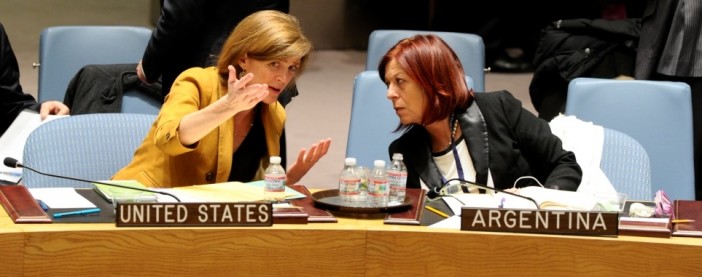
Ambassador Perceval (right) with US Ambassador to the UN, Samantha Power (Photo: UN Photo/Evan Schneider)

Ambassador Perceval (right) with US Ambassador to the UN, Samantha Power (Photo: UN Photo/Evan Schneider)

Some of the best responses to both failed and successful UN Security Council resolutions are seldom read or heard because they come from small or middle-power states and because they get lost in the fray of big-power rhetoric. Just one notable example is Brazil’s insistence, following both the Security Council’s referral of Darfur (2005) and Libya (2011) to the International Criminal Court (ICC), that exempting citizens of non-states parties fundamentally undermines the ICC as an institution and international criminal justice as a project.

Last week, in response to the failed referral of Syria to the ICC, Argentina’s Ambassador to the UN, Ambassador María Cristina Perceval lambasted the Security Council. But she did so not simply for its failure to refer Syria to the Court. Instead, Perceval slammed the Council for its insistence in propagating referrals which undermine the ICC and which entrench a system of uneven, selective justice. In doing so, Perceval covered many of the key – and crucial – concerns within the proposed referral. Below is the relevant section of her hard-hitting and eloquent statement. Hopefully the Security Council – and the ICC itself – take note.

Following our political resolve, our ethical responsibility and respect for international law, Argentina voted in favour of the referral of the situation in Syria to the ICC. Our sole, firm and clear objective was the investigation and prosecution by the Court of perpetrators of crimes under the Rome Statute and the recognition of the inalienable right of victims to “truth, memory, justice and reparation”.

But at the same time Argentina decided not to cosponsor this initiative, because it was also our objective to preserve the integrity of the Statute, which requires that referrals by this Council be formulated in the adequate terms so as to not to undermine the legal foundations of the Rome Statute or its validity as well as the Court’s effectiveness.

Mr. President,

On the one hand, there seems once and again to be the purpose that we accept the exercise of selectivity when it comes to justice; that we are not surprised that faced with comparable situations where heinous crimes are committed are considered to be susceptible of being referred to the Court while not others.

On the other, there seems to be the purpose that we accept the belief that undermining the integrity of legal instruments does not in any way hinder the objective of achieving justice. Sometimes recourse is made to very sophisticated arguments, although mainly applying the pragmatic principle that the end justifies the means. But we learned from experience that not every means leads to the objective sought.

To Argentina, as well as many other Members, normal recourse to arbitrariness, legal regression and pragmatism without values are not valid options.

In our view, every heinous crime has to be taken to justice, wherever it is committed and by whomever. Just as with human rights it is not possible to maintain we respect some but not others, we cannot maintain we defend the applicability of some provisions of a norm, but not its entirety.

Mr. President:

Already in 2005, when this Council adopted Resolution 1593 (2005) referring the situation in Darfur to the ICC and being Argentina one of its members, we maintained that certain elements of the resolution should not become permanent. But today we face the same scenario, as the text of the draft: a) reflects the intention that the referral dealt with today affects certain subjects while not others; b) it admits exemptions from the material scope of the Court’s jurisdiction and from the obligation to cooperate with the Court, and c)it includes a provision indicating that the Council “recognizes” that the expenses arising from this referral will not be defrayed by the United Nations but by States Parties to the Rome Statute or voluntary contributions, thereby contravening the provisions of the Rome Statute.

Is it necessary to remind that the Security Council has the power to oblige all Members of the United Nations -Parties and Non Parties to the Rome Statute- to cooperate with the Court?

It is disappointing that this Council does not put that ethical obligation into practice.

Continue reading

Posted in Argentina, International Criminal Court (ICC), Syria, UN Security Council, United Nations | Tagged | 3 Comments

The Security Council’s Appalling Record of Referring Situations to the ICC

With the backdrop of the failed referral of Syria to the International Criminal Court (ICC), Jonathan O’Donohue joins JiC for this very timely and critical take on the Security Council’s record of (not) referring situations to the ICC. Jonathan is a legal advisor in the International Secretariat of Amnesty International. 

(Photo: China.org.cn)

(Photo: China.org.cn)

Yesterday, China and Russia vetoed a Security Council resolution to refer war crimes and crimes against humanity committed in the conflict in Syria to the Prosecutor of the International Criminal Court (ICC). Their decision is a massive setback to efforts to ensure international justice for the Syrian people and the international initiative to end impunity for such crimes.

The failure of the resolution sends a dangerous message to all sides of the conflict in Syria that, despite the rhetoric by the UN Security Council on “the need to end impunity”, they can continue to commit horrific crimes with no real or immediate risk of being brought to justice.

This is the first time a referral has been vetoed and the Security Council has in the past referred Darfur and Libya to the Prosecutor. However, statements delivered following yesterday’s vote show that its permanent members are currently deeply divided on the issue of referrals. Therefore, it may be a long time before we see another referral to the ICC Prosecutor. If that is the case, there are many other situations where crimes are currently being committed with impunity in countries that have not ratified the Rome Statute that will be beyond the reach of the ICC.

The double veto does nothing save seek to protect those in the Syrian government, its armed forces and the armed groups from international justice. Russian officials stated that a referral would be “counterproductive” to efforts to resolve the conflict, ignoring the fact that since 2011 war crimes and crimes against humanity have been committed with complete impunity. There is no end in sight to the bloodshed. The referral would no doubt have been met with a strong reaction from the Syrian government and armed groups participating in the conflict who currently benefit from impunity. But it may have forced the individuals who are orchestrating, planning and ordering the crimes to think twice about continuing their actions and the consequences of doing so.

Russia also argued strongly, referencing the experience in Libya, that the proposed referral is an effort to lay the groundwork for outside military intervention. Without getting into the merits of its claims or calls for external military intervention, the Security Council should be able to take action under Chapter VII to refer situations to the ICC independently of any decisions it takes relating to the use of force. The military intervention in Libya was based on Security Council Resolution 1973, not on Resolution 1970 which referred the situation to the ICC Prosecutor.

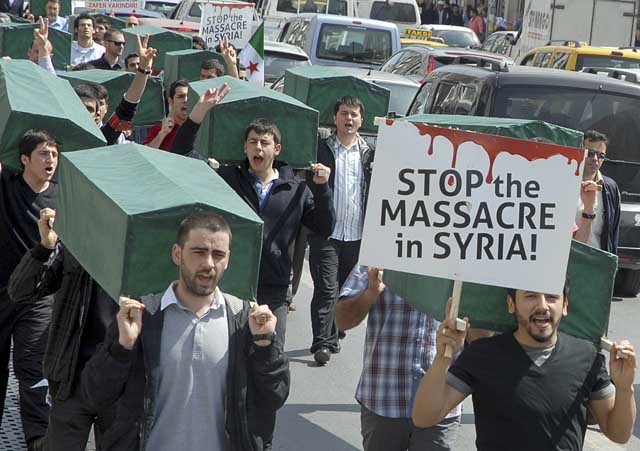
Protesters in Turkey demonstrate against ongoing violence in Syria. (Photo: Reuters photo)

Protesters in Turkey demonstrate against ongoing violence in Syria. (Photo: Reuters photo)

Russia also implied that there are double standards within the Security Council regarding referrals. Here it was right to do so. The insistence by the USA that all referrals contain an exemption clause seeking to preclude the ICC from exercising jurisdiction over US nationals (and the nationals of other countries which have not ratified the ICC’s Statute) accused of crimes in those situations is unacceptable. The clause is inconsistent with the Rome Statute, which provides that the ICC can investigate and prosecute, regardless of nationality, all persons accused of committing crimes in a situation where it has jurisdiction, if there are no genuine national proceedings against them. It is therefore also at odds with one of the key purposes of the United Nations to “establish conditions under which justice and respect for the obligations arising from treaties and other sources of international law can be maintained.” But these clauses do not justify the decision to veto the Syria referral. Instead, the members of the Security Council should make a strong stand, as Argentina did yesterday, demanding that this language be removed from future resolutions. Continue reading

Posted in Guest Posts, International Criminal Court (ICC), Syria, UN Security Council | 2 Comments

New article: “The International Criminal Court and the Politics of Prosecutions”

I have a new article out in The International Journal of Human Rights that JiC readers might be interested in.*  If anyone does not have access to the journal through their library’s subscriptions, they are free to contact me for a copy. Here’s the link and the abstract:

I assess the credibility of the International Criminal Court (ICC) as an impartial and independent institution by demonstrating how state behaviour towards the Court has politicised prosecutions. There are two mechanisms by which prosecutions have become politicised: the referrals of conflict situations to the ICC by political actors, i.e. States Parties to the Rome Statute and United Nations Security Council, and the prospect and degree of state cooperation with the Court. Consequently prosecutions have targeted only one side of the conflict and reflect the strategic political interests of the referring actors but promise a greater degree of state cooperation. The case studies selected here present variation in the nature of referrals and degree of cooperation, making for an instructive comparison and revealing an identifiable pattern of politicisation.

The article addresses most of the conflict situations currently in the ICC’s docket. But as the UN Security Council contemplates a referral of the Syria situation to the Court, it is worth considering the likelihood that all parties to the conflict will be held accountable. Given the one-sided nature of the Court’s prosecutions to date, and the limiting language of the draft resolution that is similar to to the Libya referral, it seems Syria will go the way of the rest (if it makes it to the ICC at all).

(See also a past post on the related issue of the ICC’s use of the “gravity” criterion for selecting situations and cases and how this has affected the perceived impartiality of the Court.)

*Shameless self-promotion

Posted in Gravity, ICC Prosecutor, International Criminal Court (ICC), Syria, UN Security Council, Uncategorized | Tagged , , | 3 Comments

An Enduring Shame: The Chagos Islander’s Long Fight for Justice

Linda Browne joins JiC for this fascinating guest-post on the fight of the people of the Chagos Islands to achieve justice and take back their homeland. Linda is currently a Masters student in Understanding and Securing Human Rights at the Institute of Commonwealth Studies, University of London.

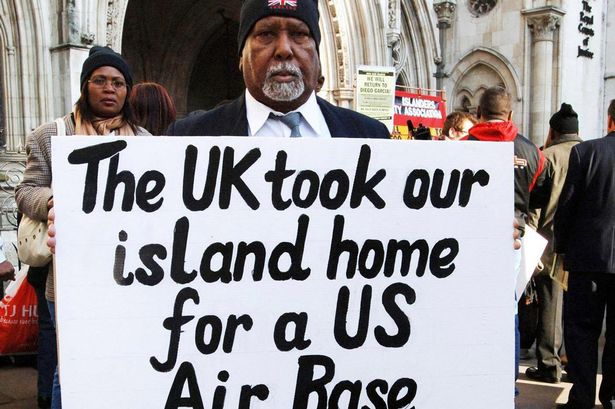
Protesters outside the Court of Justice in London, UK (Photo: PA)

Protesters outside the Court of Justice in London, UK (Photo: PA)

We are all aware of the violent political conflicts around the world, of the atrocities committed during these conflicts, of Western interference, or lack thereof. But what of the indirect impacts of these conflicts, especially the communities devastated to enable such interventions?

Communities such as the Chagos Islanders were displaced from their homeland of Diego Garcia by the British to facilitate the development of the US’s largest military base, the base from which the US would launch almost every military attack in the Iraq / Afghanistan conflict some 30 – 40 years later.

Mauritius is currently challenging UK sovereignty of the Chagos Islands in the permanent court of arbitration (PCA), a UN tribunal whose decisions are binding. This is an important case challenging the legality of the Marine Protected Area (MPA) around Chagos created by the UK in 2010. The legal proceedings could, in turn, challenge the UK’s sovereignty of the area and therefore the American government’s lease of it. Although most people have never heard of this community – or even this military base – the Chagos Islands case tells us as much, if not more, about the true nature of US / UK foreign policy than do studies of the actual conflicts themselves: the blatant violation of human rights, ruthless disregard of weaker communities in pursuit of strategic power, and the astonishing manipulation of facts to keep the truth from being uncovered.

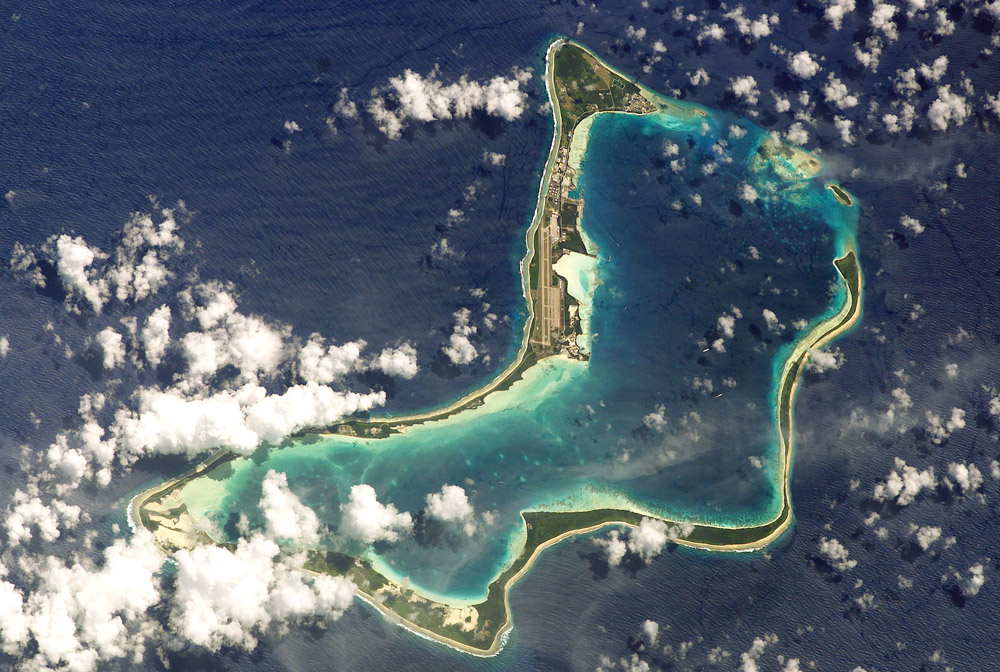
Diego Garcia is the largest of the Chagos Archipelago islands in the Indian Ocean. They were settled by the UK / US governmentsas strategic outposts to contain the threat of communism during the Cold War. The British government bargained for the islands during Independence talks with Mauritius and annexed them as a new British colony (BIOT) in 1965, a measure in direct contravention of UNGA Declaration 1514 (XV) which emphasized that preservation of the territorial integrity of dependent states was to be ensured during de-colonization. The plan to create this new British colony and then lease it to the US as a military base was done without the consent or knowledge of either the British Parliament or the US Congress. It was achieved by invoking the Order in Council, an archaic law allowing the British Monarch to override Parliament. For the British government it was a perfect solution, inasmuch as they retained influence in the Indian Ocean while the US carried the military and financial costs.

The one serious impediment to this plan was the Archipelago’s almost 2,000 inhabitants, an indigenous population with established schools, full employment on the the island’s plantations, and a subsistence economy topped up by supplies of staples shipped regularly from Mauritius and the Seychelles. Article 73 of the UN Charter makes clear that the interests of such inhabitants are to be ‘paramount,’ with the promotion of their well-being held as a sacred trust by the relevant colonial power. To circumvent this issue, the UK deliberately concealed the indigenous status of the inhabitants, categorizing them as contract labourers instead.

Diego Garcia and the Chagos Islands (Photo: NASA)

Diego Garcia and the Chagos Islands (Photo: NASA)

The resultant eviction was swift and brutal. Initially the British government issued a compulsory buy-out of the plantations, slowly closed them down, and then stopped the supply of staples to the islands. Finally by 1971 the UK government began forced evictions. To ensure the Chagossians fully understood the serious intent of the authorities, their pet dogs were rounded up, put in a shed, gassed and burned

Colonial history is replete with acts of atrocity against indigenous peoples. Yet the case of Chagos Islands has been described as one of Britain’s “most shameful episodes”. Arguably, the real shame is with the UK / US government’s continuing deception and refusal to grant an effective remedy. Details of the Chagossian’s treatment gained credence after the UK foreign office was legally ordered to release files from the period in 2012. Previously, the government had continued the charade of arguing that the Islanders were not indigenous but rather ‘contract labourers’. At every turn, the Chagossians have been thwarted by powerful bureaucracies.In 2000, the Chagossians had their claims of right to return upheld in the UK courts but this was overturned when the government again invoked the Order in Council in 2004 – on general election day so that no-one knew it had even happened! The Orders were successfully challenged in 2006/7 with the Court of Appeal stating it was an abuse of power, but when the claims were finally rejected in the House of Lords in 2008, the House of Lords decided it was a political, rather than a legal matter. Continue reading

Posted in Chagos Islands, Guest Posts, Justice, United Kingdom, United Nations | 3 Comments

Syria and the ICC: Three Burning Questions

(Photo: Pablo Tosco / AFP / Getty Images)

(Photo: Pablo Tosco / AFP / Getty Images)

The debate over the merits and meaning of a potential United Nations Security Council referral of Syria to the International Criminal Court continues. In this light, I was thrilled to have the opportunity to pen an article for The Monkey Cage / Washington Post. It covers a lot of the same ground that JiC has trodden over the last few months but hopefully brings it together in a cohesive whole. Here’s a snippet:

Calls for justice and accountability in Syria emerged as swiftly as the civil war itself. But after three years of brutal bloodshed, unsuccessful mediation and perhaps the worst ongoing humanitarian crisis in the 21st century, justice has remained evasive. The United Nations Security Council has been locked in a stalemate – not only on how to end the conflict, but how and when to pursue accountability for atrocities committed during the civil war. With the Obama administration throwing its support behind a draft Security Council resolution referring Syria to the International Criminal Court (ICC), many believe – and hope – that the deadlock on justice may soon be broken.

Proponents of the court are undoubtedly excited about the prospects of an ICC intervention in Syria. Facing obvious pushback from the Security Council, many, including former ICC chief prosecutor Luis Moreno-Ocampo, had previously concoctedcreative approaches to getting the court involved. Now their hope is that the council will grant the court the ability to open an investigation into crimes committed in Syria.

But the growing feasibility of a referral calls for sober reflection. Pursuing international criminal justice in Syria is a much more complex affair than it may first appear. At least three separate, albeit related, questions need to be answered: What does the change in U.S. policy mean with regards to a potential referral of Syria to the ICC? Is an ICC intervention into the ongoing conflict a good idea? And, if requested to do so, should the ICC intervene in Syria?

First, does the U.S. administration’s volte-face really change anything? There are two competing opinions on the matter. First, some believe that the United States’ much delayed support for a referral of Syria to the ICC is simply political grandstanding. Knowing that Russia (and perhaps China) will veto any referral, the cost of throwing support behind the ICC is low, but the benefits are high: Being able to slam Russia as being on the wrong side of history – and justice. Conversely, the Obama administration’s change in position can be seen as a “conversation changer.” While it may not automatically translate into a referral, it is an obvious and necessary condition for eventually having Syria investigated by the ICC. There is no denying that there can be no backtracking on the part of the United States and that the discussion of an ICC referral has been reinvigorated.

No one, however, is willing to suggest a referral is forthcoming – at least not any time soon. The most obvious barrier is Russia’s recalcitrance. However, there is also another reason why the ICC is unlikely to be asked to investigate Syria. There is widespread recognition – and growing evidence – that both the Syrian government and Syrian opposition forces have committed war crimes. In order for the Security Council to agree to a referral, there needs to be a consensus within the council on precisely whom the ICC should target for prosecution. Previous investigations demonstrate that the court tends to target only one side of the ongoing and active conflicts in which it intervenes (see here for reasoning). Without a consensus on the council as to who should be targeted, it is hard, if not impossible, to imagine a referral being achieved.

You can read the rest of the article here.

Posted in International Criminal Court (ICC), Syria, UN Security Council | Tagged , | 1 Comment