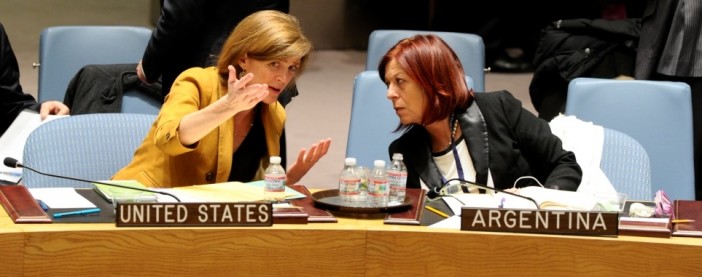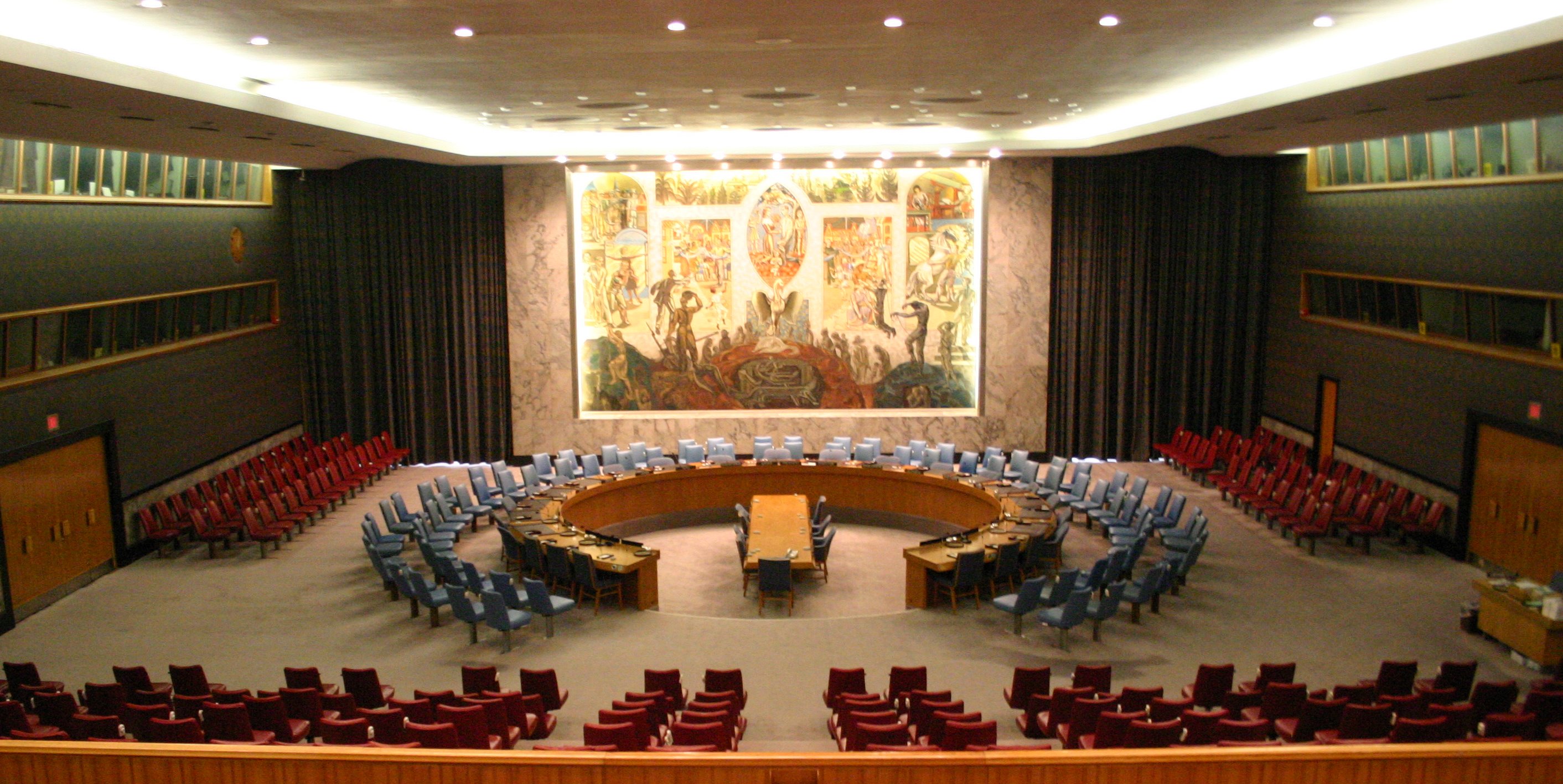
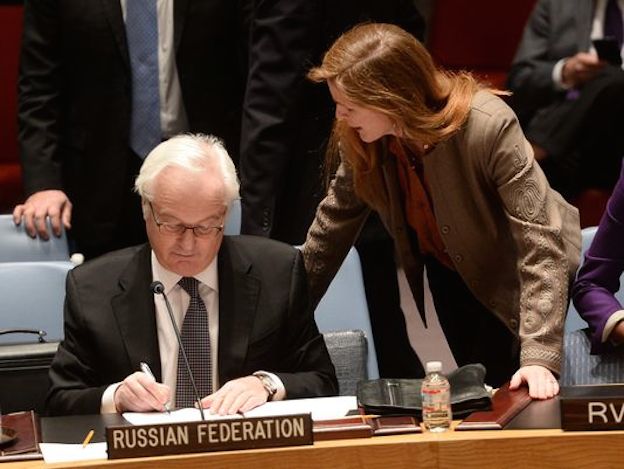
Samantha Power speaks with her Russian counter-part Vitaly Churkin during a meeting of the Security Council earlier this year (Photo: EPA)
Yesterday, I highlighted Argentina’s eloquent and conscientious defence of the International Criminal Court’s integrity and independence in response to the Security Council’s failure to refer Syria to the ICC. Today, I want to focus on the response by the United States’ Ambassador to the UN, Samantha Power.
As readers will know, about two weeks ago, the US changed its policy towards a referral of Syria to the ICC. That paved the way for a French-drafted resolution to be tabled at the Security Council. Predictably, Russia and China vetoed the referral. I say predictably not because observers of the Court and Council knew it would happen but because Russia, in particular, had been unequivocal that it would veto any referral of Syria to the ICC.
Still, no one really knew why the US had made such a dramatic change in its policy towards an ICC intervention in Syria. But in the wake of the failed referral, US Ambassador to the UN, Samantha Power explained Washington’s position. Here’s a snippet:
“Today is about accountability for crimes so extensive, so deadly, that they have few equals in modern history. Today is about accountability for Syria. But it is also about accountability for this Security Council.
It is this Council’s responsibility to stop atrocities if we can and – at a minimum – to ensure that the perpetrators of atrocities are held accountable. It was toward that minimum that we sought to make progress today. My government applauds the vast majority of members of this Council who voted to support – and the some 64 countries who joined us in co-sponsoring – this effort to refer these atrocities to the International Criminal Court.
Sadly, because of the decision by the Russian Federation to back the Syrian regime no matter what it does, the Syrian people will not see justice today. They will see crime, but not punishment.…
…In the past, when extraordinary crimes have been carried out, the International Criminal Court has been able to act. Why is it that the people of Uganda, Darfur, Libya, the Central African Republic, the Democratic Republic of Congo, Cote d’Ivoire, Mali, and Kenya deserve international, impartial justice, but the Syrian people do not? Why should the International Criminal Court pursue accountability for atrocities in Africa but none in Syria where the worst horrors of our time are being perpetrated? For those who have asked the Security Council this very reasonable question, today you have your answer: the Russian and Chinese vetoes.
Our grandchildren will ask us years from now how we could have failed to bring justice to people living in hell on earth…
…Month after month, and year after year, we have each spoken about the importance of justice and the need for accountability in Syria. Victims and survivors have begged for action and cried for justice. The international community has supported ad hoc efforts to collect evidence, to record testimony. We’ve launched commissions of inquiry to find facts, and we’ve held meeting after meeting. But we have not, before today, brought forward a resolution to refer the situation in Syria to the International Criminal Court. We have not done so because we were afraid that it would be vetoed.
But the victims of the Assad regimes’ industrial killing machine and the victims of terrorist attacks deserve more than to have more dead counted. They deserve to have each of us, the members of this Security Council, counted and held to account. They deserve to have history record those who stood with them, and those who were willing to raise their hands to deny them a chance at justice. While there may be no ICC accountability today for the horrific crimes being carried out against the Syrian people, there should be accountability for those members of this Council that have prevented accountability…”
Let’s break this down.
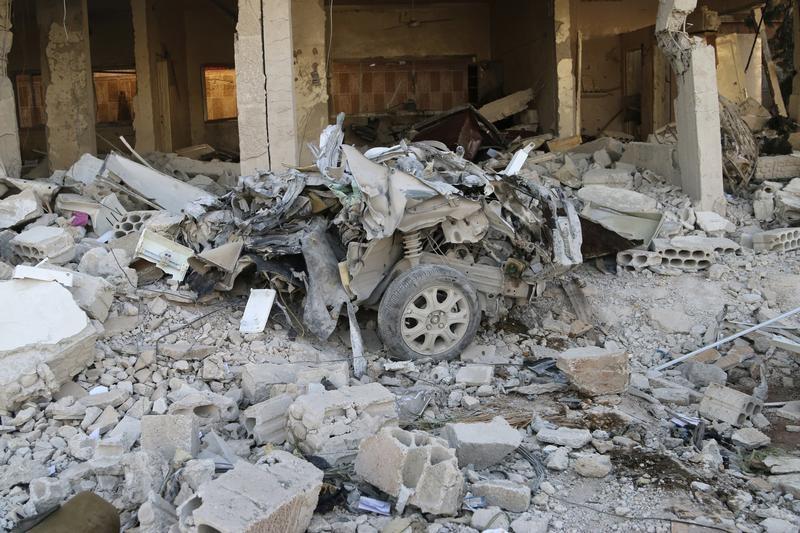
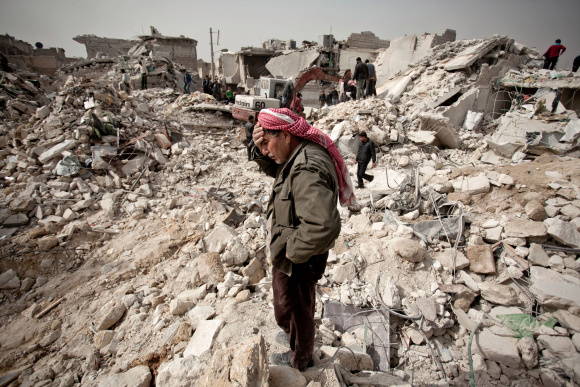
Wreckage of a car in Kaheel village, Syria (Photo: Mohamed Fares/ Thomson Reuters)
First, Power explains that the US did not support ICC involvement in Syria because the US was “afraid” that any referral would have been vetoed. But that was never the driving force behind the US’s position. Just last September, Power intimated that ICC involvement would be futile. For reasons that can be debated (and will be debated when they are eventually clarified in public), the US believed that an ICC intervention could undermine ending the Syria civil war. It also worried that an ICC investigation into Syria might bleed into an investigation of Israel, which controls the Golan Heights. Continue reading