

Joseph Kony
Numerous reports are suggesting that the notorious leader of the Lord’s Resistance Army (LRA) Joseph Kony is currently in “surrender talks” with the government of the Central African Republic. According to African Union’s special envoy on the LRA Francisco Madeira, Kony (who is about 52 years old now) is suffering from a “serious, uncharacterized illness” and is seeking guarantees of a secure safe haven.
It’s still early and the story is murky at best. I will follow any developments and posts them as they emerge but here are few initial thoughts.
Fool Me Once…
There is good reason to be skeptical of any reports about Kony’s whereabouts and any potential surrender. Kony has spent the better part of three decades fighting in the bush. Whilst the LRA does have a political agenda that is far too often ignored in favour of a narrative that paints them as “evil, crazy terrorists”, it is likely that a key, if not the key, driver of the rebel group in recent years has been mere survival. If Kony is suffering from an illness that poses a threat to his life, this could lead him to explore exit options. It is important to remember, however, that surrendering may be just one of the options he is exploring.
Observers will point out that Kony has regularly manipulated talks to surrender and achieve peace. Indeed, there is good evidence that Kony has benefitted from manipulating peace talks with the Government of Uganda. But I am not aware of any previous unilateral “surrender talks” coming directly from Kony.
In previous peace negotiations, the LRA has always argued that any peace deal required both sides to take responsibility for the war and for the atrocities and human rights violations that took place in northern Uganda. For example, Kony refused to accept an offer of amnesty in 2006 because he believed that any such amnesty had to be accepted by President Yoweri Museveni and members of the Ugandan People’s Defense Forces as well. The Government of Uganda has consistently refused to take any responsibility for its role in the war or its perpetration of human rights violations. For its part, the international community (as well as influential groups like Invisible Children) have generally given the Government a free pass. Indeed, while many observers blame the LRA for the consistent failure of peace negotiations to end the war, the GoU’s role in undermining talks and prioritizing poorly conceived military solutions to end the conflict are too often neglected. Kony and certain members of the LRA may never have been truly interested in a peaceful solution to the war. But, given the evidence, it is very hard to argue that Museveni and the GoU were either.
All of this is to say that if Kony is indeed in “surrender talks”, this is a unique development and not one which can readily be disregarded by suggesting that it is simply a repeat of previous failed peace negotiations.

Members of the LRA (Photo: James Akena)
Heading to The Hague?
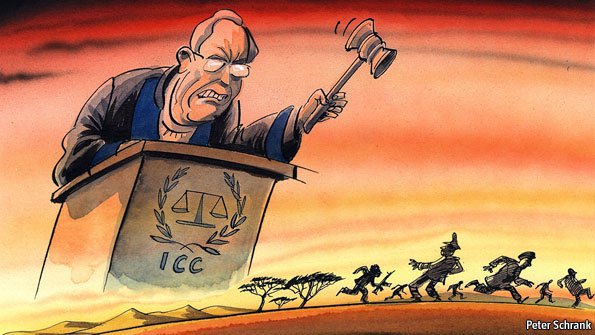
While it may be the ultimate dream of human rights advocates and champions of the International Criminal Court (ICC), it is folly to assume that Kony is currently looking for a deal that will send him to face trial in The Hague. From interviews and conversations with people close to him, it is clear that Kony equates surrendering to the ICC with his death. He does not believe that he would actually reach The Hague. Rather, Kony believes that he would be killed along the way. Have Kony’s views of the ICC changed? Possibly. But, to date, there is no evidence to suggest that they have. Continue reading





 Justice in Conflict