On 2 January 2014, Nepal’s Supreme Court ordered the Nepalese Government to amend a law to establish a truth commission with the power to recommend amnesty. The Court also instructed the government to establish a team comprising conflict experts, victims’ representatives, human rights law experts and other stakeholders to advise on how to make the amnesty provisions compliant with domestic and international law. In this guest-post, Louise Mallinder argues that The Belfast Guidelines on Amnesty and Accountability, recently published by an Expert Group of scholars and practitioners, could provide a valuable resource to inform these debates. Louise is a reader in international law and human rights at the Transitional Justice Institute, University of Ulster.
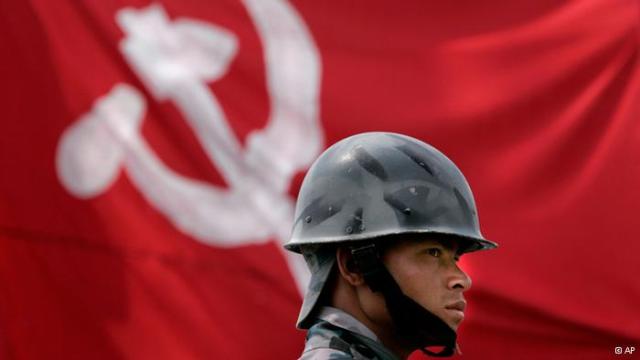
(Photo: AP)
Nepal’s decade-long civil war claimed the lives of over 13,000 persons. There were 1,300 enforced disappearances. The country’s transition from conflict and autocratic rule has been arduous. It began with signing of the Comprehensive Peace Agreement in 2006, in which the main political parties and the Maoist rebels committed themselves to investigating and taking “lawful action … against individuals responsible” for human rights violations, refraining from encouraging impunity, and providing reparations to victims. Still, since 2006, political instability has returned and the country has made limited progress in addressing the legacy of the conflict.
Draft legislation on a truth commission and a separate Disappearances Commission were subject to public consultation in 2011 but failed to be promulgated before parliament was dissolved in May 2012. In the absence of a functioning legislature, the Council of Ministers, representing the four major political parties, adopted the Ordinance on the Investigation of Disappeared Persons, Truth and Reconciliation Commission (unofficial translation) in August 2012. The President enacted the Ordinance in March 2013. It immediately faced criticism from victims’ organizations and human rights campaigners, including the OHCHR.
The Commission’s Powers to Recommend Amnesty and Prosecutions
The Ordinance provided that the Truth and Reconciliation Commission would be tasked with investigating disappearances, crimes against humanity and gross violations of human rights and recommending reparations for victims. It would also work to end the “state of impunity by bringing perpetrators” of serious violations “under the ambit of the law”.
More controversially, the Commission would be empowered to recommend that the Nepalese Government grant amnesty to individual offenders. The Ordinance did not explicitly propose amnesty be granted for gross violations of human rights, stipulating that amnesty could not be recommended for “serious crimes that lack sufficient reasons and grounds for granting amnesty”. However, it also did not define “serious crimes” nor clarify the grounds that could prevent serious crimes being amnestied.
For an offender to be eligible for amnesty, the Ordinance stipulated that he or she must
- Inform the Commission of the facts relating to the full extent of his or her involvement in crimes during the armed conflict
- Submit an individual written application for amnesty
- Repent in writing their ‘misdeeds’ during the conflict “to the satisfaction of the victim”
The Commission would have robust investigative powers, but the Ordinance did not address how the Commission would determine if offenders had truthfully disclosed their criminal acts.
The Commission could also recommend to the Attorney General that perpetrators be subject to legal action under existing law. If the Attorney General decided to prosecute a case, the Ordinance stipulated that charges must be filed within 35 days. There is no requirement in the Ordinance that charges must be brought following a recommendation from the Commission. In deciding whether or not to recommend amnesty, the Commission had the option of consulting victims.
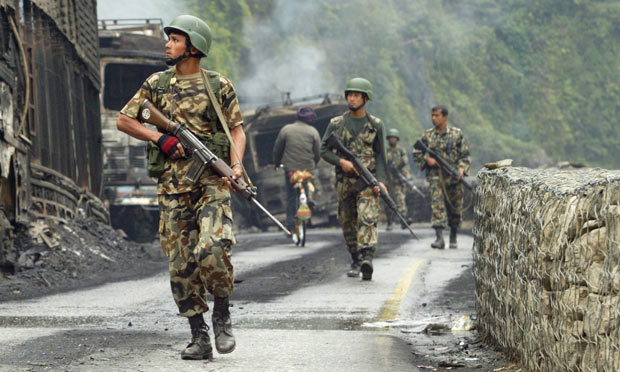
Government troops on a patrol in 2005 (Photo: Gurinder Osan / AP)
Supreme Court’s Decision on Amnesty
A coalition of victims’ organizations responded to the Ordinance by demanding that the Supreme Court repeal the sections relating to amnesty and amend the legislation to require prosecutions. In its January 2014 decision, the Court ordered a series of amendments. With respect to amnesty, it held that:
“The provision of amnesty in Section 23 of the Ordinance does not appear to have guaranteed not to recommend amnesty for [serious violations of human rights]. These crimes are made the subject of amnesty, and instead of making participation and consent of victims for the amnesty process primary, it has been made secondary. This makes it evident that this provision is against the victims’ fundamental right to justice including their right to life and liberty, right to information, right against torture, and against the accepted principles of justice. Therefore, this provision needs to be reviewed, reformed and amended accordingly.” (emphasis in original)
This raises two questions that must be addressed by the proposed Nepalese Expert Group and in the amendments to the legislation:
- What legal prohibitions exist on the granting of amnesty for serious crimes?
- What role should victims have in decisions to recommend or grant amnesty?
These questions are among the issues tackled in the Belfast Guidelines on Amnesty and Accountability.
The Approach of the Belfast Guidelines on Amnesty and Accountability
The Belfast Guidelines were produced by a group of independent, interdisciplinary scholars and practitioners around the world. The Guidelines aim to assist all those seeking to make or evaluate decisions on amnesties and accountability in the midst or in the wake of conflict or repression. Their recommendations draw on international legal sources, such as international treaties and customary international law; decisions
by international criminal courts and human rights bodies; UN declarations, guidelines, resolutions and other standards; as well
as national amnesty processes and case law, and scholarly writings. Continue reading →










 Justice in Conflict