Nothing but Verdicts: The Purpose of Tribunals

On the verge of the final verdict in the Charles Taylor trial, Thijs B. Bouwknegt joins JiC for this critical examination of the role and purpose of international criminal tribunals. Thijs is a legal historian and researcher at the NIOD Institute for War, Holocaust and Genocide Studies in Amsterdam. Enjoy!
SecurityJustice-1“The purpose of a trial is to render justice, and nothing else,” wrote Hannah Arendt two years after the trial of Adolf Eichmann in Jerusalem (1961). The political theorist observed that, “the making of a record of the Hitler regime which would withstand the test of history” could “only detract from law’s main business: to weigh the charges against the accused, to render judgement and to mete out due punishment.” Arendt’s reflection is a useful tutorial for international criminal tribunals and the International Criminal Court (ICC). They carry the responsibility not to arouse false hopes by raising high expectations.

International tribunals pledge an awful lot: justice for the victims, peace in conflict zones and reconciliation in shattered communities. Alongside these ambitions, they also claim to unravel and record history. These aspirations breathe the strong cosmopolitan human rights dogmatism that drives the transitional justice and humanitarian enterprises. Yes, they are noble. But like other ideals, they are mostly unrealistic. Remember that the UN’s International Criminal Tribunal for Rwanda (ICTR) exclusively prosecuted Hutus and no Tutsis. Ratko Mladic carried out the Srebrenica genocide less than two years after the UN gave birth to the International Criminal Tribunal for the former Yugoslavia (ICTY). And against the background of almost five million Congolese war victims, we still await an ICC appeals verdict against one local militia leader. It is true that tribunals deal with events of historic significance and that they assemble and generate historical sources. However – at best – judges write up agency history, through the straitjacketed lens of law. Their verdicts narrate the criminal actions of individual defendants in the context of genocide and other episodes of mass violence.

The trials in The Hague, Arusha, Dili, Phnom Penh, Leidschendam-Voorburg and in Dakar illustrate one certainty: the everyday business of prosecuting and judging alleged war criminals and génocidaires is not easy. Tribunals simply do no have ‘extraordinary’ or ‘special’ powers as some of their names purport. That also counts for the Sierra Leone tribunal (SCSL), which shall deliver its last verdict on 26 September 2013. Guest of honour at that historical occasion is Charles Ghankay Taylor. The Special Court’s Appeals Chamber will definitively rule whether the former Liberian president is liable for a campaign of terror in Sierra Leone. Last year, the Trial Chamber of the tribunal sentenced him to a half-century of imprisonment for planning and aiding and abetting the countless murders, rapes and mutilations perpetrated by the Revolutionary United Front (RUF) and the Armed Forces Revolutionary Council (AFRC) military junta. Taylor insists he only mediated in the civil war as a peace broker and appealed the verdict and sentence. But so did SCSL Chief Prosecutor Brenda Hollis. She wants to see the 65-year-old Taylor spend at least 80 years in a UK prison. In her view, Taylor did not only give the rebels money, weapons and advice. For Hollis, Taylor was their “Godfather” and directly orchestrated their crimes.
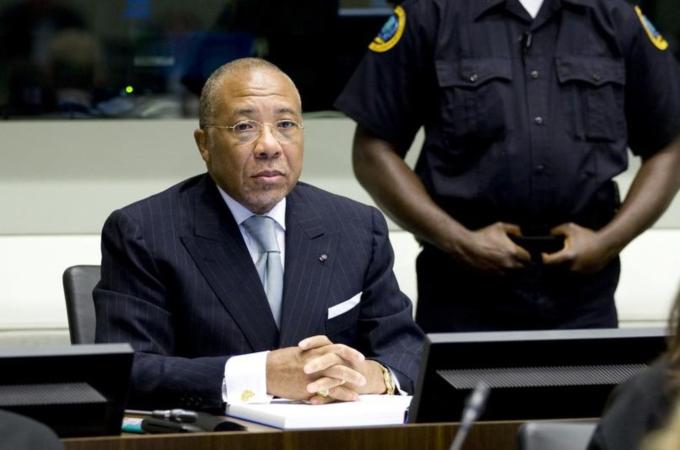
Charles Taylor (Photo: AFP)

Charles Taylor (Photo: AFP)

Time will tell which narrative will prevail. One outcome is already unambiguous. Taylor will not be held to account for a litany of human rights violations committed in Liberia between Christmas Eve 1989 and August 2003. This is the poignant consequence of the constricted focus of the SCSL. It solely has jurisdiction over crimes committed in Sierra Leone after November 1996. How does that ever generate a sense or feeling of justice for Liberian victims? What kind of reconciliation does a trial against a foreigner bring about in Sierra Leone? And what about atrocities committed since the beginning of the Sierra Leonean inferno in March 1991? The answers are obvious. The only side-goal that was achieved by indicting, arresting and prosecuting Taylor is regime change. Meanwhile, all lofty rhetoric out voiced the beating heart of the criminal proceedings: determining beyond any reasonable doubt whether the presented evidence supports the charges levelled against Taylor.

While Taylor’s trial is propagated as being the jewel in the crown of modern international criminal justice, the case was far from crystal clear. The prosecution presented the judges with a convoluted scenario, rooted in events that reached far beyond their jurisdiction. They suggested that together with former photographer and RUF-leader Foday Sankoh, Taylor – somewhere in one of Myanmar Gaddafi’s revolutionaries’ training camps in Libya approximately between 1987 and 1989 – forged a criminal conspiracy to conquer the West African coast. Their motive: to enrich themselves with diamonds from Sierra Leone. Their modus operandi: terrorising civilians. How do you prove all that?

With a relentless absence of documents or forensic traces, the prosecutor flew no less 94 – including experts – witnesses to the Dutch municipality of The Hague. In the borrowed courtrooms of the ICC and Lebanon tribunal (STL), 58 victims reminded the judges of the surrealistic theatre of violence that took place in Sierra Leone. They got an important – but often traumatic – opportunity to talk about their painful and sad experiences. In spite of that, so much heartbreaking live testimony (lawyers call that crime-base evidence) about the actual violence itself was legally unnecessary. Taylor acknowledges all those events. He only insists that he was not there and would have had to have been “Superman” to commit such deeds while he was busy running Liberia. Continue reading
Posted in International Law, Liberia, Sierra Leone, Special Court for Sierra Leone, Special Court for SIerra Leone (SCSL) | Tagged | 6 Comments

A Brand New Low: Ruto Blames the ICC For Westgate Tragedy

By now, readers will be intimately aware with the ongoing and tragic crisis unfolding in Nairobi. According to reports, al-Shabab militants have barricaded themselves and hostages inside Westgate mall. Some 70 civilians have been killed with well over a hundred injured. Al-Shabab claims the attacks are in retaliation for Kenya’s military involvement in Somalia.

When the siege broke out, some commentators suggested it would help the cases facing Kenya’s President Uhuru Kenyatta and Vice President William Ruto. Both face charges at the International Criminal Court (ICC) over their alleged role in Kenya’s 2007/08 post-election violence. They have argued (quite reasonably I think) that, as the head or state and deputy head of state of Kenya, they should not have to both attend trial in The Hague simultaneously. The massacre at Westgate would seem to bolster their argument.

But Ruto has taken things a step farther. As the siege continues, he berated the ICC for making him attend his trial (note: ICC Judges adjourned his trial as a response to the events at Westgate). Standing on the steps of the ICC, he exclaimed that the attacks in Nairobi were timed to coincide with his trial. Even more dubiously, Ruto asserted that President Kenyatta was unable to attend a conference on the security situation in Somalia last week because Ruto was forced to attend trial in The Hague.

Ruto and Kenyatta have worked tirelessly to have their trials dismissed. But it’s one thing to try to get motions passed at the Security Council to throw out the cases or resolutions passed in Kenyan Parliament to get Kenya to withdraw from the ICC. It’s another thing altogether to use this awful tragedy afflicting Kenyans to undermine the Court. It represents a brand new low.

UPDATE: There has been some concern that I didn’t quote Ruto directly in the post. I thought his words speak for themselves. Regardless, Kenya Today has transcribed Ruto’s remarks, referring to them as “sensational”. From his statement, I find it impossible not to infer that what Ruto is saying is that the ICC process which has kept him out of Kenya is (at least partly) to blame for the Westgate crisis. His comments clearly suggest that, had it not been for the ICC trial process, the Westgate attack would not have occurred. As of writing, no evidence to date has been provided to substantiate any claim that the attacks and Ruto’s absence from Kenya were coordinated or had anything to do with each other.

“Its really unfortunate that these terrorists attack was timed to coincide with my presence here at the Hague and the visit by His Excellency the president of Kenya to New York for the UN general Assembly. Meaning that both the president and myself would not have been in the country. It is also instructive to note that the president skipped a meeting last week on the 16th in Brussels that was meant to discuss the Somali crisis complete with the threats it poses to the security situation in Kenya in the horn of Africa and generally in the region,the president had to skip that because he was unable to attend because am required to continuously attend court here at the Hague. It is also important to note that because of the Somali problem that Kenya is engaged in, That these terrorists have been wedged on Kenya . We hope that some people will begin to contextualize what is going on and begin to appreciate the challenges that Kenya is going through, the region is going through,and the complications that are brought by what is going on here. We believe in justice, we believe in fair play and we have as a country, both the president and myself as individuals, we’ve committed ourselves to be present here in court so that we can clear our names but we have to counter balance our individual responsibilities or responsibilities as individuals and legitimate constitutional requirements by 40 million Kenyans. I will be home hopefully this evening to participate in my capacity as deputy president in managing the situation at home and hopefully we should be able to bring this to a close in the shortest time possible to alleviate any further suffering and to put our country on the safe path” .

Posted in International Criminal Court (ICC), Justice, Kenya, Kenya and the ICC | Tagged , , | 16 Comments

Bashir Wants to Visit the Big Apple

(Photo: Alvaro Ybarra Zavala / Getty Images)

(Photo: Alvaro Ybarra Zavala / Getty Images)

It appears that Sudanese President Omar al-Bashir has his heart set on visiting the Big Apple. Bashir, indicted by the International Criminal Court (ICC) for a trinity of atrocity crimes (genocide, war crimes and crimes against humanity) has applied for a visa in order to visit the United States and speak at the UN’s General Assembly.

US officials have responded to Bashir’s alleged plans with a barrage of criticism. A spokeswoman for the US State Department condemned Bashir’s plans, exclaiming: “Before presenting himself to UN headquarters. President Bashir should present himself to the ICC in The Hague to answer for the crimes of which he’s been accused.”

At the same time, President of the ICC’s Assembly of States Parties Tiina Intelmann was quick to remind “States Parties on whose territory the indictee might appear while in transit of their obligation to arrest and surrender Mr.Omar Al-Bashir to the ICC.”

But will Bashir visit the US? And if he does, will the US send him packing for The Hague?

A good ploy but a bad plan?

Bashir’s alleged travel plans smell more of a ploy than a plan. And it’s not a particularly smart ploy, either.

Bashir has been a primary beneficiary of the wave of venomous criticism from African states towards the ICC in the wake of the election of Uhuru Kenyatta and William Ruto as Kenyan President and Vice President. Bashir previously received support in his fight against the ICC from African states – but nothing like what Kenyatta has received. And now that it’s a matter of “Africa against the ICC”, Bashir has much more momentum in his favour in his battle to undermine the Court.

At the same time, however, Bashir has benefitted significantly from a lack of interest amongst Western states as to whether or not he should end up in The Hague. Sure, there has been lofty rhetoric about the importance of holding those responsible for atrocities in Darfur to account. And there were public condemnations of the Sudanese President and his alleged role in the litany of atrocities committed in the region.But Western states, notably the UN Security Council’s P3 (the US, France and the UK), have given Bashir’s fate scant attention in the last few years.

Omar al-Bashir - thumbing his nose at the US and the UN?

Omar al-Bashir – thumbing his nose at the US and the UN?

This wasn’t by accident. Their silence came in return for Bashir’s role in ‘allowing’ South Sudan to separate peacefully in 2011 (the UK even proposed offering Bashir a deferral of any prosecution via an invocation of Article 16 of the Rome Statute as a reward for his ‘good behaviour’). Much to the chagrin of human rights and international justice advocates, it seemed entirely possible that Bashir might retire and live out his days without fear of the ICC.

Now, however, Bashir has made his fate a front-page issue in a country where influential civil society groups have long pressed for his arrest. An issue that the US administration might have otherwise ignored, they now must speak to feverishly. In the wake of the US’s awkward failure to achieve any semblance of justice for victims of chemical weapons attacks in Syria, a potential Bashir visit may present an irresistible target.  Continue reading

Posted in Crimes against humanity, Darfur, Genocide, International Criminal Court (ICC), Sudan, United Nations, United States, War crimes | Tagged | 10 Comments

The Price of Deference: Is the ICC Bowing to Pressure in the Kenya Cases?

Thomas Obel Hansen joins JiC for this fascinating guest-post on the internal and external pressures facing the ICC in the Kenya cases. Thomas is an independent consultant and an assistant professor of international law with the United States International University in Nairobi, Kenya. 

(Cartoon: Gado)

(Cartoon: Gado)

Prosecuting a sitting Head of State and his Deputy at the ICC was always going to be a complicated task. While the ICC can claim success in that the first of the two Kenya trials commenced Tuesday last week with William Ruto, the Deputy President of Kenya, present before Trial Chamber V(a), it is no secret that the trials are marred with controversy.

As the Prosecution continues to express concerns over the level of witnesses intimidation in the Kenyan cases, the Ruto Defence used his opening statement to deliver an all-out attack on the Office the Prosecutor, claiming that it is guilty of performing a “lazy prosecution”, being “indifferent to the truth” and constituting part of a “glaring conspiracy of lies”. At the same time, political leaders in Kenya – supported by countries in the region – are adding unprecedented pressure on the Court to have it their way. The African Union is reported to have planned an extraordinary summit to (once again) discuss what can be done to end the Kenyan ICC cases. And, as Mark discusses here and here, Kenya’s Parliament has been pushing for a withdrawal from the Rome Statute, although any action by the Kenyan government to this effect would have no impact on the obligation to cooperate with the Court with respect to the ongoing cases.

But there is another aspect to the enduring mobilization against the ICC which has so far received little attention, namely that political actors are increasingly focused on influencing the outcome of specific proceedings before the Chambers. This begs the question: is the Court able to deal with such pressure and protect its institutional interests?

During a status conference on September 9 – just one day before the trial hearings in the Ruto & Sang case commenced –Presiding Judge of Trial Chamber V(a) Eboe-Osuji announced that the Chamber had considered the matter of the two Kenya cases running simultaneously or on alternating days and had come to the conclusion that “running the cases simultaneously will not necessarily expedite them”. Accordingly, Judge Eboe-Osuji stated that it was “the Chamber’s preference that the Court sits on a four-weeks alternating period”.

Keeping in mind that two of three judges who sit on the Trial Chamber that is handling the Ruto & Sang case also have a seat in the Chamber that is handling the Kenyatta case, this might have seemed a reasonable decision, had it not been because the same Chamber, in a ruling of 29 August, rejected Ruto’s request that the Chamber sits on alternating periods on the basis that it would not be “an efficient way to conduct the proceedings in the present case”.

Curiously, this change of mind took place only one day after President Uhuru Kenyatta, whose trial is currently scheduled to commence on 12 November this year, made it clear that he would only continue to cooperate with the ICC if the Court’s schedule suits him:

“They should not make it impossible for the sovereign nation of Kenya to be led as its citizens democratically chose…We will work with the ICC but it must understand that Kenya has a constitution and Ruto and myself won’t be away at the same time…If they want us to cooperate, they must ensure that when Uhuru is there (at Hague) Ruto is in the country.”

One can’t help but speculate that the Trial Chamber’s reconsideration of the issue may somehow have been influenced by Kenyatta’s remarks, a suspicion that Judge Eboe-Osuji himself made no attempts at proving wrong when he failed to clarify what had made the Chamber change its mind.

(Photo: AP / Michael Kooren)

(Photo: AP / Michael Kooren)

The danger with making such decisions is that they easily give the impression that it is the accused, not the judges, who are in charge of the proceedings. The ICC’s legitimacy is not only contingent on the Court making sound decisions, but also on the appearance that these decisions are impartial and based on the Court’s preferences – not the accused’s.

In a separate development last week, a number of African states engaged in what appears to be a well-coordinated attempt at influencing the Appeals Chamber’s soon-to-be-expected ruling on the Prosecutor’s appeal of the Trial Chamber’s decisionto grant Ruto’s request for excusal from continuous presence at trial. Almost simultaneously, TanzaniaRwandaBurundi, Uganda and Eritrea filed applications with the Registry to be granted leave to file amicus curiae briefs under Rule 103(1) of the Rules of Procedure and Evidence. This is, to my knowledge, the first time that States Parties – not to mention non-States Parties – have sought the Court’s permission to file legal observations with respect to ongoing proceedings to which they are not parties and which do not directly affect any of their nationals.  Continue reading

Posted in Burundi, Eritrea, ICC Prosecutor, International Criminal Court (ICC), Kenya, Kenya and the ICC, Rome Statute, Rwanda, Tanzania, Uganda | Tagged , , , | 20 Comments

The ICC: What Counts as a Success?

Birju Kotecha, a graduate tutor in law at Northumbria University Law School, joins JiC for this post on the challenges of measuring the ICC’s ‘success’. Enjoy!

(Photo: Juan Vrijdag / AFP / Getty Images)

(Photo: Juan Vrijdag / AFP / Getty Images)

One of the striking features of the International Criminal Court (ICC) is its ability to draw attention from a multitude of disciplinary perspectives. Law, political science, criminology, philosophy, international relations and even sociology have invested in the long-standing discourse on the ICC’s consequences, challenges, limits and pursuits. A position that unites many (though not all) ICC researchers is the desire for the Court to succeed. But what counts as ‘success’? Achieving consensus or clarity on how to measure the effectiveness or success of the ICC is challenging. Can we decide or develop appropriate metrics to assess whether the ICC is performing ‘successfully’?

In an era of market-orientated performance criteria, measuring institutional success in any public sphere is typically done through the use of key performance indicators. These are mostly ascribed values and numbers. It is what domestic public bodies from schools to hospitals are often assessed against, accompanied by the popular complaint of a detrimental “target culture”. Such performance measures can be blunt tools, commodifying public goods and values and are unable to look at an institution’s intrinsic worth. They capture pure outcomes without understanding the inherent limitations, complexities, values and nuances that dictate or skew the data. They are of limited value as they are unable to explain the meaning or quality behind those successes.

Capturing ICC effectiveness through numbers alone, though valuable, can be similarly problematic and reductionist. Not least because there are insufficient benchmarks to compare the ICC’s work. And even comparisons between its work and the ad-hoc tribunals like the ICTY or ICTR is problematic due to their differing structures, features, budgets and jurisdictions.

The use of tables, rankings and numerical criteria would see ICC performance reduced down to a range of indicators including numbers of state parties, cases, successful prosecutions, average cost, duration of proceedings, extent of victim satisfaction and so on. If we take two of those examples, the raison dêtre of any court are both trials and convictions. In this regard the ICC’s quantifiable success is rather patchy. In 11 years since its operation there have currently been only 8 investigations, 6 arrests from a possible 23 along with 1 completed trial and conviction (which is subject to appeal) and 1 acquittal.

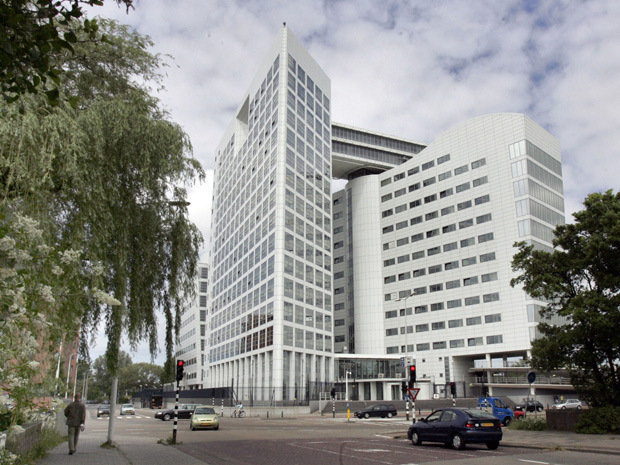
A rendition of the ICC's future premises, currently under construction.

A rendition of the ICC’s future premises, currently under construction.

However, paradoxically and as if to highlight why measuring success is such a complicated business, it was former prosecutor Moreno-Ocampo who argued in 2006 that the lack of international trials was also a reflection of success if it was the result of domestic jurisdictions fulfilling their obligations to prosecute under the complementarity regime.

The effects and consequences of an institution that is as complex as the ICC with its range of political, social and legal dimensions is not always amenable to rankings, results and other statistical judgements. How for example, can we capture the impact on discourse, political re-positioning, due process, diplomatic efforts, or popular confidence in the goal of ending impunity? The question of what can be quantifiably measured should not be confused with the question of what should be measured. Continue reading

Posted in International Criminal Court (ICC) | 1 Comment

Syria: Where Not All Deaths Are Treated Equally

Betcy Josean Assistant Professor at the University of Colorado Denver, joins JiC for this thought-provoking guest-post on intervention in Syria and the unequal treatment of human lives – and deaths.

(Photo: AFP)

(Photo: AFP)

Currently, U.S. President Barack Obama is trying to persuade Congress to authorize limited military action against Syria for its alleged use of chemical weapons against civilians in a suburb of Damascus. His Secretary of State, John Kerry, called the use of chemical weapons against civilians a “moral obscenity”. His statement reflects sentiments held by many in the international community regarding the Syrian government’s alleged use of chemical weapons. Outrage and condemnation began to reverberate across the global community soon after the appearance of heart-wrenching videos showing Syrians, many of them dying young children, displaying symptoms of a possible sarin attack. Prominent world figures forcefully and emotionally decried the attacks, often in the name of the civilians killed. For instance, British Prime Minister David Cameron stated that, “[a]lmost 100 years ago, the whole world came together and said that the use of chemical weapons was morally indefensible and completely wrong. What we have seen in Syria are appalling scenes of death and suffering because of the use of chemical weapons by the Assad regime.” United Nations Secretary General Ban Ki-moon said, “if proven, any use of chemical weapons by anyone under any circumstances is a serious violation of international law and an outrageous crime. We cannot allow impunity in what appears to be a grave crime against humanity.”

Such denunciations essentially are based on the following premise: there are certain acts intentionally committed against civilians that the international community cannot tolerate; the use of chemical weapons during war against civilians falls within this category. Even Russia, which has been Syria’s steadfast ally during this conflict, limited its defense of the Assad regime to questioning the conclusion drawn by the United States and some of its allies that it was the Syrian government which perpetrated this attack. Russia did not base its defense of the regime on the permissibility of the use of chemical weapons against civilians.

Those condemning the chemical weapons attack against civilians do not rely solely on moral claims to ground their arguments. They also utilize international law to denounce this attack. The Geneva Gas Protocol of 1925 and 1949 Geneva Conventions have both played a central role in this rhetorical battle. The Geneva Gas Protocol prohibits states from using “asphyxiating, poisonous or other gases” in international conflicts. The Geneva Conventions provide civilians with certain protections under international law like protection from deliberate attacks.

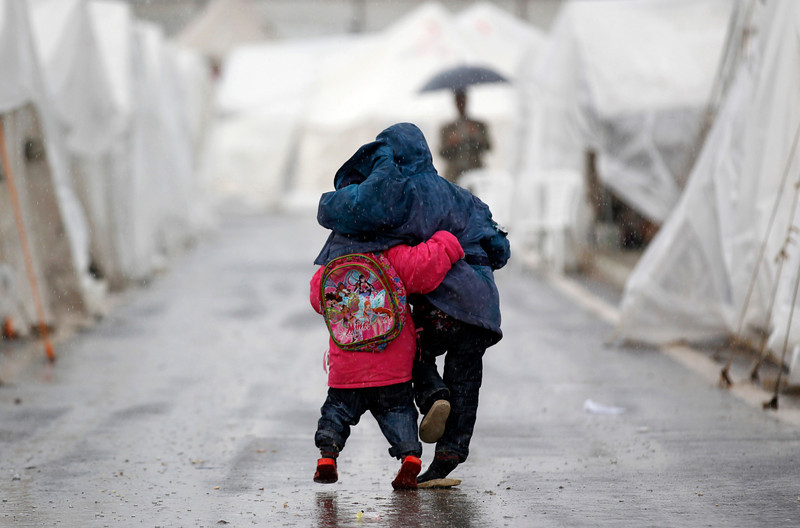
Two Syrian boys in the oynuyogun refugee camp on the Turkish-Syrian border (Photo: Reuters / Murad Sezer)

Two Syrian boys in the oynuyogun refugee camp on the Turkish-Syrian border (Photo: Reuters / Murad Sezer)

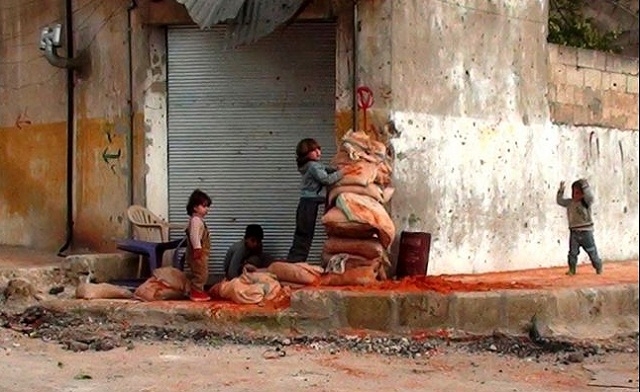
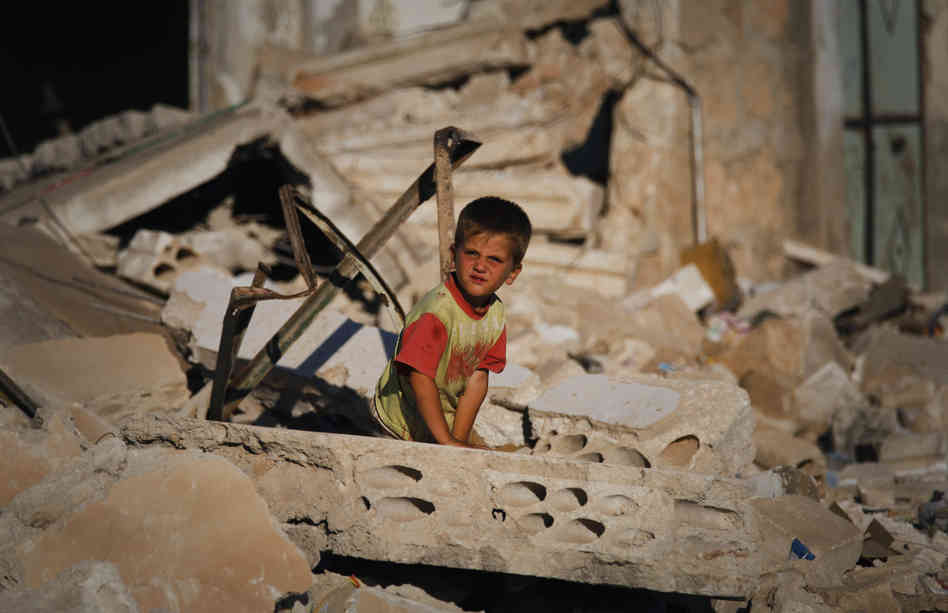
Even if you have not watched the videos of the alleged chemical weapons attack, it is not difficult to understand the intense desire to do something about what is happening to civilians in the Syrian conflict. Tens of thousands of Syrians are now dead, and it is increasingly difficult for many to continue to look away from that conflict. But the fact that the United Nations estimates that more than 100,000 people have died begs the question: why the current intense need to punish Syrian actors for these particular deaths? Violating Syria’s sovereignty in response to deaths from the chemical weapons attack without a UN mandate is an illegal act just as is a military intervention launched outside the UN in response to these other deaths. So, despite the international law violations committed by Syrian actors against civilians throughout the conflict, why is the United States contemplating violating another set of international laws in this instance but not the others? Why act in the name of nearly 2000 deaths from chemical weapons and not for the tens of thousands killed by other means? Continue reading

Posted in Syria | Tagged , | 4 Comments

Former ICC Chief Prosecutor Speaks out on Syria, Endorses Conditional Referral

(Photo: AP)

(Photo: AP)

For the most part, Luis Moreno-Ocampo has remained quiet about the work of his former employer, the International Criminal Court (ICC). But in the midst of ongoing debates about the utility and legality of military intervention in Syria, the vocal former Chief Prosecutor of the ICC decided to enter the fray.

In a Huffington Post op-ed, Moreno-Ocampo set out the argument that a United Nations Security Council referral of Syria to the ICC could represent a middle ground position between doing nothing and military intervention. Interestingly, Moreno-Ocampo avoided proselytizing the role of the ICC. Instead, he maintains that international criminal justice must be “integrated” with political negotiations – and any potential military intervention:

…to be an effective option for halting the crimes against humanity, the international justice path should be refined and improved. There should be a strategy integrating justice with military efforts and political negotiations, a strategy that was lacking in the past.

This represents a subtle but important softening in Moreno-Ocampo’s position towards the relationship between pursuing justice and negotiating peace. Previously, the former Prosecutor had been much more strident. For example, in a 2009 interview on how to resolve the conflict in Darfur, Moreno-Ocampo remarked: “We need negotiations, but if Bashir…is not the person to negotiate with. Mr. Bashir could not be an option for [negotiations on] Darfur. I believe negotiators have to learn how to adjust to the reality. The court is a reality.”

In his op-ed, Moreno-Ocampo also outlines four conditions for achieving a referral of Syria to the ICC: getting Russia on board; getting China on board; utilizing the temporal jurisdiction of the ICC to pressure the parties to end the war; and making sure that a referral specifies how any subsequent arrest warrants issued by the Court will be enforced.

Luis Moreno-Ocampo (Photo: Al Arabiya)

Luis Moreno-Ocampo (Photo: Al Arabiya)

The third condition is particularly interesting. Here’s what Moreno-Ocampo has to say:

Third, the temporal jurisdiction should be thoroughly discussed by UN Security Council members. They have options. They can request that ICC investigations start from the beginning of the Syria conflict or establish a deadline in the near future that will trigger the jurisdiction of the Court. Such a timeframe could provide an incentive to begin a different style of negotiations to end the conflict.

Should the conflict effectively stop before the deadline, the national leadership could discuss adequate ways to promote justice for the past. It will be a challenge for negotiators to include accountability as a part of the political agreement but it will be the only guarantee that the leadership are not involved in new crimes. Continue reading

Posted in International Criminal Court (ICC), Syria | Tagged , , , | 1 Comment

Kenya’s Withdrawal from the ICC – An Act in Vain?

(Photo: Reuters)

(Photo: Reuters)

Yesterday, Kenya’s Parliament voted in favour of a motion to withdraw from the International Criminal Court (ICC). In the wake of the vote, there has been some alarmist rhetoric about what Kenya’s move to withdraw from the Court means for the ICC. In yesterday’s post, I tried to dispel some of the concerns that the vote to withdraw would affect the ICC cases against Kenyan President Uhuru Kenyatta and William Ruto or that a Kenyan withdrawal would lead African states to leave the Court en masse.

But what does a potential withdrawal really mean for Kenya? Perhaps not as much as has generally been assumed. For starters, the motion does not mean that Kenya has already withdrawn from the ICC. Another bill to that effect will have to be introduced in Kenyan Parliament within the next 30 days. It will require a two-thirds majority to pass, a tall order for the Jubilee Alliance. It is far from guaranteed that such a bill will pass.

Furthermore, in a brilliant comment on the blog yesterday, Thomas Obel Hansen, an Assistant professor of international law at the United States International University in Nairobi, argued that “Parliament’s move raises more questions than it provides answers” and that it is far from guaranteed that Kenya will fully withdraw from the ICC. Obel Hansen’s comments are worth quoting in full:

First of all, it is important to point out that the motion passed was not the original one tabled in Parliament which you cite here, but an amended version, in which the sentence “further aware of a resolution of the National Assembly in the Tenth Parliament to repeal the International Crimes Act and to suspend any links, cooperation and assistance to the International Criminal Court” was deleted. This amendment, it was said during the debate, was adopted in order for Kenya not to defy its obligations towards the Court. So, on the one hand, many of the parliamentarians who took the floor yesterday said that their intention with the motion is to avoid that Kenyatta and Ruto stand trial in The Hague, but on the other hand, if this was really the intent it is surely curious that this amendment was included without much controversy (an a session that otherwise didn’t lack any drama).

(Photo: Reuters)

(Photo: Reuters)

Further, whereas the motion states that a bill will be introduced which will compel the Kenyan Government to withdraw from the Rome Statute, it is not clear that Parliament actually has the powers to do so. Kenya’s Treaty Making and Ratification Act 2012 makes it clear that it is the prerogative of the executive branch of government to initiate ratification as well as denunciation of international instruments, though Parliament must be consulted and can under certain circumstances block such decisions. So, if Parliament may only encourage the executive to initiate a withdrawal but cannot itself do so, there wouldn’t really be a need to repeat that message in an Act of Parliament to be adopted at a later stage. The motion would clearly suffice.

In contrast, if Parliament wanted to repeal the International Crimes Act (ICA), it could simply have done so by passing a bill, rather than passing a motion saying that it intends to do so within the next 30 days. Whether the ICA will be repealed will obviously depend on the outcome of the vote on such a bill, not the passing of yesterday’s motion. Continue reading

Posted in International Criminal Court (ICC), International Law, Justice, Kenya, Kenya and the ICC | Tagged , , | 10 Comments

The ICC and Kenya Parting Ways? What it Means and What it Doesn’t.

Kenyan-parliament-chairs

UPDATE: Kenyan Parliament has now approved a motion to withdraw from the ICC. A bill will be introduced to this effect in 30 days. Opposition MPs boycotted the vote. For a new post on whether the vote was in vain, see here.

By now, readers are likely well aware that Kenya’s Parliament is on the verge of voting on whether to withdraw from the International Criminal Court (ICC). This comes just days before the trial of William Ruto is set to begin in The Hague. Given the dominance of the Jubilee Alliance, which brought together Uhuru Kenyatta and Ruto (both of whom have been charged by the ICC for their alleged involvement in the 2007-08 post-election violence), it seems like a foregone conclusion that a motion to withdraw from the Court will pass. What is less clear is what that means for Kenya, the ICC, the relationship between the Court and African states, and the Kenyatta and Ruto cases.

Here is the motion being debated by Kenya’s Parliament:

That, aware that the Republic of Kenya promulgated a new Constitution on 27th August, 2010 which has fundamental changes in the circumstances relating to the governance of the Republic; aware that the Republic conducted its general elections on the 4th of March 2013 at which the President and Deputy President were lawfully elected in accordance with the Constitution of Kenya; further aware of a resolution of the National Assembly in the Tenth Parliament to repeal the International Crimes Act and to suspend any links, cooperation and assistance to the International Criminal Court ; this House resolves to introduce a Bill within the next thirty days to repeal the International Crimes Act (No 16 of 2008) and that the Government urgently undertakes measures to immediately withdraw from the Rome Statute of the International Criminal Court, adopted by the United Nations Diplomatic Conference of Plenipotentiaries on 17th July, 1998.

And here are a few quick thoughts on what I think it means and what I think it doesn’t.

Withdrawing won’t change the Kenyatta or Ruto cases

As the Court has made clear, regardless of whether or not Kenya withdraws, the ICC cases will go forward. Legally, withdrawing from the Rome Statute will have no effect on the trials of Ruto or Kenyatta. While the vote is a potentially potent political move, to quote Bill Pace, “Kenya gains no legal advantage by withdrawing from the ICC.” Importantly, a withdrawal would only be effective 12 months after any decision to withdraw was made.

(Photo: Reuters)

(Photo: Reuters)

Shooting themselves in the foot

To date, the ICC has not issued arrest warrants against either Ruto or Kenyatta. Instead they remain under summons to appear at ICC hearings. So far, they have cooperated with the Court. Critically, this has allowed statesmen, diplomats and heads of state to meet with Kenyatta in person. Had Kenyatta been indicted by the Court, meetings with individuals like the UK’s PM David Cameron would have been impossible.

If the vote to withdraw passes, the likelihood that the Court will issue arrest warrants increases dramatically. This is because Ruto and Kenyatta are very unlikely to continue to cooperate with a Court that their country has just voted to withdraw from. To do so would be confusing and look silly. With arrest warrants, however, Ruto and especially Kenyatta will join ranks with Omar al-Bashir as international pariahs whose diplomatic travel plans are highly limited. Continue reading

Posted in International Criminal Court (ICC), International Law, Justice, Kenya, Kenya and the ICC | Tagged , , | 24 Comments

Whose R2P Is It? The Responsibility to Protect Post-Syria

If you haven’t already, do take the time to check out the fantastic symposium on intervention in Syria over at Opinio Juris. You’ll find a host of provocative and timely posts on the subject, including great pieces by Stephanie CarvinJennifer Trahan and Peter Spiro, amongst others. Below is my contribution on the state and future of R2P in which I argue that there is an inherent and unreconciled tension between R2P as a political package of ideals and R2P as a potential legal doctrine. As a result, the current fight over R2P is not between R2P’s critics and its proponents but between its proponents themselves. R2P desperately needs conceptual consistency if it has any hope of emerging as an accepted norm in international relations. If it can’t achieve this, it risks meaning everything to everyone and therefore very little at all. And for every future Syria we will be doomed to debate what R2P is and what it isn’t at cross-purposes and ad nauseum. 

(Cartoon: Paresh)

(Cartoon: Paresh)

Who would have thought that the most pressing question regarding the Responsibility to Protect in 2013 would be: what is it? The answer to this question is as unclear today as any time in R2P’s political life. It might even be less clear.

In the midst of ongoing questions regarding the legality and legitimacy of direct military intervention in Syria, scholars and observers have passionately rehashed the main tenets of R2P, defending or castigating it depending on their political persuasions and which interventions they’ve cut their political teeth on. At the core of their debate is that pesky, simple question: what, exactly, is R2P?

The cacophony of reactions to plans of a potential military intervention in Syria by the US (perhaps with some coalition of powers) has been a déjà vu of the year 2000. There has been a lot of talk about reconciling international commitments to preserve and protect sovereignty with obligations to preserve and protect inalienable universal human rights. All of a sudden, the phrase “humanitarian intervention” is back with a vengeance. Echoing Richard Goldstone’s famous judgement regarding NATO’s intervention in Kosovo, many are suggesting that a military intervention without UN sanction being “illegal but legitimate”. Of course, it was out of this rather curious and, for many, frustrating proposition as well as the inability to reconcile universal human rights with the sovereign prerogatives of states, that the concept of R2P was born. Which begs the question: how did we get back to square one?

The early- to mid-2000s helped establish not one R2P but multiple R2Ps and these have never been sufficiently reconciled. There are two dominant and distinct versions of R2P at play. First is R2P as a package of norms. This package of norms represents liberal cosmopolitan convictions, namely that the commission of mass atrocities against individuals is of concern to all other human beings and that the sovereign inviability of states is conditioned upon their respect of individual rights and freedoms. R2P as a package of ideals is broadly appealing. NGOs, activists and key normative entrepreneurs like the UN Secretary General have been working tirelessly for over a decade to talk these norms into reality. But R2P in this context is also sometimes fuzzy. This has been made clear over the question of who can legitimately authorize R2P. If R2P is a set of principles, then it can be authorized outside of the UN Security Council. After all, the International Commission on Intervention and State Sovereignty (ICISS) stated that, in the situation where the Security Council is deadlocked, intervention by a coalition of states or a regional organization would be appropriate. Legally, however, this is highly dubious.

(Photo: AP)

(Photo: AP)

Distinct from R2P as a normative prescription for world politics is R2P as a legal doctrine. It is less fuzzy and rests primarily upon the two paragraphs in the World Summit Document, accepted by the UN General Assembly in 2005. With the experience of Iraq looming over UN member states, virtually none were inclined to support granting authority to invoke R2P outside the Security Council. And so they didn’t. Hence, whatever its merits, R2P can only lawfully be invoked through the Security Council.

R2P as law and R2P as a set of normative ideals are often in tension. But R2P is also something else. It has emerged as a language with its own vocabulary. The various reports and commissions, UN resolutions, nation state policies, and diplomatic statements are R2P’s lexicon. But as a language, R2P is a double-edged sword. All language can, after all, be used and abused. R2P as a vocabulary provides the invaluable discursive space within which any intervention is weighed against its ability to protect civilians. But it also allows its defenders and its critics to abuse the concept by pretending that R2P is something that it isn’t – or at least not yet. Continue reading

Posted in Responsibiltiy to Protect (R2P), Syria | 4 Comments