Today, at the Assembly of States Parties conference in The Hague, the issue of victim’s participation will take centre stage. We’re thus thrilled to have regular JiC contributor Chris Tenove join JiC today to share his remarkable research and analysis on the politics and realities of victim participation at the International Criminal Court. Chris is a doctoral candidate at the University of British Columbia. You can read more of Chris’ work here and here. Enjoy!

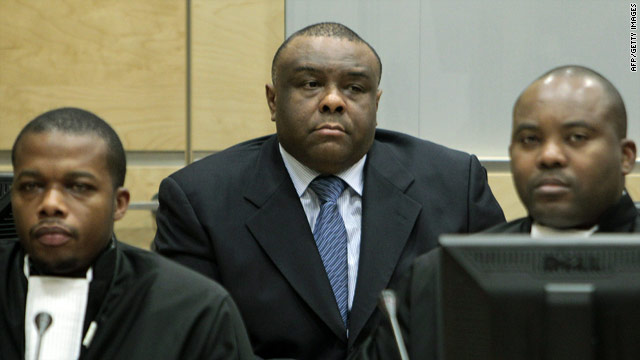
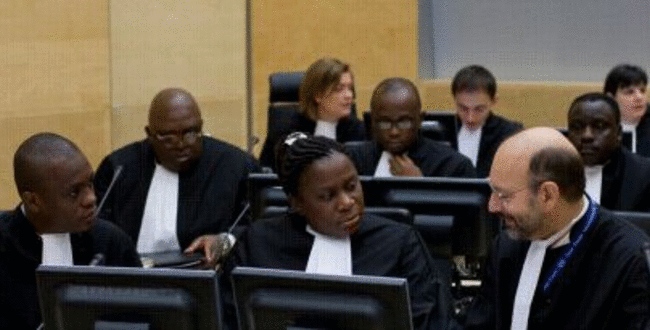
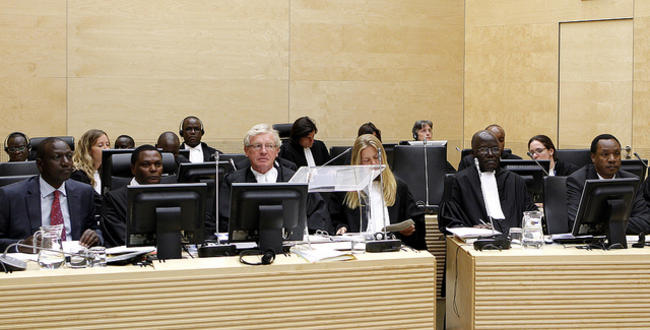
Witness testimony at the ICC
While the relationship between the International Criminal Court (ICC) and African states looms large over the current meeting of the Assembly of States Parties (ASP), victims’ issues will also receive a great deal of attention. Victims and affected communities will be the focus of a plenary discussion today and side-events will tackle victims’ legal participation, the external review of the Trust Fund for Victims, and justice for victims in Kenya. ASP members and civil society groups want the ICC to improve its policies on victims’ matters such as participation, reparations and engagement with affected communities. Academics, too, have been weighing in.
In this post I will mention a few of the issues raised in recent publications, focusing on concerns about victim participation. Academics and civil society organizations tend to want more extensive participation, which will likely require more resources. However, several legal officers from ASP member states have in recent months told me that their governments see victim participation as a money pit, capable of costing much and adding little to the Court’s core functions. To address these various concerns we need better assessments of the impact of victim participation.
The Rome Statute grants victims the right to be legal participants and not just witnesses for the prosecution or defense. While this opportunity exists in many civil law systems, it was not a part of the post-WW2 or ad hoc international criminal tribunals. Individuals apply by filling out a form that is reviewed by ICC staff and judges. Those who are accepted are put into groups – sometimes by their geographical area, sometimes by the crime they suffered – and assigned a lawyer who is paid by the Court. For instance, 129 victims were accepted as participants in the Lubanga trial and put in three groups, while over 5,000 victims have been accepted during the course of the Bemba trial and put in two groups. Victims’ lawyers can make opening and closing statements, question witnesses, invite victims themselves to give testimony, or participate in other ways, all according to the discretion of judges. The ICC’s approach is an experiment or, more accurately, a series of experiments. Different trial chambers have conducted victim participation in different ways, and the Registry has shifted its own policies over time and across situations.
Symbolism and Reality of Victim Participation
There is considerable scholarship on the origins and normative aims of victim participation, and a growing literature on its practice. In a JiC post last year I mentioned analyses by REDRESS, Hakan Friman, Christodoulos Kaoutzanis and the War Crimes Research Office. Here are a few recent additions:
Emily Haslam and Rod Edmunds explore in detail the different approaches that trial chambers have taken to grouping victims and assigning counsel. This practice of “common legal representation” is undoubtedly necessary, given the large numbers of victims and the inability for most to retain their own lawyers. But placing large numbers of victims in just a few groups can cause their different interests to be ignored, and individuals in large groups may have few opportunities to communicate with their representatives. Haslam and Edwards argue that the process may make the common legal representatives accountable to the judges and Registry rather than their ostensible clients, the victims. The authors fear that current developments will lead to victim participation that is “more symbolic than real”.
Sara Kendall and Sarah Nouwen make a similar argument in their philosophically-rich paper “Representational Practices at the International Criminal Court: The Gap between Juridified and Abstract Victimhood”. They argue that ICC staff and supporters invoke a generalized, de-politicized representation of victims to justify their actions. This rhetorical construct, “The Victims,” is used to buttress the Court’s authority. (Peter Dixon and I make a different but complementary argument about the importance of victims to the ICC’s authority in a recent paper.) While the ICC is portrayed as a court for “The Victims,” Kendall and Nouwen point out that vanishingly few victims get a chance to participate. Many victims in situation countries are ineligible to participate, since that opportunity is restricted to those affected by the specific crimes brought forward by the Office of the Prosecutor (OTP). Of those granted participant status, only a handful appear in trial proceedings. Kendall and Nouwen thus argue that, in practice, victim participation is narrow, limited, and offers little opportunity for agency.
(Photo: RNW)
Neither paper examines the impact that victim participation has on judicial processes. Mariana Pena and Gaelle Carayon begin to do so in their recent paper, “Is the ICC Making the Most of Victim Participation?” They note that victim participation can contribute to truth-finding in trials and give examples in which victims’ representatives added facts and legal arguments that had been left out by the prosecution and defense, either due to error or their focus on the guilt or innocence of the accused. But the authors see obstacles to meaningful participation, including the application process and the fact that victims have little input into OTP’s selection of crimes to be prosecuted. Pena and Carayon are particularly concerned that common legal representatives do not have sufficient opportunity to consult with victims and make arguments on their behalf. Unlike Kendall and Nouwen, who contrast participation and representation, they see representation as participation provided it is done well.
Similar arguments were made in a recent report by an independent panel of experts, facilitated by REDRESS and Amnesty International to evaluate the ICC’s approach to victim participation. Like Pena and Carayon, the panel proposed that the application process be streamlined and that the OTP expand its discussions with victims during preliminary examinations and better justify their selection of charges. To make representation meaningful rather than merely symbolic, they proposed that victims need more information about their right to participate, and more opportunity to be regularly consulted by their legal representatives. Continue reading →

 Dear readers,