
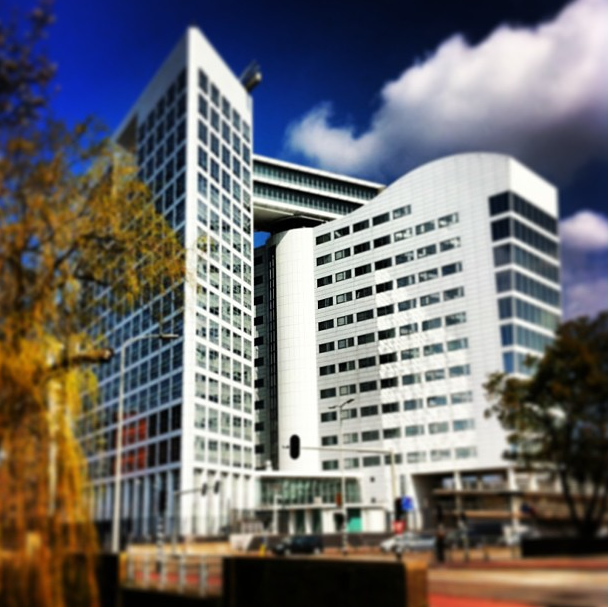
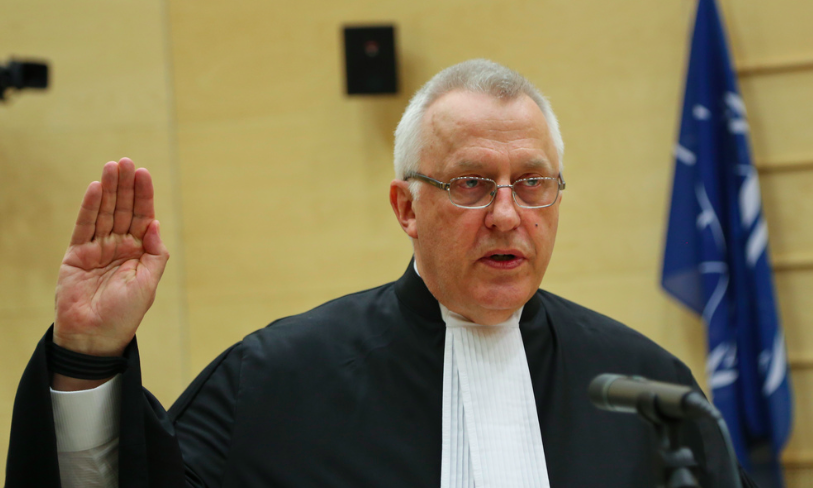
 As readers know, both Kevin Jon Heller and I have recently been rather vocal about the ICC’s website (see here and here). In a nutshell, given the potential reach and impact of the Court’s site, it is currently a disaster. So it came as very welcome news that the Court has taken the long-standing criticisms about its website seriously. The ICC has set up a survey where observers and users of the site can provide their thoughts and feedback. The survey can be found here. I highly encourage all readers to take the time to fill out the survey. Kudos to the Court and, especially, to new Registrar Herman von Hebel, for taking on the initiative!



-
Join 15K other subscribers
JiC on FB!
To keep the site going, please consider donating.

Follow Justice in Conflict on Twitter!
Tweets by MarkKerstenBlogroll
- A Contario
- Aidnography
- Communis Hostis Omnium
- Diane Marie Amann
- EJIL: Talk!
- Global Memo
- Global Transitional Justice
- Harry M. Rhea's International Criminal Justice Blog
- IFAIR
- International Justice – RNW
- International Justice Central
- IntLawGrrls
- Law and Security Strategy
- Lawyers for Justice in Libya
- LieberCode
- Making Sense of Sudan
- Notts Law PhD
- Open Society Justice Initiative
- Opinio Juris
- Peter Quayle
- PhD Studies in Human Rights
- Re-Thinking International Criminal Justice in Africa
- Rob Crilly
- Securing Rights
- Spreading the Jam
- Texas in Africa
- The American Exception
- The Disorder of Things
- The Duck of Minerva
- The International Jurist
- The Lex Specialis
- The Multilateralist
- The Rights' Future
- Turtle Bay
- UN Dispatch
- War and Law
- Wired Danger Room
- Wronging Rights
Top Posts & Pages
- Belém do Pará Comes to Canada: Lessons from Mexico on State Responsibility for Violence Against Women
- Obligations, up in the Air? Are ICC member-states obligated to arrest Netanyahu when he enters their airspace?
- Two years ago, Canada and its allies moved to bring Afghanistan to the ICJ over persecution of women and girls. Now what?
- If Israel won’t prosecute those responsible for the World Central Kitchen Attack, states whose citizens were killed must
- To Exhume or not to Exhume? The Decision is for Indigenous communities, and Indigenous communities alone, to make
- Ten Years Later: Seeking Justice for Wartime Atrocities in Sri Lanka
- Acquittals and the Battleground Over the ICC’s Legitimacy
- To Sudan, from Kenya: The case for prosecuting RSF atrocities in the courts of a regional neighbour
- It is not too late to change course: Why Britain is unwise permitting the US to use its military bases to execute Operation Epic Fury
- Yielding justice now, and in the future: The case for an independent investigative mechanisms for Sudan
Blog Stats
- 2,329,473 hits
Categories
- "Peace versus Justice" Debate
- #MeToo
- Academic Articles / Books
- Activism
- Ad hoc tribunals
- Admissibility
- Advocacy
- Afghanistan
- Africa
- Africa Group for Justice and Accountability (AGJA)
- Africa-ICC Expert Panel
- African Court on Human and Peoples’ Rights
- African Union (AU)
- Ahmad Al Mahdi Al Faqi (Abou Tourab)
- Ahmed Eldidi
- Al Hassan Ag Abdoul Aziz Ag Mohamed Ag Mahmoud
- al-Shabaab
- Al-Tuhamy Mohamed Khaled
- Alette Smeulers
- Amnesty
- Apartheid
- Apologies
- Arab League
- Arab Spring
- Archives
- Argentina
- Armenia
- Arms Deals
- Arms Trade
- Article 16
- Article 98
- Asia
- Assembly of States Parties
- Asset Recovery
- Asset Seizure
- Asylum-Seekers
- Australia
- Bahrain
- Balkans
- Bangladesh
- Belgium
- Benjamin Netanyahu
- Bilateral Immunity Agreements
- Black Lives Matter
- Boko Haram
- Books and Publications
- Bosco Ntaganda
- Bosnia and Herzegovina
- Botswana
- Brazil
- Burkina Faso
- Burma/Myanmar
- Burundi
- Cambodia
- Canada
- Canadian Partnership of International Justice
- Canadian War Crimes Program
- Central African Republic (CAR)
- Chad
- Chagos Islands
- Chambres Africaines Extraordinaires (CAE)
- Child Soldiers
- Children
- Chile
- China
- Climate Change
- Colombia
- Commission for International Justice and Accountability (CIJA)
- Commission of Inquiry
- Complementarity
- Conakry Stadium Massacre
- Conferences
- Conflict Resolution
- Corruption
- Coups
- Crime of Aggression
- Crimes against humanity
- Croatia
- Cultural Crimes
- Cybercimres
- Cyprus
- Czech Republic
- Czechoslovakia
- Darfur
- Defendants
- Defense Counsel
- Deferral
- Democratic Republic of Congo
- Denmark
- Deportation
- Deputy Prosecutor
- Deterrence
- Development
- Diplomatic Assurances
- Djibouti
- Dominic Ongwen ICC
- Donald Trump
- Donetsk
- Drones
- Ecocide
- Economic Community of West Africa (ECOWAS)
- Economics of Conflict
- Egypt
- Elections
- Enforced Disappearance
- Enforced Disapperances
- Environment
- Eritrea
- Ethnic Cleansing
- Europe
- European Court of Human Rights
- European Union (EU)
- Events
- Exile
- Extraordinary Chambers in the Courts of Cambodia (ECCC)
- Extraordinary Rendition
- Famine
- FARC
- Fascism
- Fatou Bensouda
- FIFA
- Film
- France
- Funding
- Gabon
- Gacaca
- Gambia
- Gaza
- Gender
- Genocide
- Georgia
- Germain Katanga
- Germany
- Ghana
- Gravity
- Greece
- Greenland
- Gregory Kersten
- Guantanamo Bay
- Guatemala
- Guest Posts
- Guinea
- Guinea Bissau
- Hamas
- Hissène Habré
- Historical Justice
- Holocaust
- Holodomor
- Honduras
- Human Rights
- Human Smuggling
- Human Trafficking
- Humanitarian Intervention
- Humour
- Hybrid Court for South Sudan
- Hybrid Courts
- Hybrid Justice Symposium
- Hybrid Tribunals
- ICC President
- ICC Prosecutor
- ICC Registry
- ICC Sanctions
- ICTY
- IDP
- Immigration
- Impartial and Independent Mechanism (IIIM)
- Indian Residential School System
- Indigenous Peoples
- Informers Up Close Symposium
- International and Organized Crimes Division of Kenya
- International Court of Justice
- International Court of Justice (ICJ)
- International Crimes Division (Uganda)
- International Criminal Court (ICC)
- International Criminal Justice
- International Criminal Tribunal for Rwanda (ICTR)
- International Humanitarian Law
- International Justice Ambassador
- International Justice Day
- International Law
- Interview
- Interviews
- Investigations
- Iran
- Iraq
- ISIS
- Islamic State
- Israel
- Italy
- Ivory Coast / Côte d'Ivoire
- Ivory Coast and the ICC
- Jean-Pierre Bemba
- JiC News
- Jordan (not Michael)
- Journalism
- Judges
- Justice
- Justice in Conflict
- Karim Khan
- Kenya
- Kenya and the ICC
- Kimberly Process
- Kosovo
- Kosovo Liberation Army (KLA)
- Kosovo Relocated Specialist Judicial Institution (KRSJI)
- Kosovo Specialist Chambers
- Kurdistan
- Kuwait
- Kwoyelo Trial
- Latin America
- Laurent Gbagbo
- Lawfare
- Lebanon
- Legacy
- lethal autonomous weapon systems
- Liberal Peace
- Liberia
- Libya
- Libya and International Justice Symposium
- Libya and the ICC
- Libyan National Army
- Lord's Resistance Army (LRA)
- Lugansk
- Luis Moreno-Ocampo
- Lustration
- Mahmoud al-Werfalli
- Malawi
- Malaysia
- Mali
- Mark Carney
- Mass Atrocity Monday
- Mauritania
- Memorialization
- Mexico
- Middle East
- Migration
- Missing Persons
- Money Laundering
- Mongolia
- Mozambique
- Myanmar
- Namibia
- NATO
- Nauru
- Nepal
- Next ICC Prosecutor
- Next Prosecutor Symposium
- Niger
- Nigeria
- North Korea
- Northern Ireland
- northern Uganda
- Norway
- Nuremberg
- Nuremberg Trials
- Ocampo Six
- Office of the Prosecutor
- Omar al-Bashir
- open source investigations
- Osama bin Laden
- Osama bin Laden and international law
- Osama Elmasry Njeem
- Outreach
- Pakistan
- Palestine
- Palestine and ICC Symposium
- Palestine and R2P Symposium
- Palestine and the ICC
- Paraguay
- Peace and Justice in Colombia Symposium
- Peace Negotiations
- Peace Processes
- Peacebuilding
- Peru
- Philippines
- Poland
- Policy Papers
- Politics of Memory
- Preliminary Examinations
- Prisoners of War
- Qatar
- Raila Odinga
- Ratko Mladic
- RCMP Structural Investigation
- Refugees
- Reparations
- Residential Schools
- Responsibiltiy to Protect (R2P)
- Restorative Justice
- Rethinking Peace and Justice Symposium
- Rodrigo Duterte
- Rohingya
- Rome Statute
- Rome Statute ratifications
- Russia
- Rwanda
- Rwandan Genocide
- Sanctions
- Saudi Arabia
- Senegal
- Sentencing
- Serbia
- Sexual and Gender Based Violence
- Sexual Violence
- Sierra Leone
- Simone Gbagbo
- Slobodan Milosevic
- Social and Economic Rights
- Social Media
- Somalia
- South Africa
- South America
- South Ossetia
- South Sudan
- Southern Sudan
- Spain
- Special African Chamber (CAE)
- Special Court for Sierra Leone
- Special Court for SIerra Leone (SCSL)
- Special Criminal Court
- Special Jurisdiction for Peace
- Special Tribunal for Lebanon
- Sport
- Sri Lanka
- Starvation
- State Sovereignty
- Structural Investigation
- Sudan
- Symposium
- Symposium Introduction – A JiC Symposium on Alette Smeulers' "Perpetrators of Mass Atrocities Terribly and Terrifyingly Normal?
- Syria
- Taliban
- Tanzania
- Teaching Tools
- Terrorism
- The Gambia
- The ICC’s Impact on National Justice Symposium
- The Life and Trials of Dominic Ongwen: A JiC Symposium
- The Netherlands
- The Tripoli Three (Tripoli3)
- Thomas Dyilo Lubanga
- Thomas Lubanga
- Torture
- Traditional Justice
- Traditional Justice Mechanisms
- Transitional Justice
- Transnational Criminal Law
- Transnational Organized Crime
- Transnational Repression
- Trials in Absentia
- Trust Fund for Victims
- Truth and Reconciliation Commissions
- Truth Commission
- Tunisia
- Turkey
- U.S. Immigration and Customs Enforcement (ICE)
- Uganda
- Uhuru Kenyatta
- Ukraine
- UN Commission of Inquiry on Sri Lanka
- UN Commission of Inquiry on Syria
- UN General Assembly
- UN Security Council
- Uncategorized
- United Kingdom
- United Nations
- United Nations General Assembly
- United States
- Universal Jurisdiction
- Universal Periodic Review (UPR)
- Uzbekistan
- Vatican
- Venezuela
- Victim Participation
- Vietnam
- Vladimir Putin
- War crimes
- Wayamo Foundation
- West Africa
- West Bank
- William Ruto
- Witnesses
- Yahya Jammeh
- Yazidi Genocide
- Yemen
- Yoav Gallant
- Zimbabwe

