
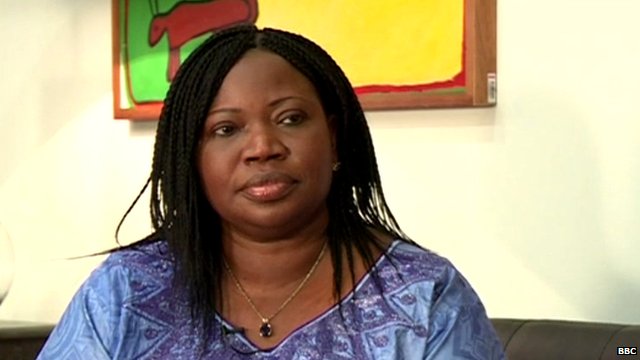
Photo: BBC
Fatou Bensouda, incoming Chief Prosecutor for the International Criminal Court, has put threatening war criminals and defiant states on notice. In several recent public statements she has directly addressed two of the Court’s most significant challenges: the accusation that the Court’s credibility suffers from a “pro-Western, anti-African” bias and the related issue of ensuring state cooperation and support, particularly in executing arrest warrants.
The argument that the ICC has (so far) unjustly targeted only African states and individuals is mostly based on misperception and has become a rhetorical tool of political elites to undermine the Court. Yes, all of the situations presently under the Court’s jurisdiction are from Africa. But as Bensouda and many others have pointed out, the Africa bias criticism is baseless for the following reasons.
African states wanted the ICC: Much of the strongest support for a permanent international criminal court in the Rome Treaty negotiations came from the Africa group. That support continued after Rome and African States Parties have a high level of ratification of the treaty (although, notably, a weak level of corresponding implementation legislation).
African states need the ICC: The empirical reality is that many situations of atrocities, and those that meet the (vague) “sufficient gravity” criteria for the Court to intervene, are in Africa. Moreover, many African states have a weak rule of law that fails to deter and respond to such atrocities, and so these situations justify the ICC’s intervention as a “court of last resort.” As Bensouda defended,
“The office of the prosecutor will go where the victims need us….The world increasingly understands the role of the court and Africa understood it from the start. As Africans we know that impunity is not an academic, abstract notion.”
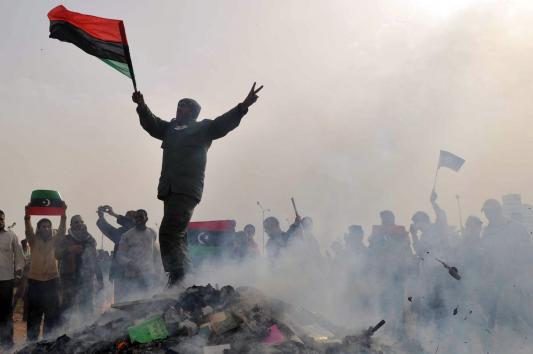
African states invited and welcomed the ICC: Three states self-referred their situations to the Court (Uganda, DRC, and the Central African Republic) and three states initially welcomed and have since exhibited a satisfactory pattern of cooperation with the Court (Cote d’Ivoire, Kenya, and Libya). Only Sudan remains resolutely defiant and given its head of state is among the accused this should prove, not disprove, the ICC’s credibility. Bensouda expressed frustration that cooperation from African states and civil society is
“not the story relayed in the media….(and) anti-ICC elements have been working very hard to discredit the Court and to lobby for non-support and they are doing this, unfortunately, with complete disregard for legal arguments.”
J’accuse! African war criminals don’t want the ICC: Accusing the ICC of a “pro-Western, anti-African” bias is a rhetorical political tool of the accused themselves. Accusing an international tribunal of pro-Western bias or victor’s justice is also not unique to the ICC – Goering, Milosevic, Taylor, etc. all rejected the tribunals they faced with this grandstanding challenge. The accused cannot defend their crimes, so they choose to undermine their accusers instead and invoke hyperbolic claims of racism and neo-colonialism. Continue reading






 Justice in Conflict