

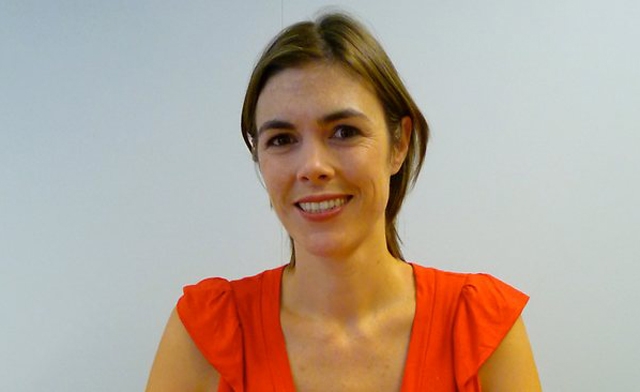
Former Nuremberg Tribunal Prosecutor, Ben Ferencz and new ICC Prosecutor, Fatou Bensouda (Photo: CICC/Solal Gaillard)
Fatou Bensouda has officially replaced Luis Moreno-Ocampo (who is off to FIFA!) as the Chief Prosecutor of the International Criminal Court. With dozens of writers and observers scrambling to publish their thoughts on what Bensouda’s tenure will and should focus on, I figured I would add a collection of thoughts as well.
African Savior of African-ICC Relations?
There is no point in denying that Bensouda became Prosecutor in large part because she is African. Very early in the process of selecting a new Prosecutor, the African Union (AU) insisted that an African had to be selected. The AU subsequently met little to no resistance and endorsed Bensouda for the job last year. With that said, Bensouda was, in many ways, the perfect candidate. Her resume is sterling, allowing her – and her supporters – to rightfully argue that her record made her an ideal Prosecutor. She thus satisfied both the merit-based and political criteria for the position. Moreover, the sense of continuity she brings to the position after being Moreno-Ocampo’s Deputy Prosecutor may turn out to be a subtle but crucial aspect of her selection.
Yet, it would be wrong to suggest that just because Bensouda is African she will immediately restore relations with those African states who have increasingly criticized the Court for its perceived bias in Africa. As I have argued elsewhere, I believe that the animosity of some African states toward the ICC is a result of the Court’s increasingly close relationship with key powers on the UN Security Council, a relationship that has reaffirmed rather than transcended the global power asymmetries that African states have long sought to undermine and make more equal. It is not surprising that the most vociferous critiques of the Court have come in the wake of UN Security Council referrals of Sudan and Libya to the ICC (as well as the ICC’s investigations in Kenya, which the Prosecutor opened on his own volition). After all, who wouldn’t be disappointed and angered with a Court that appears more interested in catering to the interests of a powerful non-member state, the US, than the thirty-plus member states from Africa without whom the Court would quickly slip into irrelevance?
Of course, this doesn’t mean that the fact that Bensouda is African won’t have important implications. It will, especially in how the Court is perceived. Bensouda’s heritage will undoubtedly make it more awkward and difficult for members of the AU to say the Court is against Africa. After all, she is their selection!
Moreover, we are likely to see a diplomatic dance between the African Union and Bensouda for the next little while as African states get a feel for her and the direction she intends to take the Court. Rather remarkably, Bensouda was invited to the African Union summit in July, already indicating a level of engagement that was impossible in the last years of Moreno-Ocampo’s tenure.
In short, there is an opportunity to improve relations between the Court and African states, but Bensouda shouldn’t be seen as a silver bullet in this context. Whether the relationship is truly transformed will depend on what Bensouda does – and not who she is or where she is from. As the chairman of the Nigerian national human rights commission, Chidi Odinkalu, exclaimed:
“Will she wave a magic wand and cure all the difficulties that exist at the ICC at the moment? No. Can she bring positive disposition over time to transforming the polluted atmosphere in which the institution has been operating in Africa? Absolutely.”
Stand up to the Security Council
One thing that Bensouda could do that I believe has the potential to transform relations between the ICC and African states, as well as boost the legitimacy of the Court, is to be tougher on the Security Council. The Council has instrumentalized the Court, nowhere so clearly as in the case of Libya. It remains a distinct possibility that the intervention in Libya will leave the ICC with a large bill, no one in the dock, and a debilitating controversy over ICC staff members.

Will the ICC, under Bensouda’s leadership, stand up to key powers on the UN Security Council?
Of course, standing up to the Security Council is no easy task. After all, the Court clearly gets a sense of legitimacy from gaining jurisdiction into non-member states. As I have written before, the Court is stuck between a rock and hard place in terms of its relationship to the Council. But being more vocal about its disappointment in the Council’s lack of political and material support for the Court’s mandate would be a healthy start. Some, including the former President of the ICC’s Assembly of States Parties, have even suggested that if the Council were to refer another situation to the Court such as Syria, the ICC might do well to simply say: “no thank you.”
On this matter, I have my doubts that the Office of the Prosecutor is ready to take a strong stance. Bensouda recently said that she views the ICC as a “tool” of the Responsibility to Protect (R2P) which, of course, can only be invoked by the UN Security Council.
Sexual and Gender Crimes
It has been widely suggested that investigating and prosecuting gender and sex-related crimes will be a major focus of Bensouda’s tenure. This would be a welcome development. Gender and sex crimes have largely escaped attention at the ICC. Earlier this year, she discussed her views on the matter: Continue reading






 Justice in Conflict