Drones for the ICC and Drones for Human Rights?

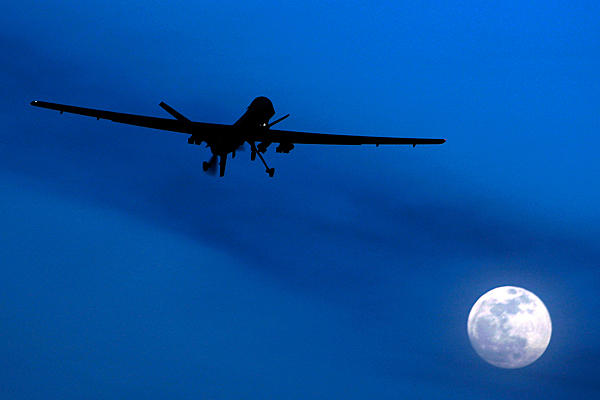
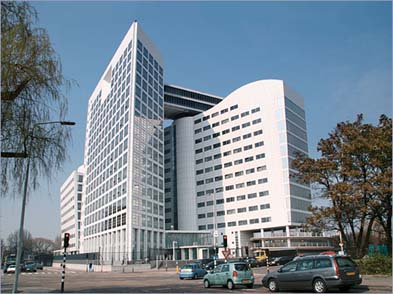
(Photo: Kirsty Wigglesworth/AP)

A recent thought-provoking and provocative op-ed in the New York Times has presented a serious challenge to those who view drones as nothing more than the evil extensions of secretive warfare. According to Andrew Stobo Sniderman and Mark Hanis, “[i]t’s time we used the revolution in military affairs to serve human rights advocacy.”

The use of drones to assassinate alleged terrorists in the Global War on Terror has elicited a heated debate on the ethics and legality of the extra-judicial killing of individuals by un-manned air crafts. Sniderman and Hanis don’t contest that the use of drones, particularly by the US, is legally and ethically controversial. But, they argue, we need to go beyond the myopic focus on drones as military hardware and consider how drones can be employed for good ends and, more specifically, the role drones could play in highlighting and responding to human rights violations. Using the case of Syria, Sniderman and Hanis argue the following:

“A drone would let us count demonstrators, gun barrels and pools of blood. And the evidence could be broadcast for a global audience, including diplomats at the United Nations and prosecutors at the International Criminal Court…

…We could record the repression in Syria with unprecedented precision and scope. The better the evidence, the clearer the crimes, the higher the likelihood that the world would become as outraged as it should be…

…Even if humanitarian drones are not used in Syria, they should assume their place in the arsenal of human rights advocates. It is a precedent worth setting, especially in situations where evidence of large-scale human rights violations is hard to come by. “

On first glance, the authors’ argument is persuasive. Heck, who doesn’t want better protection of human rights and who isn’t frustrated that atrocities often go completely ignored (here’s looking at you, DRC)?
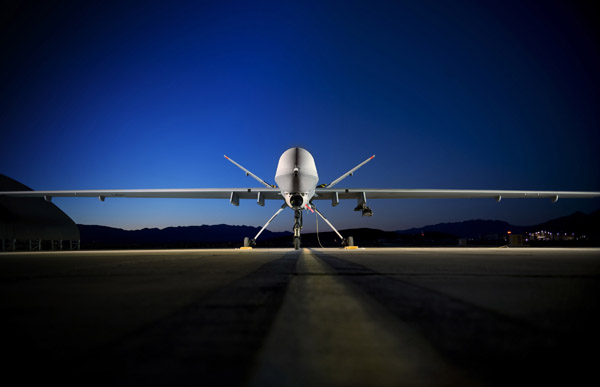
But in their argument, Sniderman and Hanis conflate two key issues which need to be distinguished and considered separately. The first, which I think most will agree with, is that having more accurate information and evidence of human rights violations is a desirable goal. The second is that drones are the answer to how to do this.

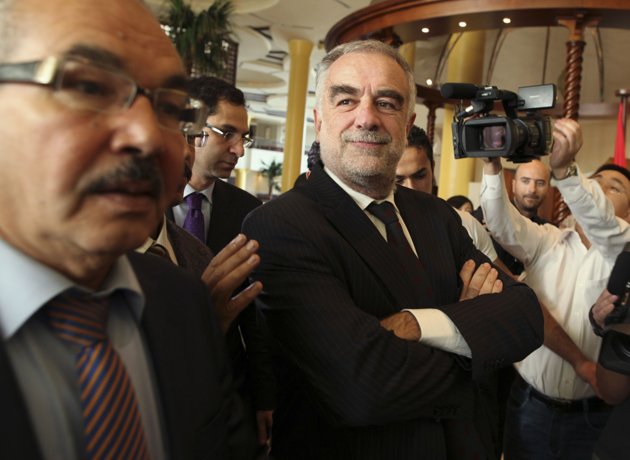
Could the International Criminal Court use drones to accumulate evidence of crimes against humanity, genocide and war crimes? It might be an appealing prospect. Consider, for example, the cases of Darfur and Libya where ICC investigators have had virtually no access. Drones could take detailed images of violations which could then be used to form the basis of arrest warrants. Sounds good, right? Continue reading
Posted in Drones, International Criminal Court (ICC), Justice | 10 Comments

Where in the World is Abdullah al-Senussi?

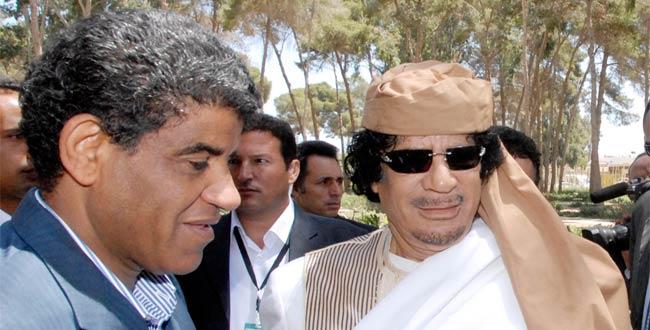
Abdullah al-Senussi and Muammar Gaddafi (Photo: ANP)

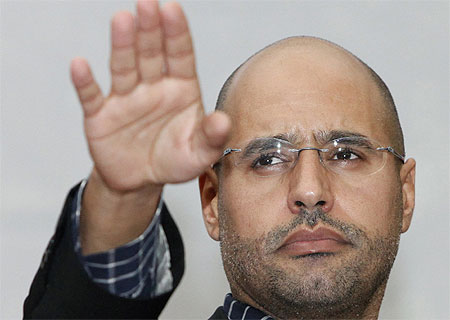
Over the past few months, the world has honed in on the fate of Saif al-Islam Gaddafi, the former heir apparent of Libya and one-time galavanting ‘playboy’ who now finds himself in almost complete seclusion after being detained in November 2011 by Libyan rebels. At the same time, international observers, the media and human rights groups have virtually ignored the whereabouts and fate of Abdullah al-Senussi, the other living member of the Tripoli Three – the individuals indicted by the International Criminal Court for alleged crimes committed while crushing the Libyan uprising.

The apparent disinterest surrounding Abdullah al-Senussi is only more precarious given his role in and knowledge of Gaddafi-era Libya. As a key confidant, the “right hand man”, the “eyes and ears” and Colonel Gaddafi’s brother-in-law, Senussi has a unique understanding on what made the Gaddafi regime tick.

Moreover, as the head of both the internal and external intelligence services under Colonel Gaddafi, Senussi is associated with, if not responsible for, some of the worst crimes of the Gaddafi regime. The bombing of UTA Flight 772 in 1989, the 1996 Abu Salim prison massacre and the violent repression of pro-democracy protests in the Libyan uprising are but a few of the more notorious acts in which Abdullah al-Senussi was deeply involved.

It is because of Senussi’s intimate knowledge of these crimes that the reputable international lawyer, Geoffrey Robertson, recently maintained that Senussi was the “crown jewel” of justice in Libya. Not only is Senussi associated with the crimes noted above but, with Colonel Muammar Gaddafi dead, Senussi may hold the keys to understanding the Lockerbie bombing, the Gaddafi regime’s funding of the Irish Republican Army, the cozy political, economic and intelligence relations between Western states and the Gaddafi regime and, just as importantly, where the bodies of the Gaddafi regime’s many victims lie.

The situation in Libya has had its moments of pure confusion and contradiction. With regards to Senussi, it was reported in November that he had been detained at his sister’s house in the south of Libya. After reports of his capture, there has been a deafening silence concerning Senussi. Indeed, it is not clear whether Senussi was, in fact, captured and then escaped, or whether he was ever captured in the first place. It is worth recalling headlines in August that declared that Saif al-Islam Gaddafi had been captured. Just hours later he was seen taking a joy-ride through the streets of Tripoli. Continue reading

Posted in Justice, Libya, Libya and the ICC, The Tripoli Three (Tripoli3) | Leave a comment

The ICC as a Network Actor

The International Criminal Court is cooperating with a large number of NGOs, civil society organisations as well as national and international institutions

Since the Rome Statute was surprisingly adopted by an overwhelming majority of the states present at the Rome Conference in 1998 (120 against 7 votes with 21 abstentions) the Court has time and again been described as a civil society creation. There are good reasons for this view as the Coalition for the International Criminal Court (CICC), a world-spanning coalition of 2,500 civil society organisations, was involved in the drafting process of the Rome Statute, in advocacy efforts for the Court and in the negotiations in Rome. The coalition is a unique network of diverse NGOs that come in different shapes and sizes, with different thematic foci, operating on national, regional or global levels.

The CICC is convened by the World Federalist Movement and includes heavyweights such as Amnesty International and Human Rights Watch. Its role in the creation of the Court, during negotiations at the Rome and Kampala Conferences, as well as in the Court’s day to day work has been comprehensively analysed in a recent Human Rights Quarterly article by Claude Welch Jr. and Ashley Watkins. The article shows convincingly how the cooperation between the CICC and the group of so-called ‘like-minded states’, who all pushed for a fair, efficient Court with an independent prosecutor, made the passing of the Rome Statute in its current form possible. The CICC also played a role during the Kampala Review Conference and during the election phases at the Court, pushing for the election of qualified candidates. The CICC’s role is just one example of how the ICC cooperates with, and is influenced by, networks on a regular basis.

Apart from the NGO roles described above, civil society organisations all over the world are of crucial importance to support the work of the Court. Again, often coordinated by the CICC, NGOs lobby for the arrest of individuals wanted by the ICC. The best case to illustrate this is probably the civil society pressure brought on governments that consider inviting the ICC indicted President of Sudan, Omar al-Bashir. Court action filed by the South African civil society led to a ruling by a South African Magistrate that South Africa would be violating its constitution by not arresting Bashir if he set foot on South African soil. Prior to that point, South Africa had been ambiguous in its statement whether it would respect its obligations towards the ICC and arrest Bashir. The decision by the Magistrate made a key African state fall in line with its legal obligations vis-à-vis the ICC and Bashir has not visited South Africa since. Recently, he skipped the 100 year African National Congress anniversary due to domestic obligations. Continue reading

Posted in International Criminal Court (ICC) | Leave a comment

The Politics of Trust: Diplomatic Assurances

Another fascinating guest post by Andrew Jillions on the politics of trust in the context of the highly controversial, yet widespread, practice of granting diplomatic assurances. Enjoy!

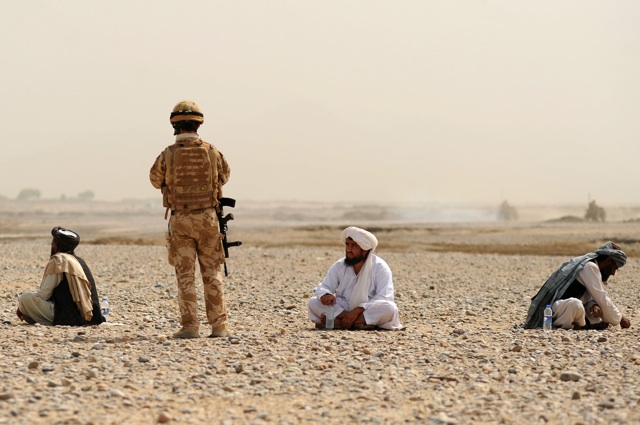
(Photo: DVIDS)

Diplomatic assurances and the politics of trust

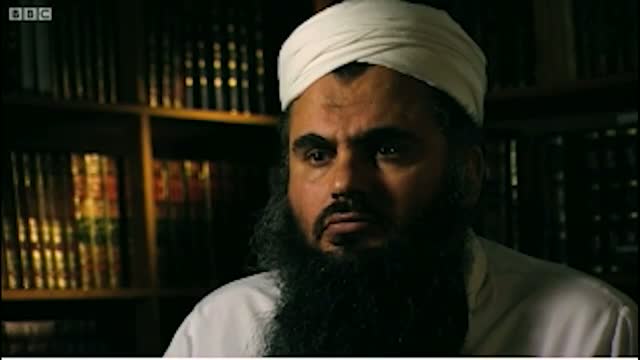
The recent decision preventing the UK from returning Abu Qatada to face trial in Jordan for terrorist related crimes has sparked a lot of discussion – especially in the popular presses – about how sovereignty simply doesn’t mean what it used to. Bad Foreign Men are being granted a privileged status over the Good British People, at the behest of Unelected European Judges.

Lost in this ridiculous narrative – a narrative that conveniently serves David Cameron’s larger purposes of reforming the European Court of Human Rights– is the potential it has to undermine the prohibition on torture. Crucially, the Court wasn’t worried that Abu Qatada would be tortured himself. In coming to this conclusion, the ECHR gave a greenlight to the institutionalization of ‘diplomatic assurances’ (DAs). For anyone concerned about the force of the norms prohibiting torture, this is a worrying legacy. Quite the contrary to Cameron’s Daily Mail spin, this strengthens states’ already expansive powers to decide on security deportations and, crucially, gives states the power to legitimately contract around the principle of non-refoulement.

Re-balancing rights and security

The idea behind diplomatic assurances is that some states – such as Jordan, in the Abu Qatada case – are known to be less than fully compliant with their international human rights obligations. At various times, the governments of these states have been accused of torture and other ill-treatment. States’ right to return an individual to their country of origin or to respond to an extradition request is not absolute; the question that needs to be asked and answered before the removal can take place is whether the individual is or will be at high risk of having their fundamental human rights violated once they’ve been removed. This is the principle of non-refoulement, which prohibits return when there is a clear threat of torture and other serious violations of basic human rights.

The argument is that this creates a direct tension between human rights and national security norms. Non-refoulement restricts that most basic sovereign power to decide who is allowed in and who has to get out. When you place counter-terrorism at the centre of the policy-making universe these restrictions on border security look immediately obsolete, a cosmopolitan throwback that gives terrorists far too much legal power. Non-refoulement becomes a weapon primed for ‘lawfare’. If human rights obligations present a barrier to effective action, diplomatic assurances are a possible doorway through this barrier.

There has always been a place for diplomatic assurances in exceptional circumstances. The current debates are over whether they have a place in everyday deportation practices. Rather than challenging the principle of non-refoulement head on, diplomatic assurances imply that both human rights and security objectives can be met. The key security objectives – getting rid of security risks or undesirables – could be achieved by signing bilateral memorandums of understanding (MOUs) where states that have a history of abuse agree not to torture. MOUs ‘enhance’ diplomatic assurance by getting rid of the need to get case-by-case assurances; having that background, principled agreement that anyone sent now or in the future will not be subjected to torture is seen to be enough. This one promise averts all future risks of individuals being tortured. Everyone goes home a winner.


Abu Qatata (Photo: BBC)

Trust and trustworthiness

This happy state of affairs has some gaps in it. For a start, as Amnesty International points out, the very fact that a country feels the need for diplomatic assurances shows that they are worried about the risks that individual would face on return. The UK does not use or seek diplomatic assurances in sending people back to Australia or Brazil. So why go through the rigmarole of getting diplomatic assurances from Libya, Algeria, or Jordan?

The obvious answer is that the individuals in question are seen to face a serious risk. In the normal course of events, the obligations of non-refoulement should be triggered. Which is where the government wants to be able to say: ‘but we have a diplomatic assurance that negates our initial suspicions!’ Which in turn begs the questions: what about the ‘promises’ these states have made under treaty and customary international law? How much weight can a promise from a serial human rights abuser carry?

The answer – at least the answer that the courts have accepted – seems to be: rather a lot. Continue reading

Posted in Diplomatic Assurances, Human Rights, Jordan (not Michael), Lawfare, Libya, Pakistan, Terrorism, United Kingdom | 1 Comment

ICC Charges Four of Six Suspects in Kenya Situation

Protester cornered by Kenyan security forces during post-election violence (Uriel Sinai/Getty Images)

Yesterday, on the 23rd of January 2012, the Pre-Trial Chamber II (PTC II) of the International Criminal Court (ICC) issued its long awaited decisions (here and here) whether or not it would confirm the Prosecutor’s charges against six suspects allegedly involved in post-election violence in Kenya in 2007/2008.

The contested elections had led to violence directed by supporters of the two major parties against the perceived supporters of the other party, as well as police violence during protests. Violence was targeted along ethnic lines and was particularly bad in the densely populated Rift Valley Province of Kenya. In total, 1200 people were killed, 900 were sexually assaulted and thousands are still living in camps having been displaced by the violence. In the end, a compromise for a Government of National Unity was struck between incumbent President Kibaki’s Party of National Unity (PNU) and the Orange Democratic Movement (ODM) of current Prime Minister Raila Odinga. Despite the compromise found after the post-election violence, fears are still running high for the upcoming 2012 elections. The UN has warned about possible post-election violence in Kenya and the BBC has reported weapons purchases in Rift Valley Province.

Against this background hopes and fears attached to the ICC decision yesterday were running high. Indeed, the ICC homepage crashed due to high traffic after the decision was announced. Sceptics feared that an ICC decision might lead to further tensions and renewed violence in Kenya while optimists hoped for a deterrent effect of the ICC investigations in Kenya. Against this delicate political background the ICC has performed pretty well to date. The Office of the Prosecutor (OTP) had announced investigations in two cases, covering the crimes committed by both sides, and seeking to charge three people on each side.

The suspects included William Ruto, a suspended government minister and the deputy party leader of the ODM, Joshua Sang, the head of operations at a radio station promoting violence during the crisis, as well as Henry Kosgey, Member of Parliament and ODM Chairman on the side of the ODM. On the side of the President’s party, the OTP named Francis Muthaura, the head of the Kenyan civil service as well as Secretary to the cabinet, Uhuru Muigai Kenyatta, current deputy prime minister and minister for finance, and Mohammed Hussein Ali, the chief executive of the postal corporation.

Post-election violence in Kenya

It was a wise move by the OTP to make sure that both sides were charged equally against the current political background. Indeed, Kenya is one of the few cases before the ICC in which both sides of a situation are seen to be investigated equally. This may be a result of the fact that the OTP is conducting its investigations in Kenya in propio motu, meaning the Prosecutor himself decided to take up investigations. In cases in which the government refers a situation to the ICC, the Prosecutor has often been criticized for going too soft on the government in order to ensure cooperation. Continue reading

Posted in Crimes against humanity, Deterrence, Elections, International Criminal Court (ICC), Kenya, Ocampo Six | Tagged , , , , , , , , , , , , , , , , , | 2 Comments

Libya set to Try Saif? Not so Fast

Saif al Islam trialSay what?

It was fitting that news and commentary on justice in Libya was thoroughly confusing today. The conflict in Libya and the post-Gaddafi era have been rife with contradictory storylines: Saif al-Islam Gaddafi was captured. Wait, he’s touring Tripoli! Abdullah al-Senussi has been detained in the south of the country, but we haven’t heard or seen from him since (he is almost certainly not in Libya). International Criminal Court Prosecutor Luis Moreno-Ocampo says Libya can try Saif and Senussi but the Pre-Trial Chamber says ‘hold your horses!’

In short, the narratives emerging from Libya as they pertain to the ICC have been anything but coherent. Even for the most keen observers and commentators, it has been tough to keep track of and distinguish between what was information and what was mis-information.

Today was no different. Reuters first quoted interim Libyan Justice Minister, Ali Khalifa Ashur as saying the ICC’s Pre-Trial Chamber had decided it would respect Libya’s desire to try Saif. Within the hour, other agencies declared that judges at the ICC had done no such thing. A basic search for “Libya + ICC” reveals a Google News mess: a slew of articles with contradictory headlines, some referencing the original Reuters article, others citing the updated news that the ICC hasn’t ruled yet.

In the midst of the confusion, the ICC was forced to clarify that it had not, in fact, ruled on whether it had accepted Libya’s application to try Saif domestically. Yet the ICC hasn’t helped make things much clearer during this process. Readers will recall the confusion that set in when Prosecutor Moreno-Ocampo suggested that Libya could try Saif and Senussi, only to be rebuked by the Pre-Trial Chamber.

Ocampo in Libya

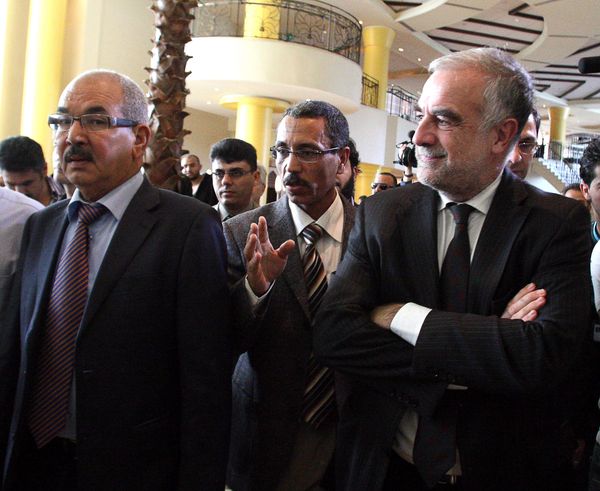
Libya's interim justice minister, Mohammed Alagi, left, ICC chief prosecutor Luis Moreno-Ocampo in Tripoli last November (Photo: Sabri Elmhedwi / EPA)

Last week, Libya’s National Transitional Council (NTC) was due to inform the Pre-Trial Chamber of its plans to try Saif. Instead, it applied for a three-week extension – until the 31st of January. The Pre-Trial Chamber ruled that it could have until today, January 23rd. The basis on which the Pre-Trial Chamber ruled is anyone’s guess. It was not clear in its judgement how it came to its decision or why. Continue reading

Posted in Libya, Libya and the ICC, Outreach, The Tripoli Three (Tripoli3), UN Security Council | 3 Comments

How you get to Justice in Conflict

A significant part of the traffic JiC gets comes from people using a variety of search engines. As we approach JiC’s one-year anniversary, I thought it would be a good time to share some of the funnier and sillier searches that lead readers to JiC as well as brief commentary on each. I’ve selected 10 but they are in no particular order.

1. why syria not libya – seriously, shouldn’t it be the other way around?

2. william a. schabas anti-american – I’m not sure he’d appreciate that!

3. justice is conflict – we didn’t say it!

4. somalia 1980’s pictures – something tells me they didn’t find neon-colours and tight pants.

5. john – someone got to JiC five times searching “john”. I wonder whether (hope, really) they had the name John in mind. In any case, weird.

6. where is gaddafi today 05/15/2011 – still alive.

7. criminal supermodel – My guess would be that they were looking for Naomi Campbell.

8. the middle man kersten – I like it!

9. nuremberg sunglasses – gotta have them if you’re going to be on trial for international crimes!

10. gaddafi sunglasses – he’s seen sunnier times, no doubt.

Thanks, as always, for your readership!

Posted in Humour, JiC News | 1 Comment

A Maverick Judge Goes on Trial: Spain’s Dark Chapter

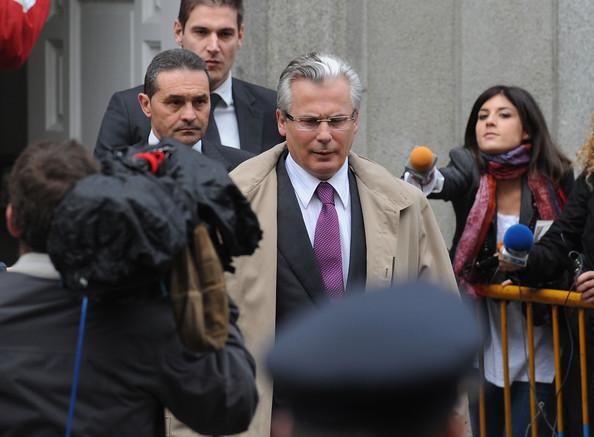
Baltasar Garzón is on trial in Madrid (Photo: Getty Images)

The famous, for some notorious and, for most, controversial, Spanish judge Baltasar Garzón is now on trial in Madrid. Garzón, most famous for issuing an arrest warrant for former Chilean dictator, Augusto Pinochet in 1999, faces three individual trials. The most dramatic of the charges brought against him suggests that Garzón exceeded his judicial boundaries in an attempt to investigate those responsible for torture, murder and enforced disappearances during the 1936-39 Spanish Civil War.

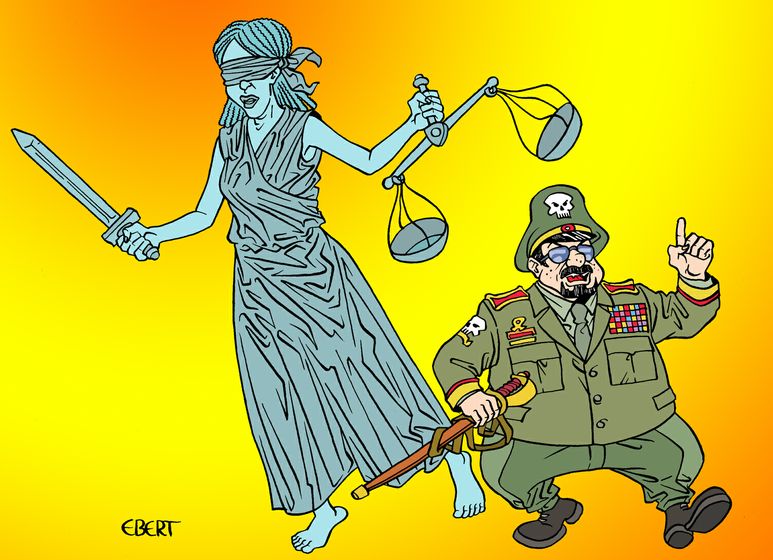
Garzón’s trial presents an opportunity to highlight a fascinating – and still under-examined – story in transitional justice, namely the remarkable resistance to over-turning the country’s amnesty laws and confronting a brutal, if inconvenient, chapter in Spanish history.

Background: From Pinochet to Franco  

Garzón, often described as a “crusading” or “maverick” judge is one of the best known and most dramatic international criminal justice entrepreneurs. Together with ICC Prosecutor Luis Moreno-Ocampo and perhaps Richard Goldstone, Garzón has likely contributed to more headlines and news stories than any other judge or lawyer in the field.

Over the last 15 years, Garzón used Spanish Courts to pursue, with incredible vitality, the doctrine of universal jurisdiction. Not only did he indict Pinochet, but also Osama bin Laden and other members of al Qaeda in 2003. He subsequently attempted to indict a number of senior Bush administration officials for committing torture in Guantánamo Bay and elsewhere in the world. His judicial activism and creativity is divisive, leading to both derision and praise for his work. Yet it was only when  Garzón pursued justice at home, in Spain, that he found himself in really hot water.

Garzón’s attempt to open investigations into Spanish Civil War atrocities cannot be understood outside of the context of the 1999 arrest warrant for Pinochet. The indictment of Pinochet unleashed a largely dormant movement to recover Spain’s political memory of the Spanish Civil War crimes. It broke with Spain’s ‘pact of silence’, a pact reinforced by a 1977 blanket amnesty law protecting Franco-era perpetrators of human rights violations from prosecution. In large part, this disruption of the ‘pact of silence’ stemmed from an obvious hypocrisy exposed by the Pinochet indictment. Spaniards were widely supportive of Garzón’s efforts to bring Pinochet to justice, so how could Spain seek accountability for Argentine crimes when they were unwilling to do the same for Spanish crimes?

To make a long story short, the indictment of Pinochet helped to create the space in which Spanish civil society organizations could open an impressive challenge to the ruling ‘pact of silence’. As Ellen Lutz and Kathryn Sikkink have argued, the action by Garzón against the former Chilean dictator “lifted psychological, political and juridical barriers to justice” in Spain. This was evidenced in 2007 by the passing of the Law on Historical Memory by the government of President José Luis Rodríguez Zapatero, whose grandfather was a victim of a Spanish Civil War shooting squad. Importantly, the law explicitly condemned Franco-era crimes. Thus, perhaps it was only a matter of time before a judicial campaign would be waged against the pact, with Spain’s amnesty laws in its cross-hairs.

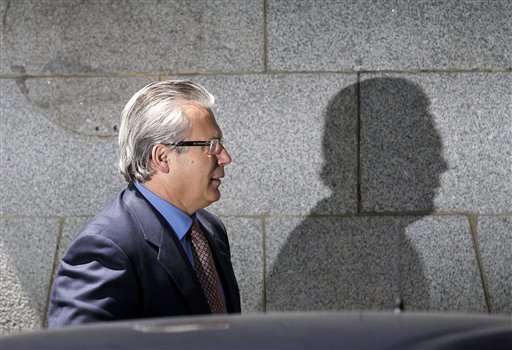
Garzón sought to shed light on Spain's shadowy past (Photo: AP)

Facing the Future – Confronting the Past  

The support for Pinochet’s indictment should not occlude the divisive nature of the debate in Spain regarding whether or not to investigate past crimes. There has always been, and there remains, a strong sense amongst some sections of Spanish society that any challenge to the country’s amnesties amounts to an unnecessary opening up of old wounds which could potentially destabilize the state. Further, as Encarnación has pointed out, confronting the past through exhumations and closing down memorials to Franco has not translated into unravelling the amnesties and there may be little mainstream political support for it.

Others disagree. The President of the Forum of Memory, for example, has argued that while

“[t]he ‘pact of silence’ was necessary for the transition to democracy…But it meant that our democracy was fundamentally flawed, resting on the impunity of Franco’s regime. It had to change.”

Continue reading

Posted in Amnesty, Chile, Crimes against humanity, Spain, Traditional Justice Mechanisms, Transitional Justice, Universal Jurisdiction | 4 Comments

The Power and Politics of Transitional Justice

Kara Apland joins JiC for a guest-post on transitional justice. Kara recently completed a Fulbright scholarship studying Human Rights at the London School of Economics and Political Science. She has worked with the Liberian Truth and Reconciliation Commission in Ghana and Liberia, and also completed the Arthur Liman Public Interest Fellowship at the International Center for Transitional Justice in New York. With this post, Kara offers a theoretical take on the politics of transitional justice, but one which should be read by practitioners and academics alike. Enjoy!

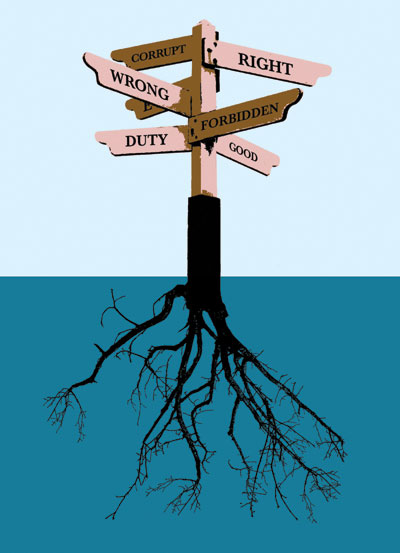
The Politics of Transitional Justice (Photo: Enrico Bertuccioli)

One of the overarching ideas this blog explores is the emerging trend of appealing to international criminal justice in (and in the wake of) conflict situations. The fact that “we no longer consider whether to pursue justice, but how and when” is part of the proliferation of the practice and perhaps more importantly the idea of transitional justice. The speed of TJ’s expansion is striking. It cycled through its celebratory phase, was consolidated as a field of knowledge and practice, and developed a body of critical literature within a decade of its formation as a concept. The tensions that exist within the “field” are also striking; transitional justice often seeks to balance conflicting ideas such as peace and justice, the international and the local, retribution and restoration, law and politics. As a field of knowledge it draws upon competing and conflicting disciplines and as a field of practice it attempts to apply unified narratives to a range of local experiences.

Christine Bell questions these contradictions. She argues that “Transitional justice does not constitute a coherent ‘field’ but rather is a label or cloak that aims to rationalize a set of diverse bargains in relation to the past as an integrated endeavour.” For Bell, transitional justice encompasses three separate projects:

“an ongoing battle against impunity rooted in human rights discourse; a set of conflict resolution techniques related to constitution making; and a tool for international state-building in the aftermath of mass atrocity.”

Yet within the language and practice of transitional justice these three distinct projects are often combined, and sometimes confused. Instead of focusing on the incoherence of TJ as a field of knowledge and practice, I suggest we ask: what has brought these seemingly contradictory ideas together into a discipline? What is TJ? Why has it gained such prominence in the past two decades? What can it tell us about international politics and the pursuit of global/local justice?

Consider the following definitions:

  1. According to Ruti Teitel, who has been credited with first coining the concept, “Transitional justice can be defined as the conception of justice associated with periods of political change, characterized by legal responses to confront the wrongdoings of repressive predecessor regimes.”
  1. For Bell, “Transitional justice appears to be an established field of scholarship connected to a field of practice on how to deal with past human rights abuses in societies in transition.”
  1. Finally, the International Center for Transitional Justice defines transitional justice in terms of the range of responses that have come to constitute TJ as a field of practice; “Transitional justice refers to the set of judicial and non-judicial measures that have been implemented by different countries in order to redress the legacies of massive human rights abuses. These measures include criminal prosecutions, truth commissions, reparations programmes, and various kinds of institutional reforms”.

Most definitions of TJ include this language of “responding to” or “dealing with” past atrocities. In its clearest formation, knowledge and practice that falls within the “field” of transitional justice is unified as a response to a single problem: how to address past human rights abuses in the context of a shift in political order (political transition). This construction is backward looking and positions TJ as a neutral force with a moral purpose. Indeed much of the literature in the field describes and debates transitional justice approaches and their association with moral principles through which transitional justice “deals with” the past, namely: truth, justice reconciliation, memory, accountability. The degree to which these values are means to an (undefined) end, or ends in themselves remains unclear. The question lingering beyond the definition is: what is justice, and perhaps more importantly in a burgeoning democracy, who decides? In this sense, perhaps transitional justice is more aptly characterized as a question and the range of knowledge and practices that may be draw upon to respond to it. Continue reading

Posted in Traditional Justice Mechanisms, Transitional Justice | 2 Comments

Trying Saif, Senussi in Libya: Why is Moreno-Ocampo so Lenient?

ICC Prosecutor Luis Moreno-Ocampo in Tripoli (Photo: Mohammed Salem / Reuters)

I recently had the opportunity to attend a seminar on the International Criminal Court and complementarity in Libya, held by Leiden’s esteemed professor of  international law, Carsten Stahn. The seminar was organized by Jens Meierhenrich and was also attended by international relations and international criminal justice scholar Kirsten Ainley. Once the (excellent) presentation was over, we got into a conversation about ICC Prosecutor Luis Moreno-Ocampo’s leniency towards Libya’s insistence on trying Saif al-Islam Gaddafi and Abdullah al-Senussi. This post is an attempt to think through some of the possible explanations for Moreno-Ocampo’s complacent attitude.

The Background

Following the arrest of Saif al-Islam Gaddafi and (false?) reports that al-Senussi had been detained, there was an impassioned debate about where they would be put on trial: in Libya or at the ICC. A third option, supported by the Office of the Prosecutor and number of observers, was for the ICC to hold an ‘in situ’ trial in Libya, but this was apparently nixed by Libyan authorities. It quickly became clear that Saif would be tried in Libya, by Libyans.

During a visit to Tripoli to talk with the Libyan National Transitional Council, Moreno-Ocampo conceded that Libya could and would try Saif:

“The standard of the ICC is that it has to be a judicial process that is not organised to shield the suspect… and I respect that it’s important for the cases to be tried in Libya… and I am not competing for the case.”

It was an odd and, for some, frustrating statement for a number of reasons. One, it isn’t in the powers of the Prosecutor to decide. As many commentators have noted – and as the ICC’s Pre-Trial Chamber I has clarified – if Saif was to be tried domestically, Libya would have to file a complementarity challenge with the Court. Once the ICC’s Pre-Trial Chamber has approved the opening of an investigation, let alone issued arrest warrants, it isn’t the prerogative of the Prosecutor to decide where and when a trial can take place.

Second, the statement was quite out of character for Moreno-Ocampo. He has never so publicly – and obviously – expressed a desire to “return” a case. It would be unthinkable for Moreno-Ocampo to even entertain the possibility of having Sudanese President, Omar al-Bashir, against whom Moreno-Ocampo has had something of a personal crusade, put on trial in Sudan. Moreno-Ocampo also didn’t express much, if any interest, in having hearings in Kenya for the ‘Ocampo Six’. In sharp contrast, this is exactly what Moreno-Ocampo did in the case of Saif’s trial – much to the chagrin of those skeptical that Libya’s judiciary is sufficiently developed to take on the case, and wary of Saif meeting a fate similar to that of his father.

Here are a four possible reasons why Moreno-Ocampo chose to throw his support, at least nominally, behind a Libyan trial. Of course, some may be more persuasive than others and they are in no particular order.

1. Playing its Part in History: The ICC and the Arab Spring

It could be that Moreno-Ocampo sees himself and the ICC as having a starring role in Libya’s transition and consequently the Arab Spring more broadly. Who wouldn’t want a little bit of that star-dust?

As a result, it is possible that Moreno-Ocampo sees it in his purview to constantly and consistently support the aims of democratic, transitional forces in Libya – in this case, quite clearly, a domestic trial. Given that he will be vacating his office at the ICC within months, it is also possible that Moreno-Ocampo sees justice served in Libya as part of his legacy and believes that trying Saif in Libya is simply the right thing to do. Continue reading

Posted in Human Rights, ICC Prosecutor, International Criminal Court (ICC), Libya, Libya and the ICC, The Tripoli Three (Tripoli3) | Leave a comment