
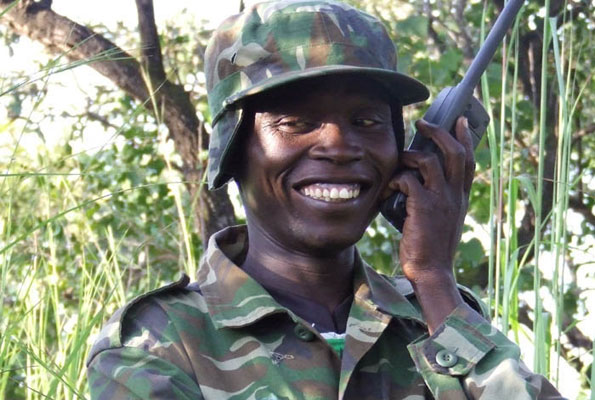
Thomas Kwoyelo when he was still with the LRA (Monitor)
Last summer Justice in Conflict regularly reported on the trial of former LRA Commander Thomas Kwoyelo. After being arrested by the Uganda People’s Defence Forces (UPDF) in the Democratic Republic of Congo (DRC) in 2009, the Ugandan Department of Public Prosecutions (DPP) decided to charge Kwoyelo with war crimes under the Geneva Conventions and with crimes under national law.
The trial received considerable national and international attention as it was the first case of the newly created International Crimes Division (ICD) of the Ugandan High Court. The ICD had been founded in reaction to questions of accountability that arose during the Juba peace talks between the Government of Uganda (GoU) and the LRA. Meanwhile the Ugandan Parliament has passed the International Criminal Court (ICC) Act, which allows the ICD to prosecute Rome Statute crimes on the domestic level.
In a nutshell, the ICD referred the Kwoyelo case to the Constitutional Court when Kwoyelo’s defence lawyers protested that Kwoyelo had been denied amnesty under the Amnesty Act. In their view, this constituted a violation of equal treatment under the Ugandan Constitution. The Constitutional Court decided in late September 2011 that Kwoyelo should be eligible for amnesty and ordered the ICD to cease the case against him.
Even though the case was stopped, Kwoyelo remained in detention. He then decided to sue the GoU for illegal detention and petitioned the Ugandan High Court for amnesty on 23rd of November 2011. The High Court indeed ruled that Thomas Kwoyelo should be given amnesty and be set free. The Department of Public Prosecutions and the Amnesty Commission are the two competent institutions in this case and decided to meet to consult the Kwoyelo case after the High Court ruling. In early February the Department of Public Prosecutions again denied amnesty to Thomas Kwoyelo, citing that there can be no amnesty for charges of war crimes. Thomas Kwoyelo thus remains imprisoned in Luzira Prison in Kampala to date.
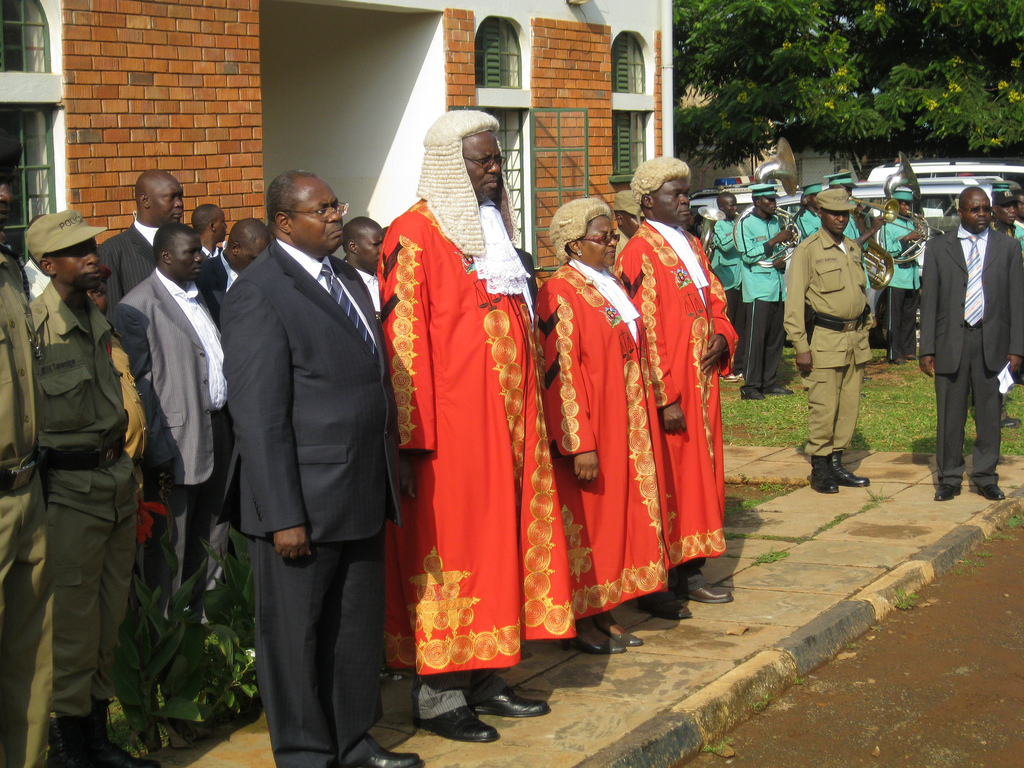
The judges of the ICD in charge of the Kwoyelo case (Justice and Reconciliation Project)
There are several conclusions that can be drawn out of the way the first domestic war crimes trial in Uganda developed. First and foremost, the ongoing back and forth concerning Thomas Kwoyelo’s amnesty again underlines that Uganda is at the crossroads with transitional justice. The actions of the DPP hint at a re-orientation towards more accountability and less amnesty in the future. The DPP has made that clear by repeatedly denying amnesty to Kwoyelo, despite court orders, and by announcing that it has prepared additional cases against former LRA rebels that it will pursue should Kwoyelo be found guilty. As far as I am aware there is no explicit government position on how amnesty and prosecution should relate to each other in the future, and the lack of clarity might well spark fears and unrest among LRA returnees as I have described in a piece last summer. Continue reading






 Justice in Conflict