
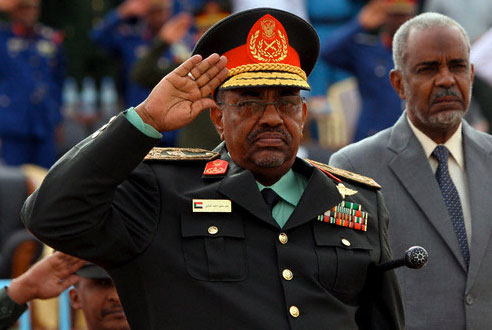
President Omar al-Bashir was indicted by the Kenyan High Court on Monday, 28th November 2011
Reuters was amongst the first to report that the Kenyan High Court had issued a domestic arrest warrant against the Sudanese President Omar al-Bashir on Monday, November 28. Bashir was the first head of state indicted by the International Criminal Court for crimes committed under his command responsibility during the Darfur conflict in the western part of Sudan. The ICC has issued two arrest warrants against him: one for war crimes and crimes against humanity, issued in March 2009, and a second for the crime of genocide, issued in July 2010.
Despite the warrants the ICC has so far not been very successful in taking steps towards ensuring the presence of al-Bashir in a courtroom. Instead, the arrest warrants have led to a cat-and-mouse game between the Court and the indicted President.
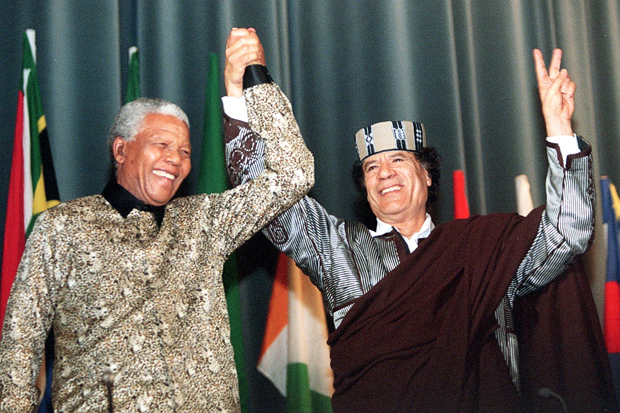
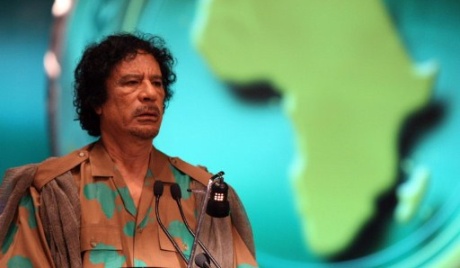
At the same time the warrants have been the initial trigger for a row that developed between the ICC and the African Union (AU), which claimed that the warrants hindered peace efforts in Darfur. In a decision – interestingly taken in Sirte and driven by Muammar al-Gaddafi – the AU decided not to cooperate with the ICC by ignoring the arrest warrant for President al-Bashir.
Against this backdrop, it is difficult to tell how successful the ICC arrest warrants were in isolating al-Bashir and increasing the pressure on Sudan to extradite him. Comparing the number of official visits Bashir conducted before and after the warrants, it is clear that his freedom of movement has been reduced. While Bashir for example regularly visited Kampala, the capital of neighboring Uganda, before the warrants were issued, he has not been to Kampala since and has skipped at least two conferences there, including the AU summit in 2010. The warrants even led to a diplomatic row between Uganda and Sudan when the Ugandan Foreign Minister stated that Bashir would be arrested if he came to Uganda in the run-up to a conference in July 2009. In the meantime, AU Member States like Botswana and South Africa have confirmed that they would stand true to their commitments arising from the Rome Statute and arrest al-Bashir despite the AU decision to the contrary.
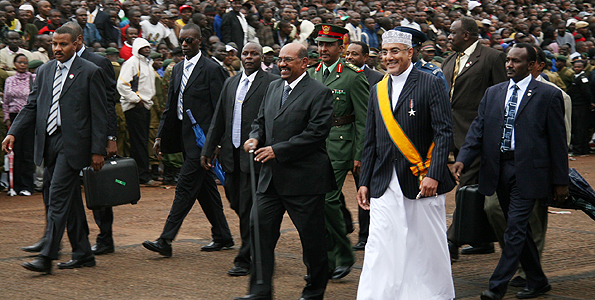
President al-Bashir arrives in Nairobi for the celebration of the new constitution in August 2010 (Photo: Stephen Mudiari)
Other ICC Member States like Chad, Malawi and Kenya have pointed out the conflicting obligations arising from the Rome Statute and the AU decision to justify their hosting of Bashir. Some other events have shown that it has become difficult for Bashir to travel freely, even to states not party to the ICC. In June 2011 al-Bashir cancelled a trip to Malaysia after massive civil society protests that prompted a cabinet meeting of the Malaysian government, discussing the invitation.
During a trip to China in summer 2011 al-Bashir’s plane had to return to Teheran, delaying the visit by a day, because Turkmenistan and Tajikistan had apparently not conceded overflight permissions. Other sources say Bashir was afraid of a plot to intercept his plane.
Against the background of this tug-of-war between supporters and critics of the ICC arrest warrants against Bashir, the recent ruling of the Kenyan High Court is an important development. First, it shows that the rift between supporters and critics does not only run through the AU, but has also emerged between parts of civil society and some governments in the Member States themselves. Continue reading









 Justice in Conflict