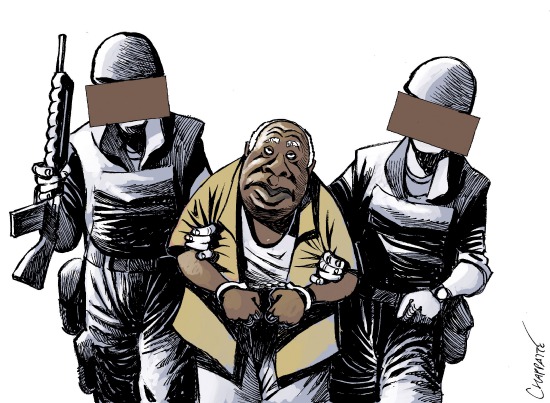

Protester cornered by Kenyan security forces during post-election violence (Uriel Sinai/Getty Images)
Yesterday, on the 23rd of January 2012, the Pre-Trial Chamber II (PTC II) of the International Criminal Court (ICC) issued its long awaited decisions (here and here) whether or not it would confirm the Prosecutor’s charges against six suspects allegedly involved in post-election violence in Kenya in 2007/2008.
The contested elections had led to violence directed by supporters of the two major parties against the perceived supporters of the other party, as well as police violence during protests. Violence was targeted along ethnic lines and was particularly bad in the densely populated Rift Valley Province of Kenya. In total, 1200 people were killed, 900 were sexually assaulted and thousands are still living in camps having been displaced by the violence. In the end, a compromise for a Government of National Unity was struck between incumbent President Kibaki’s Party of National Unity (PNU) and the Orange Democratic Movement (ODM) of current Prime Minister Raila Odinga. Despite the compromise found after the post-election violence, fears are still running high for the upcoming 2012 elections. The UN has warned about possible post-election violence in Kenya and the BBC has reported weapons purchases in Rift Valley Province.
Against this background hopes and fears attached to the ICC decision yesterday were running high. Indeed, the ICC homepage crashed due to high traffic after the decision was announced. Sceptics feared that an ICC decision might lead to further tensions and renewed violence in Kenya while optimists hoped for a deterrent effect of the ICC investigations in Kenya. Against this delicate political background the ICC has performed pretty well to date. The Office of the Prosecutor (OTP) had announced investigations in two cases, covering the crimes committed by both sides, and seeking to charge three people on each side.
The suspects included William Ruto, a suspended government minister and the deputy party leader of the ODM, Joshua Sang, the head of operations at a radio station promoting violence during the crisis, as well as Henry Kosgey, Member of Parliament and ODM Chairman on the side of the ODM. On the side of the President’s party, the OTP named Francis Muthaura, the head of the Kenyan civil service as well as Secretary to the cabinet, Uhuru Muigai Kenyatta, current deputy prime minister and minister for finance, and Mohammed Hussein Ali, the chief executive of the postal corporation.

Post-election violence in Kenya
It was a wise move by the OTP to make sure that both sides were charged equally against the current political background. Indeed, Kenya is one of the few cases before the ICC in which both sides of a situation are seen to be investigated equally. This may be a result of the fact that the OTP is conducting its investigations in Kenya in propio motu, meaning the Prosecutor himself decided to take up investigations. In cases in which the government refers a situation to the ICC, the Prosecutor has often been criticized for going too soft on the government in order to ensure cooperation. Continue reading