
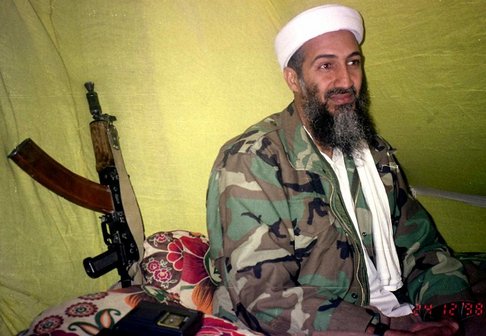
 The debate regarding the legality, justness and legitimacy of killing bin Laden continues. I figured it may be beneficial to create a post where some of the most sophisticated and fascinating perspectives on these subjects could be compiled. Keep in mind, this isn’t an exhaustive list. I will continue to add to it and opinions are certain to be revised as more facts emerge. Please feel free to send along any pieces you find particularly salient.
The debate thus far has been remarkably vibrant and, in my view, healthy. Talking about bin Laden’s death matters. It is a fundamentally good thing that we are having a global discourse on the parameters of legality and justice. As I argued before, the debate about justice and law instigated by bin Laden’s assassination has the potential to be the most important and fruitful consequence of his death. Hopefully this can act as a valuable and useful resource for those interested in the myriad of perspectives on the subject.
On the Hypothetical Trial of bin Laden
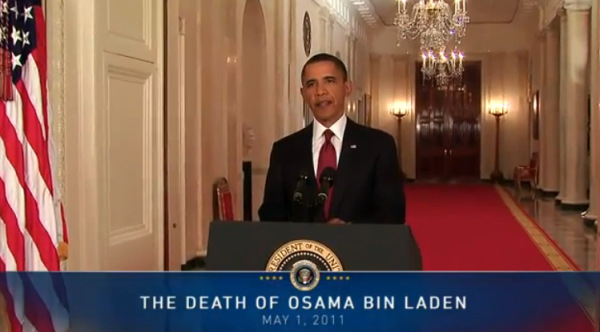
Obama on bringing Osama bin Laden to justice from 2008:
“[Obama] said he wouldn’t discuss what approach he would take to bring bin Laden to justice if he were apprehended. But he said the Nuremberg trials for the prosecution of Nazi leaders are an inspiration because the victors acted to advance universal principles and set a tone for the creation of an international order.”
Apparently, during his 2008 Presidential campaign, Obama vowed :
“We will kill bin Laden. We will crush al-Qaida. That has to be our biggest national security priority.”
Last year, Eric Holder Jr., the US Attorney General, declared that bin Laden:
“will never appear in an American courtroom…Let’s deal with the reality here. The reality is, we will be reading Miranda rights to a corpse.”
On Holder’s views at the time, also see this article from MSNBC: Holder – Bin Laden will Never Face US Trial.
In a post very similar to one posted here on the hypothetical trial of bin Laden, legal analyst Jeffrey Toobin has just published an article for CNN: 5 Hurdles if bin Laden had been taken alive. Holder focuses on five potential problems had bin Laden been put on trial: whether he would have been tried at a military or civilian court; where he would have been tried; whether bin Laden would have been granted access to US intelligence materials during the course of the trial; whether anyone would have defended him (I believe he wouldn’t have had a problem getting a defense team); and what would have been done with bin Laden’s body if, as Toobin predicts, he would have received the death penalty.
Jon Silverman also considers the challenges of holding a trial from a skeptical angle. Silverman’s analysis is particularly interesting in his use of past trials and the record of current tribunals.
Drawing on the precedence of Saddam Hussein’s capture and trial, Robert Fisk weighs in arguing that the political consequences of putting bin Laden on trial weren’t worth it. Oddly and without clarification, Fisk also calls international criminal law and process the justice of “old days”:
“Of course, there is one more obvious question unanswered: couldn’t they have captured Bin Laden? Didn’t the CIA or the Navy Seals or the US Special Forces or whatever American outfit killed him have the means to throw a net over the tiger? “Justice,” Barack Obama called his death. In the old days, of course, “justice” meant due process, a court, a hearing, a defence, a trial. Like the sons of Saddam, Bin Laden was gunned down. Sure, he never wanted to be taken alive – and there were buckets of blood in the room in which he died.
But a court would have worried more people than Bin Laden. After all, he might have talked about his contacts with the CIA during the Soviet occupation of Afghanistan, or about his cosy meetings in Islamabad with Prince Turki, Saudi Arabia’s head of intelligence. Just as Saddam – who was tried for the murder of a mere 153 people rather than thousands of gassed Kurds – was hanged before he had the chance to tell us about the gas components that came from America, his friendship with Donald Rumsfeld, the US military assistance he received when he invaded Iran in 1980.”
In a similar vein, Michael White writes in The Guardian that a trial of bin Laden would have been “easier said than done.”
Over at Foreign Policy, Joshua Keating notes that:
“There’s not likely to be too much of an outcry over the decision to kill bin Laden rather than take him alive — for one thing, we’ve avoided what would surely have been a massively controversial trial. But this question isn’t going away.”
For other challenges a trial would have incurred, check out this post.






 Justice in Conflict