Elizabeth Brown joins JiC for this guest-post on ongoing need for accountability over the death of Baha Mousa and other Iraqis killed in UK detention. Elizabeth is a doctoral researcher in the Department of War Studies at King’s College London, where her PhD research concerns accountability mechanisms following allegations of war crimes by British forces in Iraq and Afghanistan. She is also co-ordinator of Kings’ War Crimes Research Group, and can be found on Twitter and LinkedIn.

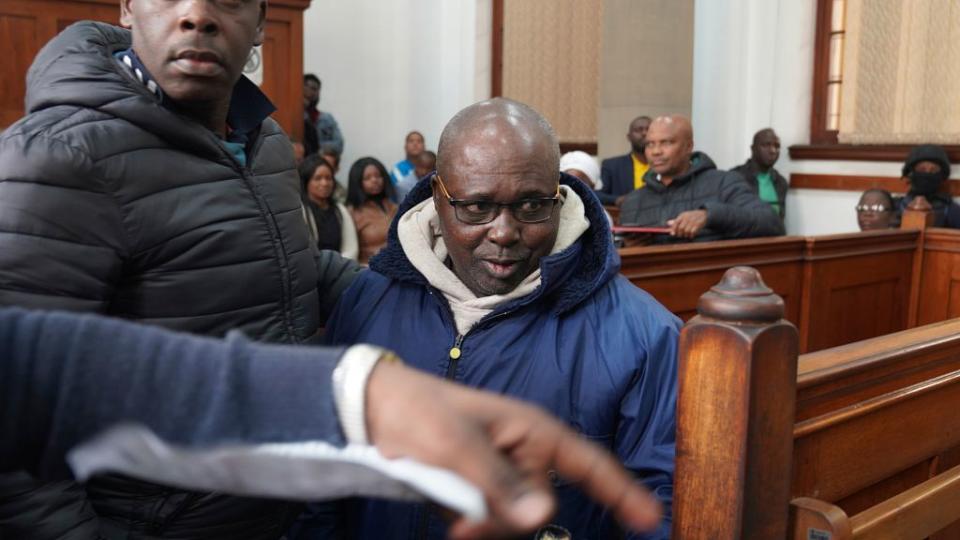
Twenty years ago, on 15 September 2003, a 26-year-old Iraqi man named Baha Mousa died following catastrophic mistreatment carried out by British soldiers in a detention facility in Basra. The incident spawned a complex web of accountability efforts, including a Royal Military Police investigation, a Court Martial, a judicial review case which ultimately concluded at the European Court of Human Rights in Strasbourg, a full Public Inquiry, and a civil litigation seeking compensation.
Britain’s experience of engaging with allegations of war crimes in Iraq was not isolated to this case. In the years after the Mousa family’s judicial review, thousands of additional alleged victims emerged. Yet more accountability efforts followed, including a second Public Inquiry, further judicial review and civil proceedings, and the establishment the Iraq Historic Allegations Team (IHAT), to investigate the claims. Now, twenty years later, a new Public Inquiry is preparing to hear evidence, this time into allegations of war crimes by British forces in Afghanistan. So, what, if anything, has the United Kingdom learnt in the two decades since the tragic death of Baha Mousa?
The Death of Baha Mousa
After being arrested on 14 September 2003 during a raid on the hotel where he worked, Baha Mousa and his colleagues were taken by members of the First Battalion, Queens Lancaster Regiment (1QLR) to their headquarters. There, according to the subsequent Public Inquiry, the men were subjected to continued and deliberate brutality. They were forced to hold painful stress positions for hours at a time, whilst their hands were bound, and thick hessian sacks were hung over their heads in the oppressive Iraqi heat. They were prevented from sleeping and given limited food and water. One was forced to sit next to a noisy and hot generator simulating white noise.
The use of these techniques had been outlawed by then-Prime Minister Edward Heath in 1972 (the ‘Heath ban’) after their controversial use in Northern Ireland. However, the ban was effectively forgotten by the time British forces were deployed in Iraq. The poor conditions were enforced through a regime of brutal violence, casually inflicted. Detainees deemed uncooperative were beaten, shouted at, and sexually humiliated. The Inquiry found “that most, if not all, of the Detainees were the victims of serious abuse and mistreatment by soldiers during their detention.”
After withstanding 36 hours of this treatment, Baha Mousa was found having removed his hood and hand restraints. Perceiving this as an escape attempt, 1QLR’s Corporal Donald Payne brought Mousa to the floor and knelt on his back whilst attempting to re-apply the restraints. According to witness testimony, frustrated that Mousa was not submitting easily, Payne ‘lost control of himself’, punching and kicking the detainee and slamming his head against a concrete wall. Baha Mousa stopped moving and was pronounced dead by the unit’s medical officer.
Continue reading