Gwen Battis joins JiC for this guest post on the gendered costs of Russia’s invasion and the war in Ukraine. Gwen is a graduate student at the University of Denver studying International and Intercultural Communication.
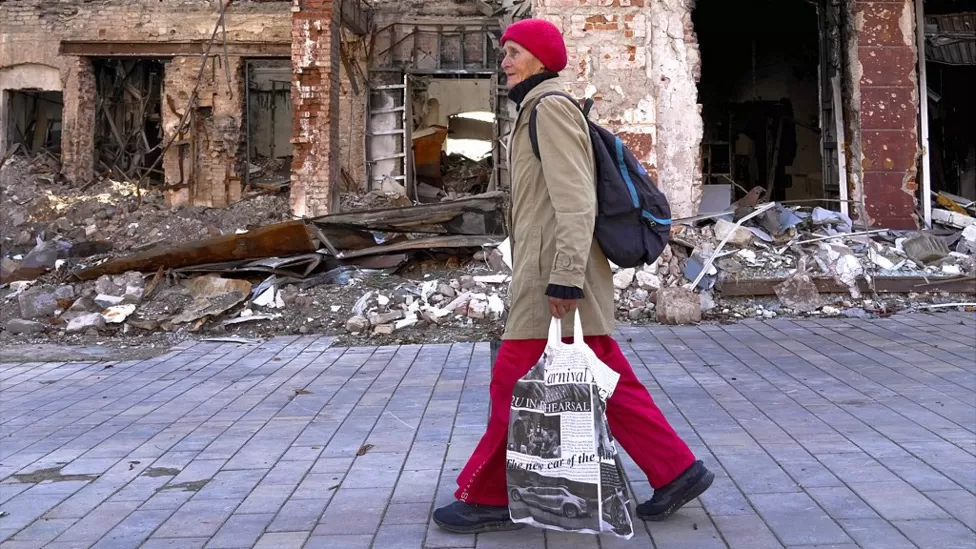
It has been one year since Russia invaded Ukraine, inciting a future of violence, war, and displacement. With billions of dollars of Western spending and foreign assistance, Ukrainians are still suffering forced migration, torture and death. But what the common discourse around the conflict is missing is a focus on how this war, like all others, is inherently gendered and disproportionately affects women.
The Russia-Ukraine war is rooted in economic and ethno-national power relations. Yet, if we analyze how economic and national systems are built, it becomes apparent that a modern-day neoliberal state cannot be built without gender, masculinity, and patriarchy. Gender relations are just as guilty in causing conflict and militarization.
Entertain this idea: Ukraine sits in the international arena as a state on its way towards progressivism, striving for equity, freedom, and liberation, thereby moving farther and farther away from its Soviet past. Russia, on the other hand, in many ways represents traditional values, patriarchy, conservatism, and dictatorship.
If we were to categorize each state based on traditional definitions of masculinity and femininity, we can more clearly see the gendered nature of this conflict: Russia’s invasion of Ukraine is symbolic of an exertion of hypermasculinity, a forcing of obedience, and a violent response to Ukraine’s feminine opposition. For Moscow, Ukraine was supposed to play the ‘woman’ in the relationship and therefore expected to submit.
But what of Ukrainian women? If Ukraine as an entity is deemed worthy to be dominated, what of the most vulnerable population within Ukraine?
Ukrainian women and other female-identifying folks are shouldering a disproportionate weight of this war. They are enduring a conflict that is both exacerbating existing gender inequalities and creating new areas of insecurity. After a year of armed conflict, I hope we can take time to investigate how the cost of a dictatorship and the subsequent fight for freedom is creating a climate that inordinately exposes women to suffering and violence.
Continue reading