
Since the emergence of international criminal justice as a regular practice in international relations and law, there has never been a dull year — and there is unlikely to be one any time soon. The year 2016 brought with it remarkable moments, significant disappointments, and some rather weird developments. Here’s a look back on some of those stories as well as some stories to anticipate in the year to come.
The Best of 2016
While some have expressed (not unfounded) concerns about the future of the International Criminal Court (ICC), there were a number of ‘victories’ in the realm of international criminal justice in 2016. Given the consistent criticism that international criminal justice is too slow and inefficient, the guilty plea and conviction of Ahmad al Faqi al Mahdi for the war crime of destroying shrines and religious sites in Timbuktu, Mali, stands out. It further appears that al Mahdi isn’t just a ‘1’ in the ICC’s ‘win column’ — his cooperation with the Court’s prosecutors could lead to additional charges, although in a rather surprising move, the Office of the Prosecutor did not include Mali as a situation under active investigation in 2017. It thus remains to be seen: is the prosecution and conviction of al Mahdi all the justice the ICC will achieve in Mali?
Another outstanding development was the landmark conviction of Hissène Habré in May 2016 for a raft of atrocities and human rights abuses perpetrated against the people of Chad. Finally, the creation of a tribunal to focus explicitly on the Kosovo Liberation Army during the 1998-2000 war there. While it is only just getting off its feet, the Kosovo Relocated Specialist Judicial Institution (KRSJI) marks the first time that an international court has been set up with the express purpose to examine the crimes of the victors of a war.
The Worst
There were a lot of rough moments in 2016. The withdrawals of Burundi, South Africa and, for the time being, The Gambia, have done significant damage to the ICC, although it must also be said that rarely have so many African states publicly expressed support for the Court. While it seems like ancient history, April 2016 brought the end of the ICC’s case against Kenyan Vice President William Ruto, marking the final death throes of justice for Kenya’s 2007-08 post-election violence.
But what really stands out is the absolute lack of accountability in Syria, after nearly 6 years of civil war. There are signs that this could potentially change in the future (see below), but 2016 is in the books as a year when, once again, no justice was brought for the victims and survivors of atrocities in Syria.
The Weirdest
There were some weird moments in 2016. The oddest was likely the announcement that the ICC’s first chief Prosecutor Luis Moreno-Ocampo as well as renowned international criminal law scholar Mahmoud Cherif Bassiouni were working for Philip Morris International (i.e. ‘Big Tabacco’) to combat worldwide smuggling rings and “related crimes” — despite the fact that institutions like the World Health Organization have called efforts to fight illegal tobacco smuggling by tobacco companies “insincere”.
The Blog
2016 was a very good year for the blog. Over the 12 months, 104 blogs were published, including a series of fantastic interviews with key actors in international criminal justice by Shehzad Charania (see here). We ran two fantastic online symposiums: on child soldiers and the trial of Dominic Ongwen and on peace and justice in Colombia. Readership grew by a healthy 7%. The United States led to way in view, followed by the UK, The Netherlands, Canada, and Germany. Kenya and South Africa were easily in the top-10.
Of course, 2016 was also the year that my book, Justice in Conflict, was published. I cannot thank everyone enough for their support, particularly the team I worked with at Oxford University Press. The book has been selling very, very well — and I look forward to using the royalties to ship copies to libraries and universities in Africa and ICC-related states. More on that soon!
Looking Forward — What To Expect in 2017
The biggest thing to expect in 2017 is the opening of an official ICC investigation into Afghanistan. Prosecutors still need to seek the approval of ICC judges, but it in their words, that decisions is “imminent”. Such a move would be unprecedented. It would mark the first time that US officials came under investigation of an international criminal tribunal. As I wrote in November, a potential ‘win’ for the ICC whatever happens. But it’s unlikely to be pretty. Under the incoming administration of Donald Trump, we are likely to see the rockiest US-ICC relationship in years. Continue reading →

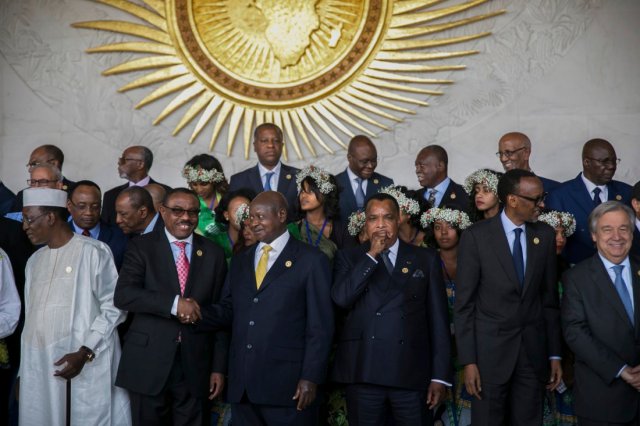
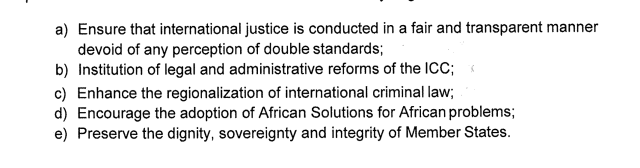 In reading the strategy, it is difficult not be left with the impression that African states remain engaged with the ICC. It certainly doesn’t sound like they’re collectively jumping ship. That’s because the Strategy reads like a largely reasonable list of possible reforms to the Rome Statute and the Court. Indeed, the arguments contained within the Strategy should be taken seriously and continue to be debated. There are at least a handful that should be acceptable to the Court and its champions, such as the long-standing request from Kenya to include “regional criminal jurisdictions” in the section of the Rome Statute’s pre-amble pertaining to the principle of complementarity. More attention also needs to be paid to the fact that the majority of the grievances and concerns expressed within the Strategy ultimately relate to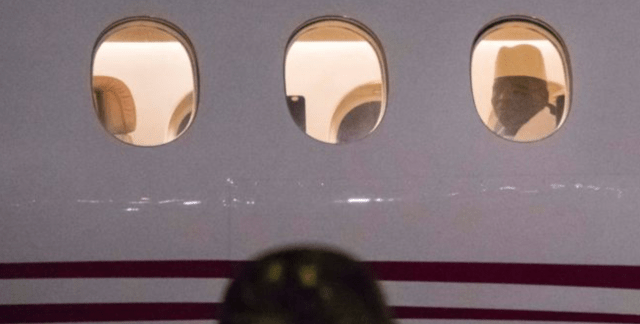



 Justice in Conflict