New Leadership in The Gambia is Good News for the International Criminal Court

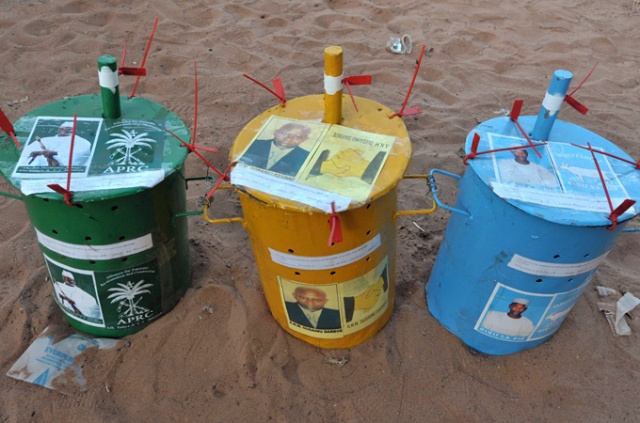
Canisters in which voters in The Gambia drop marbles to indicate their political support (Photo: AFP)

Canisters in which voters in The Gambia drop marbles to indicate their political support (Photo: AFP)

In a development that has sent shock waves of surprise across the world, Yahya Jammeh has accepted defeat following presidential elections in The Gambia. Many expected Jammeh, who once claimed he was prepared to be in power for a “billion years” and who has ruled The Gambia for the last twenty-two years, to do everything possible to hold onto power. It remains unclear what, exactly, convinced the Gambian president to accept the election results and peacefully hand over power to his rival Adama Barrow. But for the International Criminal Court (ICC) and its supporters, Jammeh’s retirement from the presidency is very good news.

Last month, The Gambia joined South Africa and Burundi in notifying the United Nations Secretary General that they intended to withdraw from the ICC. At the time, Jammeh invoked particularly colourful language in deriding the Court as an “International Caucasian Court for the prosecution and humiliation of the people of color, especially Africans.” The Gambia’s intention to withdraw put the ICC in a particularly awkward position because the Court’s chief Prosecutor, Fatou Bensouda, hails from the country and was previously Jammeh’s Justice Minister. Had twelve months passed (the time it takes for an ICC withdrawal to take effect), the ICC chief Prosecutor would have hailed from an non-member state. But it seems that the Court may not have to worry after all.

Earlier this week, incoming President Barrow, who incidentally was a security guard at a London-based retail chain, pledged to keep The Gambia in the International Criminal Court:

We will ensure that we respect all international agreements we are a signatory to and we will take the country back to the Commonwealth and the International Criminal Court.

The ICC and Commonwealth and other international institutions are advocating for good governance – if you are doing that why should you fear.

According to the BBC, Barrow has now confirmed his intention to keep that promise.

While it has never happened before and there is no precedent to follow, it should be assumed that all that is required to keep The Gambia a member of the ICC is an executive decision to withdraw the country’s notice of withdrawal. So what will this mean for the ICC and for the alleged ‘exodus’ of states seeking to leave the Court? Continue reading

Posted in Gambia, International Criminal Court (ICC), International Criminal Justice | 3 Comments

Intersex, Outcast – The Limits of Gender at the International Criminal Court

Laura Nacyte joins JiC for this post on the limited conceptualization of gender in the Rome Statute of the International Criminal Court. Laura is an MSc graduate of Global Security from the University of Glasgow where she wrote the dissertation “The Copenhagen School Meets International Law: Has the International Criminal Court Impeded the Securitisation of Sexual and Gender-Based Violence?”. Laura is currently based at the Rape Crisis Centre Glasgow.

A witness gives testimony during proceedings at the International Criminal Court (Image: ICC)

A witness gives testimony during proceedings at the International Criminal Court (Image: ICC)

The adoption of the Rome Statute of the International Criminal Court (ICC) in 1998 was momentous for historically neglected victims of gender-based violence (GBV). It was the first international treaty to codify numerous gender-related offences, including those of a sexual nature. The document enlists rape, sexual slavery, enforced prostitution, forced pregnancy, enforced sterilisation, and other comparable sexual violence, both as crimes against humanity and war crimes. In addition, it proscribes persecution on account of gender.

The ICC’s responsibility to prosecute GBV was further reinforced by incorporating gender elements into the Statute’s procedural architecture. The Court is obliged to apply law without any adverse distinction founded on gender. The latter has also to be taken into account to protect victims and witnesses.

Intuitively, engagement with the concept of gender is required to comprehend gender-specific provisions. Article 7(3) of the Rome Statute provides the following definition:

For the purpose of this Statute, it is understood that the term ‘gender’ refers to the two sexes, male and female, within the context of society. The term ‘gender’ does not indicate any meaning different from the above.

Much commentary was devoted to this vexed provision. The debate has revolved around the tension between the deterministic (‘the two sexes’) and sociological (‘within the context of society’) dimensions of the definition of ‘gender’. With questions of sexual orientation and gender identity at stake, a status of lesbian, gay, bisexual and transgender (LGBT) persons has been in focus. Yet the first, biological part of the provision received surprisingly short shrift. Insistent upon a binary sex classification, it is overtly exclusive of intersex individuals.

Formerly known as hermaphrodites, intersex people are neither entirely male nor female. Their anatomy reveals the incongruence of sex characteristics — chromosomal, hormonal, gonadal or genital — that can result into any of approximately twenty intersex conditions. Under the law of certain ICC member states — for instance, Germany, Australia and Malta — the sex of these individuals is ‘indeterminate’ or ‘unspecified’.

In fact, not all intersex conditions complicate sex determination. By way of example, men with Klinefelter syndrome possess XXY chromosomes instead of the typical XY sex chromosomes, or male chromosomes. They are often not even aware of this genetic disorder, since no obvious symptoms are present. (But their different physical development may manifest through small testes and penis, decreased body and facial hair, and enlarged breast tissue.)

Other conditions are more troubling and deserve an adequate legal acknowledgment. For instance, infants with complete androgen insensitivity syndrome are born with XY sex chromosomes, or male chromosomes, but possess female external genitalia. Categorised as females accordingly, they nevertheless fail to menstruate at puberty and remain infertile. Similarly, genetic males with 5-alpha-reductase deficiency have XY sex chromosomes and female external genitalia, and are usually raised as girls. During puberty, however, their physical appearance starts to display male characteristics, including increased muscle mass, deeper voice, and development of penis. Around half of these individuals eventually migrate to male gender role. Continue reading

Posted in Gender, Guest Posts, International Criminal Court (ICC), International Criminal Justice, Rome Statute | 3 Comments

Five Things to Know about the ICC’s Afghanistan Investigation

With the International Criminal Court (ICC) on the verge of opening an investigation into Afghanistan, much has been written about how this might affect Canada. Could the investigation focus on the role of Canadian officials in surrendering detainees who were subsequently tortured by Afghan authorities? How should Canada balance its support for the  Court with its diplomatic proximity to Washington? This post, originally published at Open Canada, covers five things that the Canadian and the Canadian government needs to know about the ICC’s looming investigation.

Canadian soldiers in Afghanistan, in 2010. (Photo: The Chronicle Herald)

Canadian soldiers in Afghanistan, in 2010. (Photo: The Chronicle Herald)

The Canadian government’s renewed and vocal support for the International Criminal Court (ICC) has received a tremendous amount of attention in recent weeks. Global Affairs Minister Stéphane Dion has spoken passionately about his support for the institution and his disappointment that three states (South Africa, Burundi, and The Gambia) have begun the process of withdrawing from the court. Earlier this month, Dion visited the ICC’s premises in The Hague and hosted the court’s chief Prosecutor, Fatou Bensouda, in Ottawa.

At the same time, Canadian activists and legal experts have continued their efforts to get Canada to be considered within the scope of an ICC investigation into torture and other war crimes in Afghanistan. Their focus is on the alleged crimes committed by Canadian officials in transferring detainees to Afghan authorities with the knowledge that they would subsequently be tortured during Canada’s military engagement in Afghanistan.

The prospect of such an investigation received new life when the ICC’s Office of the Prosecutor announced this month that an investigation into Afghanistan was “imminent.” From the court’s statements, it is evident that such an investigation will include alleged torture committed by U.S. forces, as a matter of “policy,” in Afghanistan. Will it include Canada’s involvement? What does it mean for the Trudeau government? And what does it say about the ICC? Here are the five takeaways to note so far.

1. The investigation is historic.

The historic nature of this development is worth stressing: in the history of international criminal justice, from the Nuremberg Tribunals to the present day, the ICC’s investigation in Afghanistan marks the first time a tribunal has sought to investigate and prosecute crimes perpetrated by U.S. nationals. Some assert this poses a threat to Canada’s revived passion for the ICC. Michael Byers, for example, argues that Canada will be “caught in the middle” with the government facing a stark choice: side with the U.S. government or side with the ICC. But we should not pose support for international criminal justice or our closest ally as a binary decision. What is needed is principled and smart diplomacy. More on that below.

2. Canada is unlikely to be under investigation by the ICC in the near future.

It is worth taking a step back and addressing the likelihood of Canadian forces being investigated by the ICC. With an official investigation looming, the possibility is now higher than ever. That much is undoubtedly true. Even if Canada is not currently on the ICC’s radar, investigations often have a life of their own and, without any domestic judicial activity to address alleged crimes by Canadian forces in Afghanistan, the long arc of justice could eventually be directed towards Canada.

For at least two reasons, however, Canada is unlikely to be a focus of the ICC in the near future. One, it is improbable that ICC investigators would be able characterize any possible crimes committed by Canadian forces (which are still in contention) as anything more than “aiding and abetting” the war crime of torture. Aiding and abetting is not a second-rate crime. Charles Taylor, the former President of Liberia, received a 50-year sentence for aiding and abetting war crimes and crimes against humanity in Sierra Leone. But in opening its momentous investigation into Afghanistan, the ICC has signalled that it is focused on the direct perpetration of atrocities — by the Taliban, by Afghan forces, and by U.S. officials. Second, prosecutors at the ICC (rightly) believe that states should receive fair warning of any impending investigation into the conduct of their military or governmental officials. In last year’s report on the court’s preliminary examination of Afghanistan, it listed alleged crimes perpetrated by “international forces.” In this year’s report, that language has been replaced with “U.S. armed forces and CIA.” There is no reference to Canada or Canadian forces.

3. The investigation could prompt a separate look at the detainee scandal.

None of this means that the ICC does not have any role in galvanizing accountability for the dark stain on Canada’s recent past that is the Afghan detainee scandal. The ‘long shadow’ of the ICC should be cast on Canada. But the court’s role should be to encourage the government of Justin Trudeau to finally establish a judicial body to investigate Canada’s role in the abuse of Afghan detainees. At some point, that may require signalling to the government that it at least could investigate Afghan detainee abuses and that it is monitoring the Canadian judiciary’s activities.

4. Canada does not have to choose between the ICC and the U.S. government

The ICC’s investigation of the conduct of U.S. forces in Afghanistan undoubtedly puts the Trudeau government in a political pickle. In this, Byers is absolutely correct. Donald Trump will inevitably defend U.S. forces and is very likely to call into question the court’s legitimacy. But the Canadian government need not and should not see its options as going all-in with the ICC (and against the Trump administration) or all-in with the U.S. (and rally against the court).

Continue reading

Posted in Afghanistan, Canada, International Criminal Court (ICC), International Criminal Justice, United States | 2 Comments

The Clock is Ticking – Keeping South Africa in the ICC is a Tall, but Not Impossible, Order

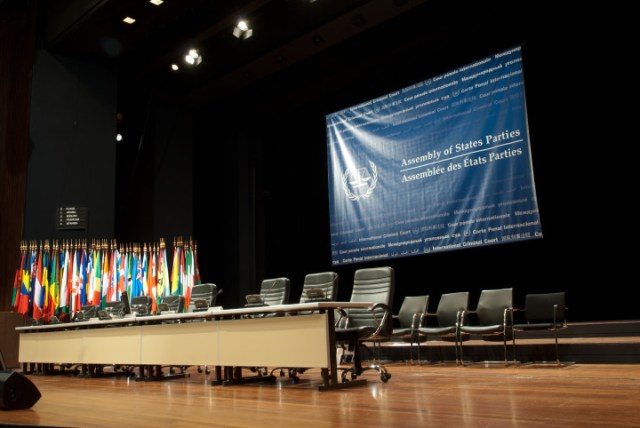
(Photo: Mark Kersten)

(Photo: Mark Kersten)

The clock is ticking. In just about eleven months, South Africa will officially withdraw from the International Criminal Court (ICC). Here at the Assembly of States Parties (ASP), though, the overall feeling is optimistic. Many participants, especially those representing civil society and human rights organizations, seem convinced that South Africa will consider withdrawing its ICC withdrawal. There is little doubt that the country has sent some signals it will remain engaged with the Court. The country’s delegation was led by Justice Minister Michael Masutha — itself an important indication that the government remains serious about its engagement with the ICC. Masutha also had a highly publicized meeting with ICC President Silvia Fernández de Gurmendi and declared to the country delegations present here in The Hague that South Africa would continue to work with the Court and push to improve the institution. There may indeed be a crack in the wall of South Africa’s commitment to withdrawing from the ICC. But proponents of the ICC and, in particular, ICC member-states need to realize that, right now, nothing has yet been achieved. The clock is still ticking.

Much has been said at the ASP about the need for continued ‘dialogue’. Indeed, the word ‘dialogue’ seems to be the theme of this conference, despite the fact that it should really be the theme of all ASP meetings. Still, when it comes to South Africa, while continued and respectful dialogue is essential, what is needed now is a period of bargaining and negotiations. As time runs down on South Africa’s withdrawal, we have entered a period of conflict resolution. A number of important issues should be considered in this context.

First, there is a need to recognize that addressing South Africa’s withdrawal will require both political and legal responses and considerations. Those hoping — and pushing — for South Africa to reconsider its ICC exit must understand what they are asking the government to do: a very significant political flip-flop. That is not easy for any government and will require a narrative that allows the South African government not just to save face but to show that they ‘won’ their case at the ICC. Right now, it isn’t clear whether this is possible, but it is evident that without such a story-line, the African National Congress (ANC) government of Jacob Zuma is unlikely to budge.

Of course, some are trying to re-set the clock. There is ongoing domestic litigation aimed at getting South Africa’s Constitutional Court to fule that the executive order issued by Zuma to withdraw South Africa from the ICC was unconstitutional because the government did not consult Parliament. To be clear, all civil society actors should be supported in their right to challenge the government’s actions — especially when they threaten South African rule of law. However, part of the litigation effort has been led by the Democratic Alliance — the ANC’s primary political opposition. This complicates matters for the government. If they are to rescind their withdrawal — either temporarily or permanently — they now most ‘lose’ to the Democratic Alliance and not just to the country’s courts and civil society. In other words, the Democratic Alliance’s direct involvement risks raising the costs of the government conceding and remaining a member-state.

So what can be done? Here are three proposals which, I believe, should at the very least be on the table. None are full-proof — there is no perfect way out of this. But assuming that states and the ICC want South Africa to remain a member of the Court, here are three options that could be explored. Continue reading

Posted in Africa, Assembly of States Parties, International Court of Justice, International Criminal Court (ICC), International Criminal Justice, South Africa | 3 Comments

‘We Stay. We Respond’ – A Speech on Africa and the International Criminal Court

The following is a speech delivered by Njonjo Mue to the plenary session of the Assembly of States Parties of the International Criminal Court. Njonjo is a human rights lawyer and transitional justice expert. He is currently a Senior Advisor to Kenyans for Peace with Truth and Justice (KPTJ) and serves as the Chair of the Kenyan Section of the International Commission of Jurists.

(Photo: K. Tjart / The Hague Institute for Global Justice)

(Photo: K. Tjart / The Hague Institute for Global Justice)

Mr. President, distinguished delegates, ladies and gentlemen:

When I received news of South Africa’s intention to withdraw from the Rome Statute, like all other people who have dedicated their lives to the fight for human dignity and accountability around the world, I was deeply saddened.

I also remembered an incident that occurred during the negotiations that led to majority rule in South Africa, held at Kempton Park, Johannesburg. The then State President F.W. De Klerk had made some remarks that greatly offended Nelson Mandela. In fact, I have never seen Mandela so angry in public. But what was Mandela’s response to De Klerk? He did not storm out of the hall; he stood and walked majestically to the podium and confronted De Klerk firmly and honestly. That is the African way: We do not withdraw and walk away; we stay and we respond.

Mr. President, there have been long-running allegations that the International Criminal Court targets Africa. These allegations have often been met by recounting statistical evidence to the contrary, by recalling that most of the African cases at the ICC were referred to the Court by African states themselves. But I would like to respond here by giving another statistic. As of August 2016, there were 16 UN Peacekeeping Missions around the world. 9 of these are in Africa. This comprises 56% of all missions. We know that Africa does not make up 56% of the global population, but I have never heard anyone claiming that the UN is targeting Africa. Could it be that the like the UN, the ICC is most active where it is most needed?

We all know from recent history that the need for post-conflict justice is self-evident. Where there is no accountability, where warlords fighting for power know that they will not be held to account, there is no motivation to end conflict. And if there is a pause in the fighting, without justice, the ensuing peace is ever only temporary. This was amply demonstrated in Sierra Leone where the Lomé Peace Agreement of July 1999 included a blanket amnesty for combatants. It was just a matter of time before fighting resumed. When accountability was introduced into the equation through the establishment of the Special Court for Sierra Leone, sustainable peace was assured and continues to hold to this day.

Part of the grievance by African states against the ICC flows from a deeper pathology of governance in Africa where what is regarded as bad for the leader of a particular country is automatically assumed to be bad for the entire state. It also flows from a narrow and outdated definition of sovereignty that dictates that states should be left to mind their own business no matter how the decide to do so. But sovereignty is not a blank cheque nor can sovereignty mean that African states – whether governments or warlords – should be free to brutalise, murder, rape and loot from their own people in pursuit of power and resources without consequence.

The AU political leadership regularly complains about the role of the ICC in Africa. But these conversations are held behind closed doors in Addis Ababa and in other African capitals. Spaces where civil society and the press, let alone ordinary citizens, have to struggle to gain access. The tone of the communiqués that are issued after the AU summits make it clear that the leaders are speaking from their own perspectives. But who speaks for the victims?

The ICC is our court, created through the demand and with overwhelming support of African states, governments and civil society alike, to try to overcome their own legacies of massive human rights violations, including apartheid, genocide and multiple civil conflicts. It is time to tell those who complain that the Court is targeting Africa that the true position is that it is rather African victims who are accessing their Court in pursuit of justice. This is especially true when we remember that the ICC is a court of last resort which only intervenes where states are either unwilling or unable to investigate and prosecute serious crimes according to the principle of complementarity. There is a simple answer to African states that feel ‘targeted’ by the ICC to address the situation: Prosecute atrocity crimes occurring in your territories or committed by your nationals and deliver justice to the victims at home.

But this said, ICC is not a perfect institution. We should also remember that the Court is a small island of law that exists in a vast sea of politics. And as with all islands, sometimes the tide rises and the storms blow and the waves of politics come crashing onto the shores of the law and this clearly presents some challenges. There are three notable examples this:

First is the role of UN Security Council in referring cases to the ICC and deferring ongoing cases. 3 of the 5 permanent members of the Security Council are not members of the Rome Statute and yet they have the power under the Rome Statute to refer other states, including non-members, to the ICC as they have done with Sudan and Libya. This is clearly problematic. The situation is exacerbated by the fact some members of the Security Council have used their veto power to prevent serious crimes taking place in countries such as Syria from being investigated by the ICC. This blatant display of double standards that sacrifices the demand for justice at the altar of geo-strategic interests of the great powers can only hurt the global fight against impunity. Continue reading

Posted in Africa, Assembly of States Parties, Guest Posts, International Criminal Court (ICC), International Criminal Justice | Tagged | Leave a comment

Whatever Happens, the ICC’s Investigation into US Torture in Afghanistan is a Win for the Court

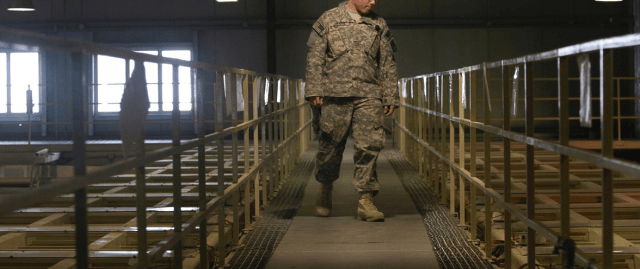
An American military guard looks over detainee cells at a detention facility near Bagram Air Field.(Photo: Dar Yasin / AP)

An American military guard looks over detainee cells at a detention facility near Bagram Air Field.(Photo: Dar Yasin / AP)

It was predicted when the US Senate released its so-called ‘Torture Report’. A few weeks ago, it was reported to be true. And now the Office of the Prosecutor of the International Criminal Court (ICC) has confirmed it. A decision to request an official investigation into war crimes committed in Afghanistan is “imminent”. What this means is that the ICC will finally investigate atrocities committed by the Taliban and Afghan forces. It also, and most remarkably, means the ICC will investigate crimes committed by American forces — particularly allegations of widespread torture against detainees. The momentous nature of this development is worth appreciating. In the history of international justice, never has an international criminal tribunal confronted the alleged crimes of the United States.

There are understandable fears that investigating alleged US war crimes in Afghanistan could end up undermining the ICC, particularly if the incoming administration of Donald Trump adopts malicious and antagonistic policies towards the Court. But here are three possible outcomes (in order of least-to-most likely) of the ICC’s investigation and reasons why they could each be ‘wins’ for the Court.

Outcome 1: The United States Prosecutes Perpetrators of Torture Itself

This would be the best case scenario for the ICC. For years, prosecutors at the Court have signaled to US lawmakers that they could open an investigation into Afghanistan which included US conduct. There has been an ongoing back-and-forth between American and ICC officials on the possibility of opening an investigation. The hope of prosecutors was that this would push US authorities to investigate and prosecute the senior-most perpetrators of these crimes themselves. However, the lack of any meaningful domestic justice and accountability for alleged US-perpetrated torture in Afghanistan forced the ICC’s hand. After including “enhanced interrogations techniques” in their preliminary examination reports, the Court set itself on a path that could only end with two outcomes: 1) the US took the signal seriously and prosecuted senior perpetrators itself; or 2) the ICC would open an investigation. With nothing forthcoming on the former option, the latter was inevitable.

It seems unlikely, although not impossible, that the decision to open an investigation would push the US to finally take accountability for its crimes in Afghanistan seriously. But if the US miraculously decided to do so, it would be a huge win for the ICC and its policy of pursuing “positive complementarity” — the belief that the Court has a role in encouraging and galvanizing domestic justice and accountability for international crimes.

Outcome 2: The ICC Manages to Prosecute American Perpetrators of Torture in The Hague

This is the least likely scenario. The prospect of ever seeing Dick Cheney, Donald Rumsfeld, or John Yoo facing judges in The Hague is virtually non-existent. It is unthinkable that the US or a third-party country would arrest senior American officials and surrender them to The Hague. Moreover, the US retains an archaic law (often referred to as “The Hague Invasion Act”, but actually called the American Servicemembers’ Protection Act) which grants the US President executive authority to use “all necessary measures” to repatriate any American citizen surrendered to the ICC. You can’t make this up: the President is authorized to order an invasion of The Netherlands if any US nationals ended up facing prosecution in The Hague. Further, the US judicial system would never allow itself to be characterized by the media or ICC proponents as “unable and unwilling” to genuinely investigate and prosecute crimes perpetrated by American citizens. Option one — prosecuting them domestically — is vastly more likely. Continue reading

Posted in Afghanistan, International Criminal Court (ICC), International Criminal Justice, Preliminary Examinations, Torture, United States | 9 Comments

South Africa and Burundi Withdrawals Expose Faults and Fault-Lines in ICC Opposition

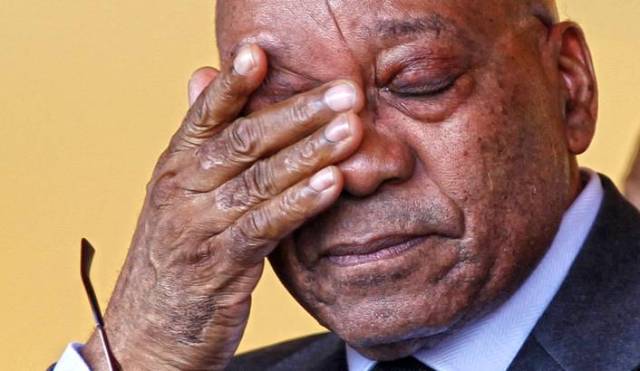
South African President Jacob Zuma (Photo: News 24)

South African President Jacob Zuma (Photo: News 24)

It’s now been a few weeks since Burundi and South Africa signalled their intention to withdraw from the International Criminal Court (ICC). Barring any changes or decisions to reverse course, by October of next year the number of ICC member-states will drop to 122. But so far, the widespread, doomsday predictions of an Africa-wide mass departure from the ICC has failed to materialize. Even if more states do join the ICC-exit parade (and they likely will), there has been no “domino effect” or “mass exodus”. Still, the decision of Burundi and South Africa to withdraw from the ICC has drawn a line in the sand, one that undermines the anti-ICC movement on the continent.

The tumult characteristic of the Africa-ICC relationship is nothing new. As the relationship between the US and the ICC began to warm in the mid-late 2000s, the relationship with certain African states began to sour. A specific group of states has led the way: Sudan, whose president, Omar al-Bashir faces two arrest warrants from the ICC; Ethiopia, a non-member state which hosts the seat of the African Union (AU); Kenya, whose President Uhuru Kenyatta and Deputy President William Ruto have faced trial at the ICC; Uganda, which coincidentally has benefited tremendously from the ICC’s investigation into the war in the north of the country; Rwanda, which has been a long-standing sceptic of the ICC and international criminal justice; and Zimbabwe, led by Robert Mugabe, an opponent of anything that might be perceived as Western.

The governments of these states successfully galvanized scepticism of the ICC’s role in Africa. They did so by masterfully combining legitimate criticisms (e.g. the ICC’s far-too-cosy relationship with the United Nations Security Council and its propensity to investigate weak states) with reductionist rhetoric (the ICC as “racist”, “neo-colonial” and “against Africa”). The Court and its proponents did themselves no favours in deriding sceptical voices in Africa by insisting that any anti-ICC rhetoric was the work of a small handful of angry African governments.

And yet, the decision of South Africa and Burundi have polarized African states on the issue of the ICC and given credence of a significant divide between African states. While Namibia and The Gambia have said they too would withdraw, far more states have openly expressed support for the ICC. This includes public statements from leaders in Côte d’Ivoire, Nigeria, Senegal, Sierra Leone, Malawi, Tanzania, Zambia, and Botswana. Notably, some of these states have regularly voiced their support for the Court but it seems, in the wake of the fear of a full-blown ICC-Exit, the media are paying almost as much attention to ICC supporters as they are to the dramatic throes of ICC opponents. Continue reading

Posted in Africa, Burundi, International Criminal Court (ICC), International Criminal Justice, South Africa | 2 Comments

Balancing Principles, Politics, and Pragmatics: U.S. Policy-Making on Transitional Justice

Zachary D. Kaufman joins JiC for this post on recent transitional justice policy-making in the United States. Zachary is a Senior Fellow at Harvard University‘s John F. Kennedy School of Government and the author of ‘United States Law and Policy on Transitional Justice – Principles, Politics, and Pragmatics’ (OUP 2016).

(Cartoon: Gianfranco Uber / Cartoon Movement)

(Cartoon: Gianfranco Uber / Cartoon Movement)

As the presidency of Barack Obama draws to a close, his administration has been wrestling with its legacy on transitional justice (TJ). In May, the U.S. Department of State and the U.S. Agency for International Development (USAID) published a series of policy papers on the subject (2016 TJ Policy Papers). These white papers follow and relate to a presidential study directive (PSD-10) President Obama decreed in 2011 that created an interagency Atrocities Prevention Board (APB). PSD-10 states: “Preventing mass atrocities and genocide is a core national security interest and a core moral responsibility of the United States.”

The executive branch’s recent policymaking on TJ occurred after I published my new book, United States Law and Policy on Transitional Justice: Principles, Politics, and Pragmatics. In that book, I challenge the “legalist” paradigm, which postulates that liberal states pursue war crimes tribunals because their decision-makers hold a principled commitment to the rule of law. I develop an alternative theory—“prudentialism”—which contends that any state may support bona fide war crimes tribunals. More generally, prudentialism proposes that states pursue TJ options, not out of strict adherence to certain principles, but as a result of a case-specific balancing of politics, pragmatics, and normative beliefs. As such, prudentialism allows for even liberal states, such as the United States, to support non-legalistic TJ options.

This blog post provides an overview of the 2016 TJ Policy Papers. These white papers and my research show that the U.S. government continues to balance politics, pragmatics, and principles in formulating its policy on TJ. Consequently, given the historical case studies my book examines and more recent situations, prudentialism correctly describes not only the past but also the present U.S. government approach to TJ.

U.S. Policy Papers on Transitional Justice

According to Ari Bassin, Senior Policy Advisor on Transitional Justice in the State Department’s Office of Global Criminal Justice, the 2016 TJ Policy Papers are the executive branch’s first public white papers on the subject. A joint effort of the State Department and USAID, the release of these unprecedented white papers demonstrates that the U.S. government increasingly views and officially acknowledges engagement in TJ as a significant component of its foreign policy.

The six white papers cover TJ generally, amnesties, criminal prosecutions, lustration and vetting, truth commissions, and reparations. The white papers do not address exile, indefinite detention, or lethal force as TJ options. As I establish in my new book, the U.S. government’s TJ toolkit has also featured these latter options as either serious considerations or actual policies.

The white papers describe how the U.S. government engages on TJ: through providing financial and technical support as well as by promoting TJ through diplomacy, public statements, laws, resolutions, and other actions. The white papers omit, however, that the U.S. government has also engaged on TJ through contributing staff to such mechanisms.

The white papers offer the U.S. government’s definition of “transitional justice”: that it “refers to a range of measures—judicial and non-judicial, formal and informal, retributive and restorative—employed by countries transitioning out of armed conflict or repressive regimes to redress legacies of atrocities and to promote long-term, sustainable peace.” This definition of TJ accords with my own: “Transitional justice refers to both the process and objectives of societies addressing past or ongoing atrocities and other serious human rights violations through judicial and nonjudicial mechanisms.” Acknowledging implicitly—as Phil Clark, Kalypso Nicolaïdis, and I argue explicitly—that the first word in the term “transitional justice” may be a misnomer, the white papers also state: “There may be questions about the applicability of the concept of ‘transition’ to all relevant scenarios; consequently the issues noted . . . may also be discussed using the term ‘dealing with the past’ or ‘the promotion of truth, justice, reparation, and guarantees of non-recurrence.’

The white papers invoke PSD-10. In doing so, the U.S. government directly links TJ with atrocity prevention by arguing: “Effectively addressing past atrocities through these approaches is an important tool in preventing the recurrence of atrocities, a goal that is a core national security interest and core moral responsibility of the United States.” Continue reading

Posted in Guest Posts, Transitional Justice, United States | Tagged | Leave a comment

Invitation to Events in London

screen-shot-2016-11-10-at-8-24-21-am

Dear readers,

For those of you in London, I will be participating in two public events in the city next week. The first will be a launch of my book, Justice in Conflict – The Effects of the International Criminal Court’s Interventions on Ending Wars and Building Peace, followed by a panel discussion on the future of the ICC. The event will feature Shehzad Charania, Kirsten Ainley, Kevin Jon Heller, Mark Hoffman, and myself. It will take place on Wednesday 16 November from 6.30 – 8.00pm at the London School of Economics. Details are available here.

The second event, taking place on 17 November from 5:00-6:30, will be a talk at SOAS entitled ‘Prosecutorial Opportunism and the International Criminal Court’. I will discuss the decision-making of the ICC’s Office of the Prosecutor as well as the future direction of prosecutions at the ICC. Details of that event can be found here.

Both events are open to the public. I hope to see some of you there!

Mark

Posted in JiC News, Justice in Conflict | 3 Comments

What the ICC Can Do to Improve its Relationship with African States

Allegations that the International Criminal Court (ICC) is biased against ‘Africa’ are nothing new. They have persisted for nearly a decade now and have only achieved greater salience in the wake of the recent decisions of South Africa, Burundi, and The Gambia to withdraw from the ICC. While we don’t tend to re-post pieces, this article from May 2013 (!) on public relations advice for the International Criminal Court (ICC) seems more pertinent today that ever. I hope it helps to generate debate on what ICC officials can do to tackle the perceived and valid shortcomings of its work. 

Many perceive the International Criminal Court as being biased and 'against' Africa (Photo: Screen shot from the film, "The Prosecutor")

Many perceive the International Criminal Court as being biased and ‘against’ Africa (Photo: Screen shot from the film, “The Prosecutor”)

Allegations that the International Criminal Court (ICC) is biased against Africa aren’t going away. On the contrary, in the wake of the victory of Uhuru Kenyatta in Kenya’s recent Presidential elections, they seem to be increasingly common. At an African Union summit, Ethiopia’s Prime Minister Hailemariam Desalegn declared that the ICC is “hunting” Africans because of their race.

I continue to maintain that the Court is neither biased against Africa, neo-colonial, nor racist. Africa is not monolithic and many states continue to support the ICC and its mandate. As has often been pointed out, many African citizens don’t share the views of their governments and, in fact, would like to see them held accountable. At the same time, even if some cases that aren’t before the Court should be, no case or situation currently before the Court shouldn’t be. As Abdul Tejan-Cole writes, “while it is true that the ICC can be lambasted for inconsistent case selection, there is not a single case before the Court that one could dismiss as being frivolous or vexatious.” Moreover, in cases where the Court has functioned to bolster the legitimacy and the political and military aims of African leaders (like Museveni in Uganda, Ouattara in Cote D’Ivoire, and Kabila in the Democratic Republic of Congo), governments have been more than happy to accept and manipulate the Court’s interventions for their own political purposes.

At the same time, it would be folly to deny the fact that the ICC works within an international structure that is far too unequal and within an international hierarchy that no longer reflects the distribution of power in the world. This structure reinforces the reality that powerful states are too often shielded from accountability. The Court’s promise was to transcend this by being an impartial institution independent of the realpolitik machinations of institutions like the United Nations Security Council and ‘great powers’ like the United States. It hasn’t been able to do so. That’s no secret. No honest advocate of international criminal justice can say that he or she is satisfied with the current reach of international criminal justice. The Court is selective and that is a problem.

So how did we get here? In my view, part of the problem comes down to the ‘perception game’ – how the ICC has communicated its work and decision-making.

Too often the ICC and its strongest proponents have responded to criticisms by being reactionary and defensive rather than reflective and measured. Far too often the Court has blamed its negative perception on external sources, refusing to take responsibility for how it is perceived by others. In an interview that touched on the question of the Court’s perceived bias against Africa, Bensouda suggested that it was the media’s fault. More recently, when recently asked about whether the Court has dealt poorly with the perception that it is biased against Africa, Bill Pace, the head of the Coalition for the International Criminal Court, responded by apportioning blame on the media and academia (update: see Pace’s response to this post in the comments below).

It is unwise and possibly even dangerous to refuse to understand how you are perceived by others, whether you are a state, an institution or an individual. It is a refusal that demonstrates, above all, immaturity. The ICC needs to – and can – avoid going down this path. But it can only do so if it is honest and accepts that it has an active role to play in the ‘perception game‘. It also has to realize that its current messaging strategies aren’t working.

Working against the Court is the fact that the playing field in the ‘perception game’ is highly uneven. In comparison to states like Kenya and institutions like the African Union, the ICC has very few resources for counter-messaging. Sadly, key states that ostensibly support the Court’s work haven’t picked up the slack.

But there’s also another problem. As I recently argued, the ICC has responded to allegations of being biased by consistently repeating the same set of responses: the vast majority of African states have signed and ratified the Rome Statute; there are numerous preliminary investigations in situations outside of Africa; the Court can only investigate situations under its jurisdiction; the argument that the ICC is biased is the work of a few autocrats and anti-ICC dictators afraid of justice, etc. All of these arguments are, to varying degrees, true. The problem is that they seem to be falling on deaf ears and have been for quite some time. They may be well-versed amongst proponents of the Court but, again, it is worth asking: has anyone who initially believed that the ICC was biased against African been convinced that it isn’t?

So what can the ICC do? Here are a few suggestions from an ICC supporter who wants to get beyond this ICC-Africa debate.

Don’t externalize blame to the ‘media’ and ‘academia’. If a particular article or post is unfair or inaccurate, Court officials should feel free to engage and respond. Some journalists and academics will be inclined to support the ICC and some will not but the institution is not unique in this instance. It does no good to blame academia or media and can easily come across as petulant. If the media is consistently not reporting the narrative that the Court is trying to establish, it is probably time to try a new communication strategy.

– Assemble a working group of experts on the politics of the ICC, including staff who work on ICC-state relations, along with communications experts. Ask them to come up with a professional communication strategy which does not shy away from political controversies or rely exclusively on legal arguments.

– Carefully consider where criticisms of the Court are coming from. Do not dismiss them out of hand. Again, don’t blame it on ‘bad apples’ even if they clearly have a role to play. It is virtually impossible that a persuasive line of criticism has no legitimate grounds whatsoever. Invite and welcome fair critics to come to the Court and voice their opinions. Take the time to understand where critics and criticisms are coming from. Some of the suggestions below may help in this regard. Continue reading

Posted in Africa, African Union (AU), International Criminal Court (ICC), International Criminal Justice | 8 Comments