We are thrilled to welcome Barrie Sander as a regular author and contributor to JiC. In his latest post, Barrie examines how the ICC is a Court that was built to react and respond to emerging crises. Keep an eye out for more from Barrie in the coming days and weeks!
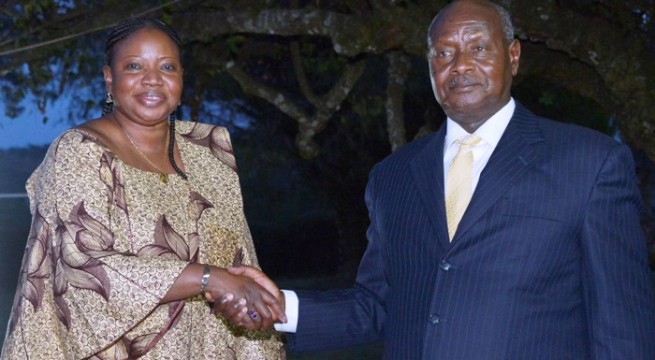
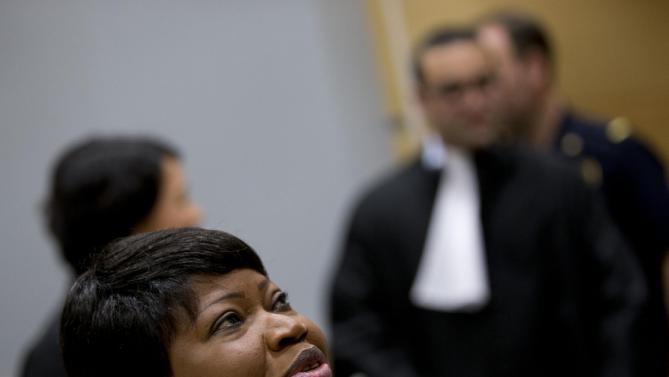
Chief Prosecutor Fatou Bensouda (Photo: ICC)
Last week, Mark characterised the International Criminal Court (ICC) as the kind of institution that needs to be in crisis. From that perspective, the most relevant question for the ICC is how it manages the crises it confronts. This post explores how the ICC is not only an institution in crisis, but also an institution that reacts and responds to crisis.
The ICC’s Crisis-Mentality
The ICC has tended to focus its resources on crisis situations, on situations of ongoing violent conflicts (e.g. Uganda, Darfur, Libya, Mali, Democratic Republic of Congo, Central African Republic) or recently expired periods of violence (e.g. Kenya and Côte d’Ivoire). To some extent this is understandable since the core crimes of the Rome Statute tend to arise in crisis situations. Yet, while the ICC’s crisis-focus may appear natural, it is also reflective of the workings of certain forms of power.
In particular, the ICC not only responds to crisis situations, it also constructs the terms on which such crises are understood. These terms tend to be reductionist in nature, often leading to what Gerry Simpson has referred to as “hegemonic histories”, myopic accounts of conflicts that tend to align with the interests of powerful states. This reductionism is partially a consequence of the ICC’s institutional design and partially a result of its foundations in criminal law.
Institutionally, while the ICC often proclaims the global and borderless nature of the atrocities it investigates, it is forced to function within a political environment in which state sovereignty remains an important instrument of power. To adopt Antonio Cassese’s famous image, the ICC is like a giant without arms and legs, heavily reliant on the limbs of States to function effectively. Consequently, when the ICC intervenes in a situation, it tends to pragmatically align itself with the interests of the UN Security Council and States Parties by only focusing on one side of a conflict.
The danger of this practice has been to facilitate the promotion of simplified characterizations of crisis situations as battles between the forces of good and evil. The ICC’s reductionism is not without consequence. The Government of Uganda, for example, has instrumentalized the ICC’s investigation of the Lord’s Resistance Army (LRA) as a strategy both to delegitimize the LRA’s authority as well as to legitimize its own military incursions in neighbouring States under the banner of global justice.
Moreover, by focusing on the actions of flesh-and-blood individuals, the ICC may inadvertently divert attention from the roles played by a broader range of actors, including corporations, States, and international organisations. Similarly, by focusing on direct violence, the ICC tends to abstract crises from their underlying structural causes, with the risk of mystifying their origins. As Tor Krever has recently put it, “the preoccupation remains with the abnormality of conjunctural violence, rather than the normality of the forces – including economic and legal structures – that lurk beneath”.
The failure of the ICC to deal with more systemic forms of repression is not problematic per se; after all, selectivity and exclusion are inevitable features of all legal institutions. However, when the ICC monopolizes the language of global justice through assertions that it is responding to the “most serious crimes of concern to the international community as a whole”, it is more than a little troubling when many of the crimes that appear to support the interests of the “international community” are relegated to the shadows beyond the ICC’s grasp.

The new ICC premises under construction (Photo: Mark Kersten)
Responding to the Critique of the ICC’s Crisis Mentality
Clearly, some of the above critiques target unavoidable features of the ICC system, such as the limits of its jurisdiction and its inability to control how actors beyond the courtroom attempt to instrumentalize its practices. Equally, however, the ICC does have some room for maneuver in responding to these critiques.
(1) A Revised Public Relations Strategy
First, the ICC could adopt a more careful public relations strategy, one that expressly acknowledges the limits of its interventions in crisis situations. This would require an ICC Prosecutor prepared to self-reflexively draw attention to what she cannot do. Fatou Bensouda has arguably begun to adopt this strategy by using her symbolic power to attribute blame to the Security Council for failing to adequately assist her office with respect to the situation of Darfur. However, the ICC Prosecutor could go much further.
For instance, in her press release concerning the surrender and transfer of Lord’s Resistance Army (LRA) Commander Dominic Ongwen, the ICC Prosecutor could have avoided painting a reductionist picture of the conflict in northern Uganda as one dominated by “the LRA’s reign of terror”. Instead, she could have reiterated the need for the investigation of alleged abuses committed by Ugandan governmental forces, for non-criminal forms of justice that are better equipped to meet the social and economic needs of those affected by the conflict, and for alternative, more participatory justice modalities that are better equipped to interrogate the structural causes of the conflict.
Critics may argue that, to the extent the ICC Prosecutor draws attention to abuses allegedly committed by Ugandan government forces, she risks losing Uganda’s support and cooperation in conducting its investigations against members of the LRA. But this is a risk worth taking if the ICC is to avoid being depicted as a partial instrument of the Ugandan government. Continue reading →