This is the first post in our symposium on Israel, Palestine and the Responsibility to Protect. Other contributions can be found here, here and here. Aidan Hehir is a Reader in International Relations at the University of Westminster and the author of The Responsibility to Protect: Rhetoric, Reality and the Future of Humanitarian Intervention.

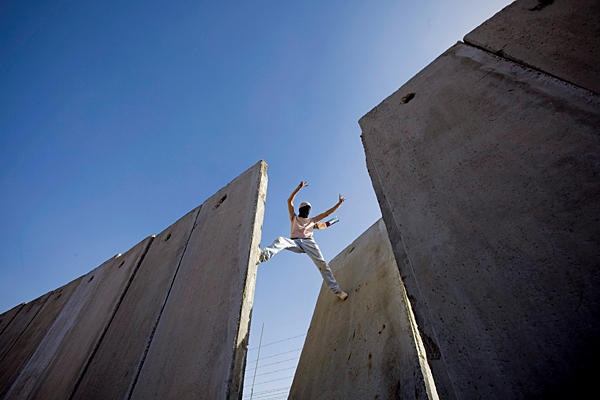
(Photo: UPI / Debbie Hill / Creative Commons)
It is often noted that in times of war laws fall silent. But NGOs rarely do. When crises erupt – – or appear on the horizon – NGOs invariably take to conventional and, increasingly, social media to appeal for calm and/or highlight the suffering of innocents. On 15 July, I published a short article on E-IR in which I noted that the Global Centre for R2P (GCR2P), the International Coalition for RtoP (ICRtoP) and the Asia Pacific Centre for R2P (APCR2P) had afforded the crisis in Gaza negligible coverage since Israel’s “Operation Protective Edge” began a week earlier on the 8th of July. Collectively, the three organisations had only published two tweets during this period (both came from the ICRtoP and neither directly addressed key issues pertaining to the application of R2P). This was, I suggested, incongruous considering the huge international media attention and the shocking number of fatalities, injuries and displaced persons, but also because, during this seven-day period, the three organisations had highlighted numerous situations, many of which – such as class discrimination in Mexico – were very evidently of far less gravity.
In response to my article, the ICRtoP tweeted, “We are working on a Listserv highlighting situation in Gaza – stay tuned later this week”. The GCR2P likewise tweeted, “We have been monitoring the situation closely. A statement is forthcoming”. On the 17th both the ICRtoP and the GCR2P finally published statements. To date, the APCR2P has not replied to the article or issued a statement.
During the course of a Twitter exchange amongst R2P scholars and observers in the wake of my article, the question of R2P’s applicability was raised. Kyle Matthews of the Will to Intervene Project asked whether “the weakness of R2P is that it applies to atrocities committed within a state’s borders. Is Gaza in Israel?”. Obviously, “is Gaza in Israel?” is a contentious question; Gaza is within the “State of Palestine” which is recognised by 134 UN member states and thus a very plausible answer could well be “no”. The statement issued by ICRtoP indeed stated that if Gaza is not considered to be part of Israel “RtoP would not be applicable for the protection of civilians across borders in the crisis”. Thus, could there then be logic to the idea that R2P does not apply to the crisis in Gaza because it is an inter-state conflict, hence the lack of coverage from R2P groups? In my opinion this is not a convincing argument.
First, it is disingenuous to advance this legalistic argument in the context of a crisis that very obviously constitutes a situation of grave humanitarian concern. Can organisations established to promote a concept dedicated to the protection of civilians and the promotion of respect for human rights credibly avoid engaging with a crisis on a narrow technical interpretation of R2P’s remit? Indeed, in the past, these organisations have commentated on inter-state crises; for example, on March 31, the ICRtoP issued a statement on the Russian intervention in Crimea.
A second point to note is that Israel does not recognise the State of Palestine. Thus, this is not an unambiguous case of inter-state conflict. The ambiguity surrounding the status of the State of Palestine could be used – if there was sufficient will – to overcome the “R2P does not apply to inter-state crises” argument. The issue could, of course, be disputed by international lawyers and brings up myriad issues related to recognition, legitimate authority, de jure and de facto sovereignty, but the key point is that there is sufficient grounds for any R2P-orientated group to make a case for their right to, at least, discuss the crisis. Continue reading