Hear me out: The case for Canada to refer itself to the ICC over Residential School Crimes

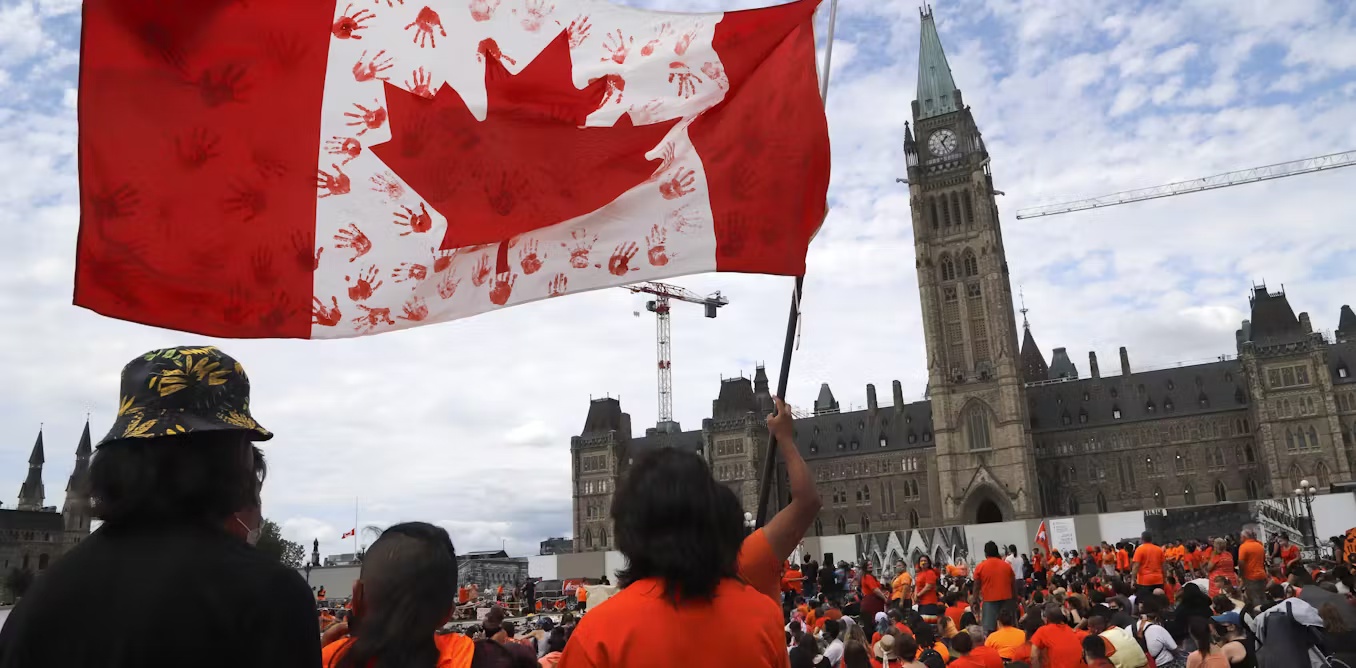
(Photo: Canadian Press)

It might sound bizarre to some. Canada referring itself to the International Criminal Court (ICC) for crimes against humanity? Isn’t the ICC supposed to be going after the likes of Vladimir Putin? Who would they even investigate? Is this all just a ploy for attention?

No. Hear me out. There is a case to be made that Canada should ask the ICC to investigate alleged atrocities committed by Canadian authorities in the Indian Residential School System. That case was put forward by Kimberly Murray, the Special Interlocutor for Missing Children and Unmarked Graves and Burial Sites associated with Indian Residential Schools, in her final report. It has since been endorsed by national chief of the Assembly of First Nations Cindy Woodhouse Nepinak.

As some readers will know, I was involved in writing the Special Interlocutor’s Report, working for Murray’s office from 2022-2024. The proposal for Canada to refer itself to the ICC deserves serious consideration, and not the all-too-common dismissal we see whenever Indigenous communities ask that actual, meaningful accountability be delivered for Residential School crimes and atrocities committed against Indigenous Peoples in Canada more generally.

The fact is that some crimes committed at Residential Schools may fall within the ICC’s jurisdiction.

The Court has jurisdiction over the crime against humanity of enforced disappearances. This crime occurs when a person’s liberty is deprived – via arrest, abduction or some other kind of force – by agents ordered or supported by the state. They are placed outside of the protection of the law. Whether the person survives captivity or not, they disappeared. Those responsible then conceal their fate, leaving relatives to wonder what happened to their loved ones, whether they are dead or alive, and if they will ever return. 

All of these things happened to the Indigenous children, on a widespread and systematic scale. As a matter of Canadian policy, the children were taken by state agents – often the RCMP – and forced into Residential Schools where they weren’t permitted to leave. Thousands never returned home. Thousands perished. Thousands are buried in unmarked graves. Their disappearances have still not been addressed.

This is the crime against humanity of enforced disappearances.

Still, the ICC only has jurisdiction over crimes committed after it became a functioning institution, on 1 July 2002. So, how could the Court investigate the disappearances of children if the last Residential School closed in 1997?

Continue reading
Posted in Canada, Enforced Disappearance, Enforced Disapperances, Indian Residential School System, International Criminal Court (ICC), International Criminal Justice | 2 Comments

The ICC has issued arrest warrants for Netanyahu and Gallant. What’s next?

Dear readers,

Last Thursday was a good day for justice and accountability, one that many thought would never come or believed was even possible.

I therefore thought some might be interested in this interview that I did with Al Jazeera English’s The Take on the International Criminal Court’s warrants for Israel’s Prime Minister Benjamin Netanyahu and Yoav Gallant along with Hamas’ Mohammed Diab Ibrahim Al-Masri (Deif):

While I noted in the interview that I thought that Netanyahu and Gallant would be allowed to visit the United Nations, I am also keen to hear the views of others on this subject.

Given that the United States would likely welcome both, what would happen if Netanyahu entered the premises of the UN to attend, for example, the UN General Assembly next year? Even if the UN sought to enforce the warrant, who would do so on behalf of the UN? Would it be practically possible given where the premises of the UN are located?

I also recommend this article over at Just Security, by Tom Dannenbaum, Nuts & Bolts of the International Criminal Court Arrest Warrants in the ‘Situation in Palestine’

As always, thank you for tuning in and your readership!

Posted in Benjamin Netanyahu, International Criminal Court (ICC), International Criminal Justice, Israel, Palestine, Palestine and the ICC, Yoav Gallant | Tagged , , , | 1 Comment

Seeing through the Fog of Justice in Israel and Palestine: Dispelling false claims about the ICC

A version of this article originally appeared in E-International Relations.

(Photo: EPA-EFE/REX/Shutterstock)

As is often said, the first casualty in war is the truth. Misinformation, disinformation, and propaganda are commonplace in the context of armed conflicts, as warring sides and their allies attempt to secure narratives conducive to their wartime aims. No contemporary conflict has been as rife with untruths than the conflict in the Middle East, a reality that extends to ongoing efforts to address the mass atrocities committed in Israel and Palestine. In what follows, I dispel some popular but false claims about the work of the International Criminal Court (ICC), its investigation into the situation in Palestine, and the warrants that have been requested by the Prosecutor for Israeli officials.

Firstly, there is the issue of jurisdiction. Israel, the United States, and a few other states have cast doubt on whether the ICC has jurisdiction over Israeli officials. According to them, the Court cannot exercise jurisdiction over citizens of Israel because Israel has never joined the ICC. Others, like former Canadian Justice Minister Irwin Cotler, a staunch defender of Israel, has attempted to argue that the ICC has jurisdiction over Palestinian citizens, but not Israeli ones. These claims are false.

The ICC has jurisdiction over both Israeli officials and Palestinian leaders. In 2015, Palestine became a member-state of the ICC. That same year, the Court opened a preliminary examination into the situation in Palestine. In 2021, judges determined that the ICC Prosecutor therefore has jurisdiction over Gaza and the West Bank, including East Jerusalem and an official investigation into the situation in Palestine ensued. 

Because Palestine is a state before the ICC (and a state recognized by 149 of 193 UN member states), the Court has jurisdiction to investigate any citizens of Palestine, irrespective of where their atrocities are perpetrated. The Court also has jurisdiction over any atrocities committed on Palestinian territory, irrespective of the nationality of the perpetrators. As a result, the ICC has jurisdiction over Hamas and the crimes its fighters committed in Israel even though Israel is not an ICC member-state, and the Court has jurisdiction over any Israeli perpetrators of mass atrocities committed in Gaza and the West Bank. Suggestions to the contrary are not only incorrect but represent efforts to interfere with one of the only avenues for accountability in a situation rife with credible allegations of war crimes, crimes against humanity, ethnic cleansing and genocide.

Continue reading
Posted in ICC Prosecutor, International Criminal Court (ICC), Israel, Palestine, Palestine and the ICC | Tagged , , , , | 5 Comments

Justice for the Missing and Disappeared: A landmark report on the ongoing need for accountability for the atrocities committed against Indigenous children in and by Canada

The release of the Final Report of the Office of the Independent Special Interlocutor for Missing Children and Unmarked Graves and Burial Sites associated with Indian Residential Schools

Dear JiC readers,

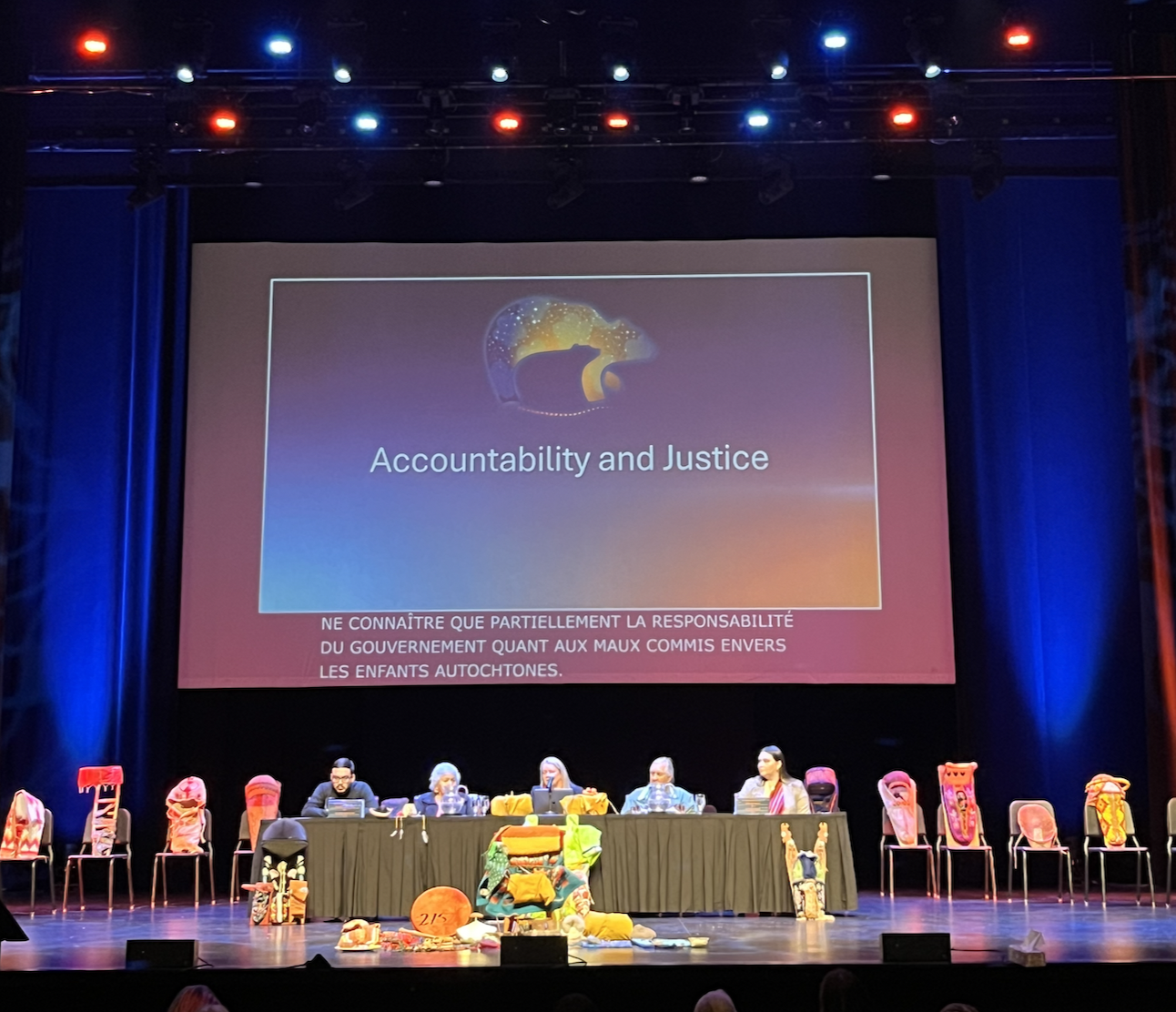
In late October 2024, The Office of the Independent Special Interlocutor for Missing Children and Unmarked Graves and Burial Sites associated with Indian Residential Schools released its final report and submitted it to the government of Canada.

As the title of the office suggests, the report by Special Interlocutor Kimberly Murray examines the abuses committed against Indigenous children in the Indian Residential School System, including through scientific experimentation, enforced disappearances, and other serious human rights violations and potential crimes against humanity. Among the report’s conclusions is that Canada has done more to protect perpetrators of atrocities against Indigenous children than the children themselves.

These harms will be known to many readers who have learned of the presence of thousands of unmarked burials across Canada as well as findings of genocide in Canada by the National Inquiry on Missing and Murdered Children as well as the House of Commons.

I was given the opportunity to work with the Office on this report from late 2022 until the Spring of 2024. My efforts focused on applying international human rights law and international criminal law to the abuses and horrors faced by Indigenous children. It also endeavoured to articulate how impunity in Canada is systemic and structural as the atrocities committed against Indigenous peoples, via the existence of “settler amnesty”. In the end, four chapters describe how international human rights law and international criminal law apply and help us to better understand the nature of the horrors committed through the Indian Residential School System:

  • Chapter 2: The Enforced Disappearances of Children and Crimes Against Humanity
  • Chapter 3: Unmarked Burials and Mass Graves
  • Chapter 4: Experimentation and Other Atrocities Against Indigenous Children
  • Chapter 5: Settler Amnesty and the Culture of Impunity in Canada
Continue reading
Posted in Amnesty, Canada, Crimes against humanity, Genocide, Indigenous Peoples, International Criminal Court (ICC), Torture | Tagged , , , , , , , | Leave a comment

Canada should Recognize Palestine, Now: My Speech to the House of Commons Standing Committee on Foreign Affairs

Dear JiC readers: I had the honour and opportunity to present my views to the Canadian House of Commons’ Standing Committee on Foreign Affairs and International Development on 29 October. A video of my testimony – and that of others, including Ambassador Jon Allen and law professor Ardi Imseis is available here. In case of interest, I have also shared the text of my speech below. – Mark

Thank you, Mr. Chair.

There is no reason for Canada to wait to recognize Palestine. It is time.

Palestinian statehood is a legal fact. 146 out of 193 United Nations member states currently recognize Palestine. Our allies – Sweden, Ireland, Ukraine, Norway, and Spain – all recognize Palestine.

But not Canada. Why?

Let me take this opportunity to dispel some arguments that have been put forward against immediate recognition.

First, some claim that Canada should not recognize Palestine because doing so would go against our NATO and G7 allies.

But Sweden, Norway and Spain are NATO members. So too are Poland and Czechia. All recognize Palestine. G7 countries like Japan and France have likewise moved closer to recognizing Palestinian statehood. The only G7 state to oppose the May 2024 UN General Assembly vote on Palestinian statehood was the United States.

Second, it is said that recognizing Palestine as a state is a “reward for Hamas”.

This argument is duplicitous and dangerous. It relies on an assumption that Palestinians are all Hamas, a notion that drives the collective punishment of Palestinian civilians and is used to justify mass atrocities.

Recognition is not a reward. Nor is recognition a consolation for the relentless and well-documented war crimes and crimes against humanity committed against the Palestinian people. It is a basic, inalienable human right. It is the right of Palestinians.

The International Covenants on Civil and Political Rights and on Economic, Social and Cultural Rights – treaties Canada has signed and ratified – list the right of all peoples to self-determination. Both list it in Article 1.

Third, some say that recognizing Palestine as a state would undermine the prospects of a negotiated, Two-State solution.

Continue reading
Posted in Canada, Gaza, International Law, Israel | Tagged , , , , | 2 Comments

Justice for the Disappeared in Gaza: It’s Time to Investigate Enforced Disappearances as a Crime Against Humanity

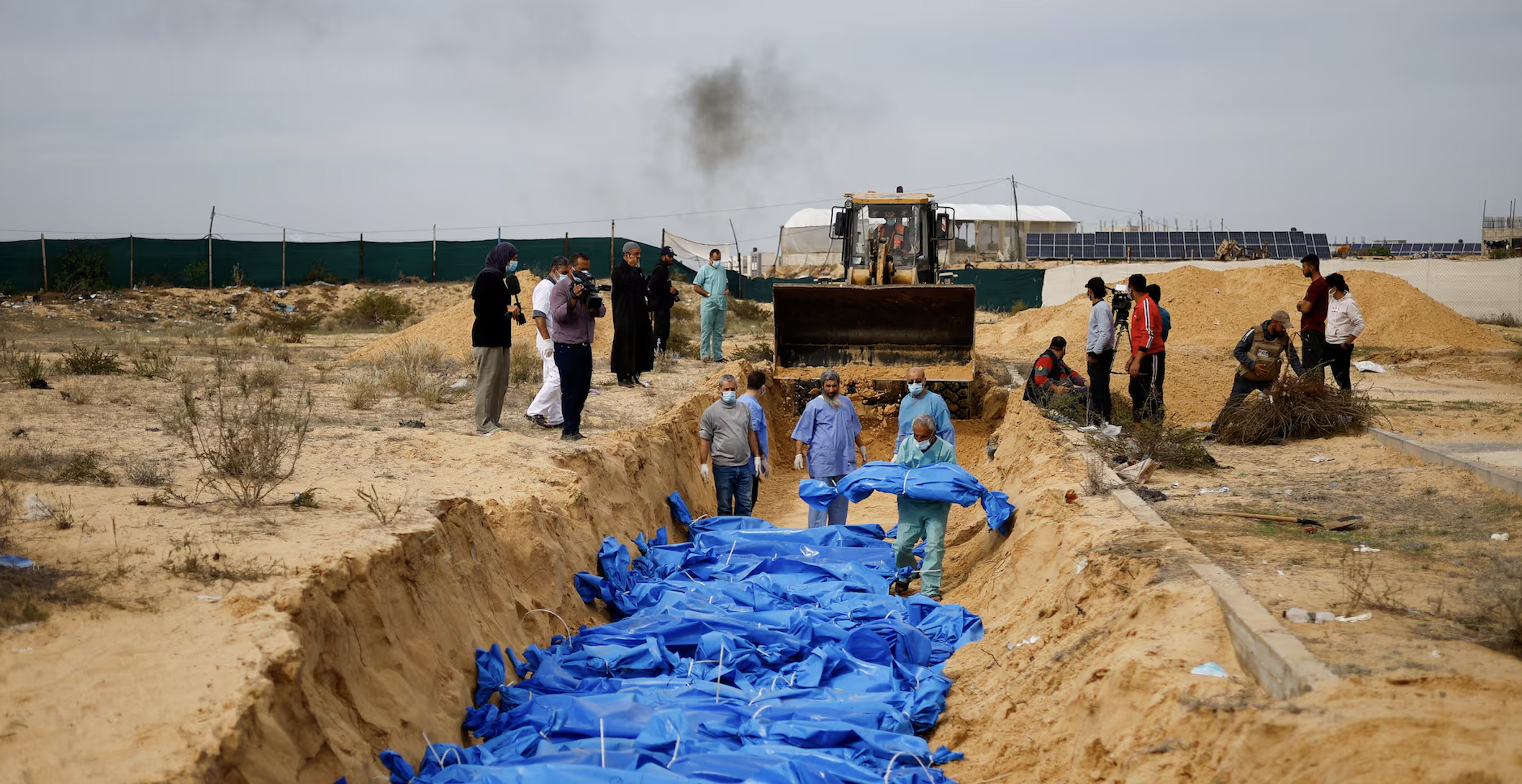
A mass burial in Gaza (Photo: Reuters)

In late September 2024, a container was brought into Gaza from Israel on a truck. Inside were the bodies of eighty-eight Palestinians killed during Israel’s offensive on the Gaza Strip. Who were they? No one appeared to know and those who knew weren’t willing to provide an answer. Palestinian health authorities refused to accept the bodies or bury them until someone told them who they were and why they had died. 

Whoever these bodies belonged to or what they had done in life, they were someone’s son, someone’s husband, and someone’s father. Those someones deserve to know the fate of their relatives. That their right to know is refused may form part of a crime against humanity.

Enforced disappearances are perpetrated in virtually every conflict in the world marked by mass atrocities. The UN Working Group on Enforced or Involuntary Disappearances has catalogued tens of thousands of cases of disappeared persons. The UN says that such disappearances are used “as a strategy to spread terror within the society,” aimed not only at close relatives but “their communities and society as a whole.”

Enforced disappearances typically begin with an arrest, abduction or detention by secret police, militaries, or militias working for a government. Detention is often, although not always, followed by torture and death. What makes the cruelty of enforced disappearances unique is that family and community members of the disappeared are left in the dark as authorities refuse to disclose the victim’s fate or whereabouts. 

Where are they? Are they alive? If they were killed, where are their bodies?

Continue reading
Posted in Enforced Disapperances, Gaza, Hamas, ICC Prosecutor, International Criminal Court (ICC), International Criminal Justice, Israel, Palestine, Palestine and the ICC | 1 Comment

To change the we as well as the me and the you: Concluding the Symposium on Informers Up Close

Mark A. Drumbl and Barbora Holá join JiC for this concluding contribution to our Symposium on their new book, Informers Up Close. To access all of the other contributions the symposium, please see here.

(Photo: Wired)

So I turned myself to face me

But I’ve never caught a glimpse

Of how the others must see the faker

[…]

Changes, just gonna have to be a different man

Time may change me

But I can’t trace time

[…]

Changes, where’s your shame?

You’ve left us up to our necks in it

Time may change me

But you can’t trace time

[…]

Strange fascination, fascinating me
Ah, changes are taking the pace I’m going through

[…]

I said that time may change me
But I can’t trace time

–David Bowie, ‘Changes’, 1971, from the album Hunky Dory 

Transitional justice is about change. Good change, supposedly. Change from repression or war to sunnier days. About the process, in David Bowie’s words, to face me, to face you, for us to face each other, and then turn to face our collective we. To cleanse the shame in which all have been left up to their necks. Change from venality and secrecy to purity and transparency. Progressive change. Forward change. We come out, in Bowie’s words, as ‘different’ – new and improved, for the better.

The change of transitional justice is to change the we as well as the me and the you. And so it goes for informers. They change from fooling others to becoming fools. Informers Up Close documents how they become scapegoated and revealed as fakers. Informers are put in front of a mirror. They are exposed through file-openings, thereby collaterally damaging all their naked informed-upons. Informers are fired and flattened. They are not considered victims of a regime that had indeed often abused them. Although, as Novak Vučo and Vladimir Petrović note, top state security brass might have been able to broker power in Communist Czechoslovakia, their bevvy of informers largely remained marginal. Many betrayed others for breadcrumbs and scraps; to feel useful; or to find some panache in the pinch of penury. In the end, placing informers in front of a mirror enables many others to avoid self-examination. The others see the fakers very disdainfully and thereby might not grasp the complicity that lurks in themselves.

Continue reading
Posted in Czech Republic, Czechoslovakia, Europe, Informers Up Close Symposium, Transitional Justice | Tagged , , , , , | Leave a comment

Lustration of Informers to Promote Trust

The following is the final contribution to our ongoing symposium on Mark Drumbl and Barbora Holá’s new book Informers up Close. It was written by Cynthia Horne, a Professor Political Science at Western Washington University. To see all of the other submissions to the symposium, click here.

Communist-era buildings in Tartu, Estonia

Lustration was a particular form of vetting used in most post-communist transitional justice programs. Although lustration differed by national context, at its most basic, individuals were screened for evidence of employment in or collaboration with the secret police and/or high-ranking communist party membership drawing on information found in the secret police files.  Evidence of collaboration could negate eligibility for public office or employment in a range of public and semi-public positions. In some cases this evidence was also publicly disclosed, with the intention of shaming individuals to recuse themselves from consideration for positions. 

A core goal of lustration was (re)building trust.  This was an acute issue in post-communist countries, which suffered from especially high levels of both social and political distrust. The Vice Minister of the Interior of the Czech situated the lustration of informers within this trust-building context: 

The network of [secret police] collaborators is like a cancer inside Czechoslovak society. Is it so difficult to understand that people want to know who the former agents and informers are?  This is not an issue of vengeance, nor of passing judgments. This is simply a question of trusting our fellow citizens who write newspapers, enact laws and govern our country.

How was lustration supposed to support trust-building?  First, removing those with a past tainted by collaboration was alleged to improve citizens’ trust in the capacity and integrity of public institutions. Second, the threat of revelation was expected to prompt the recusal of collaborators from public office, catalyzing bureaucratic change.  Third, the process of revealing the files and acknowledging collaboration was intended to support “the purification of state organizations from their sins under the communist regimes.” In essence, a combination of personnel changes and changes in the ‘moral culture’ of citizens was expected to build trust in the state and public institutions.   

Interpersonal trust was expected to change, although how was not entirely clear at the start of the transitions from communism to democratic governance. Finding out that your neighbors, co-workers and family members were spying on you could break any remaining social trust networks. Alternatively, although painful, revealing the scope of the spy networks might help society confront its own complicity in past harms. 

Continue reading
Posted in Czech Republic, Czechoslovakia, Europe, Informers Up Close Symposium, Transitional Justice | Tagged , , , , , , | Leave a comment

On the far-reaching relevance of Holá’s and Drumbl’s Study of Informers from Cold War Czechoslovakia

The following is a contribution from Novak Vučo and Vladimir Petrović to JiC’s ongoing symposium on Mark Drumbl and Barbora Holá’s new book, Informers up Close. Vladimir is a Research Professor at Institute for Contemporary History Belgrade and a researcher at the NIOD Institute for War, Holocaust and Genocide Studies, Amsterdam. Novak is a prosecuting attorney from Belgrade, Serbia, specializing in war crimes. To see all of the other submissions to the symposium, click here.

Communist era buildings in Czechia (Photo: Depositphot)

Writing about secret service surveillance operations has always been popular. However, writing sensibly on this topic is incredibly difficult. Accordingly, books from which we can actually learn something about it are rather rare. There are many reasons for that. The modus operandi of these organizations is soaked in secrecy, mystery, obfuscation, and disinformation. Hence, it is no wonder that established academics rarely venture into such a sticky domain. The result is that this field is sadly almost entirely abandoned to popular accounts of questionable accuracy, as well as populated by authorized and semi-authorized publications by those same services or their proxies and admirers. If only for this reason, Mark Drumbl and Barbora Holá’s book should be highly praised, as it rests on solid academic ground and aims at shedding light into this dark corner of our reality.  

In our view, the authors succeeded in their effort for several reasons. Firstly, they are both experienced in the realm of international criminal law in general, and criminology in particular, but they are also well-versed in the promises and pitfalls of transitional justice mechanisms in various contexts around the world. Secondly, they decided to zoom into only one such organization, namely, the political police of Communist Czechoslovakia. Thirdly, they delved into only one crucial aspect of its activity: the interaction with the citizenry in order to obtain information. Spying on elements of society deemed unreliable was pervasive all over the Eastern Bloc and created an entire, massive subgroup in society – the informers. Drumbl and Holá unwind how this dynamic played out in postwar Czechoslovakia. What was the scope of the surveillance and its societal impact?

The authors provide a valuable overview of organization of repression in socialist Czechoslovakia, beginning with a special focus on 1948-1956. This ’Period of Stalinization’ was formative for the institutional culture of its robust security apparatus. Evolving under the watchful Soviet gaze, this system was generally set to provide total control over the population by extracting information considered to be valuable for the regime protection. At its center was the secret police, State Security (Státní bezpečnost – StB). Modeled according to its Cheka/NKVD precursor, the StB was also supposed to act as the Communist party’s “sword and shield”. In 1955, 38% of the informers were Communist party members, and although in the mid-1960s that number dropped below 10%, there is no doubt that they provided valuable service to the all-powerful party. 

This is not an unusual development – it happened in every country which fell under Stalin’s influence after the Second World War. However, even though they came from the same mold, and were also closely intertwined, Eastern European security regimes showed some slight, albeit telling, variations. For instance, they all relied on informers, but to a different degree. 

Continue reading
Posted in Czech Republic, Czechoslovakia, Historical Justice, Informers Up Close Symposium, Transitional Justice | Tagged , , | Leave a comment

Victims who Victimize – Understanding Informers

The following is Irit Dekel‘s contribution to JiC’s ongoing symposium on Mark Drumbl and Barbora Holá’s new book, Informers Up Close. Irit is an Assistant Professor of Germanic Studies and Assistant Professor of Jewish Studies at Indiana University, Bloomington. To see all of the other submissions to the symposium, click here.

A soviet-era apartment building (Photo: Dreamtime)

In Informers Up Close Mark Drumbl and Barbora Holá aim to understand both the act of informing and informers themselves. In this beautifully written volume, Drumbl and Holá make sense of what informers did and how subjective values of the Communist era in Czechoslovakia both affected informer worldviews and knowledge formation of informer actions. As its title promises, the book offers a microscopic analysis of Czechoslovak secret police (StB) files about informers and individuals they informed upon, their own writing, those of recruiters and bureaucrats, the state, and its operatives in what was given to or withheld from citizens in Communist Czechoslovakia. The authors use the most detailed elements of human experience and social mechanisms to draw a larger picture of how informing came to be and was sustained and how informers were caricatured and denounced after the regime ended. A central finding of the book is that informing dynamically takes shape as an intimate and relational act of social navigation. The authors conceptualize StB informers as victims who victimize

Drumbl and Holá focus on ‘everyday collaboration’, such as denouncing a spouse or refusing to report on a close friend and still being useful to the state. Their sensitivity to detail enables them to paint a multi-faceted picture of informing and informers beyond their case study.  While the archived StB files constitute the epistemological foundation of Informers Up Close, the authors helpfully incorporate extensive content from a robust array of secondary sources: accounts in the Memory of Nations” oral history archive, academic literature, newspaper articles, informal discussions they have conducted, and literary works. For instance, reading the recruitment proposals the authors show, rather than tell, the salience of individual interpersonal connections amid the intricate structure of the bureaucracy. Understanding informers in this way, the authors shed light on multiple aspects of transitional justice after conflict or regime end. The book also opens space for future studies of the residual effect of authoritarian regimes, the lingering emotions that first moved the informers and sustained their actions; and after the regime’s end morphed into a shared disdain toward informers and their acts, and into the lingering distrust and anger toward that time.

As a sociologist and ethnographer who focuses on memory in contemporary Germany and on witnessing, my discussion of this fascinating book follows questions its authors encourage readers to consider: (1) What files do? (2) What to do with files? (3) The ‘memory’ of files: and how to understand with them, or the long- lasting impact of narratives built upon the figure of the informer for the post-communist societies.

Continue reading
Posted in Czech Republic, Czechoslovakia, Europe, Historical Justice, Informers Up Close Symposium, Transitional Justice | Tagged , | Leave a comment