Victim Participation at the ICC – What’s the Deal?

Today, at the Assembly of States Parties conference in The Hague, the issue of victim’s participation will take centre stage. We’re thus thrilled to have regular JiC contributor Chris Tenove join JiC today to share his remarkable research and analysis on the politics and realities of victim participation at the International Criminal Court. Chris is a doctoral candidate at the University of British Columbia. You can read more of Chris’ work here and here. Enjoy!

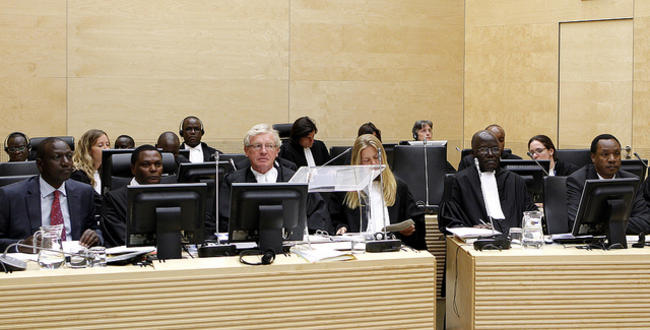
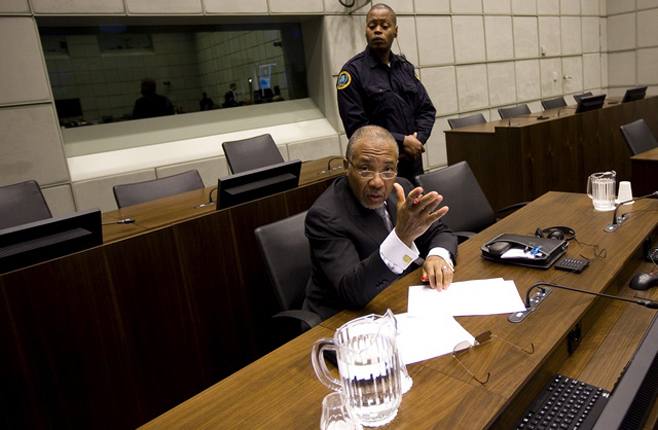
Witness testimony at the ICC

Witness testimony at the ICC

While the relationship between the International Criminal Court (ICC) and African states looms large over the current meeting of the Assembly of States Parties (ASP), victims’ issues will also receive a great deal of attention. Victims and affected communities will be the focus of a plenary discussion today and side-events will tackle victims’ legal participation, the external review of the Trust Fund for Victims, and justice for victims in Kenya. ASP members and civil society groups want the ICC to improve its policies on victims’ matters such as participation, reparations and engagement with affected communities. Academics, too, have been weighing in.

In this post I will mention a few of the issues raised in recent publications, focusing on concerns about victim participation. Academics and civil society organizations tend to want more extensive participation, which will likely require more resources. However, several legal officers from ASP member states have in recent months told me that their governments see victim participation as a money pit, capable of costing much and adding little to the Court’s core functions. To address these various concerns we need better assessments of the impact of victim participation.

The Rome Statute grants victims the right to be legal participants and not just witnesses for the prosecution or defense. While this opportunity exists in many civil law systems, it was not a part of the post-WW2 or ad hoc international criminal tribunals. Individuals apply by filling out a form that is reviewed by ICC staff and judges. Those who are accepted are put into groups – sometimes by their geographical area, sometimes by the crime they suffered – and assigned a lawyer who is paid by the Court. For instance, 129 victims were accepted as participants in the Lubanga trial and put in three groups, while over 5,000 victims have been accepted during the course of the Bemba trial and put in two groups. Victims’ lawyers can make opening and closing statements, question witnesses, invite victims themselves to give testimony, or participate in other ways, all according to the discretion of judges. The ICC’s approach is an experiment or, more accurately, a series of experiments. Different trial chambers have conducted victim participation in different ways, and the Registry has shifted its own policies over time and across situations.

Symbolism and Reality of Victim Participation

There is considerable scholarship on the origins and normative aims of victim participation, and a growing literature on its practice. In a JiC post last year I mentioned analyses by REDRESSHakan Friman, Christodoulos Kaoutzanis and the War Crimes Research Office. Here are a few recent additions:

Emily Haslam and Rod Edmunds explore in detail the different approaches that trial chambers have taken to grouping victims and assigning counsel. This practice of “common legal representation” is undoubtedly necessary, given the large numbers of victims and the inability for most to retain their own lawyers. But placing large numbers of victims in just a few groups can cause their different interests to be ignored, and individuals in large groups may have few opportunities to communicate with their representatives. Haslam and Edwards argue that the process may make the common legal representatives accountable to the judges and Registry rather than their ostensible clients, the victims. The authors fear that current developments will lead to victim participation that is “more symbolic than real”.

Sara Kendall and Sarah Nouwen make a similar argument in their philosophically-rich paper “Representational Practices at the International Criminal Court: The Gap between Juridified and Abstract Victimhood”. They argue that ICC staff and supporters invoke a generalized, de-politicized representation of victims to justify their actions. This rhetorical construct, “The Victims,” is used to buttress the Court’s authority. (Peter Dixon and I make a different but complementary argument about the importance of victims to the ICC’s authority in a recent paper.) While the ICC is portrayed as a court for “The Victims,” Kendall and Nouwen point out that vanishingly few victims get a chance to participate. Many victims in situation countries are ineligible to participate, since that opportunity is restricted to those affected by the specific crimes brought forward by the Office of the Prosecutor (OTP). Of those granted participant status, only a handful appear in trial proceedings. Kendall and Nouwen thus argue that, in practice, victim participation is narrow, limited, and offers little opportunity for agency.
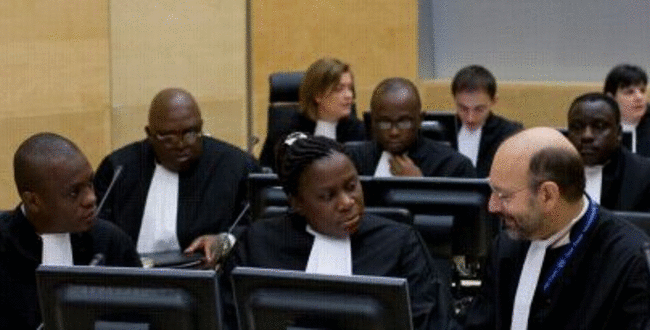
(Photo: RNW)

(Photo: RNW)

Neither paper examines the impact that victim participation has on judicial processes. Mariana Pena and Gaelle Carayon begin to do so in their recent paper, “Is the ICC Making the Most of Victim Participation?” They note that victim participation can contribute to truth-finding in trials and give examples in which victims’ representatives added facts and legal arguments that had been left out by the prosecution and defense, either due to error or their focus on the guilt or innocence of the accused. But the authors see obstacles to meaningful participation, including the application process and the fact that victims have little input into OTP’s selection of crimes to be prosecuted. Pena and Carayon are particularly concerned that common legal representatives do not have sufficient opportunity to consult with victims and make arguments on their behalf. Unlike Kendall and Nouwen, who contrast participation and representation, they see representation as participation provided it is done well.

Similar arguments were made in a recent report by an independent panel of experts, facilitated by REDRESS and Amnesty International to evaluate the ICC’s approach to victim participation. Like Pena and Carayon, the panel proposed that the application process be streamlined and that the OTP expand its discussions with victims during preliminary examinations and better justify their selection of charges. To make representation meaningful rather than merely symbolic, they proposed that victims need more information about their right to participate, and more opportunity to be regularly consulted by their legal representatives. Continue reading

Posted in Uncategorized | 5 Comments

Between Skepticism and Reality: LRA Leader Joseph Kony in “Surrender Talks”

Joseph Kony

Joseph Kony

Numerous reports are suggesting that the notorious leader of the Lord’s Resistance Army (LRA) Joseph Kony is currently in “surrender talks” with the government of the Central African Republic. According to African Union’s special envoy on the LRA Francisco Madeira, Kony (who is about 52 years old now) is suffering from a “serious, uncharacterized illness” and is seeking guarantees of a secure safe haven.

It’s still early and the story is murky at best. I will follow any developments and posts them as they emerge but here are few initial thoughts.

Fool Me Once…

There is good reason to be skeptical of any reports about Kony’s whereabouts and any potential surrender. Kony has spent the better part of three decades fighting in the bush. Whilst the LRA does have a political agenda that is far too often ignored in favour of a narrative that paints them as “evil, crazy terrorists”, it is likely that a key, if not the key, driver of the rebel group in recent years has been mere survival. If Kony is suffering from an illness that poses a threat to his life, this could lead him to explore exit options. It is important to remember, however, that surrendering may be just one of the options he is exploring.

Observers will point out that Kony has regularly manipulated talks to surrender and achieve peace. Indeed, there is good evidence that Kony has benefitted from manipulating peace talks with the Government of Uganda. But I am not aware of any previous unilateral “surrender talks” coming directly from Kony.

In previous peace negotiations, the LRA has always argued that any peace deal required both sides to take responsibility for the war and for the atrocities and human rights violations that took place in northern Uganda. For example, Kony refused to accept an offer of amnesty in 2006 because he believed that any such amnesty had to be accepted by President Yoweri Museveni and members of the Ugandan People’s Defense Forces as well. The Government of Uganda has consistently refused to take any responsibility for its role in the war or its perpetration of human rights violations. For its part, the international community (as well as influential groups like Invisible Children) have generally given the Government a free pass. Indeed, while many observers blame the LRA for the consistent failure of peace negotiations to end the war, the GoU’s role in undermining talks and prioritizing poorly conceived military solutions to end the conflict are too often neglected. Kony and certain members of the LRA may never have been truly interested in a peaceful solution to the war. But, given the evidence, it is very hard to argue that Museveni and the GoU were either.

All of this is to say that if Kony is indeed in “surrender talks”, this is a unique development and not one which can readily be disregarded by suggesting that it is simply a repeat of previous failed peace negotiations.

Members of the LRA (Photo: James Akena)

Members of the LRA (Photo: James Akena)

Heading to The Hague?

While it may be the ultimate dream of human rights advocates and champions of the International Criminal Court (ICC), it is folly to assume that Kony is currently looking for a deal that will send him to face trial in The Hague. From interviews and conversations with people close to him, it is clear that Kony equates surrendering to the ICC with his death. He does not believe that he would actually reach The Hague. Rather, Kony believes that he would be killed along the way. Have Kony’s views of the ICC changed? Possibly. But, to date, there is no evidence to suggest that they have.  Continue reading

Posted in Central African Republic (CAR), International Criminal Court (ICC), Justice, Lord's Resistance Army (LRA), Uganda | Tagged , | 7 Comments

Kenya and the ICC: Coming to a Head?

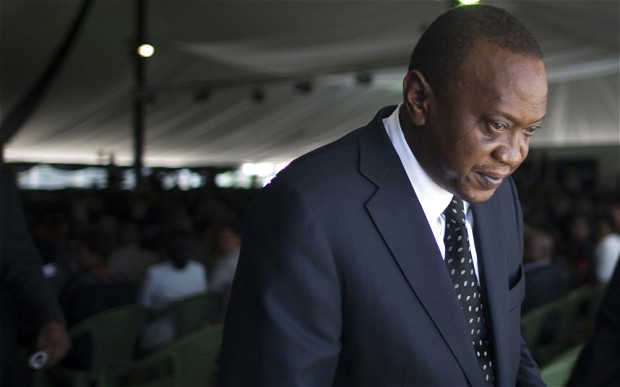
(Photo: ICC)

(Photo: ICC)

Starting this week, member-states of the International Criminal Court (ICC) will gather in The Hague for the ICC’s yearly Assembly of States Parties (ASP) conference. This meeting of member-states is shaping up to be one of the most contentious – and important – to date. The reason is simple: the ICC cases against Kenyan President Uhuru Kenyatta and Deputy President William Ruto.

Deferral Flops

Last Friday, Kenya, supported by most of the African Union, went to the United Nations Security Council to request a deferral, under Article 16 of the Rome Statute, of the cases against Kenyatta and Ruto. Kenya knew well in advance that a deferral request would fail. Security Council members had outlined their positions regarding a deferral in the days and weeks prior to the vote. The P3 (the US, France and the UK) as well as ICC member-states sitting on the Security Council  stated that the Council was the wrong venue to deal with the Kenya cases. They did not want the question of a deferral to come to a vote and reiterated that they believed that the ASP meetings were the proper venue to discuss and deal with the Kenya cases. Still, Kenya went ahead and certainly made a point in having the deferral request voted upon – and fail.

In ensuring that the vote went ahead, Kenya and its African Union partners have transformed what was generally viewed as a battle between themselves and the ICC into a diplomatic row between themselves and ‘Western’ ICC member-states. As an aside, this isn’t a bad thing for the Court. The focus is now squarely on those Security Council states, and especially the P3, who voted not to put a (temporary) halt to the Kenya cases.

A Matter of Diplomacy not Justice

Amazingly if not surprisingly, the Kenya cases now have almost nothing to do with justice. They long ago seized being an attempt to bring justice to the victims of Kenya’s 2007/08 post-election violence. Instead, the cases have morphed into some quirky combination of a diplomatic circus and fast-paced game of legal one-upmanship. It should be repeated: if Kenya had spent half the time it did on identifying and seeking justice mechanisms to deal with the post-election violence than it did seeking to undermine the Court and get African Union states behind it, we would be in a very different situation.

But for the rest of the world, the Kenya cases also represent a potential and looming diplomatic crisis. Even those states who are ICC member-states are scrambling to find a way to bridge their legal obligations stemming from of the Court and their political relationships with Kenyan government. It was telling that not one of the seven ICC member-state that was present on the Security Council for the deferral vote decided to vote against the motion to invoke Article 16. Not wanting to offend Kenya, all abstained. Their vote should be seen as a vote of non-confidence in the motion rather than a vote of confidence in the Court or the Kenya cases.

(Photo: UN / Paulo Filgueiras)

(Photo: UN / Paulo Filgueiras)

Those states that have sided with Kenya all along were the only clear winners on Friday. Amongst these, China stands out. Not long after being elected President, Kenyatta visited China and was welcomed with all the honours bestowed to a respected head of state. The Chinese government has consistently made it clear that it would support a deferral and the country voted in favour invoking Article 16. It has also used all of the right diplomatic language and niceties in supporting Kenya’s efforts to delay or terminate the cases. The diplomatic message to Western states from Kenya’s side is clear: we can just as easily look East as we can West and we won’t hesitate to do so.

Western states, as I have written previously, want to avoid the Kenya cases coming to a head. For all the oft-stated reasons (Kenya as a key player in the fight against terrorism, Kenya as a regional economic and political powerhouse, etc.), sustaining diplomatic relations with the Kenyan government is a key priority. These states want to avoid the much-dreaded “moment of non-cooperation”, when Kenyatta decides that he will not show up for a trial hearing and the Court, in response, issues a warrant for his arrest. At that point, normal diplomatic relations will become immensely more difficult. To avoid a diplomatic crisis, Western states have consistently stated that the cases should be examined at the ASP conference. Continue reading

Posted in African Union (AU), Article 16, Assembly of States Parties, Kenya, Kenya and the ICC, UN Security Council | 7 Comments

International Justice and the Prevention of Mass Atrocities: Paper Series

ECFR Conference on international justice and the prevention of mass atrocities in The Hague (Photo: Mark Kersten)

ECFR Conference on international justice and the prevention of mass atrocities in The Hague (Photo: Mark Kersten)

The debate over the relationship between peace and justice isn’t going to go away any time soon. Yet, despite all of the attention the ‘peace versus justice’ debate has received over the years, scholarship on the subject still suffers from a predilection to re-hash the same theories and arguments. It has thus been very refreshing to participate in a project, organized by Anthony Dworkin and the European Council on Foreign Relations, examining the effects of international justice mechanisms on conflict resolution.

Here’s the ECFR’s project description:

What place should the international community give to justice and accountability in its response to conflicts involving mass atrocities? Under what circumstances does the effort to pursue justice help or alternatively complicate the effort to bring atrocities to an end? Is it better to set a benchmark for justice by referring active conflicts to the International Criminal Court, or should efforts to seek justice be deferred until a peace deal is being discussed? To help inform future policymaking in this complex field, ECFR has launched a project to examine the record of past cases where international efforts to end conflict have taken different approaches to justice – ranging from the introduction of international tribunals to the acceptance of amnesties for the sake of peace.

Over the summer, the project brought together a diverse group of leading scholars on the peace-justice nexus, including Priscilla Hayner, Leslie Vinjamuri, Sarah NouwenLaura Davis and, course, Anthony himself. Each of the participants was asked to write a case study, the final result being twelve case-specific analyses of the effects of international justice on conflict resolution in: Afghanistan, Bosnia & Herzigovina, the DRC, Israel & Palestine, Kosovo, Liberia, Libya, Sierra Leone, Sudan, Syria, Uganda and Yemen.

All of the cases are accessibly written and are relatively short (about 2,500 words). I encourage all readers and anyone interested to check out this fantastic resource here and to pass it along to students and colleagues!

Posted in Afghanistan, Conferences, Conflict Resolution, Democratic Republic of Congo, Israel, Justice, Liberia, Palestine, Palestine and the ICC, Serbia, Sudan, Syria, Yemen | Tagged | Leave a comment

Kenyatta’s Next Move: What Kenya Wants from the ICC

(Photo: Getty Images)

(Photo: Getty Images)

Kenya’s dreams of getting the UN Security Council to defer the cases against President Uhuru Kenyatta and Vice President William Ruto have collapsed, at least for the time being. Key members of the Security Council aren’t willing to go for it; at least one of the P3 – France, the UK or the US – has made it clear that they would veto any attempt to invoke of Article 16 and defer the Kenya cases for at least one year.

Of course, that doesn’t mean that Kenya’s battle against the ICC is over. They may have lost the battle but they’re in it for the war. The country’s attention has now turned to the upcoming Assembly of States Parties (ASP) conference in The Hague (November 20 – 28). And, thanks to an online leak, we now know exactly what Kenya wants to see happen at the ASP.

Kenya will put on a full-court press in an attempt to amend the Rome Statute. Their attitude seems to be that if they can’t circumvent the Court, they might as well try to change it.

What Kenya Wants

1. An amendment to Article 63 pertaining to the presence of an accused at trial. Whether or not Kenyatta (and Ruto) have to be continuously present at their trials in The Hague has been an issue of much contention. Many believed (and some hoped) that allowing Kenyatta and Ruto to be absent from parts of their trial would constitute a middle ground and, consequently, lessen tensions between the Court and Kenya. However, it was recently ruled that Ruto had to be present throughout his trial and it now appears that a similar decision will be made in the Appeal’s chamber with regards to Kenyatta. Some, like Kevin Jon Heller, believe this is a recipe for disaster, putting the ICC and Kenya on a collision course.

Kenya wants to make it easier for individuals such as Kenyatta and Ruto to avoid being present at trial throughout the duration of proceedings. Specifically, it wants the Rome Statute to be amended to read:

“…an accused may be excused from continuous presence in the Court after the Chamber satisfies itself that exceptional circumstances exists, alternative measures have been put in place and considered, including but not limited to changes to the trial schedule or temporary adjournment.”

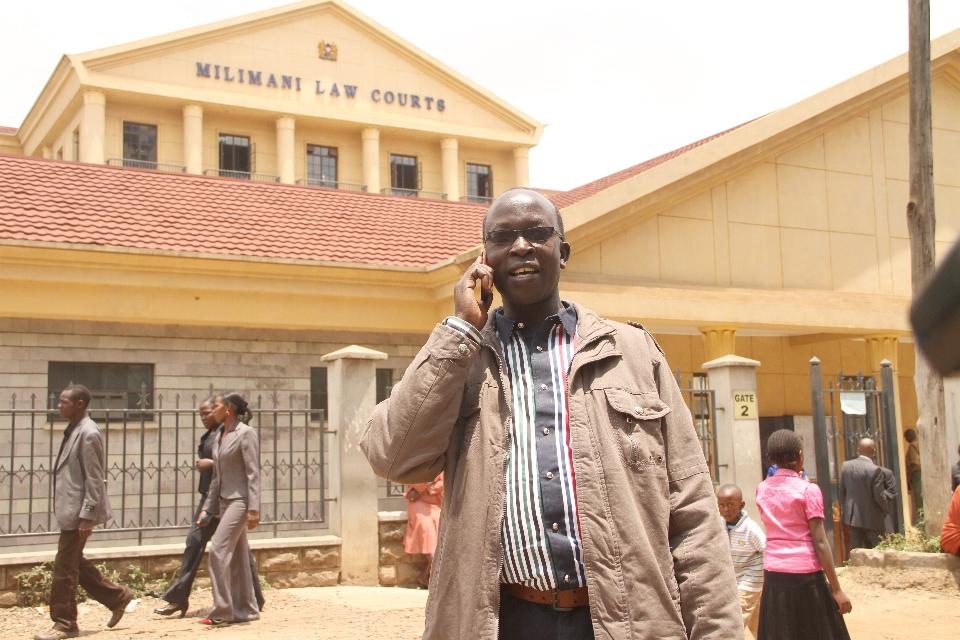
Walter Barasa (Photo: Fred Mutune / Xinhua Photo)

Walter Barasa (Photo: Fred Mutune / Xinhua Photo)

2. Kenya wants to amend provisions within the Rome Statute that ensure the Court treats “all persons without any distinction based on official capacity.” According to Kenyan officials, this “goes against the basic tenets of international law pertaining to privileges and immunities of government officials.” Kenya would like to see that government officials who are cooperating with proceedings (like Kenyatta and Ruto) should be excused from these provisions. Moreover (and predictably), Kenya wants to see Article 27 amended with the words: “… serving Heads of State may be exempt from prosecution during their current term of office. Such an exemtion [sic] may be renewed by the Court under the same conditions”. In other words, if you’re elected, you shouldn’t have to go to the ICC until your time in power is up. You have to wonder what kind of incentive that gives to gaining and maintaining power at all costs.  Continue reading

Posted in Deferral, International Criminal Court (ICC), Kenya, Kenya and the ICC | Tagged , | 10 Comments

Searching in Vain: Perfect Justice in Syria

(Jeff J Mitchell/Getty Images)

(Jeff J Mitchell/Getty Images)

A hot topic for many of the best and brightest in the field of international criminal justice is the ongoing conflict in Syria. Is it possible for justice to be delivered for the commission of atrocities – on both sides of the war? If so, what is the best way forward?

Much of the debate on justice in Syria unfortunately suffers from a rigid, all-or-nothing approach. Either perfect justice must be achieved or absolutely no justice should be pursued; either the international community gets the International Criminal Court (ICC) involved via a UN Security Council referral that funds the Court’s work and protects it from political manipulation or… well, nothing. As a result, attempts to elaborate how to achieve justice in Syria have marginalized middle-ground options on the grounds that they aren’t perfect or exactly what should happen in an ideal world. The perfect solution really has become the enemy of any solution.

But, of course, there are middle-ground solutions. They deserve more attention than they’ve received and key states involved in the conflict should weigh the costs and benefits of each. Here’s three worth talking about:

A Conditional Referral

I previously wrote about this concept but it remains just as, if not more, pertinent today than ever. Interestingly, Former ICC Prosecutor Luis Moreno-Ocampo has endorsed the idea.

A conditional referral would entail a legal guarantee from the Security Council that it would refer the situation in Syria by a given, future date. The parties to the conflict would then have a clear timeline for when they needed to end hostilities and cease their commission of atrocity crimes. If they did not, the Security Council would be legally ‘locked-in’ to issuing a referral of the situation to the ICC.

There are significant problems with this proposition, especially because it risks placing the ICC at the complete and utter whim of the Security Council member-states. As a result, it could severely undermine the independence and thus legitimacy of the Court. For many, it has consequently raised an uncomfortable question: is the pursuit of justice in any one context worth undermining the Court’s long-term viability?

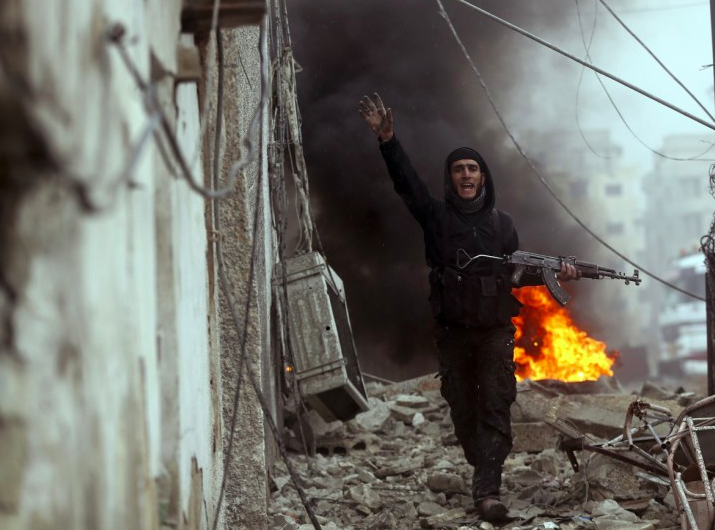
A Free Syrian Army fighter in Damascus(Goran Tomasevic/Reuters)

A Free Syrian Army fighter in Damascus(Goran Tomasevic/Reuters)

A Referral-Deferral

The concept of a referral-deferral hasn’t received much attention (in fact, I can’t find anything written about it to date). Still, it is an interesting proposition that was first proposed to me by Jason Ralph, who has written extensively on the legitimacy costs of UN Security Council deferrals.

The proposal is, in essence, an adaptation of a conditional referral. The Security Council would pass a resolution referring the situation in Syria to the ICC. It would then immediately pass a resolution deferring any investigation and prosecution in Syria for a period of 12 months. The belligerents in Syria would thus have one year to the resolve the war or to demonstrate that they were on a viable path to doing so and thus deserved a second 12-month deferral. Importantly, a referral-deferral might provide an incentive for the parties to negotiate an accountability mechanism that would satisfy the Court’s complementarity regime and therefore make any subsequent investigation unnecessary.

Of course, there are those who believe that a deferral under Article 16 is anathema to the ICC despite the fact that it forms an integral part of the Rome Statute. But a referral-deferral does have some advantages. Unlike a conditional referral of Syria to the ICC, a referral-deferral would put the onus and responsibility for matters of justice and accountability on the Security Council member-states and not the ICC.

An Ad-Hoc Tribunal 

The idea of an ad hoc tribunal gained traction after a number of high-profile academics and practitioners released a draft statute of a tribunal aimed at preventing Syria becoming a post-conflict “basket case”. There have been important voices, like Dov Jacobs, who expressed disappointment with the effort. But the broader outlines of the idea an ad hoc tribunal deserves more attention.

Still, for some reason the idea of an ad-hoc tribunal has been treated as an affront and an attack on the ICC. Others suggest that it simply can’t deliver justice. For example, Richard Dicker, Human Rights Watch’s Director of International Justice and Human Rights, recently told US lawmakers that an ad hoc tribunal “the solution most likely to provide justice is not a stand-alone ad hoc tribunal for Syria.” Continue reading

Posted in International Criminal Court (ICC), Syria, UN Security Council | 5 Comments

From Justice Delayed to Justice Denied: Katyń in Strasbourg

In April 1940, the Soviet secret police initiated a secret massacre of some 20,000 Polish officials and officers. The struggle to establish the truth of what happened in the Katyń forests came to dominate much of contemporary Polish political life and played a leading role in the struggle to wrench the country free from the shackles of communism. JiC is thrilled to welcome Maria Radziejowska for this  guest-post on the recent ruling at the European Court of Human Rights on whether Russia has sufficiently investigated the Katyń massacre. Maria is currently working for the Polish Institute of International Affairs in Warsaw where she conducts research and analysis focusing on international security and justice issues. She also blogs at Beyond the Hague

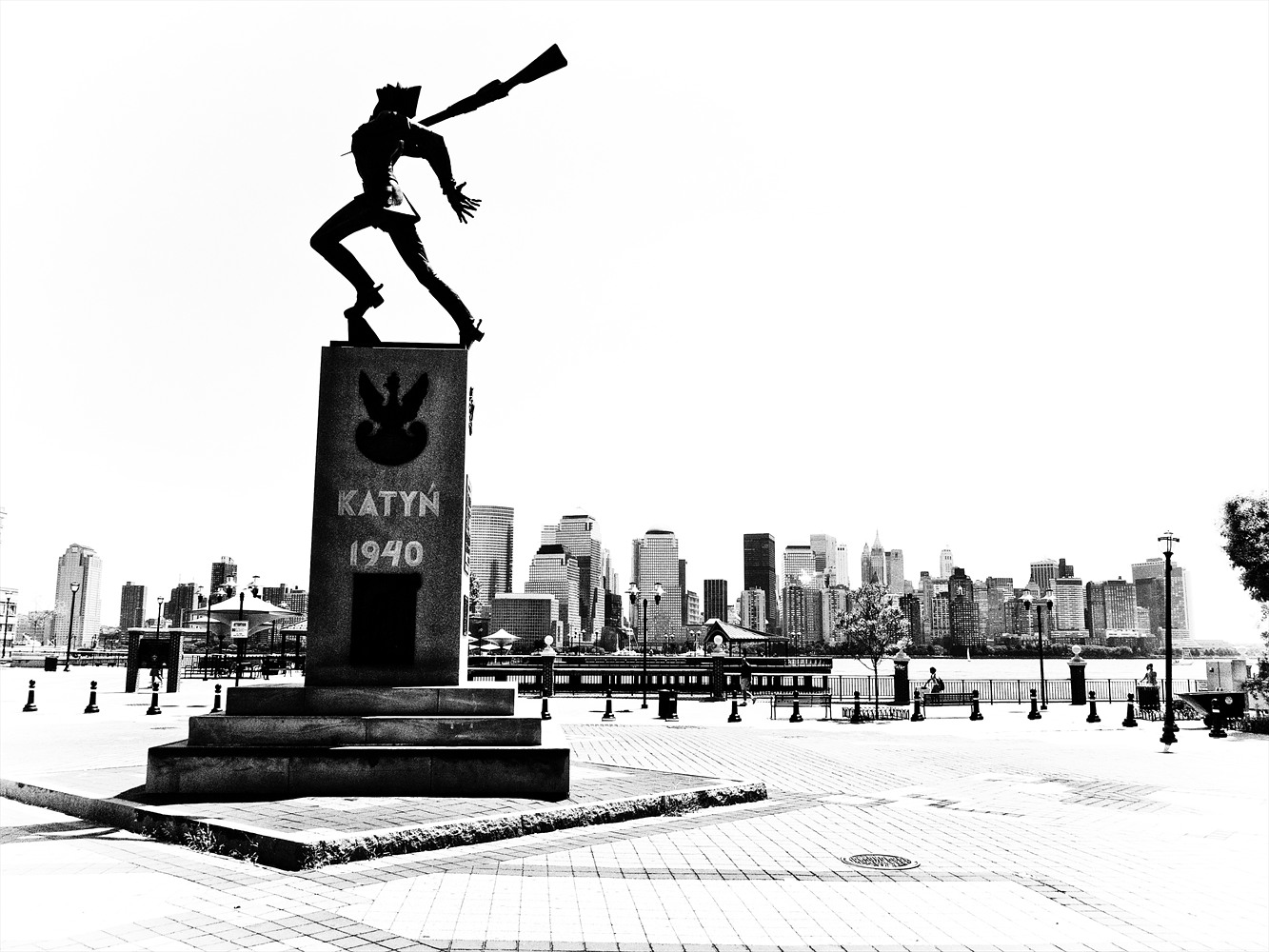
Katyn monument in Jersey City (Photo Mark Grabowski)

Katyn monument in Jersey City (Photo Mark Grabowski)

The Katyń massacre took place between April and May 1940 when 20,000 thousand Polish officers and officials were executed by NKVD, the Soviet special police. After decades of denial, Russia publicly acknowledged Soviet responsibility for the massacre in 1990. But the entire truth about what happened in the forests of Katyń has remained out of reach. Many believe Russia has not done enough in coming clean about the massacre.

Last week, the Grand Chamber of the ECHR delivered its final decision in Janowiec et al. v. Russia (other comment here). The case before the ECHR concerned the quality of investigations conducted by Russian authorities into the Katyń massacre. These started in 1990 and ceased in 2004, following the decision of the Russian authorities to re-classify as “top-secret” 36 volumes of files and to discontinue the investigation. The applicants before the Court argued that Russian authorities breached their rights by failing to carry out an effective investigation into the death of their relatives and displayed a dismissive attitude towards the applicants’ requests for information about their relatives’ fate.

The final outcome of the case has turned out to be a bitter disappointment for the victims’ families and the human rights community, especially in light of the first instance decision partly granting the applicants’ claim pertaining to the way they were treated by Russian authorities. Many observers reacted to the Court’s decision with disappointment. So too did the dissenting judges who proclaimed that this decision turned a “long history of justice delayed into a permanent case of justice denied.”

The Grand Chamber confirmed that the Court has no temporal authority to examine the efficiency of the investigations carried out by the Russian authorities into the massacre. The majority considered that in certain circumstances, a state-party may be obliged under the Convention to investigate unlawful or suspicious deaths, even if such occurred before the state in question was bound by the Convention (Šilih v. Slovenia which I recently discussed in more detail here). However, not without limits. The Grand Chamber clarified that the time lapse between the crime and the entry into force of the Convention for the obliged state must not exceed ten years (!). Moreover, the major part of the investigation must be carried out after the Convention became binding for the state (paras 140-151). To this end the applicants pointed out that the Court should have given due consideration to the “Ukrainian list” pertaining to 3,435 victims, discovered and conveyed to the Russian investigation authorities in 2004, or to the very decision to classify parts of the files (para. 113, statement by victims’ representative, Ireneusz C. Kamiński in Polish). Nevertheless, the majority upheld the previous finding that the most crucial part of the investigations into the Katyń massacre took place before Russia ratified the Convention in 1998 (para. 159).

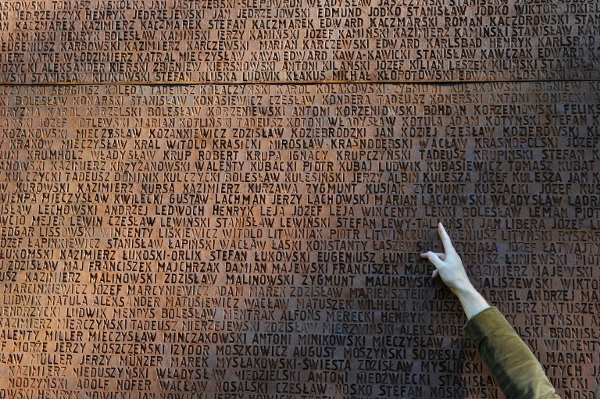
pomnik_katyn_afp_600To the dismay of those who had hoped to invoke the “humanitarian clause” to seek justice for grave human rights breaches of the past, the verdict is clear. Even when the crime in question is so grave that it negates the very foundations of the Convention, the Court is not competent to examine state parties’ obligation to investigate war crimes and crimes against humanity that predated the adoption of the Convention (4 November 1950) (para. 151). The multitude of arguments one could make for or against this finding is displayed in the majority judgment, the dissenting opinions as well as in the third party submissions (i.e. Open Society Justice Initiative or Amnesty International). The arguments raised elaborate on the content and interpretation of the non-retroactivity of treaties, the non-applicability of statute of limitations to war crimes, the values and the intended purpose of the Convention, the customary law status of the crimes in question. All that being said, it seems that the Court has chosen to definitively close the door to victims of gross human rights violations that occurred prior to the Convention.

The brutally ironic result is that following the applicants’ decision to appeal, the Grand Chamber negated the first instance finding that the manner in which the applicant’s enquiries were dealt with by the Russian authorities “has attained the minimum level of severity to be considered inhuman treatment within the meaning of Article 3 of the Convention”. In view of the Grand Chamber this would be justified only if the fate of the applicants’ relatives was uncertain. However, their death was publicly acknowledged in 1990 and has become an established historical fact by 1998 (para. 186). Continue reading

Posted in Historical Justice, Justice, Poland | Tagged | 1 Comment

Orbiting in Space – Suspended Justice in Sierra Leone

Laura Martin joins JiC for this timely and critical examination of the over-relieance of legal, retributive modes of justice in Sierra Leone. Laura is a currently Ph.D candidate in the Centre for African Studies at the University of Edinburgh. Her research largely pertains to local transitional justice in Sierra Leone.  

The SCSL

The SCSL

In The Hague last month, the Appeals Chamber of the Special Court for Sierra Leone (SCSL) upheld the May 2012 ruling that Charles Taylor had in fact committed war crimes by aiding Sierra Leonean soldiers during the 11 year civil war (1991-2002). Many have praised the verdict as another victory on the war against impunity, ‘serving justice’ for the many victims of Sierra Leone. But the ruling is simply another example of how “serving justice” during transitions largely remains confined to a narrow, legal understanding of what justice means. Context and culture continue to be marginalized and, as a result, so too is justice.

Legal transitional justice predominantly stems from the 1990s when justice institutions manifested as ad hoc tribunals in Yugoslavia and Rwanda. They sought to prosecute criminal masterminds with international criminal law. Therefore, the notion of ”serving justice” was equated with due process and guilty convictions. However, these institutions were found to be slow, stagnant, expensive and, most importantly, disconnected. Critics often pointed to both their physical and psychological distance. As Makau Mutua writes in reference to Rwanda, the “tribunal [was] orbiting in space, suspended from political reality and removed from individual and national psyches,” demonstrating its lack of relevance or legitimacy in civil society.

In response, practitioners sought to renovate transitional justice tribunals to become what Beth Dougherty refers to as the “second generation,” incorporating aspects specific to local contexts. Transitional justice in Sierra Leone was the pinnacle product of this evolution. The Special Court, located in Freetown, was designed as a legal hybrid institution where both international humanitarian law and national law served as the backbone of justice, as well as employing both international and Sierra Leonean judges and lawyers. Established in 2002, its purpose was to charge individuals who “bore the greatest responsibility” for crimes committed in Sierra Leone from November 1996 onward. This resulted in the indictment of 23 men, primarily key war architects and top commanders. Of these individuals, 9 are currently serving jail sentences; 3, including top rebel leaders Sam Hinga Norman, Foday Sankoh, and Sam Bockarie died during proceedings; Johnny Paul Koroma, head of state during the AFRC government from 1997-98 remains a fugitive (although is believed to be dead); and the remaining served lesser (or, in some instances, no) sentences for cases of contempt including witness intimidation and witness tampering.

Charles Taylor (Photo: Jerry Lampen / Reuters)

Charles Taylor (Photo: Jerry Lampen / Reuters)

International legal scholars have widely hailed the Court as a success. Last year, the UN Security Council stated the SCSL had succeeded in contributing to international criminal justice-particularly in relation to forced marriage, sexual violence, sexual slavery and the recruitment and use of child soldiers. The Court was also said to have strengthened stability in West Africa by “bringing an end to impunity.” The May 2012 Charles Taylor conviction and its recent reaffirmation have further served as evidence that “justice has been done.” However, what did this mean in Sierra Leone and, more importantly, for its citizens?

The short answer is: not a lot. To begin with, the vast majority of Sierra Leoneans reside in rural areas disconnected from state and legal institutions. The Court, located in the coastal city of Freetown, hidden behind barricaded walls and barbed wire fences rendered it neither physically visible or nor accessible. In addition, a large portion of the population is illiterate. Hence, legal rhetoric was in many was not understood or of interest. Even with press outlets there was a strong disconnect. As Lansana Gberie observed, “[T]he Court appears aloof from the general population…[Their] Public Information Unit…has been perceived as having little engagement with the local media…and has seemed more concerned communicating with foreign press.” Continue reading

Posted in Liberia, Sierra Leone, Special Court for SIerra Leone (SCSL), Transitional Justice | 6 Comments

Putting the ICC’s Kenya Cases on Ice

(Cartoon: Esther Wandia, The Star)

(Cartoon: Esther Wandia, The Star)

Kenya wants the United Nations Security Council to halt the trials of President Uhuru Kenyatta and Deputy President William Ruto. With the African Union at its side, Kenya has asked the Security Council to temporarily defer ICC prosecutions through the invocation of Article 16 of the Rome Statute. Doing so will undoubtedly lead to accusations that the Security Council is actively endorsing impunity in Kenya. But will that stop them?

Recent reports have suggested that Western diplomats are busy drafting a Security Council resolution to defer the Kenya cases. This is significant. Presumably ‘Western’ powers – especially the US and ICC member-states France and the UK – are the key to any resolution passing. A veto from any of them would ruin Kenya’s chances at a deferral – although it should be noted that such a resolution is unlikely to ever come to a vote unless it is guaranteed to pass in advance.

This isn’t the first time that the Security Council has seriously contemplated a deferral of ICC prosecutions. The possibility of a deferral arose in the case of Sudanese President Omar al-Bashir, as a reward for allowing South Sudan to secede peacefully in 2011. The UK supported a deferral but it was eventually kiboshed by the US. Just a few months ago Kenya asked the ICC to defer the cases against Kenyatta and Ruto but made little-to-no headway. So what has changed?

Here’s what one Western diplomat had to say:

“He is not like Sudan’s President Omar al Bashir. He is someone who is working closely with the West in a region in chaos that needs to tackle a very worrying terrorist situation. A solution must be found that avoids a breakdown in relations with Kenyatta or the court’s authority.”

(Photo: Simon Maina / AFP / Getty Images)

(Photo: Simon Maina / AFP / Getty Images)

The above statement suggests two primary reasons for a deferral. First of all, the Westgate mall tragedy has dramatically changed the political landscape in Kenya. The horrific attacks in Nairobi by al-Shabaab have put the need for stability and order in Kenya under the international community’s microscope. They have also had the effect of bolstering the argument of those who maintain that Kenyatta and Ruto cannot attend trials in The Hague and effectively run a country at the same time. Ruto himself used the tragedy to suggest as much. Crucially, the Security Council powers can now claim that a deferral of the Kenya cases is a matter of international peace and security. This is essential if an Article 16 deferral is to pass.

Second, Western states want to continue ‘normal’ diplomatic relations with Kenya. The country is a key regional economic and political power as well as a partner in the ‘Global War on Terror’. Kenyatta understands this. He has been quite deft at playing chicken with the international community over his trial. While maintaining that he will continue cooperating with the Court, Kenyatta has also had his allies suggest he would do otherwise. If he refuses to show up for his trial (scheduled to begin November 12), he’ll immediately be booked with an arrest warrant by ICC judges. At that point he’ll quickly become a pariah, perhaps not on the level of Bashir, but nonetheless someone who cannot travel freely or shake hands with many, if not most, of the world’s political leaders. This is something he undoubtedly wants to avoid. But Western states who see Kenya as a valuable ally also want to avoid this scenario. When they say “Kenyatta is not Bashir”, they aren’t comparing the two leaders’ records when it comes to atrocities; they are saying: “we still want to deal with him.” While the focus has been on what will happen to Kenyatta’s travel plans and Kenya’s diplomatic relations if an arrest warrant is issued by the Court, Western states are just as worried that their own diplomatic relations will be disrupted. A deferral would avoid all that.

But how can the Security Council justify this decision? Continue reading

Posted in Article 16, International Criminal Court (ICC), International Criminal Justice, Kenya, Kenya and the ICC, UN Security Council | Tagged , | 12 Comments

ICC Hands off Libya

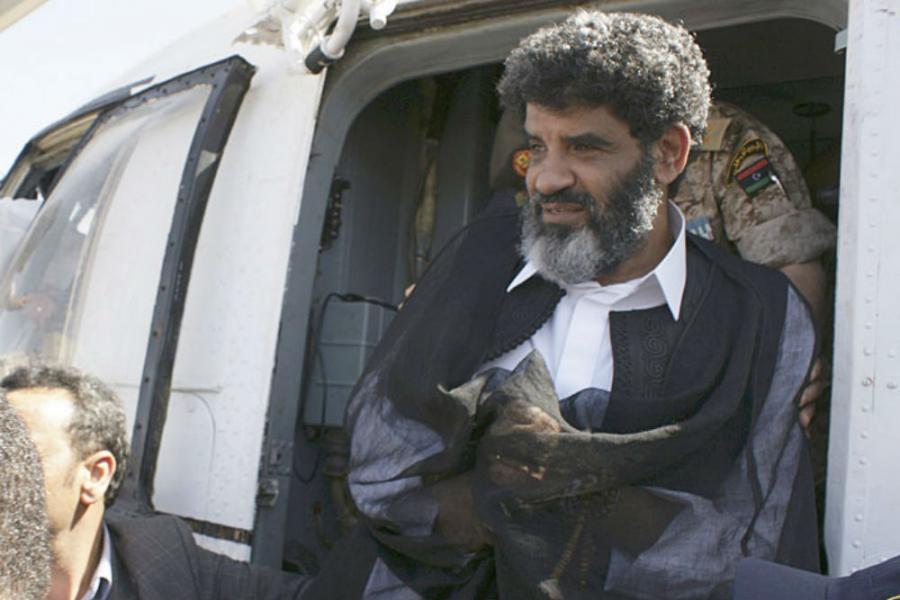
Abdullah al-Senussi (Photo: Reuters)

Abdullah al-Senussi (Photo: Reuters)

I have a new article up at Foreign Policy’s Middle East Channel that may be of interest to some readers. It covers the ICC’s inadmissibility ruling in the case of Abdullah al-Senussi. The piece places the ruling into the political context of the battle between Libya and the ICC over where Senussi and and Saif al-Islam Gaddafi should be tried. Here’s a snippet:

Judges at the International Criminal Court (ICC) have ruled that Libya has demonstrated a genuine will and ability to prosecute Abdullah al-Senussi. Libya, they ruled, is free to prosecute the mysterious former Libyan intelligence chief and the mastermind behind a laundry list of Muammar al-Qaddafi-era atrocities. The path is now clear for Libya to prosecute Senussi — and to do so with the blessing of the ICC and the international community. But is the path cleared for Libyans to achieve justice?

Headlines and statements that proclaim “Qaddafi spy chief to be tried in Libya” miss the point. Senussi was always going to be tried in Libya; what the ICC said or ruled was irrelevant. The Libyan public had made it clear: they wanted Senussi tried in Libya, by Libyans. Libyan politicians made it even clearer, reportedly paying $200 million to Mauritania for Senussi’s surrender in September 2012.

Still, the ruling by ICC judges that Libya can proceed in its prosecution and trial of Senussi is significant. It bestows a badge of credibility on Libya’s fledgling efforts at state building. Whether it should have done so will be a matter of much debate.

Since even before the Libyan revolution concluded, Libya and the ICC have been engaged in adrama-filled fight over where Senussi and Muammar al-Qaddafi’s son and former heir-apparent Saif al-Islam Qaddafi should be tried. Libya, on the one hand, has argued that trying Saif and Senussi is its sovereign prerogative. On the other hand, defense lawyers for Saif and Senussi, along with the international human rights community, have been adamant that a fair trial in post-war Libya is all but impossible. They decry that neither Saif nor Senussi have received adequate legal representation and that both are likely to go the way of the gallows.

Unsurprisingly, legal arguments in the battle over where to try Saif and Senussi have been overshadowed by political developments as the Libyan government, handicapped by a prevalence of wanton militias, struggles to assert stability and order. The stalemate between the ICC and Libya has been punctuated by moments of remarkable controversy, most notably when Saif’s ICC defense lawyers were arrested and detained for three weeks following a visit to their client in Zintan.

While Libyan political figures have made it clear that, come hell or high water, Saif and Senussi will see justice served in Libya at the hands of Libyans, it is easy to forget that the government has also fully engaged the ICC from day one, hiring an impressive roster of legal minds to represent its cases. The reason seems simple enough: while Libya, in no uncertain terms, will ultimately be responsible for bringing Saif and Senussi to justice, getting a seal of approval from the ICC — and, by extension, the international community — matters to a country struggling to build state institutions but yearning to be reinstated as a sovereign and legitimate member of the international community.

ICC Chief Prosecutor Fatou Bensouda has generally been in favor of Libya prosecuting Saif and Senussi. She called their prospective trials in Libya a potential “Nuremberg moment,” referring to the trials of senior Nazi figures in Germany following World War II. Undoubtedly, many at the ICC believe that Libya should be given every opportunity to prosecute Saif and Senussi itself. To deny Libya that opportunity would be to treat the new regime as if it were the Qaddafi regime of old. To give justice a chance, they argue, is to give Libyan justice a chance.

Judges at the International Criminal Court (ICC) have ruled that Libya has demonstrated a genuine will and ability to prosecute Abdullah al-Senussi. Libya, they ruled, is free to prosecute the mysterious former Libyan intelligence chief and the mastermind behind a laundry list of Muammar al-Qaddafi-era atrocities. The path is now clear for Libya to prosecute Senussi — and to do so with the blessing of the ICC and the international community. But is the path cleared for Libyans to achieve justice?

Headlines and statements that proclaim “Qaddafi spy chief to be tried in Libya” miss the point. Senussi was always going to be tried in Libya; what the ICC said or ruled was irrelevant. The Libyan public had made it clear: they wanted Senussi tried in Libya, by Libyans. Libyan politicians made it even clearer, reportedly paying $200 million to Mauritania for Senussi’s surrender in September 2012.

Still, the ruling by ICC judges that Libya can proceed in its prosecution and trial of Senussi is significant. It bestows a badge of credibility on Libya’s fledgling efforts at state building. Whether it should have done so will be a matter of much debate.

Since even before the Libyan revolution concluded, Libya and the ICC have been engaged in adrama-filled fight over where Senussi and Muammar al-Qaddafi’s son and former heir-apparent Saif al-Islam Qaddafi should be tried. Libya, on the one hand, has argued that trying Saif and Senussi is its sovereign prerogative. On the other hand, defense lawyers for Saif and Senussi, along with the international human rights community, have been adamant that a fair trial in post-war Libya is all but impossible. They decry that neither Saif nor Senussi have received adequate legal representation and that both are likely to go the way of the gallows.

Unsurprisingly, legal arguments in the battle over where to try Saif and Senussi have been overshadowed by political developments as the Libyan government, handicapped by a prevalence of wanton militias, struggles to assert stability and order. The stalemate between the ICC and Libya has been punctuated by moments of remarkable controversy, most notably when Saif’s ICC defense lawyers were arrested and detained for three weeks following a visit to their client in Zintan.

While Libyan political figures have made it clear that, come hell or high water, Saif and Senussi will see justice served in Libya at the hands of Libyans, it is easy to forget that the government has also fully engaged the ICC from day one, hiring an impressive roster of legal minds to represent its cases. The reason seems simple enough: while Libya, in no uncertain terms, will ultimately be responsible for bringing Saif and Senussi to justice, getting a seal of approval from the ICC — and, by extension, the international community — matters to a country struggling to build state institutions but yearning to be reinstated as a sovereign and legitimate member of the international community.

ICC Chief Prosecutor Fatou Bensouda has generally been in favor of Libya prosecuting Saif and Senussi. She called their prospective trials in Libya a potential “Nuremberg moment,” referring to the trials of senior Nazi figures in Germany following World War II. Undoubtedly, many at the ICC believe that Libya should be given every opportunity to prosecute Saif and Senussi itself. To deny Libya that opportunity would be to treat the new regime as if it were the Qaddafi regime of old. To give justice a chance, they argue, is to give Libyan justice a chance.

Read more here.

Posted in Admissibility, Complementarity, ICC Prosecutor, Justice, Libya, Libya and the ICC, UN Security Council | Tagged | 2 Comments