To Intervene or not to Intervene – R2P and the Murky Legal Options in Syria

James P. Rudolph joins JiC for this guest-post on R2P and the legal options for intervening in Syria. James is an attorney in Washington, D.C. and California where his work focuses on international law. He has previously written on R2P in the case of Mali. Enjoy!

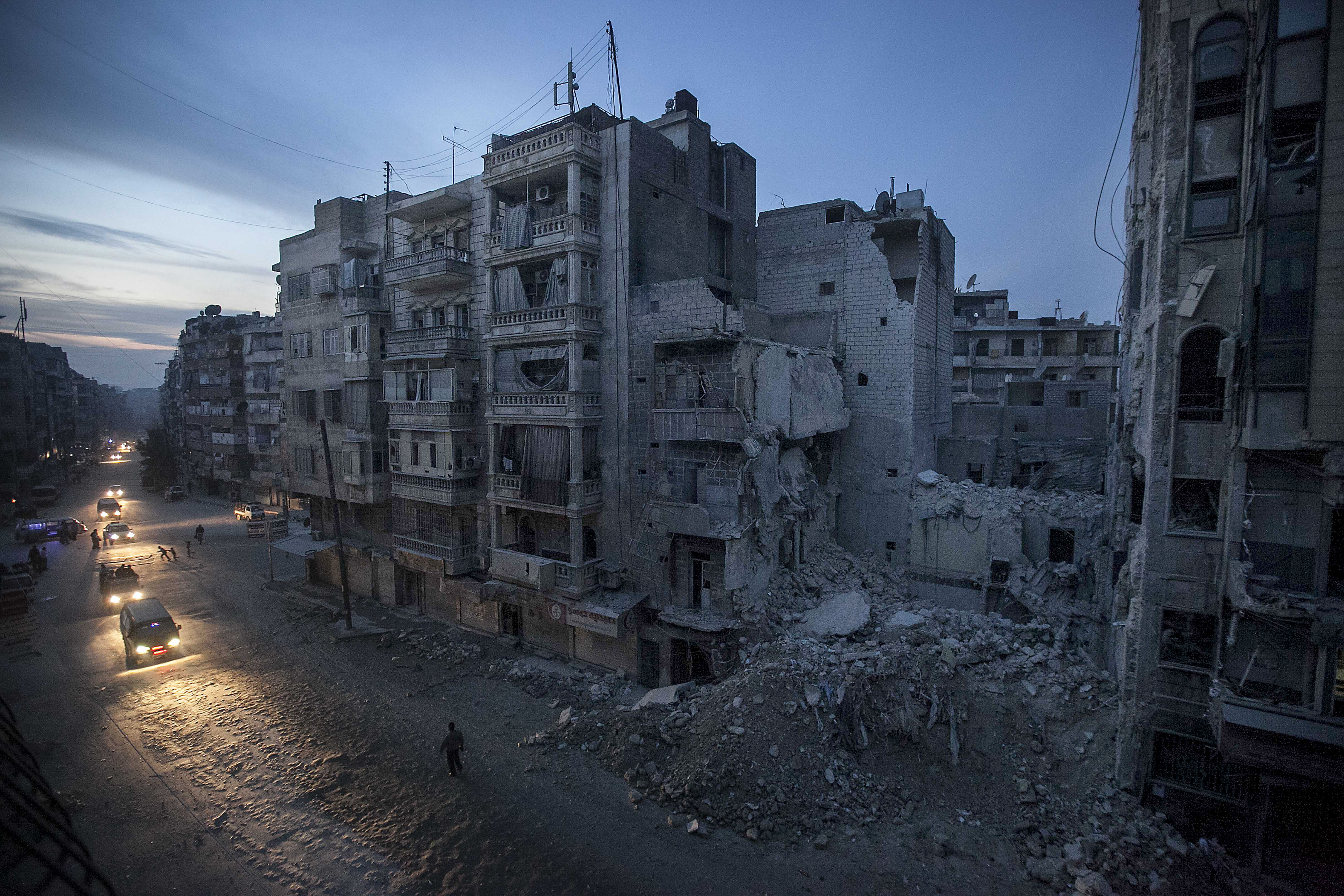
Aleppo, November 2012. (Photo: AP / Narciso Contreras)

Aleppo, November 2012. (Photo: AP / Narciso Contreras)

How, in the absence of U.N. Security Council authorization, could the Obama administration, acting alone or as part of a coalition, justify the use of force under international law? This question is doubtless being bandied about by high-level officials within President Obama’s national security team, and the answer, despite protestations to the contrary from both hawks and doves, is not an easy or straightforward one.

Article 2(4) of the U.N. Charter reads as follows: “All Members shall refrain in their international relations from the        threat or use of force against the territorial integrity or political independence of any state, or in any other manner inconsistent with the Purposes of the United Nations.” There are only two exceptions to this otherwise ironclad edict: the use of force as authorized by the Security Council and self-defense.

If the Security Council sanctions the use of force, it does so pursuant to Chapter VII, Article 42 of the U.N. Charter, after first having decided that there exists a threat to the peace, a breach of the peace or act of aggression. “Should the Security Council consider that measures provided for in Article 41 would be inadequate or have proved to be inadequate, it may take such action by air, sea, or land forces as may be necessary to maintain or restore international peace and security. Such action may include demonstrations, blockade, and other operations by air, sea, or land forces of Members of the United Nations.”

When there is agreement regarding what constitutes a threat to the peace or act of aggression, this authorization normally is forthcoming. But there’s the rub: matters of peace and security can be devilishly difficult and divisive.  As an example, one need look no further than the Security Council as it relates to Syria’s horrifically violent civil war. Russia and China, permanent members of the Council with veto power, oppose any military intervention in Syria. Yet the U.S. and France are today in favor of a more robust response to the atrocities unfolding there. Hence the current deadlock.

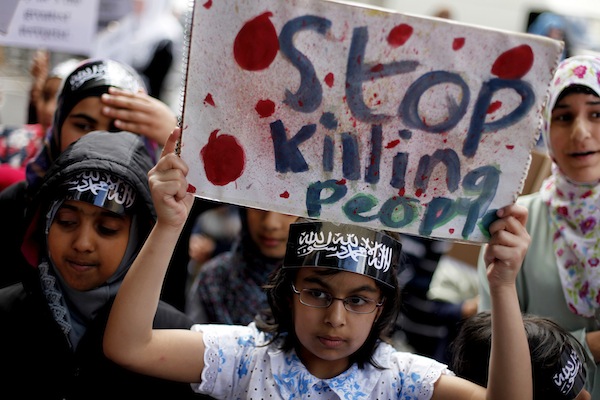
(Photo: The Spectator)

(Photo: The Spectator)

The other exception to the prohibition on the use of force is self-defense. This right, which can be invoked individually or collectively, predates the United Nations and, given its importance in international affairs, is enshrined in Article 51 of the U.N. Charter. The right does not arise until after an armed attack occurs against a member of the U.N., and any such response must be necessary and proportional. In the case of Syria’s apparent use of chemical weapons, it isn’t obvious that an armed attack has occurred against a member of the U.N. To be sure, the use of chemical weapons constitutes a crime in itself, but arguing that another member of the United Nations has been attacked would, to say the least, be a stretch.

What, then, is left as an option for responding to the gross human rights violations occurring in Syria today? After all, it’s estimated that at least 100,000 people have been killed since the start of the conflict; laws of war have been flouted; and fundamental rights are being violated with impunity. Despite the apparent unavailability of U.N. Security Council authorization or the use of self-defense, there are several other options, one of which is known as the Responsibility to Protect, or R2P. Continue reading

Posted in International Law, Responsibiltiy to Protect (R2P), Syria, UN Security Council, United Nations, United States | Tagged , , , | 11 Comments

Syria: War is Looming, but is Justice Possible?

(Photo: Khalil Ashawi/Reuters)

(Photo: Khalil Ashawi/Reuters)

Dear readers,

I wanted to share an op-ed I penned for the Globe and Mail on Syria and international criminal justice. It’s no secret that, over the past few days, the UK, France and the US have begun beating the drums of war. But they have also been precariously silent on the question of justice.  Here’s a snippet of the article:

Despite two years of an incessant civil war that has claimed at least 80,000 people, the United Nations Security Council has been mired in deadlock on how to respond to the violence in Syria. Yet the images and videos of civilians attacked with chemical weapons in the outskirts of Damascus has rocked the Syrian status quo. As Jon Western suggests, the chemical weapons attack may constitute “Syria’s Srebrenica,” galvanizing the international community into taking action in a war they can no longer afford to ignore.

The massacre of 8,000 Bosnian Muslims at Srebrenica in 1995 became a crucial moment not only in the Bosnian war but for international justice. The International Criminal Tribunal for the former Yugoslavia declared that the massacre at Srebrenica constituted genocide; generals and political officials have been tried and convicted for their role in the carnage.

In the case of Syria, however, there have been no calls from the Security Council for chemical weapons attacks to be investigated by the International Criminal Court (ICC). Even as UN Secretary-General Ban Ki-moon declared that the use of chemical weapons in Syria constituted an “outrageous crime” that could not be met with impunity, there were no calls for the Council to refer Syria to the ICC. This begs the question: if the use of chemical weapons against thousands of civilians is a crime, why the silence on Syria and the ICC?

You can read the whole post here.

Thanks for reading!

Posted in International Criminal Court (ICC), Justice, Syria | Tagged | 4 Comments

Meeting the Devil’s Advocate – An Interview with Jacques Vergès

The following glimpse into the life and mind of Jacques Vergès is brought to you by Chris Tenove. Chris is a doctoral candidate in Political Science at the University of British Columbia where his research explores the political and ethical dilemmas of global governance for international criminal justice and humanitarianism. Chris also runs an excellent blog (see here). Enjoy!

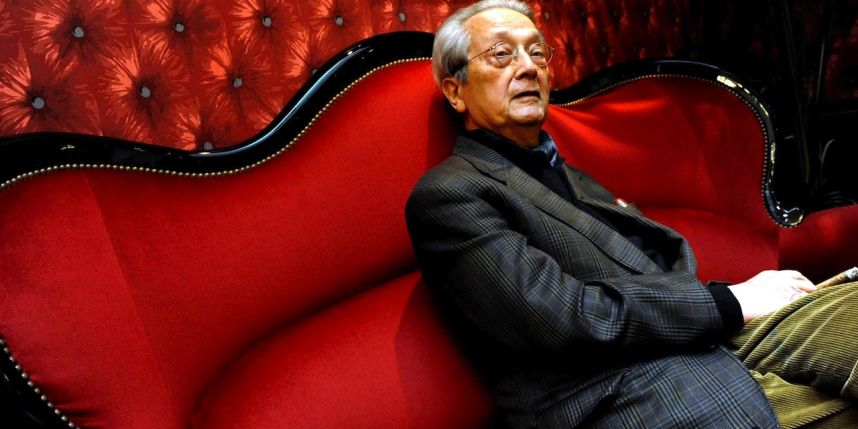
Jacques Vergès (Photo: Bourdas / SIPA)

Jacques Vergès (Photo: Bourdas / SIPA)

Last week the illustrious, despised and devilishly playful Jacques Vergès died. The French lawyer was notorious not only for the clients he defended but for the provocative tactics he used. Most recently, he had defended former Khmer Rouge head of state Khieu Samphan, now being tried at the Extraordinary Chambers in the Courts of Cambodia. I wrote about the ECCC in its early days for Macleans, The Walrus and the Radio Netherlands World Service. I was curious to see whether Vergès might challenge the authority and the narrative of the ECCC, as he had done in previous trials. I therefore secured a meeting at his Paris home in August, 2008. I had planned to write a magazine profile or an academic paper on Vergès but never quite got to it. Re-reading my interview with him I regretted that decision. I continue to find his views on criminal trials to be provocative and interesting, as well as self-serving and sometimes cold-hearted. Vergès saw legal advocacy as profoundly creative and political, particularly if one casts off conventional views about the legitimacy of courts or the desire to have criminal trials establish the truth and provide some vindication to victims.

Before excerpting from that interview, here are a few details from Vergès’ fascinating life. Those interested in more can turn to this superb profile by Stéphanie Giry, the very good documentary Terror’s Advocate and a great character sketch in Erna Paris’ Unhealed Wounds: France and the Klaus Barbie Affair. Vergès was born in 1925 in Thailand to a French doctor and his Vietnamese wife. His father had to quit as French consul because of this interracial marriage, which helps explain Vergès’ love-hate relationship with France. He enjoyed attention from his countrymen, a refined life in Paris and the French tradition of subversive public intellectuals like Voltaire. (Vergès died in a home that Voltatire once lived in.) Yet he spent much of his life attacking the country’s mores and defending some of its enemies.

Vergès rose to fame in 1957 when he defended – and fell in love with – Djamila Bouhired, a young revolutionary with Algeria’s National Liberation Front. Bouhired was accused of planting a bomb in a milk bar in Algiers frequented by French civilians. Eleven people were killed. Vergès did not try to prove that Bouhired was innocent or seek a reduced sentence. Instead he mounted what he called “la défense de la rupture” – to defend the accused by creating a rupture in the trial itself. He did so by challenging the legality and morality of the state that mounted the prosecution, through dramatic speeches to the courtroom and the news media. In Bouhired’s case he attacked the court as a puppet of French colonialism in Algeria. Bouhired was sentenced to death but Vergès’ performance had made her a cause-célèbre. Facing a domestic and international outcry, the court stayed her execution. When Algeria became independent in 1962 she was released and proclaimed a national hero. Bouhired and Vergès together advocated for anticolonial causes, met with Mao Zedong in China, and married in 1965.

In 1970, Vergès told his wife and others that he was going to Spain. He then disappeared for seven years. He has referred to this phase, mysteriously, as the time when he stepped “into the looking glass.” Theories abound concerning his whereabouts: in Cambodia under the Khmer Rouge (I think unlikely), in Palestinian militant training camps, perhaps living invisibly in Paris, etc. When I asked when he would reveal the truth of those years, Vergès said “perhaps as a last testament.” He added with a laugh, “But for now I am in very good health.”
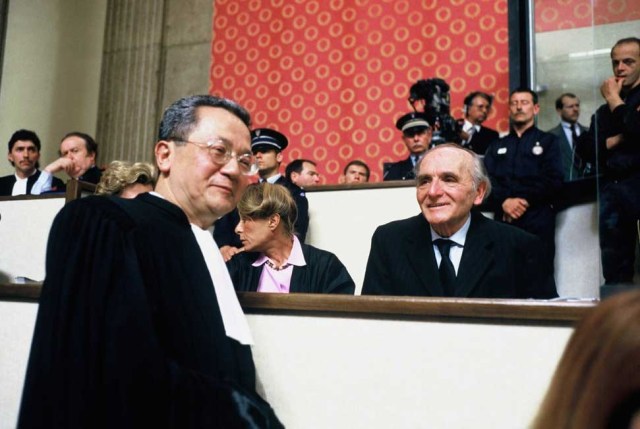
Jacques Vergès with Klaus Barbie (Photo: AP)

Jacques Vergès with Klaus Barbie (Photo: AP)

When Vergès reappeared he did not rejoin Bouhired and his children but became a Paris-based lawyer. He no longer focused on anticolonial struggles but defended a range of notorious clients, from enemies of the French state (Klaus Barbie and Carlos the Jackal), to African despots (Togo’s Gnassingbe Eyadema and Henri Conan Bédié of Ivory Coast), to people infected with HIV by tainted blood in France, to celebrities such as Marlon Brando’s daughter Cheyenne. While his clients were often found guilty, he reveled in the notoriety and the proximity to violence, and appears to have made a tidy income doing so.

Vergès used his rupture defense most famously in the 1987 trial of the Nazi official Klaus Barbie, known as the “Butcher of Lyon”. Barbie was accused of overseeing the murder or torture of thousands of French citizens, including Jewish children and French Resistance members such as the revered Jean Moulin. The trial of Barbie was expected to show the suffering and heroic resistance of the French under Nazi occupation. But Vergès used the trial to bring attention to war crimes that France had committed in countries it occupied after 1945, as well as to show the divisions and sometimes betrayals within the French Resistance. Barbie was convicted but Vergès’ successfully ruptured the trial’s dominant narrative.

This approach makes sense in international criminal tribunals, where the court’s legality and legitimacy are often in question. Defense lawyers often challenge the jurisdiction of international tribunals’ over their clients, and defendants such as Slobodan Milosevic have tried to create ruptures in their trials in order to tell alternate histories of events. Vergès intended to challenge the ECCC’s limited focus on crimes under the Khmer Rouge regime, ignoring the horrific American bombing of Cambodia before 1975 and the later involvement of China and Vietnam in the country (see below). I haven’t watched the trial of Khieu Samphan closely, but several people have told me that Vergès’ performance was not particularly impressive or effective.

The Interview: August 6, 2008.

I met Vergès at his private residence and office on a quiet street in Paris, a stone canyon of Haussman-era buildings brightened by the occasional spray of geraniums on marble balconies. In the antechamber to his office a dozen chess sets from different countries were laid out on a low table—a reminder to the visitor that they are about to meet a man of the world and a master strategist. Vergès met me here, wearing a pale lavender dress shirt and silk vest and his familiar round-rimmed glasses. He shook my hand and guided me into his office. Wall-to-wall bookshelves extended to the high ceilings, thousands of books ranging from legal tomes, leather-bound volumes of theology and history to works of literature from Molière to F. Scott Fitzgerald. Around the office were mementos of Vergès’ past clients, such as the wooden mask given to him by Cheyenne Brando and a ten-foot tall statue of polished mahogany, a deity with the mouth of a crocodile and kangaroo ears, given to him by the Malian strongman General Moussa Traore.

Vergès spoke in elegant and clear French, interrupted by pauses to let a particularly apt phrase register or to punctuate a rhetorical question. He speaks warmly but with a steely conviction in his views. From time to time he laughed at some absurdity that he wanted to share with me, a strange chortle that began in his stomach and bubbled up through his chest to emerge just as he concluded his phrase.

His remarks that follow are not direct quotations. Vergès did not permit me to record our conversation and both my French and my shorthand are imperfect. Continue reading

Posted in Cambodia, International Law, Interview, Interviews | Tagged , , , | 1 Comment

World Wide Justice – Help Improve the ICC’s Website

Screen Shot 2013-08-23 at 12.16.20 PMAs readers know, both Kevin Jon Heller and I have recently been rather vocal about the ICC’s website (see here and here). In a nutshell, given the potential reach and impact of the Court’s site, it is currently a disaster. So it came as very welcome news that the Court has taken the long-standing criticisms about its website seriously. The ICC has set up a survey where observers and users of the site can provide their thoughts and feedback. The survey can be found here. I highly encourage all readers to take the time to fill out the survey. Kudos to the Court and, especially, to new Registrar Herman von Hebel, for taking on the initiative!

Posted in ICC Registry, International Criminal Court (ICC) | Tagged , | 1 Comment

Why Syria Still Won’t be Referred to the ICC

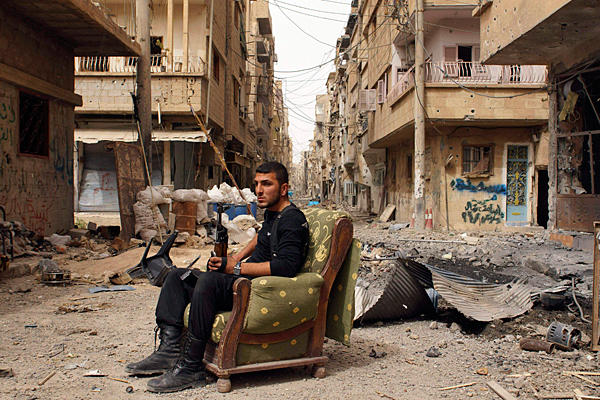
A Free Syrian Army Fighter (Photo: Goran Tomasevic/Reuters)

A Free Syrian Army Fighter (Photo: Goran Tomasevic/Reuters)

Forces loyal to Syrian President Bashar al-Assad probably used chemical weapons in an attack on the outskirts of Damascus. The United Nations responded that it will probably investigate what happened. Still, the International Criminal Court (ICC) probably won’t be investigating alleged crimes in Syria any time soon.

After two-and-a-half years of debilitating civil war in which some 80,000 – 100,000 people have been killed, the international community is no closer to bringing anyone suspected of war crimes and crimes against humanity in Syria to account. It isn’t because there’s a lack of injustices to investigate. The alleged chemical weapons attack on civilians is just the latest atrocity to garner the attention of advocates seeking referral of the situation in Syria to the ICC. But despite the outcry over the barbarity of this attack, it remains unlikely that that the ICC will find itself investigating atrocities in Syria. Here’s a few reasons why – some obvious, some perhaps less so.

The Continued Stalemate with Russia

The ongoing stalemate between Russia (and, to a lesser extent, China) and the rest of the Security Council is the most obvious and most widely reported reason as to why no ‘breakthrough’ on the Syria question has been achieved. In order for the ICC to intervene, the UN Security Council would have to refer Syria to the Court. In order to do so, Russia needs to either abstain or vote in favour of a referral. It isn’t likely to do so.

Russia, it is regularly argued, remains stubbornly supportive of the Assad regime. Russia has supplied Syria with “advanced missiles” and has consistently protected Assad from assertive action by the Security Council. In July, the Russian government suggested that it was the rebels who had used chemical weapons in their fight against the regime. In emergency meetings where the Council discussed how to respond to the alleged chemical weapons attack, Russia maintained that videos showing civilians suffering from the effects of chemical agents was a “premeditated provocation” and was likely fabricated by Syria’s rebel forces. This was in line with the response of the Syrian regime.

It is easy to believe that Russia will, come hell or high water, stand by Assad. Still, however deplorable Russia’s position on Syria has been, it has also proved a useful scapegoat to Western states eager talk the talk but unwilling to walk the walk.

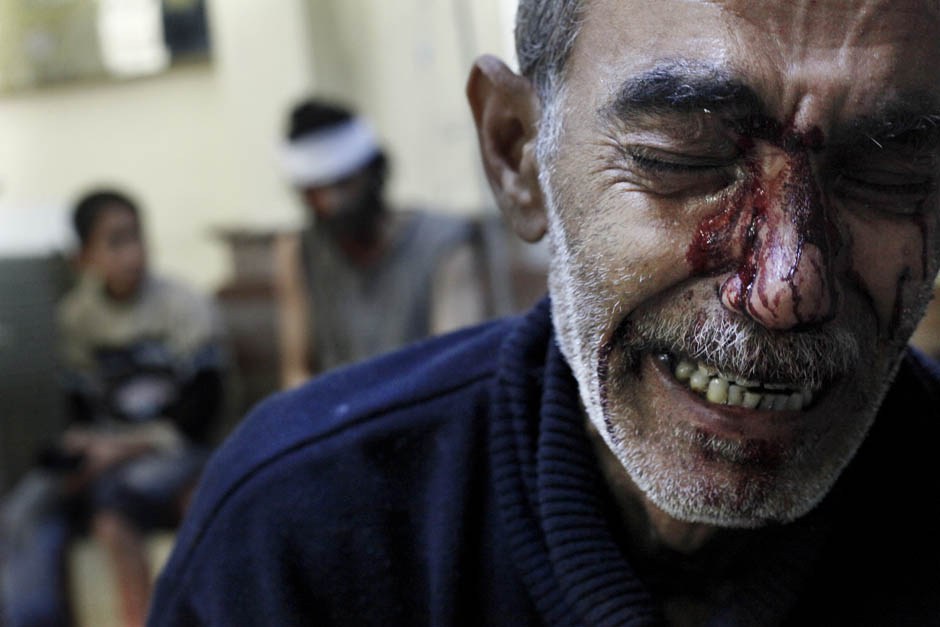
A man mourns the death of his daughter in Aleppo (Photo: Javier Manzano / AFP / Getty Images)

A man mourns the death of his daughter in Aleppo (Photo: Javier Manzano / AFP / Getty Images)

Stalemate amongst Western States

It has regularly been argued that if only Russia would step aside, the rest of the international community could finally intervene in Syria. This unfortunate but popular characterization of the situation obfuscates the reality that the international community has long been intervening in Syria Indeed, the civil war in Syria is something of a proxy battle with Russia arming the government and the ‘West’ arming the rebels (consequently, the (re)solution of the Syrian civil war is likely to depend on the relationship between Russia and the ‘West’ as much as what happens on the ground). The debate over intervention in Syria is thus not one of action versus inaction. And when observers suggest that the international community should be “doing more” in Syria, they are calling for some form of direct military intervention. For the many who continue to be wary that a direct intervention in Syria could spell disaster – for Syria and for the wider region – anything and anyone that blocks such an intervention is welcome news.

As for a judicial intervention by the ICC, the story is similar. The UN Commission of Inquiry on Syria has catalogued rebel crimes and, according to UN High Commissioner for Human Rights Navi Pillay, the Syrian rebels that the ‘West’ supports have likely committed war crimes. This certainly complicates any idea of Western states using the ICC as a tool to hurt the regime. In the initial stages of the civil war, it was foreseeable that the P3 could ‘use’ the ICC as they had in Libya – to pressure the Assad regime, bolster efforts to depose him, and legitimate the opposition. Now, however, the ICC would almost certainly investigate – and indict – both sides. But Western powers likely prefer no judicial intervention than one that targets the side they support.  Continue reading

Posted in International Criminal Court (ICC), Russia, Syria, UN Security Council, United Nations | Tagged , | 7 Comments

Could Russia be a Key to International Justice in Libya?

(Photo: Andrew Winning / Reuters)

(Photo: Andrew Winning / Reuters)

The battle between Libya and the International Criminal Court (ICC) over where Abdullah al-Senussi and Saif al-Islam Gaddafi should be tried has taken another dramatic turn.

Saif’s legal representative John Jones has written a scathing letter to the UK’s Foreign Secretary William Hague in which he decried what he views as Britain’s hypocrisy in selectively promoting international justice:

“You cannot plausibly claim to be a champion of international humanitarian law while turning a blind eye to Libya’s faults… Libya is defying the ICC’s order to hand over Saif. The foreign secretary needs to demonstrate Britain’s backing for the court.”

At the same time, Ben Emmerson and the team of lawyers representing Abdullah al-Senussi have requested that ICC judges refer Libya to the Security Council over fears that a planned trial of Senussi in Libya “will be nothing more than sham justice, the old-fashioned show trial”.

As I have previously argued, the Security Council has completely shirked its responsibility in assuring that justice is achieved in Libya. When the Revolution began in February 2011, the P3 (the US, France and the UK) calculated that it would be useful to get the ICC involved. The Court’s intervention helped to further isolate and delegitimize Gaddafi, stigmatized him with the label “international criminal” and, in so doing, laid the grounds for a military intervention that could framed as being primarily about serving justice and removing an illegitimate, criminal leader. Seeing an opportunity to capture international attention, the ICC went along with the show. Controversially, the Security Council gave the cash-strapped Court no funding, prevented it from investigating any alleged crimes before 15 February 2011, and ensured that no citizens of states that weren’t members of the ICC could be prosecuted. At the time, the Court and its most fervent supporters didn’t seem to mind. If they did, they certainly didn’t make a fuss.

The Security Council’s interest in Libya quickly waned. Before the civil war was over, its members began softening their positions on enforcing international justice in Libya. The new government – whoever it was – would be able to decide what happened with Libya’s ICC indictees. The Court was hung out to dry.

It is this dynamic which, in my view, at least partially helps to explain why the Office of the Prosecutor, first under Luis Moreno-Ocampo and now under Fatou Bensouda, was inclined to side with Libya in its quest to prosecute Saif and Senussi in Libya, by Libyans. There wasn’t exactly a long line of powerful actors demanding that Saif and Senussi be transferred to The Hague. With no influential powers in its corner, repeatedly declaring that Libya should hand over suspects would not only be futile but make the Court look impotent.

(Photo: Democratic Underground)

(Photo: Democratic Underground)

With time, some observers began to openly question the Security Council’s role in promoting the ICC and international justice more broadly. Some even suggested that, if the Council were to refer another case to the Court, the ICC might consider politely declining. Still, by and large, the P3 Security Council members haven’t had to defend themselves. As the legal battle between Libya and the ICC has dragged on, there’s been virtually no pressure on them to intervene with either words or deeds. When pressed, their response has generally been to request that the Court and Libya “cooperate”. But if Saif and Senussi’s defence teams are successful in getting their clients’ predicaments on the agenda of the Council, the P3 might just be forced to justify their positions and perhaps even take some action. Here, Russia could play a very important role.

Russia is undoubtedly upset over how the Libyan conflict transpired. Contrary to the narrative that the media has propagated, however, Russia isn’t upset with the fact that NATO’s intervention digressed into regime change. It is impossible that, when Russia supported the referral of Libya to the ICC and allowed NATO to intervene, it didn’t know what it was getting in to. Rather, it appears that the Russian government is upset that it hasn’t been able to cash in on the spoils of war. Libya and Russia had lucrative deals (including for oil) in place prior to the Revolution. Since the intervention, Russia’s economic interests in the country have been ignored.

Russia is keen to take the P3 to task over Libya and in doing so it has defended the mandate of the ICC. And why not? They are in full knowledge that the P3 has ignored the Court and its work in Libya.  Continue reading

Posted in Libya, Libya and the ICC, UN Security Council, United Nations | Tagged , , , , , | 2 Comments

Impending Disaster? The ICC in Kenya and Africa

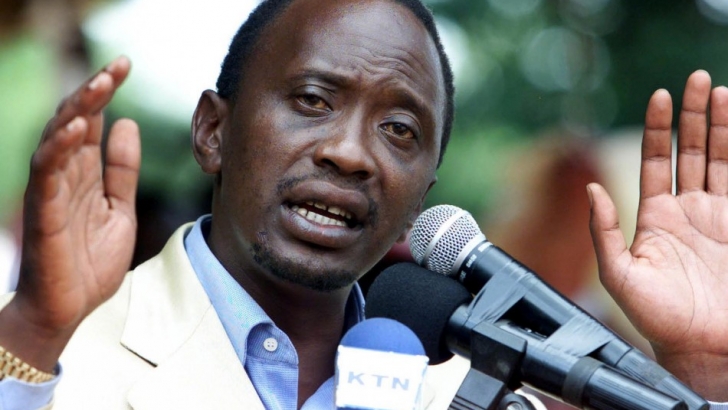
Kenyan President Uhuru Kenyatta (Photo: TV/C)

Kenyan President Uhuru Kenyatta (Photo: TV/C)

Dear readers,

I recently had the pleasure and honour to write a brief article for the UNA-UK’s publication New World on what the election of Kenyatta and Ruto in Kenya means for the ICC. For anyone interested, the full article can be found here. Here’s a glimpse:

There is no denying that the recent election of Uhuru Kenyatta and William Ruto as President and Vice President of Kenya respectively, came as a significant blow to the International Criminal Court (ICC). The ICC had identified Kenyatta and Ruto as bearing responsibility for crimes committed during the 2007/2008 post-election violence in Kenya. Their election has left the belief that the ICC could isolate and marginalise its targets battered. Some have even suggested that the ICC indictments could have helped Kenyatta and Uhuru achieve electoral victory, in a country where it’s reported that just 35% of the population now support the Court.

The situation has elevated criticisms of the ICC as a ‘neo-colonialist’ institution biased against African states to a new level and put the relationship between Africa and the ICC under the microscope once again. Ugandan President Yoweri Museveni praised Kenyans for rejecting “blackmail by the International Criminal Court and those who seek to abuse this institution for their own agenda”. And Ethiopian Prime Minister Hailemariam Desalegn proclaimed that the Court was “race hunting”. The African Union subsequently passed a resolution insisting that the Court was unfairly targeting African states. Had it not been for the lone dissenting voice of Botswana, the resolution would have passed unanimously.

There have also been numerous calls to dismiss the cases against Ruto and Kenyatta. The trials for both have been repeatedly delayed. Dozens of witnesses have withdrawn their testimonies amidst reports of witness tampering and, in some cases, disappearances. Despite stating that there would be “consequences” if Kenyatta was elected, many ICC member-states have since congratulated Kenyatta on his victory. Given this laundry list of controversies, it is hard not to wonder whether Kenya is the hill the Court’s relationship with Africa will die on.

So what is the Court to do?

Read more.

Posted in Uncategorized | Leave a comment

Palestine and the ICC: Peace First, Justice (Maybe) Later

(Photo: Reuters)

(Photo: Reuters)

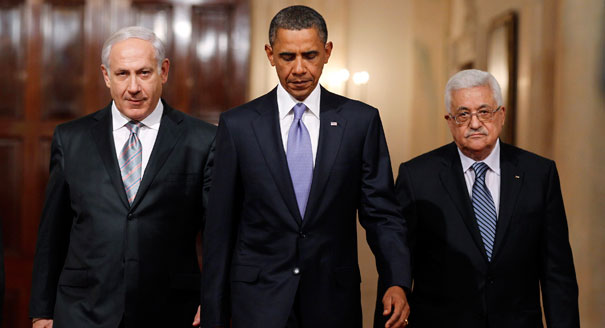
News that Palestine and Israel have committed to a new round of US-brokered negotiations has been met with a mix of curiosity and caution. No surprise there. We’ve seen this show before. While it is undoubtedly useful to be positive and have “hope”, no one is really willing to bank on the fact that these negotiations will finally conclude the world’s most protracted conflict. We’ve been disappointed too many times. Even Martin Indyk, the US’s chief mediator in the talks, was careful in stating that these talks pose “a daunting and humbling challenge.” Apparently, Israeli media was more interested in the birth of a British kid called George than the announcement that peace talks would resume. No one seems to be holding their breath although, who knows, maybe that fact will be a conducive element in the talks.

Still, just a few short months ago it appeared very unlikely that Palestine and Israel would get to the negotiation table. While many are attributing the beginning of the negotiations to US Secretary of State John Kerry’s “six official visits to the Middle East in an effort to restart the negotiations”, it could easily have been twelve or twenty. And regardless of how many trips he made, they could easily have resulted in failure.

A key reason why many were doubtful about the resumption of peace talks was the question of Palestine’s interest in referring itself to the International Criminal Court (for more analysis, see herehere and here). But in recent months, the Palestinian Authority’s rhetoric regarding a potential self-referral to the ICC was reduced to a murmur. The quieter talk of the ICC became, the louder talk of peace talks got. Unsurprisingly, it has now been revealed that the issue was dealt with, behind the scenes, in advance of the peace talks. According to the Jerusalem Post,

Senior officials from the White House and State Department said that Palestinian action against Israel at the United Nations is highly unlikely so long as negotiations continue.

While not explicitly saying that the Palestinian Authority had agreed to cease its campaign at the UN, the officials suggested referral to the International Criminal Court was addressed before talks began Tuesday in Washington.

“It’s no secret that one of the motivating factors, I think for everybody, was to avoid that sort of train wreck that would have happened if we weren’t able to get negotiations started,” a senior White House official told reporters.

“No guarantees of anything,” he added, when asked about Palestinian threats to refer Israel to the ICC, but “so long as this process is moving forward, I think the risk of that sort of thing are reduced if not entirely eliminated.”

The parties have agreed to negotiate over a period of nine months with the goal of reaching a final status peace agreement between two independent states.

A senior State Department official added, “the parties have agreed to take affirmative steps to create a positive atmosphere for negotiations,” in responding to actions at the UN. “And both sides are going to take that very seriously.”

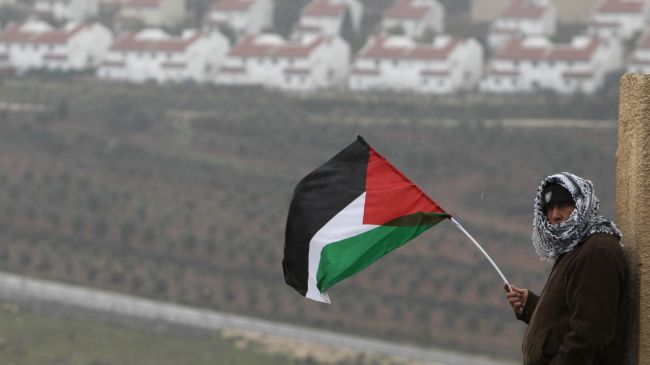
(Photo: PressTV)

(Photo: PressTV)

These comments are notable for a number of reasons. First and most obviously, they represent the extent to which the ICC matters in global politics. This is credit to the Court’s permanent role in international relations. The ICC matters and it matters a lot, even if it isn’t always in the way that the Court would like and even if it doesn’t always make the Court’s life easier (see below).

Second, the comments represent the clearest indication of how fiercely the US government feels about any potential ICC intervention into Palestine. We’ve known for sometime that many Western states and especially the US and Canada (yes, Canada) have threatened ‘consequences’ if Palestine moved forward. But the use of the phrase “train wreck” really brings home just how strongly the US feels about the ICC getting involved.

Third, the report indicates that the Palestinian Authority may have successfully leveraged the ICC to gain some advantages in the talks (although what those are isn’t entirely clear). The PA’s promise not to pursue an ICC referral has been described as a “gesture” of good-faith to the US and Israel. The White House official’s comments suggest that the US was convinced that Palestine would have proceeded with a referral if peace negotiations did not get underway. Of course, that won’t make ICC proponents happy. Many are allergic to the Court being used, manipulated and politicized. As a weak state with very few devices of leverage, the PA saw an opportunity to use its potential self-referral to ICC as a tool in peace talks.

Lastly, once again, there remains a widespread misunderstanding of how a self-referral would work. Palestine cannot “refer Israel” to the ICC. It can refer itself and thus alleged crimes that have been committed on its territory. This comes with significant risks. Yes, some acts by Israel would come under the ICC’s microscope. But as Kevin Jon Heller has astutely noted, this is a double-edged sword:

I would also caution the Palestinians to be careful what they wish for.  Joining the ICC would be a good idea, but referring the situation in Gaza might not be.  From a legal perspective, the OTP would have a much easier time prosecuting deliberate Palestinian rocket attacks on Israeli civilians than prosecuting disproportionate Israeli attacks on and Israeli collective punishment of Palestinian civilians.

In the end, putting the whole ICC issue aside suits the American, Israeli and even Palestinian governments. It probably also suits the ICC which, in general, has shown a reluctance to intervene in complex conflicts where there interests of major powers collide. Of course that leaves the ever-present question: does it serve the victims on either side of the war?

The cause of international criminal justice has been useful for the Palestinian Authority. Now that they’re back in peace talks with their Israeli counterparts, justice appears to be off the table. But achieving peace at the expense of justice is a bet the PA appears willing to make. Given the coercive diplomacy and threats from the US and others about what pursuing justice would mean, perhaps they have little choice. Or perhaps there is reason to believe that peace between Israel and Palestine now can avert future injustices on both sides. After all, the status quo has been unable to achieve either peace or justice.

Posted in Israel, Palestine, Palestine and the ICC | Tagged | 5 Comments

A Rebel’s Escape – An LRA Commander Tells His Story

Scott Ross joins JiC to report and share his thoughts on the story of Caesar Acellam, the rebel commander who defected from the Lord’s Resistance Army last year. Scott is the author of the blog Backslash Scott and is a graduate student at Yale where his research focuses on the use of radio as a response to the LRA conflict in Uganda and the Democratic Republic of Congo. 

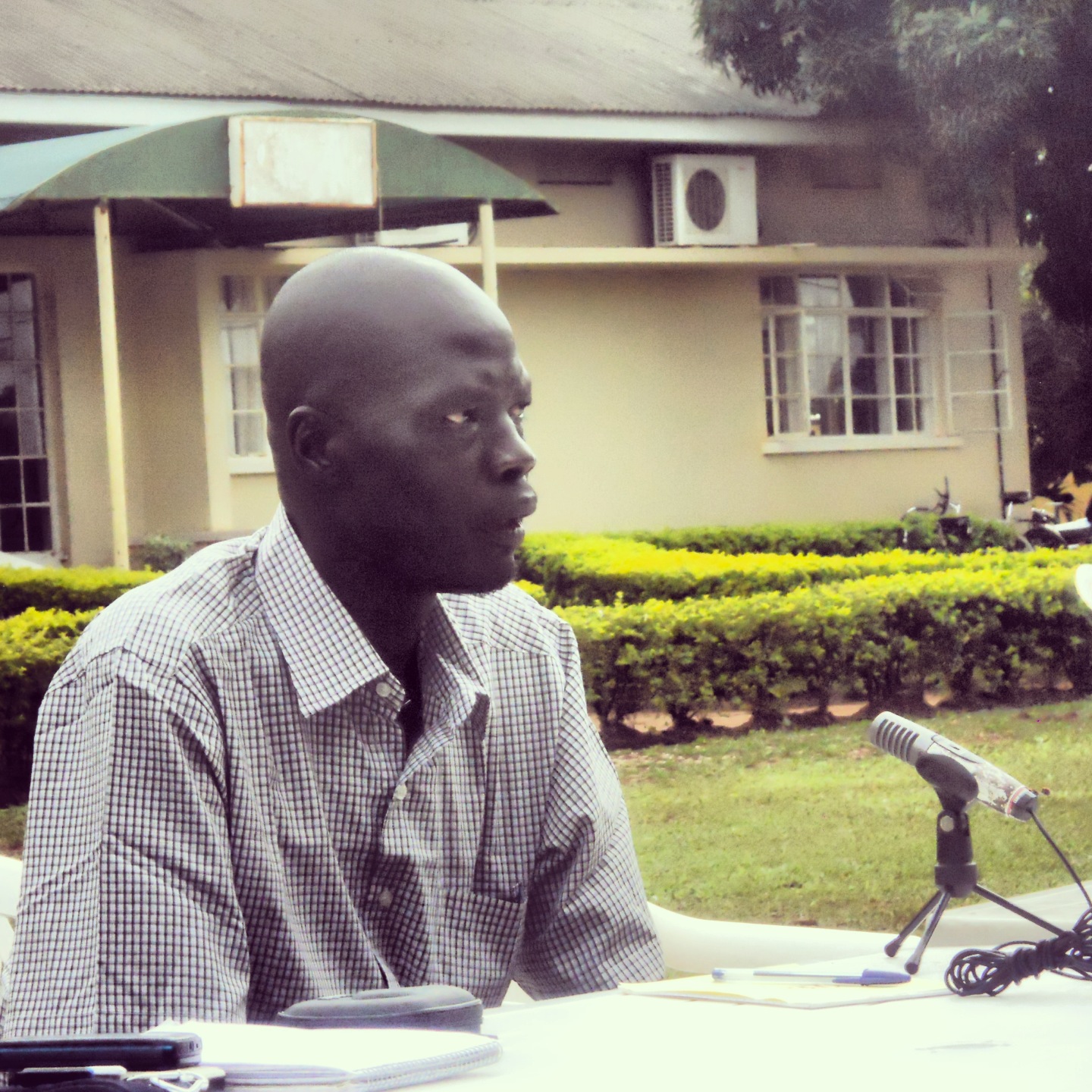
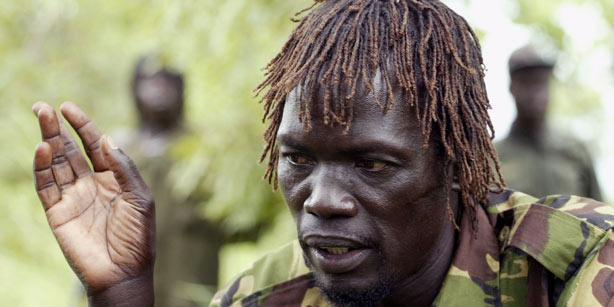
Caesar Acellam giving his first public address since his defection last year (Photo: Scott Ross)

Caesar Acellam giving his first public address since his defection last year (Photo: Scott Ross)

It has been over a year since former Lord’s Resistance Army (LRA) Major General Caesar Acellam was taken into custody by the Uganda People’s Defense Force (UPDF). Only now has he opened up and told his defection story.

On June 28, Acellam addressed civil society leaders and government officials from Uganda, the Democratic Republic of Congo (DRC), and Central African Republic (CAR) at a conference organized by the US-based NGO Invisible Children. In his first public address since his initial capture in May of 2012, the former rebel commander called for an end to the rebel group through both military and peaceful means.

Initially abducted in 1988 by the nascent Ugandan rebel group, Acellam has been the subject of some scrutiny among observers of the LRA and advocates of peace and justice in the conflict.  When the UPDF announced his capture last May, it came both in the aftermath of the viral Kony 2012 video and in the midst of the tumultuous suspension of Uganda’s Amnesty Act.

Invisible Children released Kony 2012 in March of that year with the intention of raising awareness in the international community about the LRA conflict. The video called for the United States to support the Ugandan military’s efforts to capture LRA rebel leader and ICC indictee Joseph Kony and his top commanders.

While many rallied behind the organization’s support for bringing the LRA to justice, the Ugandan government was working to dismantle a key effort to bring the war to an end. The Amnesty Act of 2000 was originally passed by the Ugandan Parliament with broad civil society support among those affected by the LRA. The goal was to bring back abducted conscripts without endangering them and, in doing so, sap strength from the LRA by peaceful means. When the government unilaterally allowed key provisions of the Act to expire in 2012, organizations both in Uganda and abroad called for its immediate reinstatement.

In this wider context, Acellam was taken into custody by the UPDF and it remains unclear what subsequently happened to him. When he was first captured, an adviser to the Amnesty Commission stated that “there’s absolutely nothing that prevents Achellam from being considered for amnesty.” However, less than a week later the Director of Public Prosecution declared that he would be ineligible for amnesty due to his seniority in the rebel group. The confusion continued as Acellam was whisked away by the UPDF. He has been seldom seen or heard from since.

Caesar Acellam speaking to media in South Sudan in 2006 (Photo: Reuters)

Caesar Acellam speaking to media during the Juba peace talks in South Sudan in 2006 (Photo: Reuters)

The question of whether Acellam defected or was captured is an important one.  According to the Amnesty Act, defecting escapees are allowed to apply for amnesty immediately, while captured rebels must first be approved by the Director of Public Prosecution, the party responsible for prosecuting them. This latter process has been marred by the illegal detention of former LRA commander Thomas Kwoyelo, who remains imprisoned despite multiple court orders for his release. When he spoke to the conference last month, Acellam tried to make it clear that he was a defector and not a prisoner.

The conference brought together religious, governmental, and civil society leaders from DRC and CAR to meet with each other and with leaders of the Acholi community who had suffered under the LRA for over twenty years. On the first day, Central African and Congolese leaders raised questions about Acellam. It was then decided that they would meet him the next day in a brief dialogue about the LRA and their activities in the DRC and CAR. It was to this audience that Acellam called for “cooperation between the locals and security personnel” in order to capture other LRA commanders. Continue reading

Posted in Central African Republic (CAR), Democratic Republic of Congo, Justice, Kwoyelo Trial, Lord's Resistance Army (LRA), Uganda | Tagged , , | 5 Comments

The Justice in and of Death

(Photo: filmjunk.com)

(Photo: filmjunk.com)

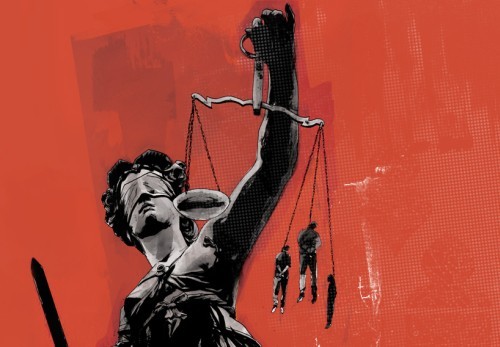
Somewhere in Sudan, Ali Kushayb is recovering from injuries that very nearly took his life. Kushayb, a Janjaweed leader wanted by the International Criminal Court (ICC) on allegations that he committed crimes against humanity in Darfur, was attacked in an apparent assassination attempt earlier this month. Had Kushayb been killed, would it have counted as justice? What is the role of death in the achievement of justice?

Death is central to the story and practice of international criminal justice. Too little death and there would be little-to-no need for institutions like the ICC or other tribunals examining conflict and post-conflict violence. Too much death, along with well-placed images of it, trigger interest in whether people should ‘get’ justice and who should deliver it.

Some argue that the role of international tribunals is to prevent death, to “stay the hand of vengeance”. It is argued that the existence and threat of retributive justice that international criminal courts pose, in and of themselves, can deter leaders from committing crimes in the future. Others argue that this is a groundless claim and wishful thinking. Death will march on, ICC or no ICC.

International criminal justice was created with the explicit intention of replacing the practice of killing adversaries with a judicial system that could bring them to account for their crimes. The Nuremberg Tribunals that prosecuted top-level Nazi perpetrators following WWII marked a dramatic shift in how perpetrators would be dealt with. Despite the desire on the part of many key figures (including senior American and British officials) to summarily execute the likes of Hermann Göring, Hans Frank and Rudolph Hess, the view that trials – and not immediate death – would best serve justice ultimately prevailed.

Yet the seductive appeal of crudely ridding the world of ‘evil’ remains: what if the ‘bad guys’, the really, really bad guys – like those indicted by the ICC – were just killed? No trial. No dragging on of costly courtroom drama. No negotiations. Just the elimination of perverse international criminals. Would that count as justice?

Surprisingly, many seem to believe the answer is yes. Take three examples.

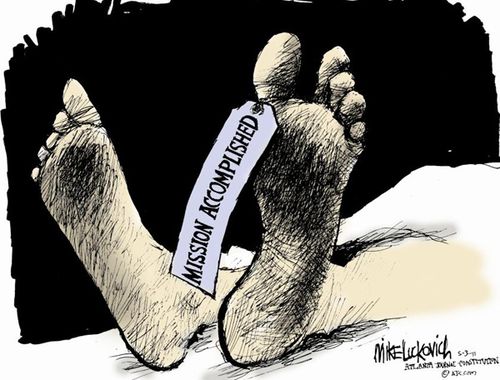
(Cartoon: Mike Lukovich)

(Cartoon: Mike Lukovich)

The reaction to the death of Osama bin Laden clearly indicated that freedom and rights loving people were more than willing to conflate killing and justice. Thousands, if not millions, of people did not simply celebrate the fact that Osama bin Laden was ‘gone’. They celebrated bin Laden’s death as an act of justice. And if anyone was confused as to whether it really did count as justice, President Obama was clear:

“Justice was done and I think that anyone who would question that the perpetrator of mass murder on American soil didn’t deserve what he got, needs to get their head examined.”

In October 2011, when Muammar Gaddafi was killed by rebels, it was likewise seen, in and outside Libya, as a final and just act in Libya’s Revolution and Civil War. This perspective was somewhat complicated by the fact that Gaddafi’s grisly last moments were caught on video and raised suspicions that his death constituted a war crime. Still, after a brief salvo of concern, the matter was quickly dropped. After forty years of Gaddafi dictatorship, the over-arching sentiment seemed to be that he got what he deserved. As then Secretary of State Hilary Clinton stated upon learning of Gaddafi’s death: “We came, we saw, he died.” Continue reading

Posted in Darfur, Justice, Nuremberg, Nuremberg Trials, Osama bin Laden, Osama bin Laden and international law | Tagged , , , | 2 Comments